
Your blood pressure is finally under control. Your numbers look better. Your doctor is pleased. Then something else changes that nobody warned you about.
Sex feels different. Desire drops. Erections become less reliable. Orgasm takes longer, or doesn't happen the way it used to. For some women, arousal feels muted or dryness becomes a new problem. For many men, the first reaction is confusion. For many couples, the second is silence.
This is one of the most common hidden reasons people start resenting a medication that's otherwise helping them. It can feel unfair. You took the pills to protect your heart and blood vessels, and now your sexual confidence takes a hit.
The important part is this. You are not stuck choosing between healthy blood pressure and a healthy sex life. Blood pressure medication sexual side effects are real, but they are not all the same across every drug class, and they are often manageable. In some cases, the right medication change can improve sexual function rather than worsen it.
Table of Contents
- The Unspoken Side Effect of Healthy Blood Pressure
- How Blood Pressure Pills Can Disrupt Sexual Function
- High-Risk vs Low-Risk Antihypertensive Medications
- How to Discuss Sexual Side Effects With Your Doctor
- Safe Strategies to Reclaim Your Sexual Health
- When to Consider Advanced Regenerative Therapies
- Frequently Asked Questions
- Will these side effects go away if I just wait?
- Can I just lower the dose on my own?
- How quickly can sexual function improve after a medication switch?
- If I can still get erections sometimes, is the medication really the problem?
- Do women get blood pressure medication sexual side effects too?
- If I switch medications, will I still need ED treatment?
- Are PDE5 inhibitors the final answer?
The Unspoken Side Effect of Healthy Blood Pressure
A pattern I see often in clinic is simple. Someone finally gets their blood pressure under better control, feels good about taking care of their health, and then notices that desire, arousal, erections, lubrication, or orgasm no longer feel the same. The timing is confusing, so many people blame stress, aging, or the relationship before they ever consider the prescription bottle.
That hesitation is understandable. Sex can feel like a small concern compared with stroke prevention or heart protection. It is still a real medical concern. Sexual side effects affect quality of life, confidence, relationships, and whether someone keeps taking treatment as prescribed.
A 2021 review of existing research found that sexual dysfunction during antihypertensive treatment is common, often underrecognized, and more likely with some older medication classes than others. The same review described a different pattern with angiotensin receptor blockers, or ARBs, which were generally neutral or favorable for sexual function in many patients. That point matters. “Blood pressure medication” is not one single sexual side effect category. Drug choice can change the outcome.
That is the part many patients never hear early enough. Better blood pressure control and better sexual function are often compatible goals.
Sexual symptoms also rarely have just one cause. High blood pressure itself can impair blood vessel health long before medication enters the picture. Low testosterone, diabetes, poor sleep, pelvic floor tension, anxiety, vascular disease, and relationship stress can all add friction. This overview of conditions that may cause erectile dysfunction explains why the full picture matters.
Why this issue stays hidden
Many patients wait until the problem is affecting the relationship before they mention it. Men often worry they will sound vain or weak. Women are frequently told the problem is only hormonal or age-related, even when the timeline clearly fits a medication change. Both groups can leave the visit with controlled blood pressure and an avoidable loss in sexual well-being.
I tell patients this plainly. Sexual side effects are a treatment issue, not a personal failure.
What to keep in mind early
- Do not stop blood pressure medication on your own. Sudden changes can raise cardiovascular risk.
- Ask whether a different drug class would fit you better. Some classes create more sexual problems than others, and some, especially ARBs, may be a better match.
- If a medication change helps only halfway, that still gives useful clinical information. It suggests the prescription was part of the problem, but probably not the whole problem.
- A broader hormone and vascular review may still be needed. In some men, fertility or hormone treatment discussions overlap with sexual symptoms, which is one reason patient education around topics like understanding clomid for males can be relevant.
The hopeful message is practical. Start by optimizing the medication plan. If sexual function does not fully recover, modern sexual medicine offers ways to address the vascular and tissue-level problem instead of telling you to just live with it.
How Blood Pressure Pills Can Disrupt Sexual Function
Sexual function depends on timing. Blood vessels need to open. Nerve signals need to fire. The brain has to stay engaged instead of distracted, exhausted, or chemically dampened. Blood pressure medication can interfere with one or more parts of that sequence.
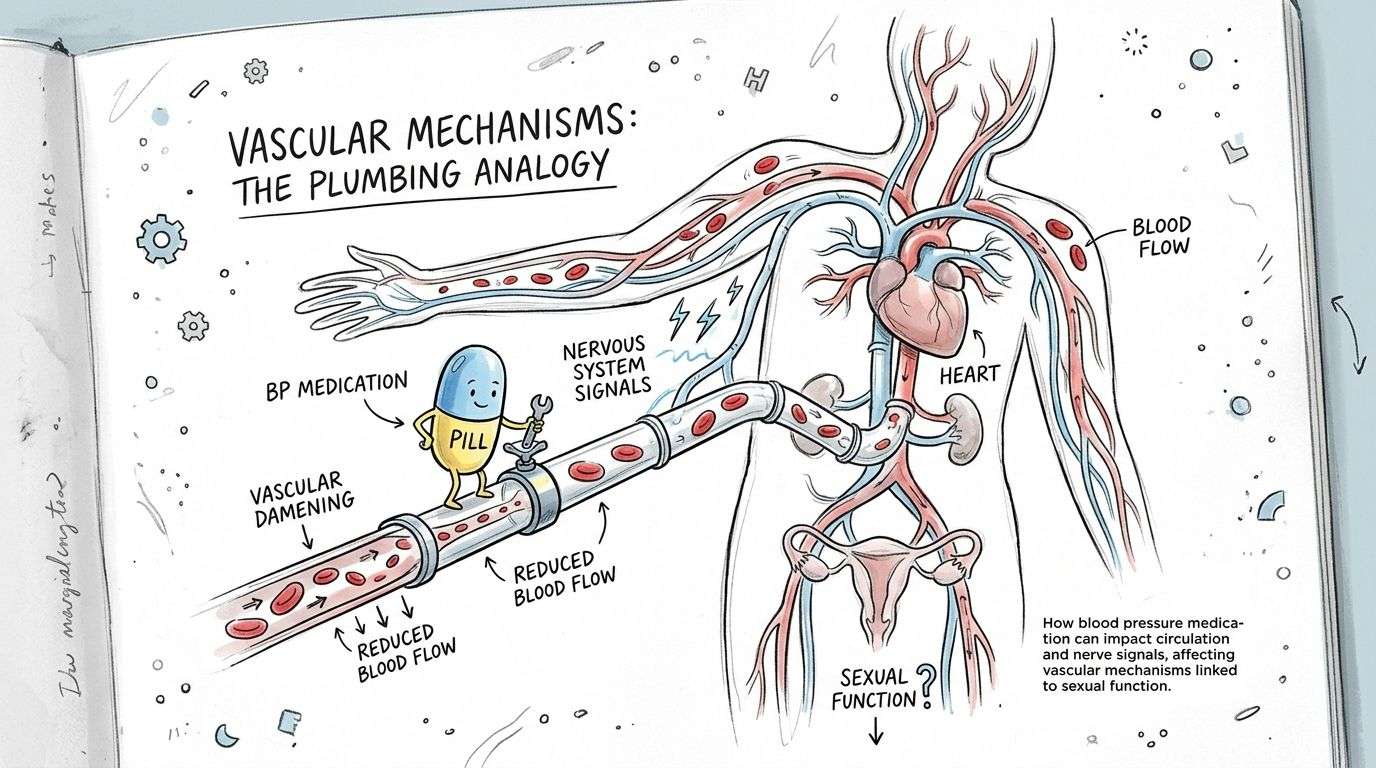
A simple way to think about it is plumbing plus wiring. Your vascular system is the plumbing. Your nervous system is the wiring. Sexual response needs both. If pressure is lowered in a way that also reduces genital blood flow, or if the “wiring” for arousal and orgasm gets dulled, you can feel the difference quickly.
Three pathways that affect sex
First is blood flow. An erection depends on strong inflow and the ability to trap blood in erectile tissue. Female arousal also depends heavily on healthy blood flow to genital tissue. Some antihypertensives can reduce that responsiveness.
Second is nerve signaling. Arousal and orgasm involve the autonomic nervous system. Some medications reduce sympathetic outflow, which can blunt the body's ability to shift into a sexually responsive state.
Third is chemical signaling inside blood vessels, especially nitric oxide. A key mechanism described in the literature is decreased sympathetic outflow and reduced penile blood flow due to inhibition of nitric oxide-mediated vasodilation, which is critical for erection initiation. Some newer agents, such as nebivolol, appear different because they enhance nitric oxide production and may improve erectile function, as detailed in this review on beta-blockers and erectile dysfunction mechanisms.
Practical rule: If sexual function changed after a medication change, timing matters. It doesn't prove the medication is the only cause, but it does make the medication worth reviewing.
Hormones can also complicate the picture. Fatigue, lower exercise tolerance, stress, and age-related testosterone changes can stack on top of a medication effect. If you're trying to sort out the hormonal side from the medication side, this guide on understanding clomid for males gives useful context on how men's hormone treatment discussions often overlap with sexual symptoms.
Why the same blood pressure goal can feel different on different drugs
Two people can reach similar blood pressure readings and have very different sexual experiences because the medication class matters as much as the blood pressure target. That's why broad statements like “blood pressure meds cause ED” are too simplistic.
Some patients also have more than one contributor at once. Hypertension itself can impair circulation. Diabetes, sleep problems, performance anxiety, pelvic floor tension, depression, and low hormones can all add friction. If you want a broader look at overlapping causes, this overview of contributory conditions that may cause erectile dysfunction is a good place to sort the medication issue from everything else.
High-Risk vs Low-Risk Antihypertensive Medications
Medication class often explains why one patient's sex life changes on treatment while another patient with the same blood pressure reading feels no difference at all.
The higher-risk group is fairly consistent in practice. Older beta-blockers and thiazide diuretics are the first medications I review when sexual symptoms start after a prescription change. In men, these drugs are more often linked with erection problems, lower libido, or less satisfying sexual performance. In women, beta-blockers are more often associated with reduced arousal or delayed orgasm, and thiazides can add vaginal dryness in some cases.
That pattern matters because it gives you options. “Blood pressure medication causes ED” is too broad to be useful. Some medications carry more sexual burden, and some are much less likely to interfere.
Which classes raise the most concern
Older beta-blockers are more likely to interfere with sexual function because they can blunt the sympathetic nervous system response, reduce exercise tolerance, and in some patients lower the sense of physical readiness for sex. Thiazide diuretics can create problems through volume depletion, lower zinc levels in some cases, and reduced tissue perfusion. Those effects do not hit everyone the same way, but they are common enough to justify a medication review.
ARBs deserve special attention for the opposite reason. They are often lower-risk from a sexual side effect standpoint, and in some patients they may improve sexual function. That is a very different message from the usual fear-based discussion around blood pressure treatment. Newer beta-blockers with nitric oxide activity, such as nebivolol, also appear meaningfully different from older agents and may be a better fit when a beta-blocker is still medically indicated.
ACE inhibitors are often neutral or lower concern clinically, although individual response still matters. The practical point is simple. If a patient develops sexual side effects, the answer is not automatically “stop the medication.” The better first step is to ask whether the current class is the right one.
Quick reference table
| Risk Level | Drug Class | Common Examples |
|---|---|---|
| Higher risk | Older-generation beta-blockers | Atenolol, metoprolol, acebutolol, carvedilol |
| Higher risk | Thiazide diuretics | Hydrochlorothiazide, chlorthalidone |
| Lower risk or potentially beneficial | ARBs | Losartan, valsartan |
| Lower risk in selected cases | Newer beta-blocker with nitric oxide activity | Nebivolol |
| Often lower concern clinically | ACE inhibitors | Commonly used agents in this class |
Atenolol is a good example of why these distinctions matter. Earlier research has shown a clear drop in sexual activity frequency in some men taking it, which fits what many clinicians have seen over time. By contrast, switching from an older beta-blocker or diuretic to an ARB or a more sexually neutral option can improve erections, arousal, and overall confidence without giving up blood pressure control.
That trade-off is the main clinical takeaway. Protect the heart, but do it with the least sexual cost possible.
If your medication falls into a higher-risk class, that does not prove it is the cause. It does make a thoughtful switch worth discussing.
A focused medication review usually comes down to three questions. Did symptoms start after the medication was added or changed? Is the current drug in a class known to cause more sexual side effects? Is there a safer alternative that still fits the patient's cardiac risk profile? For added guidance on managing medication side effects, patients can review general strategies before that conversation.
How to Discuss Sexual Side Effects With Your Doctor
A common clinic scenario goes like this. Blood pressure is finally under control, but sex has changed, and the patient has been sitting on that concern for months because it feels awkward to bring up. The fix often starts with one clear conversation.
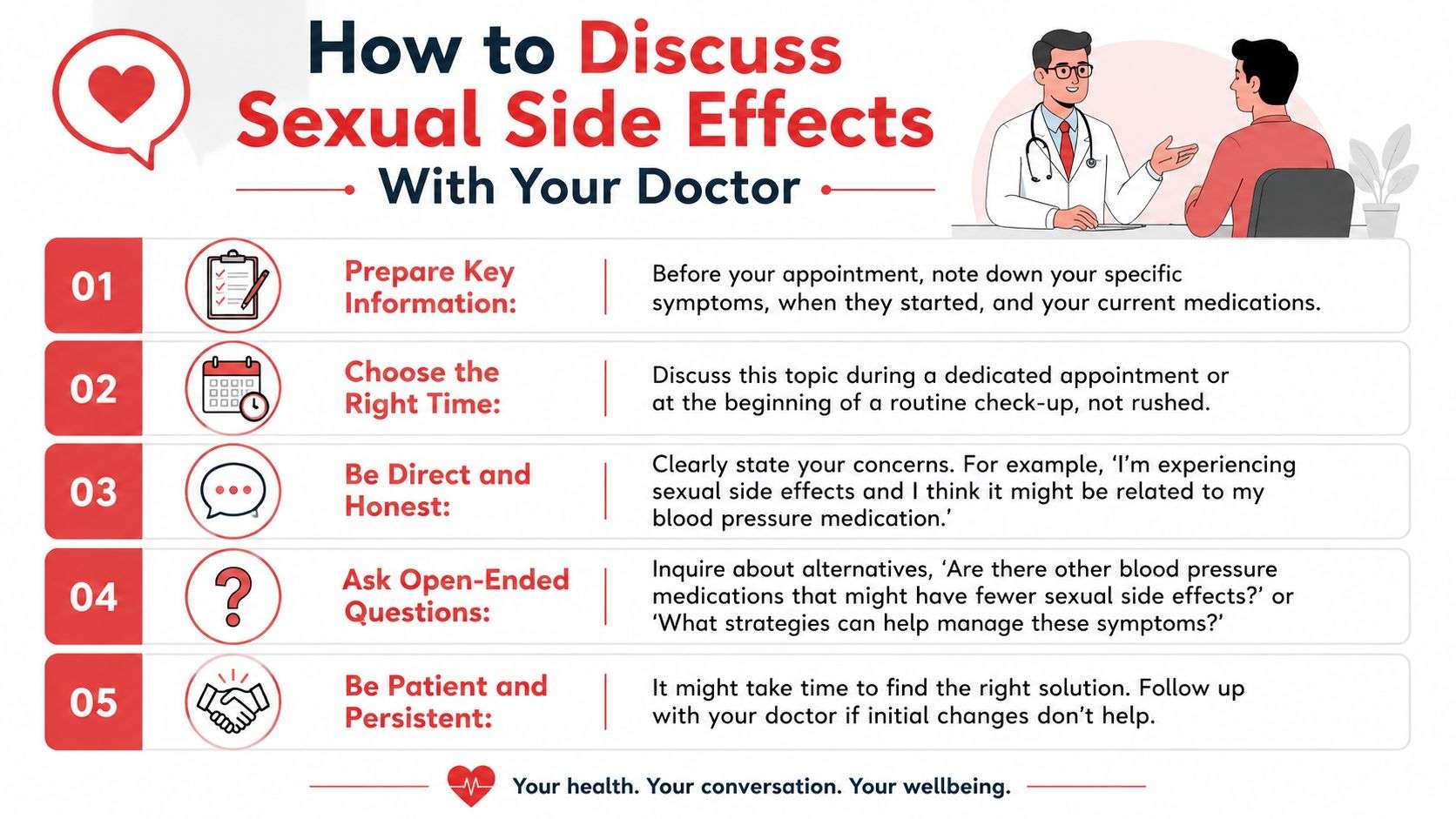
Doctors can only sort out medication side effects if the pattern is specific. “Things feel off” is hard to work with. A short timeline is much more useful because it helps separate a drug effect from stress, relationship strain, low testosterone, menopause, diabetes, poor sleep, or vascular disease that was already developing.
What to track before the visit
Write down a few practical details for two to four weeks, if you can.
- Medication details. List each blood pressure medication, the dose, and when it was started, stopped, or changed.
- Sexual symptoms. Note erection difficulty, lower desire, ejaculation changes, delayed orgasm, reduced arousal, vaginal dryness, or pain with sex.
- Timing pattern. Record when the problem began and whether it appeared suddenly or built gradually.
- Other changes. Include fatigue, anxiety, new antidepressants, blood sugar issues, sleep problems, pelvic pain, or major life stress.
This distinction matters. For men, libido and erection quality are different functions. For women, desire, arousal, lubrication, orgasm, and discomfort can each point to a different cause. That kind of detail gives your clinician something useful to act on.
What to say in the room
You do not need a polished speech. You need one direct sentence.
- Direct opener. “I'm having sexual side effects, and I think my blood pressure medication may be part of the problem.”
- If you want to stay neutral. “My sexual function changed after my medication changed, and I want to review whether the drug class could be contributing.”
- If you are worried about being dismissed. “I'm not going to stop anything on my own, but I do want a plan that protects both my blood pressure and my sex life.”
That last line matters because it frames the visit the right way. The goal is not to abandon treatment. The goal is to find the best fit. In practice, that may mean adjusting the dose, switching to a more sexually friendly class, checking for another medical contributor, or adding targeted treatment if the medication is only part of the story.
For men, ask whether the erection problem sounds medication-related, circulation-related, or both. If pills come up, it helps to understand how erectile dysfunction treatment pills work so the discussion stays practical. For women, bring up reduced arousal, orgasm delay, dryness, or pain as plainly as you would mention fatigue or headaches. These are recognized medical side effects, not minor complaints.
If your clinician says the medication may be contributing, ask the next useful question. “Is there an option in the same blood pressure plan that is less likely to interfere with sexual function?” That opens the door to medication optimization, which is often the most efficient first step. As noted earlier, some drug classes carry more sexual burden than others, while some options are much more neutral and may even be favorable for sexual function in selected patients.
A helpful outside resource is this guidance on managing medication side effects, especially if you want a simple framework for documenting symptoms before a visit.
Bring the symptom log. It keeps the conversation focused and makes it easier for your doctor to spot patterns.
One rule matters more than any script. Never lower the dose, skip doses, or stop a blood pressure medication without medical supervision. Uncontrolled hypertension is dangerous. The safer path is to review the regimen, choose the lowest sexual-cost option that still protects the heart, and build from there.
Safe Strategies to Reclaim Your Sexual Health
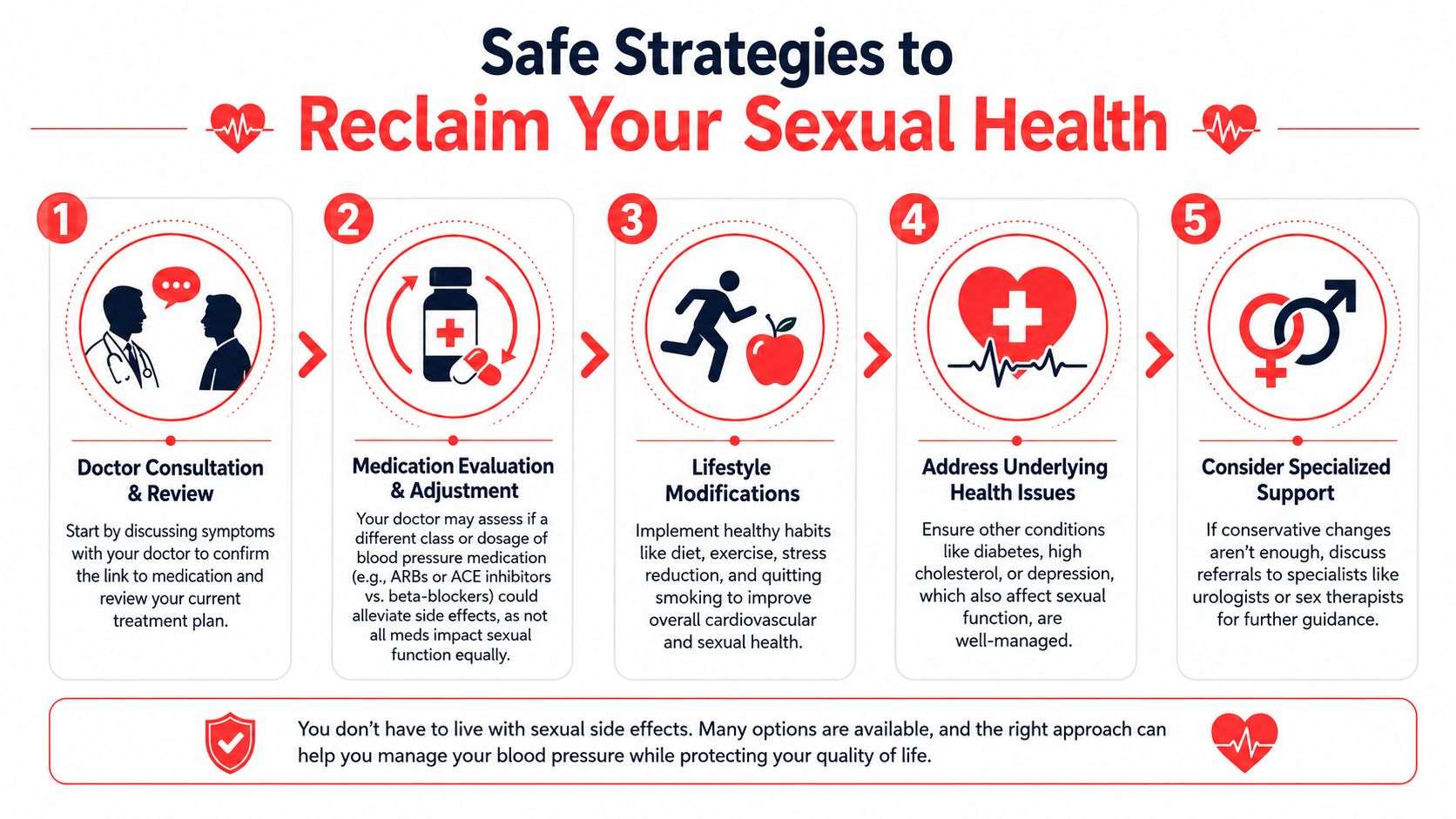
The best first move is often not adding a sex medication. It's reviewing whether the blood pressure regimen itself is the problem.
That matters because the old story, “BP meds cause ED, so now you need a second prescription,” is incomplete. Some medication choices are much more likely to interfere with sexual function, while others may protect it better. A thoughtful switch can solve the problem more directly than stacking treatments on top of the original cause.
Start with medication optimization
The hopeful part of the discussion becomes evident. Contrary to the assumption that all blood pressure medications harm sexual health, some ARBs may improve it. A 2023 study of 3,500 patients found that valsartan improved all aspects of sexual function, and multiple studies have shown that switching from older beta-blockers or diuretics to ARBs or nebivolol can improve sexual function in both men and women, discussed in this overview on the valsartan angle and medication optimization.
That doesn't mean every patient should be switched to an ARB. Blood pressure treatment depends on the whole cardiovascular picture. But it does mean medication optimization should be treated as a first-line strategy, not an afterthought.
A reasonable medical discussion may include:
- Whether the current class is a known higher-risk option
- Whether a lower-risk or potentially beneficial class fits the patient's cardiovascular needs
- Whether the dose or combination is contributing
- Whether another condition is making the sexual effect worse
Build the rest of the plan around vascular health
Medication changes help most when the rest of the physiology gets attention too. Sexual function is a vascular event, so the same habits that support endothelial health usually support sexual health.
- Exercise. Regular movement improves circulation and often improves confidence and energy.
- Weight and metabolic health. Better insulin sensitivity and lower inflammation can support both erections and female arousal.
- Stress reduction. Chronic stress keeps the body in a state that competes with sexual response.
- Sleep. Poor sleep lowers resilience and worsens hormonal and vascular function.
- Smoking cessation. Tobacco damages blood vessels directly.
For patients also working on weight and metabolic health, muscle preservation matters because loss of lean mass can worsen energy, strength, and sexual confidence. This practical piece on how to preserve muscle on GLP-1 medications is useful when body composition is part of the bigger plan.
PDE5 inhibitors can still play a role. They often help with function, especially while a medication change is being evaluated, but they may not address the root cause if the antihypertensive regimen is still working against sexual response. If you want a plain-language breakdown of that category, this guide on how erectile dysfunction treatment pills actually work explains where these medications fit and where they fall short.
When to Consider Advanced Regenerative Therapies
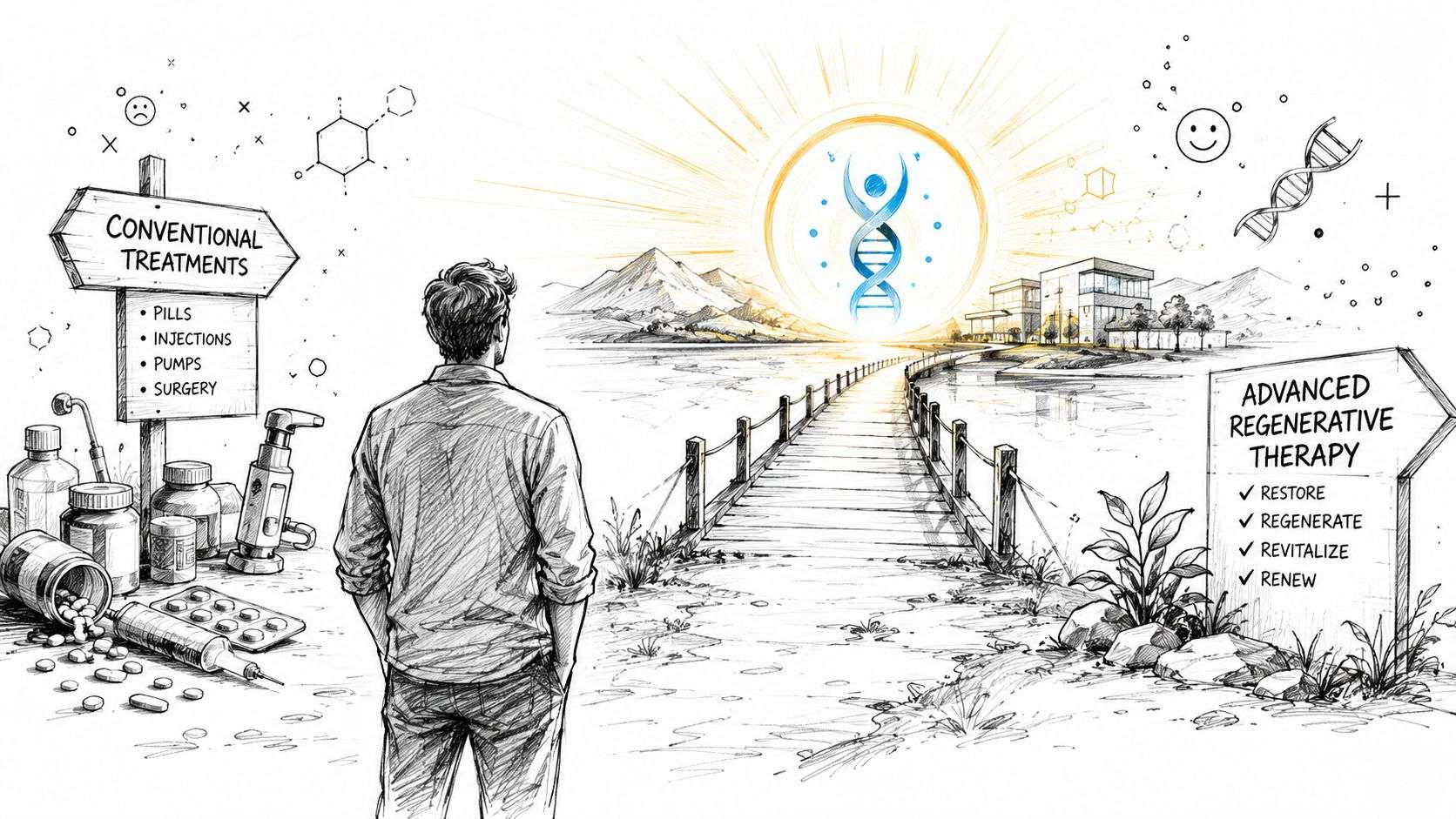
Sometimes the medication switch helps, but not enough. Sometimes PDE5 medication creates a usable response, but it still feels forced, inconsistent, or temporary. That pattern usually means the issue isn't just the prescription. It suggests deeper vascular or tissue-level dysfunction.
Signs that pills and medication changes aren't enough
A few clinical patterns raise that suspicion:
- Partial response only. You improve after a medication change, but erections or arousal still aren't dependable.
- Declining spontaneity. You can perform only with planning, high stimulation, or medication support.
- Multiple vascular risk factors. Hypertension, diabetes, metabolic issues, and age-related changes often affect tissue quality over time.
- Reduced sensitivity or firmness. Those symptoms can reflect more than just a medication side effect.
In those cases, the conversation often shifts from symptom management to tissue restoration. That's where regenerative medicine enters.
Why regenerative care enters the conversation
Pills can improve blood flow temporarily. They don't rebuild tissue. They don't reverse structural vascular decline. Regenerative therapies are designed around that gap.
Non-surgical options such as acoustic wave therapy, laser-based tissue stimulation, and regenerative injection protocols are used to support blood vessel growth, circulation, and tissue repair. The point is to improve the health of the sexual tissue itself, not just override a bad night.
Some patients don't need “stronger pills.” They need better tissue function.
This step tends to make sense when someone has already done the basics responsibly. They addressed medication class, reviewed hormones and metabolic health, improved lifestyle inputs, and still don't feel restored. If you're evaluating where shockwave-based approaches fit in that progression, this review of shockwave therapy for ED success and what the studies show is a useful starting point.
The key mindset shift is simple. If a blood pressure medication unmasked a problem, changing that medication may stop the aggravation. But if the underlying tissue has already lost function, restoration may require more than prescription management.
Frequently Asked Questions
Will these side effects go away if I just wait?
Sometimes mild symptoms settle, but don't count on time alone to fix them. If the issue began after a medication change and persists, it deserves review. Waiting too long often increases frustration and relationship stress.
Can I just lower the dose on my own?
No. Blood pressure medication should not be changed without medical supervision. A lower dose might reduce side effects, but it can also reduce blood pressure control or create rebound problems depending on the drug.
How quickly can sexual function improve after a medication switch?
It varies. Some people notice a change fairly quickly, while others need longer because more than one factor is involved. If symptoms only improve partway, that still tells your clinician something important about the role of the medication.
If I can still get erections sometimes, is the medication really the problem?
It still can be part of the problem. Medication-related sexual dysfunction is often inconsistent rather than absolute. The pattern may be weaker erections, more effort required, less firmness, less reliability, or lower desire rather than complete loss of function.
Do women get blood pressure medication sexual side effects too?
Yes. Women can experience reduced arousal, delayed orgasm, or vaginal dryness depending on the medication class and the rest of their health picture. These symptoms deserve the same clinical attention as erection changes in men.
If I switch medications, will I still need ED treatment?
Maybe. Some patients improve enough with medication optimization alone. Others need additional support because the drug side effect was only one contributor. That's especially common when vascular health, hormones, diabetes, stress, or aging tissue changes are also present.
Are PDE5 inhibitors the final answer?
Not always. They can be very helpful, but they mainly support function in the moment. If you want more natural, dependable response, it often takes a broader plan that includes medication review and, in selected cases, restorative treatment.
If blood pressure medication sexual side effects are affecting your confidence, relationship, or quality of life, you don't have to face it alone. Sexual Wellness Centers of America provides evaluation and treatment options for men and women who want a clearer answer, whether that means identifying medication-related contributors, exploring non-surgical ED solutions, or considering advanced regenerative care when standard approaches haven't restored natural function.