
Why BPC 157 Bone Healing Research Has Captured Scientific Interest
BPC 157 bone healing research has emerged as one of the most intriguing yet controversial topics in regenerative medicine. This synthetic peptide, derived from a protein found in stomach acid, shows promise in animal studies for accelerating bone repair – but critical gaps in human evidence raise serious questions about its safety and effectiveness.
Key Facts About BPC 157 for Bone Healing:
- Current evidence: Limited to animal studies showing improved bone defect healing in rabbits
- Human trials: Zero randomized controlled trials exist
- Safety profile: Unproven in humans with unknown long-term effects
- Regulatory status: Not FDA-approved; prohibited by WADA for athletes
- Clinical recommendation: Most medical professionals advise against use
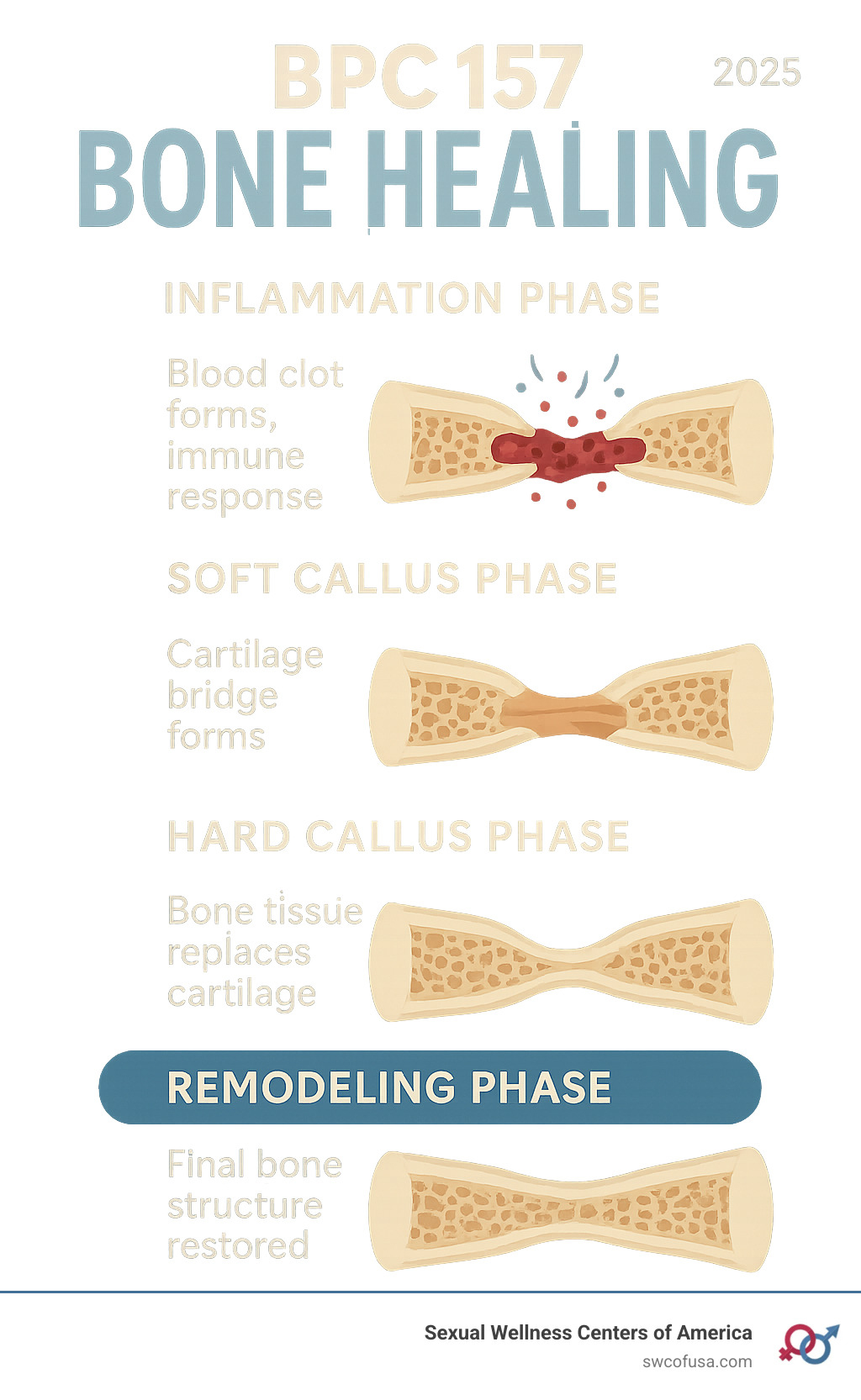
The research story begins with promising animal studies. In rabbits with segmental bone defects, BPC-157 treatment resulted in callus formation twice as large as controls after two weeks. The peptide’s effects were comparable to traditional bone marrow grafts, suggesting significant potential for bone regeneration.
However, the leap from animal models to human application remains a massive scientific gap. With zero human clinical trials and significant safety concerns, BPC-157 exists in a regulatory gray area that has sparked intense debate among medical professionals.
As Jeff Nuziard, CEO of Sexual Wellness Centers of America, I’ve witnessed the challenges patients face when seeking evidence-based treatments for healing and regeneration, including inquiries about BPC 157 bone healing therapies. My experience in healthcare innovation has taught me the critical importance of distinguishing between promising research and clinically proven treatments.
What is BPC-157 and How Might It Work?
Think of BPC-157 as a tiny molecular messenger that might help your body heal faster. This synthetic peptide consists of just 15 amino acids, but it’s derived from something surprisingly familiar – a protein found naturally in your stomach’s gastric juice.
The name “Body Protection Compound 157” sounds impressive, and there’s a reason researchers chose it. This peptide was designed to potentially protect and heal tissue, though whether it actually delivers on this promise in humans remains a big question mark.
What makes BPC-157 stand out from other healing compounds is its remarkable stability. While most peptides break down quickly in your body’s acidic environment, BPC-157 can survive in gastric juice for up to 24 hours. It’s like having a message that doesn’t get lost in translation – theoretically, anyway.
The science behind BPC 157 bone healing involves several fascinating biological processes. Scientific research on angiogenesis shows us that creating new blood vessels is crucial for tissue repair, and BPC-157 appears to boost this process in animal studies.
How BPC-157 May Influence Tissue Repair
When researchers look at how BPC-157 might work, they see several promising mechanisms happening simultaneously. The peptide appears to improve blood flow through angiogenesis – essentially helping your body build new highways for nutrients and oxygen to reach healing tissues.
At the cellular level, BPC-157 seems to stimulate fibroblasts, the hardworking cells responsible for producing collagen and other structural proteins your body needs for repair. Think of fibroblasts as your body’s construction crew, and BPC-157 as their potential energy drink.
The peptide also appears to upregulate growth factors like VEGF (vascular endothelial growth factor), which is crucial for blood vessel formation and tissue regeneration. Additionally, research suggests it provides anti-inflammatory effects, helping create a calmer environment where healing can happen more efficiently.
Some studies even hint at neuroprotective properties, though this is less directly related to bone healing. The challenge? All of these exciting mechanisms have primarily been observed in animal studies and laboratory settings, not in actual human patients.
Comparing BPC-157 to Natural Healing Processes
| Aspect | BPC-157 | Natural Bone Healing |
|---|---|---|
| Evidence Level | Preclinical animal studies only | Extensively documented in humans |
| Scientific Understanding | Limited, mostly theoretical | Well-established mechanisms |
| Mechanism | Synthetic peptide intervention | Complex cascade of natural processes |
| How They Are Activated | External administration required | Body’s natural response to injury |
This comparison reveals something important: while your body’s natural bone healing process is like a well-rehearsed orchestra with every instrument knowing its part, BPC 157 bone healing is more like a promising new musician who’s only performed in practice sessions.
Your body already has an incredible system for healing bones, refined over millions of years of evolution. The question isn’t whether BPC-157 works in theory – it’s whether it can actually improve on what your body already does naturally, and more importantly, whether it can do so safely in real human patients.
The Evidence for BPC 157 Bone Healing: Promise vs. Reality

When it comes to BPC 157 bone healing, we’re looking at one of those classic medical stories where the laboratory results look incredibly promising, but the human evidence is… well, practically nonexistent. It’s like having a recipe that works perfectly in your test kitchen but has never been tried in a real restaurant.
The animal research has been genuinely impressive. Scientists have put BPC-157 through its paces in various studies, and the results consistently show faster healing, stronger tissue repair, and improved outcomes across the board. But here’s the thing that keeps medical professionals up at night – none of this has been properly tested in humans.
The systematic review on peptides in bone healing reveals a pattern that’s both fascinating and frustrating. Many peptides show incredible promise in preclinical studies, yet very few make it successfully through human clinical trials. It’s like a talent show where the rehearsals are amazing, but the live performance is a different story entirely.
What Animal Studies Suggest
The preclinical research on BPC-157 has been nothing short of remarkable. In rodent models, researchers have seen impressive improvements in ligament healing, with tissues becoming stronger and recovering faster than expected. Tendon repair studies showed better collagen synthesis and improved tissue organization. When it came to muscle injury, the peptide reduced inflammation and sped up regeneration in ways that made researchers take notice.
But the real star of the show has been the bone research. The rabbit bone defect study00180-X) created 0.8 cm segmental bone defects in rabbit radius bones – essentially removing a piece of bone to see how well it would heal. The results were striking: callus formation was twice as large as controls after just two weeks, and the effects were comparable to traditional bone marrow grafts.
What made this study particularly interesting was that both systemic application (injecting into muscle) and local application (directly at the injury site) worked effectively. The researchers used doses of 10 μg/kg and 10 ng/kg body weight, and both showed significant improvements over the 6-week study period with no observed side effects.
The Critical Lack of Human Data for BPC 157 Bone Healing
Here’s where the story takes a dramatic turn, and not in a good way. Despite years of promising animal research, there are currently zero randomized controlled trials studying BPC 157 bone healing in humans. Zero. None. This isn’t just a small gap in the research – it’s a massive canyon.
The only human study we have is a tiny retrospective look at 16 people who received BPC-157 injections for knee pain. Of these, 12 reported significant pain reduction. But as the analysis of the small human study points out, even the study’s own authors admitted that the improvements could simply be due to time passing rather than the peptide actually doing anything.
This lack of human data creates some serious problems. Animal models don’t always translate to humans – our biology is similar but not identical. The placebo effect is incredibly powerful, especially when it comes to pain reduction. People can feel genuinely better without any actual tissue healing occurring. Anecdotal evidence from individual success stories, while compelling, doesn’t constitute scientific proof.
Perhaps most concerning is that without proper human trials, we have no idea what the optimal dosing should be. The rabbit study used specific doses for rabbits, but translating that to human physiology is pure guesswork. We simply don’t know if BPC-157 is safe or effective for bone healing in humans – and that’s a problem that lack of scientific rigor in the current research landscape has created.
Safety Profile and Regulatory Status: The Red Flags

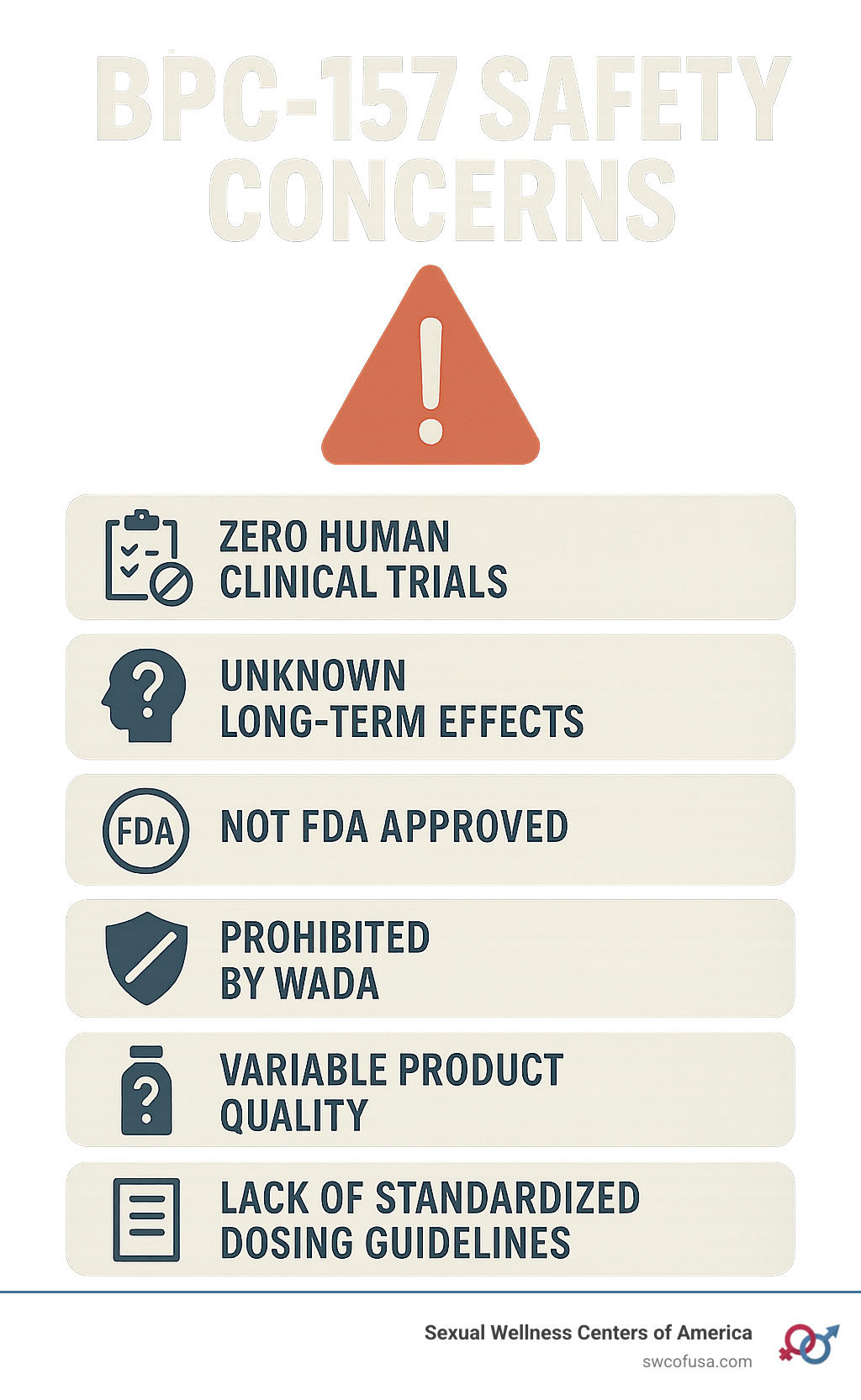
The safety profile of BPC-157 represents one of the most concerning aspects of its current use. While animal studies haven’t shown obvious toxicity, the leap to human use without proper safety trials raises serious medical and ethical questions.
Why is BPC-157’s Safety Profile Unproven?
The fundamental problem is that BPC-157 has never undergone the rigorous safety testing required for human medications. This creates several critical unknowns:
No clinical safety trials: Unlike approved medications, BPC-157 hasn’t been tested in controlled human safety studies. We don’t know what constitutes a safe dose, how long it can be used safely, or what populations might be at higher risk for adverse effects.
Unknown side effects: While animal studies haven’t shown obvious toxicity, humans may respond differently. Potential concerns include impacts on cellular signaling pathways, interactions with other medications, and long-term effects on organ systems.
Purity concerns from unregulated sources: Since BPC-157 isn’t FDA-approved, it’s often obtained from online vendors or compounding pharmacies with variable quality control. Studies have shown that many supplement manufacturers fail to meet basic manufacturing standards, raising concerns about contamination or incorrect dosing.
Potential for contamination: Without proper regulatory oversight, there’s risk of bacterial contamination, heavy metals, or other harmful substances in BPC-157 products.
Lack of dosage standards: Without human clinical trials, there are no established safe and effective dosing guidelines. This means users are essentially experimenting on themselves.
Legal and Ethical Standing of BPC-157
The regulatory status of BPC-157 creates additional concerns:
World Anti-Doping Agency (WADA) prohibition: In 2022, WADA added BPC-157 to its prohibited substances list for athletes. The USADA statement on BPC-157 explicitly warns against its use, citing both performance improvement concerns and safety risks.
FDA status: BPC-157 is not approved by the FDA for human use. It’s often sold as a “research chemical” with labels stating “not for human consumption,” yet it’s being promoted for human healing applications.
Patient safety risks: The promotion of unproven treatments raises serious ethical concerns about patient welfare and informed consent.
Professional liability: Healthcare providers who recommend BPC-157 may face professional liability issues given its unproven status.
The Medical Perspective: Why Experts Urge Caution
When it comes to BPC 157 bone healing, the medical community’s response has been overwhelmingly cautious – and there are compelling reasons why. The gap between promising animal research and proven human benefits represents one of the biggest challenges in modern medicine.
As healthcare professionals, we’ve seen countless “miracle cures” that looked amazing in the lab but failed when tested in real patients. The history of medicine is littered with treatments that worked perfectly in animals but caused serious harm in humans. This is exactly why we have such rigorous standards for approving new treatments.
Why Most Doctors Advise Against Using BPC-157
The medical profession operates on a fundamental principle: evidence-based medicine. This means we need solid proof that a treatment is both safe and effective before we can recommend it to patients. Unfortunately, BPC 157 bone healing falls far short of these standards.
Risk vs. benefit analysis is at the heart of every medical decision. When we don’t know the benefits and can’t predict the risks, the equation simply doesn’t work in favor of treatment. It’s like asking someone to jump across a canyon when you can’t see the other side – the potential for harm is too great.
Most doctors follow the ancient medical principle of “first, do no harm.” Without proper safety studies, recommending BPC-157 could violate this core tenet of medicine. We simply don’t know what we don’t know about this peptide’s effects in humans.
Professional liability is another serious concern. Healthcare providers who recommend unproven treatments can face malpractice claims, especially if patients experience adverse effects. The lack of standard of care protocols for BPC-157 leaves both doctors and patients in legally murky territory.
Perhaps most importantly, unpredictable patient outcomes make it impossible to provide appropriate medical oversight. Without standardized dosing, purity controls, or safety data, we can’t predict how patients will respond or monitor them effectively.
As one medical expert bluntly stated in recent research: “The prescription of BPC-157 is malpractice” due to its unproven status and potential for harm. This harsh assessment reflects the serious concerns within the medical community about promoting unproven treatments.
Designing a Definitive Study for BPC 157 Bone Healing
To truly establish whether BPC 157 bone healing is safe and effective, researchers would need to conduct comprehensive clinical trials following established protocols. This process would involve several critical steps:
Phase I safety trials in humans would be the starting point, establishing safe dosing ranges and identifying potential side effects in small groups of healthy volunteers or patients. These studies focus primarily on safety rather than effectiveness.
Phase II efficacy and dosing trials would then test whether BPC-157 actually works for bone healing and determine optimal dosing. These studies would involve larger groups of patients with actual bone injuries.
The gold standard would be large-scale, randomized, double-blind, placebo-controlled design studies. These would compare BPC-157 to placebo in large patient populations, with neither patients nor researchers knowing who receives the real treatment until the study ends.
Finally, long-term follow-up for safety and efficacy would monitor patients for months or years to identify delayed effects and confirm sustained benefits. This step is crucial because some treatments show initial promise but cause problems over time.
Such comprehensive studies would likely take 5-10 years and cost millions of dollars. While this seems like a long time and a lot of money, it’s the only way to prove that a treatment is truly safe and effective for human use.
At Sexual Wellness Centers of America, we understand the frustration patients feel when seeking innovative treatments for healing and regeneration. That’s why we focus on evidence-based therapies like REGENmax® that have undergone proper testing and shown real results in clinical practice.
Frequently Asked Questions about BPC-157
How is BPC-157 administered in research?
When researchers study BPC-157 in laboratory settings, they use several different administration methods to understand how the peptide might work. The most common approach is subcutaneous injection, which involves injecting the peptide under the skin – similar to how people with diabetes give themselves insulin shots.
Intramuscular injection is another method researchers use, where the peptide is injected directly into muscle tissue. This route may allow for different absorption patterns and potentially more localized effects at injury sites.
Some studies have explored oral administration, though this appears to be less effective due to the digestive system breaking down the peptide before it can work. The stomach’s harsh environment, despite BPC-157’s relative stability, still poses challenges for oral delivery.
Local application represents perhaps the most intriguing approach, where researchers apply the peptide directly to injury sites. This method could theoretically deliver higher concentrations exactly where healing is needed.
The dosage variability in research studies ranges dramatically – from nanograms to micrograms per kilogram of body weight. However, here’s the critical point: these animal dosages cannot be safely extrapolated to humans without proper clinical trials. What works in a rabbit or rat may be completely different in human physiology.
It’s absolutely crucial to understand that all legitimate BPC 157 bone healing research occurs in controlled laboratory settings with proper oversight and safety protocols. The administration methods used in research are not recommendations for human use.
What are natural ways to support bone healing?
While we await definitive research on BPC 157 bone healing, there are proven, safe methods to support your body’s natural bone healing processes. These approaches have decades of solid research behind them.
Proper nutrition forms the foundation of good bone healing. Your body needs adequate calories and protein to provide the building blocks for bone repair. Think of bone healing as a construction project – without enough raw materials, the job simply can’t get done properly.
Calcium and Vitamin D work together as a powerful team for bone health. Calcium provides the mineral content that makes bones strong, while Vitamin D helps your body actually absorb that calcium effectively. Without enough Vitamin D, you could take all the calcium in the world and still not get the benefits.
Adequate protein intake is often overlooked but incredibly important. Bone matrix is largely composed of collagen, which is a protein. This means your body needs a steady supply of amino acids to build new bone tissue during healing.
Avoiding smoking is one of the most important things you can do for bone healing. Smoking significantly impairs the process by reducing blood flow and oxygen delivery to healing tissues. If you’re a smoker dealing with a bone injury, this might be the perfect motivation to quit.
Limiting alcohol consumption also supports better healing. Excessive alcohol interferes with bone formation and can significantly delay the healing process. Moderate consumption is generally fine, but heavy drinking can seriously impact your recovery.
Appropriate weight-bearing exercise post-injury can actually stimulate bone formation through mechanical stress – but only once your physician clears you for activity. Your bones respond to controlled loading by becoming stronger, but timing is everything.
These evidence-based approaches have been proven safe and effective through decades of research, unlike experimental treatments that lack human clinical data.
Conclusion: A Promising Peptide That’s Not Ready for Prime Time

After examining all the available evidence, BPC 157 bone healing research tells a story that’s both exciting and frustrating. It’s the classic tale of a treatment that looks amazing in the lab but isn’t ready for real-world use.
The preclinical promise is genuinely impressive. Those rabbit studies weren’t just showing minor improvements – they demonstrated callus formation twice as large as controls and healing rates that matched established treatments like bone marrow grafts. When animal research shows results that strong, it’s natural for both researchers and patients to get excited about the possibilities.
But here’s where the story takes a sobering turn. Despite years of promising animal research, we have zero randomized controlled trials in humans. That’s not just a minor gap – it’s a massive chasm between laboratory promise and clinical reality.
The safety concerns are equally troubling. We simply don’t know what BPC-157 does to human bodies over time. The unproven safety profile means anyone using it is essentially participating in an uncontrolled experiment. Add in the lack of FDA approval and WADA prohibition for athletes, and the red flags become impossible to ignore.
The quality control issues make things even worse. When you’re dealing with unregulated sources and variable product quality, you’re not just gambling on whether the treatment works – you’re gambling on whether what you’re taking is even what it claims to be.
At Sexual Wellness Centers of America, we understand the frustration patients feel when they’re looking for innovative healing solutions. The appeal of cutting-edge treatments is real, especially when traditional options haven’t provided the results you’re hoping for. But we believe in doing things the right way.
That’s why we focus on evidence-based regenerative treatments like REGENmax® that have established safety profiles and proven effectiveness. Our approach centers on supporting your body’s natural healing capabilities through scientifically validated methods that you can trust.
The future of BPC 157 bone healing research might hold real promise. But that future requires the kind of rigorous clinical trials that take years to complete and cost millions of dollars. Until those studies are done, patients deserve treatments that have already proven their worth through proper scientific testing.
For those interested in regenerative therapies that combine innovation with scientific rigor, we encourage you to learn more about our regenerative therapies. We’re committed to offering treatments that balance cutting-edge approaches with the safety and efficacy standards our patients deserve.
The BPC-157 story serves as an important reminder that in medicine, hope needs to be balanced with evidence. Promising research is exciting, but it’s not the same as proven treatment. While we wait for the definitive studies that could open up BPC-157’s potential, the most responsible approach is focusing on therapies with established track records.
Sometimes the most innovative thing you can do is stick with what’s been proven to work safely and effectively. That’s the approach we take at Sexual Wellness Centers of America – because your health is too important for anything less than the gold standard of care.