
What’s in a Word? From “Buttocks” to “Buttox”
Language moves fast, spell-check sometimes snoozes, and suddenly a typo takes on a life of its own. That is exactly what happened with buttox—a misspelling that slid into everyday slang.
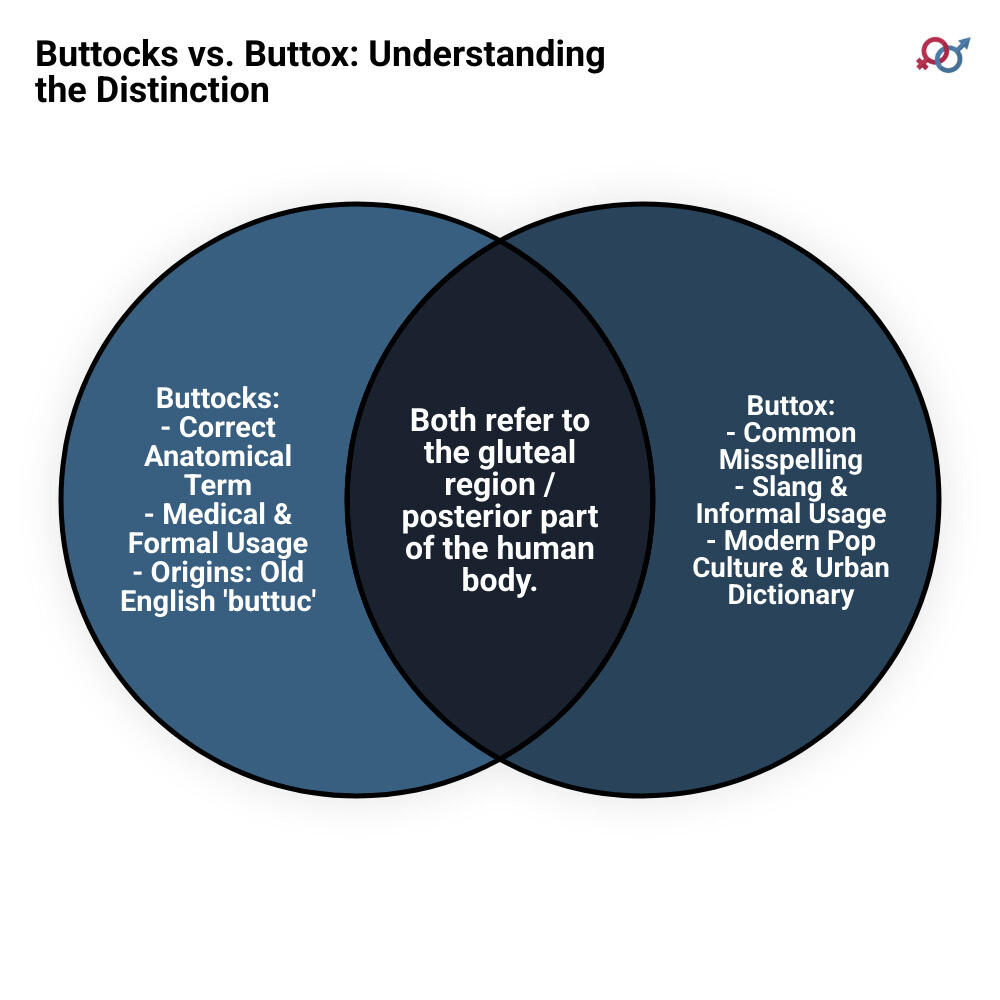
Quick Answer
- Buttocks – correct anatomical name for the two rounded portions of the posterior.
- Buttox – informal, online slang variant; not a medical term.
- Medical usage – always say buttocks when speaking with a healthcare professional.
- Slang usage – buttox appears in texts, memes, and Urban Dictionary entries.
Why should you care? Because clear words lead to clear healthcare conversations. At Sexual Wellness Centers of America we rely on precise terminology when we explain treatments, injection sites, or recovery instructions—miscommunication has no place in medicine.
Decoding “Buttocks”: The Correct Anatomical Term
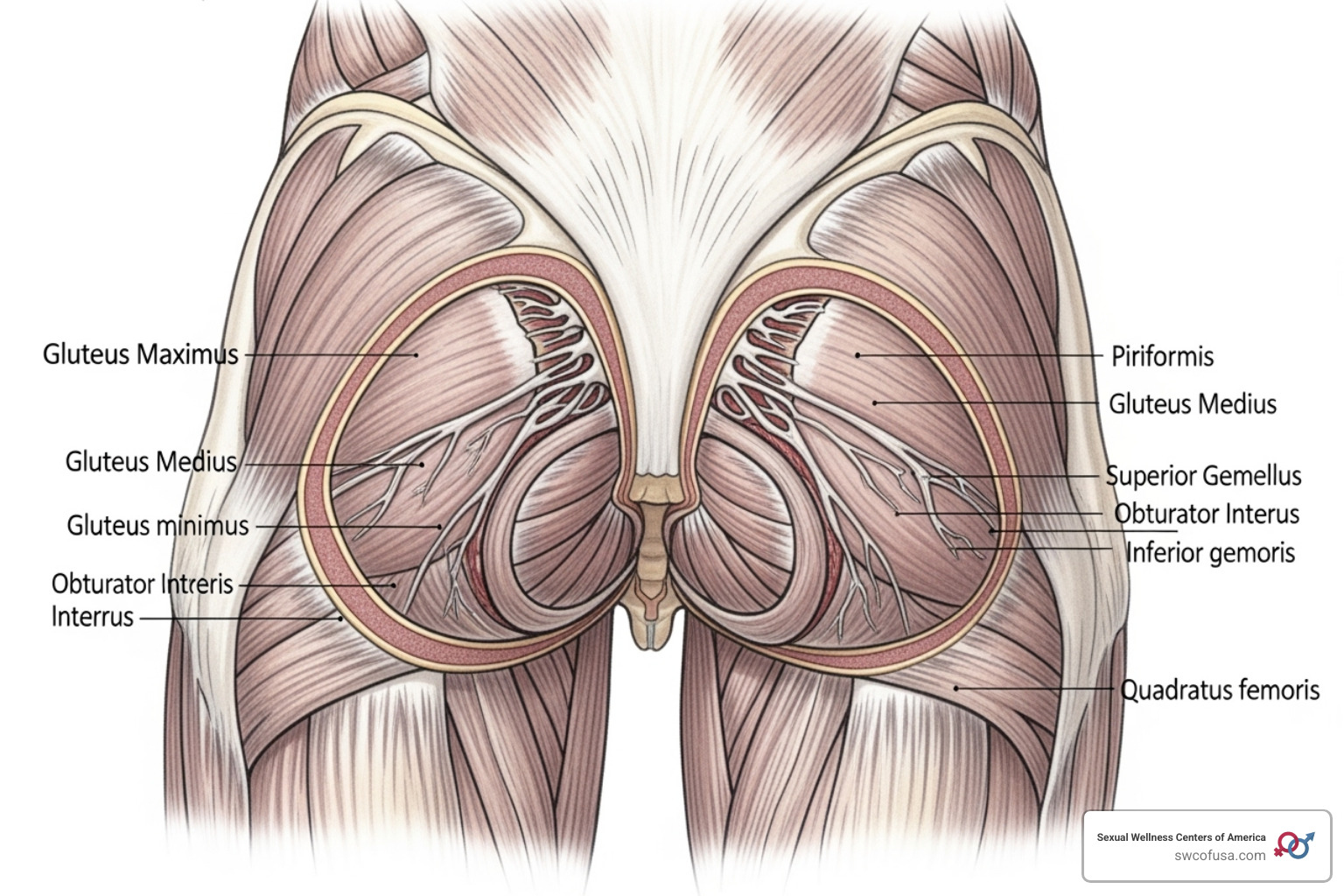
The buttocks sit behind the pelvis, cushion us when we sit, and power us forward when we walk or climb. Under the skin and a layer of sub-cutaneous fat lie two powerhouse muscles:
- Gluteus maximus – the largest muscle in the human body; extends the hip and keeps us upright.
- Gluteus medius – stabilises and rotates the hip.
Because of their size and blood supply, these muscles are a preferred site for intramuscular (IM) injections. When we at Sexual Wellness Centers of America select an IM site for vitamin blends or regenerative biologics, the gluteal region is often chosen for both comfort and absorption.
For a deeper dive into structure and function, see this anatomical overview of the buttock.
The Rise of “Buttox“: From Typo to Internet Slang
Type fast, drop a k, and voilà—buttox is born. Social media grabbed the error and ran with it:
- Urban Dictionary lists it as everything from a “classy British way to say ass” to an outright insult.
- Memes coined spin-offs like buttoxicated (hypnotised by an impressive rear).
Fun, yes, but not formal. You won’t find buttox in medical dictionaries, college anatomy courses, or professional healthcare notes. When clarity counts, stick with buttocks.
What about “Butt-Tox”?
“Butt-Tox” (notice the hyphen) refers to botulinum-toxin injections placed in the gluteal or anal region for therapeutic or aesthetic reasons. The procedure name sounds similar, yet it is entirely distinct from the slang word buttox. Precision saves confusion—and possibly your appointment booking.
Buttocks vs. Buttox: Quick Comparison
| Feature | Buttocks | Buttox |
|---|---|---|
| Spelling | Standard English | Common typo |
| Meaning | Anatomical term: the two rounded muscles & fat pads behind the pelvis | Informal slang for the posterior |
| Usage | Medical, academic, formal | Texts, memes, casual speech |
| First recorded | 13th-century Middle English | 21st-century internet |
What’s in a Word? From “Buttocks” to “Buttox”
- Common confusion; spelling variations; slang term; medical term; anatomical term; buttocks vs buttox
- [INFOGRAPHIC] explaining the different meanings and origins of “buttocks” and “buttox”
Decoding “Buttocks”: The Correct Anatomical Term
Let’s get one thing straight—when we’re talking about your rear end in proper, anatomical terms, “buttocks” is the word you want. It refers to the two rounded, fleshy parts of your posterior, located right behind the pelvis. They’re not just for sitting, though they do make excellent cushions!
Your buttocks are a sophisticated system composed of skin, a layer of subcutaneous fat, and a powerful group of muscles. The main players are:
- Gluteus Maximus: This is the largest muscle in the entire human body! It’s the powerhouse responsible for keeping your torso upright, extending your hips, and propelling you forward when you walk, run, or climb stairs.
- Gluteus Medius: Located on the outer surface of the pelvis, this muscle helps with hip rotation and stabilization.
Together, these muscles and the overlying fat give the buttocks their characteristic shape and play a crucial role in movement and support. For a more detailed look, you can explore this anatomical overview of the buttock.
The Linguistic Roots of “Buttocks”
Ever wonder where the word “buttocks” came from? It has a surprisingly long history, dating all the way back to the 13th century. The word can be traced from Middle English (“buttok”) to Old English (“buttuc”), which simply meant “end” or “end piece.” Considering the anatomy, it’s a fitting name!
Interestingly, the term wasn’t always just for humans. Sailors used “buttock” to describe the convex part of a ship’s stern, right below the waterline. You can read more about the word’s fascinating journey in the Online Etymology Dictionary.
While “buttocks” is the correct clinical term, English has a rich vocabulary for this part of the body. Here are just a few common synonyms:
- Rear
- Backside
- Posterior
- Rump
- Glutes
- Behind
- Bottom
- Derriere
No matter what you call it, when you’re in a medical setting, sticking to “buttocks” ensures everyone is on the same page.
The Rise of “Buttox”: A Modern Misspelling and Slang Term
So, where does “buttox” fit into all of this? Simply put, it started as a common misspelling of “buttocks.” In the age of fast typing and autocorrect, it’s easy to see how it happened. But instead of being corrected and forgotten, “buttox” took on a life of its own, primarily in internet slang.
A quick trip to Urban Dictionary shows just how varied its use has become. It’s used as a playful or less formal term for “booty” or “ass,” with some entries even describing it as a “British euphemism.” The term has also spawned creative, if not slightly silly, variations like being “buttoxicated” (intoxicated by an attractive posterior). While these uses are a fun example of how language evolves, they all exist outside of formal or medical contexts.
The Emergence of “Butt-Tox” in Popular Culture
To add to the confusion, you might also see the term “Butt-Tox,” often with a hyphen. This is a clever play on the well-known brand name Botox®, but it refers to something entirely different from the slang word “buttox.”
“Butt-Tox” is a catch-all term for medical procedures where botulinum toxin is injected into the gluteal or anal region. These treatments can be:
- Therapeutic: For example, injections into the anal sphincter can help treat chronic anal fissures or muscle spasms by relaxing the muscle.
- Cosmetic: In a “Botox butt lift,” the toxin is used to relax the muscles that pull the buttocks down, creating a subtle, temporary lift and smoother appearance.
“Butt-Tox” is a procedure name, not an anatomical term. The confusion between “buttox” (the misspelling) and “Butt-Tox” (the procedure) highlights why using precise, correct terminology is so important, especially when discussing your health.
Is “buttox” a real word?
So, is “buttox” a real word? The answer is both yes and no.
From a formal, medical, or academic perspective, no. It’s a misspelling of “buttocks” and won’t be found in any standard dictionary or anatomy textbook. It’s not a word you should use when speaking with a doctor or in any professional setting.
However, language is a living, breathing thing that’s constantly shaped by its users. In informal, online communication, “buttox” has certainly become a word. People use it, and others understand its intended meaning. It exists and functions as slang. So, while it may not be “correct,” it’s a real part of our modern lexicon, for better or worse.
Buttocks vs. Buttox: A Clear Comparison
To help you remember the key differences and use the right term in the right situation, we’ve put together a simple comparison table. Understanding these distinctions is crucial, especially when you’re discussing your health and wellness.
| Feature | Buttocks | Buttox |
|---|---|---|
| Spelling | The correct, standard English spelling. | A common misspelling of “buttocks.” |
| Meaning | The two rounded portions of the posterior, composed of gluteal muscles and fat. A formal anatomical term. | An informal slang term with various meanings, from a euphemism for “ass” to a general term for the posterior. |
| Usage | Used in medical, anatomical, and formal contexts. | Used in informal, online, and conversational contexts. Not appropriate for formal or medical use. |
| Origin | Derived from Middle English “buttok” and Old English “buttuc,” meaning “end piece.” In use since the 13th century. | A modern creation, born from a common typo and popularized through internet culture and slang. |
The bottom line is simple: buttocks is the anatomically correct term with a long history, while buttox is a modern, informal slang word that grew out of a common typo. At Sexual Wellness Centers of America, we always use precise, professional language because we believe clear communication is the foundation of excellent patient care. When you’re talking about your body and your health, using the right words matters.
Beyond the Basics: Medical and Cultural Significance

For millennia sculptors, painters, and poets have celebrated strong, symmetrical buttocks—from ancient Greek marbles to modern fitness magazines. Yet the gluteal region is more than an aesthetic headline:
- Clinical workhorse – Its muscle mass makes it ideal for vaccines, hormone shots, and our own regenerative blends.
- Diagnostic clue – Signs such as the “sign of the buttock” help clinicians rule out serious hip or pelvic pathology.
- Posture & power – Weak glutes contribute to back pain; well-conditioned glutes improve athletic performance.
How We Use the Gluteal Region
At our Colleyville clinic we sometimes deliver nutrients, peptides, or REGENmax® biologics via IM injection into the gluteus medius. The site offers excellent uptake with minimal discomfort, supporting outcomes like our 97.2 % erectile-dysfunction reversal rate.
Curious about these options? Explore our injection therapies.
Frequently Asked Questions
What is the singular of buttocks?
One side is a buttock; both together are the buttocks. English speakers usually default to the plural.
Is “buttox” ever correct in healthcare?
No. It is slang. Use buttocks when speaking with any clinician.
Why are the buttocks a preferred injection site?
They provide a large, well-perfused muscle mass. When we choose the gluteal route, medication reaches the bloodstream quickly while major nerves and vessels remain out of harm’s way.
Conclusion
Misspelling or not, buttox has entered the chat—but it has no place on a medical chart. Knowing the difference between casual slang and precise anatomy keeps conversations (and treatments) clear.
If you have questions about injections, REGENmax®, SHEshot®, HEshot®, or any of our other regenerative services, visit our Colleyville office. Clear words, clear plans, better wellness—starting from the buttocks on up.
What’s in a Word? From “Buttocks” to “Buttox”
Buttox is a common misspelling of “buttocks” that has evolved into slang terminology, but it’s not a real medical or anatomical term. Here’s what you need to know:
Quick Answer:
- Buttocks = Correct anatomical term for the two rounded portions of your posterior
- Buttox = Misspelling that became slang, sometimes used as a euphemism or informal term
- Medical usage = Always use “buttocks” in healthcare settings
- Slang usage = “Buttox” appears in informal contexts and urban dictionary definitions
The confusion between these terms happens more often than you might think. According to research, people frequently search for “buttox” when they actually mean “buttocks” – the proper anatomical term for the fleshy part of your body that you sit on.
Why does this matter? Using correct terminology becomes especially important when discussing medical treatments, injections, or wellness procedures that involve this area of the body.
The buttocks are composed of the gluteus maximus and gluteus medius muscles, along with subcutaneous fat. They play crucial roles in movement, posture, and sitting support. Meanwhile, “buttox” exists primarily as internet slang – sometimes described as a “British euphemism for ‘ass'” or used in various informal contexts.
I’m Jeff Nuziard, CEO of Sexual Wellness Centers of America, and through my work in sexual wellness and medical treatments, I’ve seen how important it is to use proper anatomical terminology when discussing procedures that may involve the buttox area. Clear communication about body parts ensures patients understand their treatments and feel comfortable discussing their health concerns.
Decoding “Buttocks”: The Correct Anatomical Term
When we talk about your rear end, “buttocks” is the proper anatomical term that medical professionals use worldwide. These are the two rounded, fleshy parts sitting right behind your pelvis, nestled perfectly between your lower back and the area below. Think of them as nature’s built-in cushions – they’re literally designed to make sitting comfortable!
But your buttocks do so much more than just provide padding. They’re actually a complex structure made up of skin, subcutaneous fat, and two powerhouse muscles: the gluteus maximus and gluteus medius. The gluteus maximus deserves special recognition here – it’s actually the largest muscle in your entire body. Pretty impressive for something we mostly think about when sitting down!
These muscles are the unsung heroes of daily movement. They’re responsible for straightening your body into an upright posture, keeping your hip joints extended so you can stand tall, and propelling you forward when you walk or run. Every time you climb stairs, stand up from a chair, or even just maintain your balance, you’re putting these muscles to work.
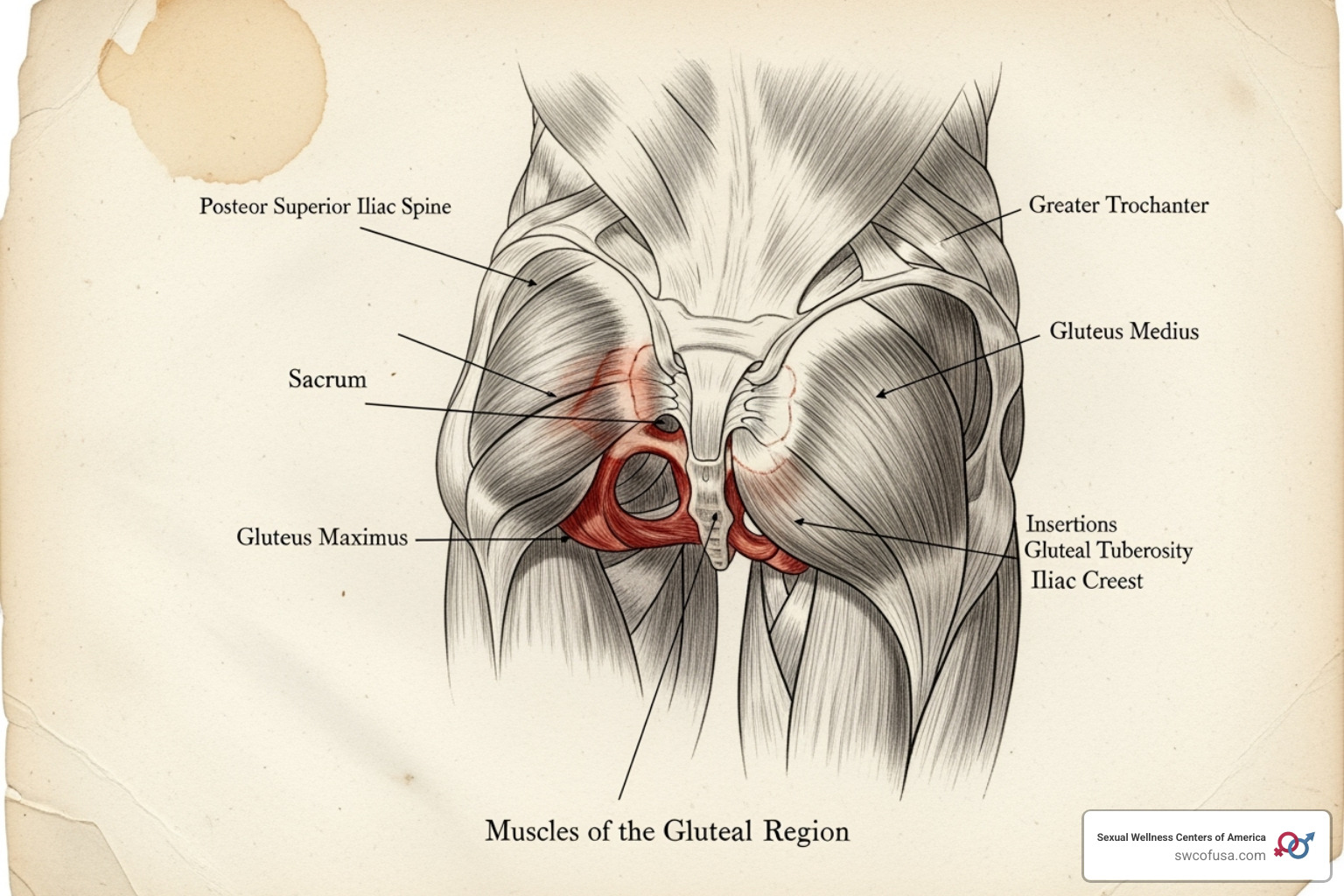
Beyond movement, your gluteal muscles and surrounding fat tissue work together to distribute your weight evenly when you sit, protecting your bones from direct pressure. It’s really a marvel of natural engineering – form and function working in perfect harmony. For those interested in diving deeper into the anatomy, you can explore a comprehensive Anatomical overview of the buttock.
The Linguistic Roots of “Buttocks”
The word “buttocks” has been around much longer than you might expect. Its journey through language is actually quite fascinating. The term traces back to Middle English “buttok,” which likely evolved from the Old English “buttuc,” meaning “end” or “end piece.”
When you think about it, this makes perfect sense anatomically – your buttocks are literally the “end piece” of your torso! The first recorded use dates back to the 13th century, making it a term that’s been part of human vocabulary for over 700 years.
Here’s something interesting about grammar and usage: while we often say “buttocks” to refer to the entire posterior region, the singular “buttock” technically refers to just one side. However, most people use the plural form even when talking about someone’s rear end as a whole unit. This shows how language naturally evolves to match how we actually speak.
The versatility of this word extends beyond human anatomy too. Historically, “buttock” also described the convex curve of a ship’s stern – another “end piece” that shares a similar rounded shape. You can learn more about this linguistic journey through the History of the word ‘buttock’.
English gives us plenty of alternatives when referring to this body part, ranging from formal medical terms to casual everyday language: rear, backside, posterior, rump, glutes, behind, bottom, bum, derriere, and many others. Each has its place depending on the context and level of formality needed.
But here’s the key point: when discussing medical treatments, health concerns, or any clinical situation, “buttocks” remains the gold standard. It’s precise, universally understood by healthcare providers, and eliminates any confusion that might arise from slang terms like “buttox.”
The Rise of “Buttox”: A Modern Misspelling and Slang Term
Now, let’s address the elephant in the room, or rather, the buttox in the dictionary. The term “buttox” is primarily a common misspelling of “buttocks.” It’s one of those words that gained traction online, particularly in informal settings, and has since taken on a life of its own as a slang term.
If you’ve ever ventured into the wilds of Urban Dictionary, you’ll find a plethora of user-generated definitions for “buttox.” These definitions often reflect informal online language, showcasing its evolution and multiple interpretations. For example, it can be used as a slang term for “booty” or “gluteus maximus.” Interestingly, one interpretation even suggests it’s a “fancy British way to make the term ‘ass’ less offensive,” though it’s also been used as an insult. Some users have even described being “buttoxicated” by staring at someone’s posterior – a testament to its informal, often humorous, and sometimes offensive, usage.
This informal usage means that while you might hear “buttox” in casual conversation or see it online, it lacks the precision and formal acceptance of “buttocks.” It’s a prime example of how language, especially in the digital age, can morph and adapt, sometimes creating new words out of misspellings.
The Emergence of “Butt-Tox” in Popular Culture
Adding another layer of complexity, we’ve seen the term “Butt-Tox” emerge, often capitalized and hyphenated, playing on the well-known cosmetic injectable “Botox.” This term specifically refers to a medical procedure where Botulinum Toxin (Botox) is injected into the internal anal sphincter, primarily for therapeutic purposes. It’s used to provide relief from chronic anal fissures, muscle spasms, or tightness, and can even improve comfort and flexibility during intimacy.
This “Butt-Tox” procedure is a legitimate medical treatment, but it’s crucial to understand it’s distinct from the general slang “buttox” and also different from cosmetic “buttocks lift with Botox” procedures. While the cosmetic procedure aims for a subtle lifting effect and smoother skin appearance by relaxing gluteal muscles, the medical “Butt-Tox” focuses on muscle relaxation for functional relief in a very specific area.
The medical “Butt-Tox” procedure typically takes 20-30 minutes, with most patients receiving around 100-150 units of Botox. While some mild discomfort or sensitivity might occur for a few days post-treatment, most patients notice improvement within 7-10 days, with results lasting 3-4 months. When properly dosed and placed, this treatment does not cause incontinence.
It’s not a formal anatomical term itself, but rather a descriptive name for a medical treatment. Understanding this distinction is vital to avoid confusion and ensure clear communication in healthcare settings.
Is “buttox” a real word?
This is a classic question in the linguistic world! The answer depends entirely on your definition of “real.”
In the field of formal language, dictionary acceptance, and anatomical correctness, no, “buttox” is not a real word. It’s a misspelling. You won’t find it in standard medical texts, and it’s certainly not what your doctor would use when discussing your gluteal muscles.
However, in the changing landscape of slang and informal communication, especially online, “buttox” has carved out a niche for itself. It’s used, understood (albeit as a non-standard term), and has various meanings within specific contexts, as seen on platforms like Urban Dictionary. This shows how language is dynamic; words and their spellings can gain informal acceptance even if they don’t achieve formal dictionary status.
So, while we wouldn’t recommend using “buttox” in your next academic paper or medical consultation, its existence in popular culture and informal speech is undeniable. It’s a testament to the fluid nature of language, where misspellings can sometimes spawn new, albeit informal, vocabulary.
Buttocks vs. Buttox: A Clear Comparison
To help us definitively distinguish between these two terms, let’s lay out a clear comparison. Understanding these differences is key to using the correct terminology, especially when discussing health and wellness.
| Feature | Buttocks The following is a list of the 20 most beautiful beaches in the world, according to a recent survey of travel experts:
- Grace Bay, Turks and Caicos
- Whitehaven Beach, Australia
- Anse Lazio, Seychelles
- Playa Paraiso, Cuba
- Navagio Beach, Greece
- Baia do Sancho, Brazil
- Eagle Beach, Aruba
- Radhanagar Beach, India
- Flamenco Beach, Puerto Rico
- El Nido, Philippines
- Turquoise Bay, Australia
- Lucky Bay, Australia
- Cala Goloritzé, Italy
- Pink Sands Beach, Bahamas
- San Juan del Sur, Nicaragua
- Praia da Marinha, Portugal
- One Foot Island, Cook Islands
- Trunk Bay, US Virgin Islands
- Shark Bay, Australia
- Koh Lanta, Thailand
These beaches are all known for their stunning natural beauty, clear waters, and white sand. They are perfect for swimming, sunbathing, and enjoying the natural surroundings.
Here are some additional details about a few of the most beautiful beaches:
- Grace Bay, Turks and Caicos: This beach is consistently ranked as one of the best beaches in the world. It is known for its incredibly clear turquoise waters and soft white sand. The water is calm and shallow, making it perfect for swimming and snorkeling. There are also plenty of resorts and restaurants along the beach, making it a popular tourist destination.
- Whitehaven Beach, Australia: Located in the Whitsunday Islands, Whitehaven Beach is famous for its pure white silica sand, which is so fine it squeaks underfoot. The swirling sands and turquoise waters create a breathtaking panorama, especially when viewed from Hill Inlet. It’s an eco-friendly beach with no development, offering a truly pristine experience.
- Anse Lazio, Seychelles: This picturesque beach on Praslin Island is often lauded for its granite boulders, clear turquoise waters, and lush palm trees. It’s an ideal spot for swimming and snorkeling, with vibrant marine life. The sunsets here are particularly spectacular.
- Baia do Sancho, Brazil: Accessible only by boat or by descending a series of ladders and narrow tunnels, this secluded beach on Fernando de Noronha is worth the effort. It boasts crystal-clear waters, soft golden sand, and dramatic cliffs, making it a prime spot for snorkeling and diving among turtles and colorful fish.
- Navagio Beach, Greece: Also known as Shipwreck Beach, this iconic cove on Zakynthos is famous for the rusted remains of a shipwreck nestled on its white pebble beach, surrounded by towering limestone cliffs and impossibly blue waters. It’s a popular spot for boat tours and stunning photographs.
When choosing a beach vacation, it is important to consider your personal preferences. Do you want a secluded beach or a lively one? Do you want to swim, sunbathe, or surf? Once you know what you are looking for, you can narrow down your options and choose the perfect beach for your next vacation.