
What Are Collagen Peptides and How Do They Work?
Collagen peptide supplement benefits include improved skin elasticity, reduced joint pain, stronger bones, improved muscle recovery, and healthier hair and nails. Here’s what research shows these supplements can do for your body:
- Skin Health: Increases hydration by 28% and reduces wrinkles after 8-12 weeks
- Joint Support: Reduces osteoarthritis pain by up to 43% and improves mobility
- Bone Strength: Increases bone mineral density in postmenopausal women
- Muscle Recovery: Reduces exercise-induced soreness and supports muscle mass
- Hair & Nails: Improves nail growth and reduces brittleness in 24 weeks
Collagen is your body’s most abundant protein, making up about 30% of all proteins in your system. Think of it as the scaffolding that gives structure to your skin, bones, tendons, and blood vessels.
But here’s the problem: your body’s collagen production starts declining around age 25. By age 40, you’re losing about 1% of your collagen each year. By 80, your body produces only a fraction of the collagen it made when you were young.
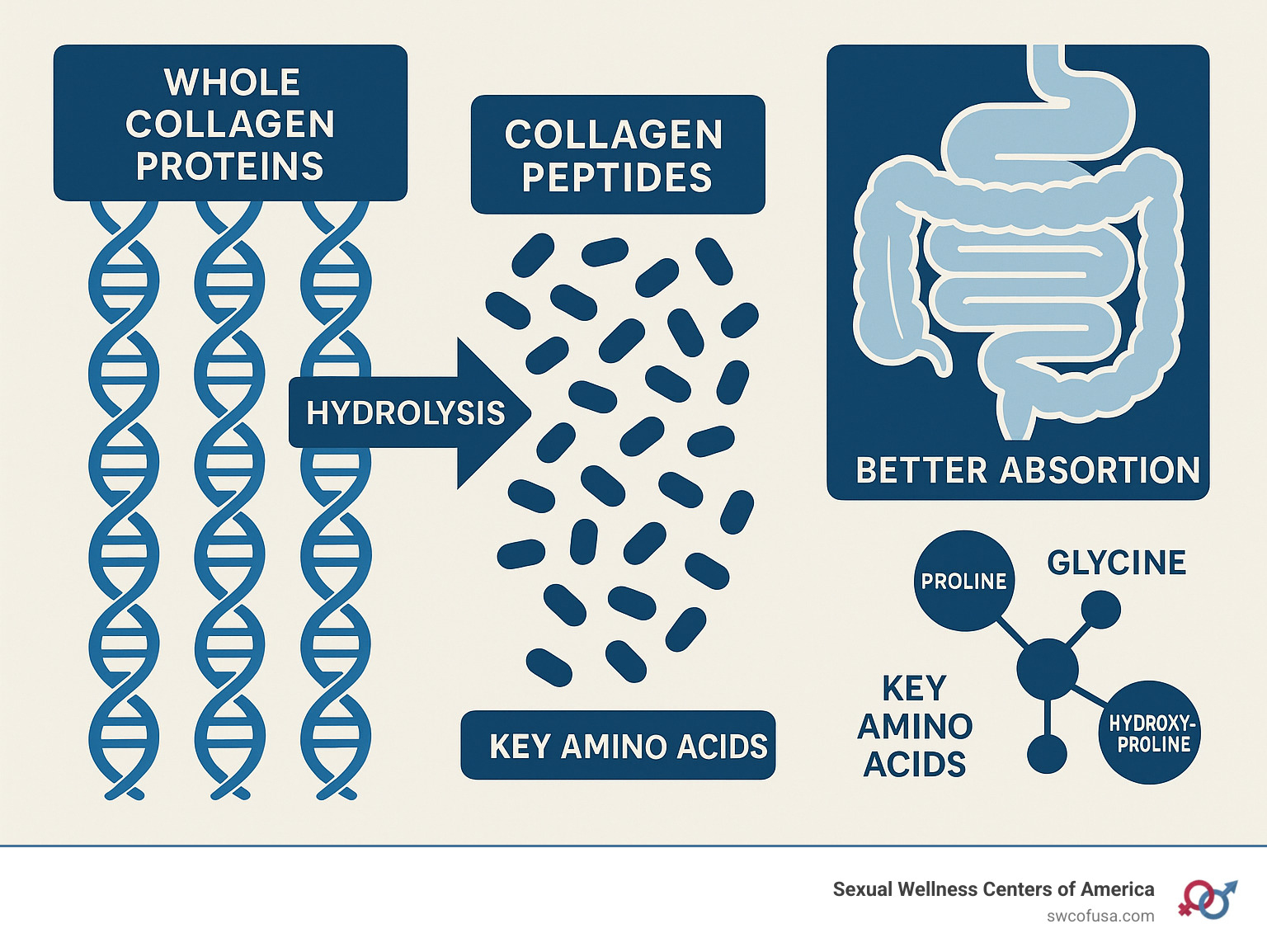
That’s where collagen peptides come in. Unlike regular collagen, these supplements contain hydrolyzed collagen – collagen that’s been broken down into smaller pieces your body can actually absorb. When you eat a steak, your body can’t use the collagen directly. But collagen peptides are pre-digested into amino acids like glycine, proline, and hydroxyproline that your body can put to work right away.
I’m Jeff Nuziard, CEO of Sexual Wellness Centers of America, and I’ve seen how collagen peptide supplement benefits extend beyond just beauty – they support the overall vitality and confidence that contribute to healthy aging and wellness. Through our comprehensive approach to health optimization, we help clients understand how foundational nutrients like collagen peptides fit into their broader wellness journey.
Relevant articles related to collagen peptide supplement benefits:
The Top Collagen Peptide Supplement Benefits for Skin, Hair, and Nails

When most people hear about collagen peptide supplement benefits, they immediately think of younger-looking skin. And honestly, that’s where the research is most exciting. Your skin is basically a collagen powerhouse when you’re young – about 75% of its structure comes from this protein. But as the years go by, that percentage drops dramatically, leading to wrinkles, sagging, and that dreaded “crepey” texture.
The good news? Science shows that collagen peptides can actually help turn back the clock on your skin’s appearance. But the benefits don’t stop there – your hair and nails can get a boost too.
Exploring the Collagen Peptide Supplement Benefits for Skin Health
The research on collagen and skin health is pretty impressive. A major review looked at 19 different studies involving over 1,000 people, and the results were clear: collagen supplementation significantly improved skin firmness, suppleness, and moisture levels.
But let’s talk real numbers. In one particularly compelling study, 64 women took just 1,000 mg of collagen peptides daily for 12 weeks. The results were remarkable – their skin became noticeably more elastic and hydrated, with visible reductions in wrinkles. Another study found that participants experienced a whopping 28% increase in skin hydration after just 8 weeks.
What’s really fascinating is what happens inside your body. When you take collagen peptides, specific amino acid sequences called prolylhydroxyproline and hydroxyprolylglycine travel through your bloodstream. These aren’t just random building blocks – they’re like molecular messengers that tell your skin cells to kick collagen production into high gear.
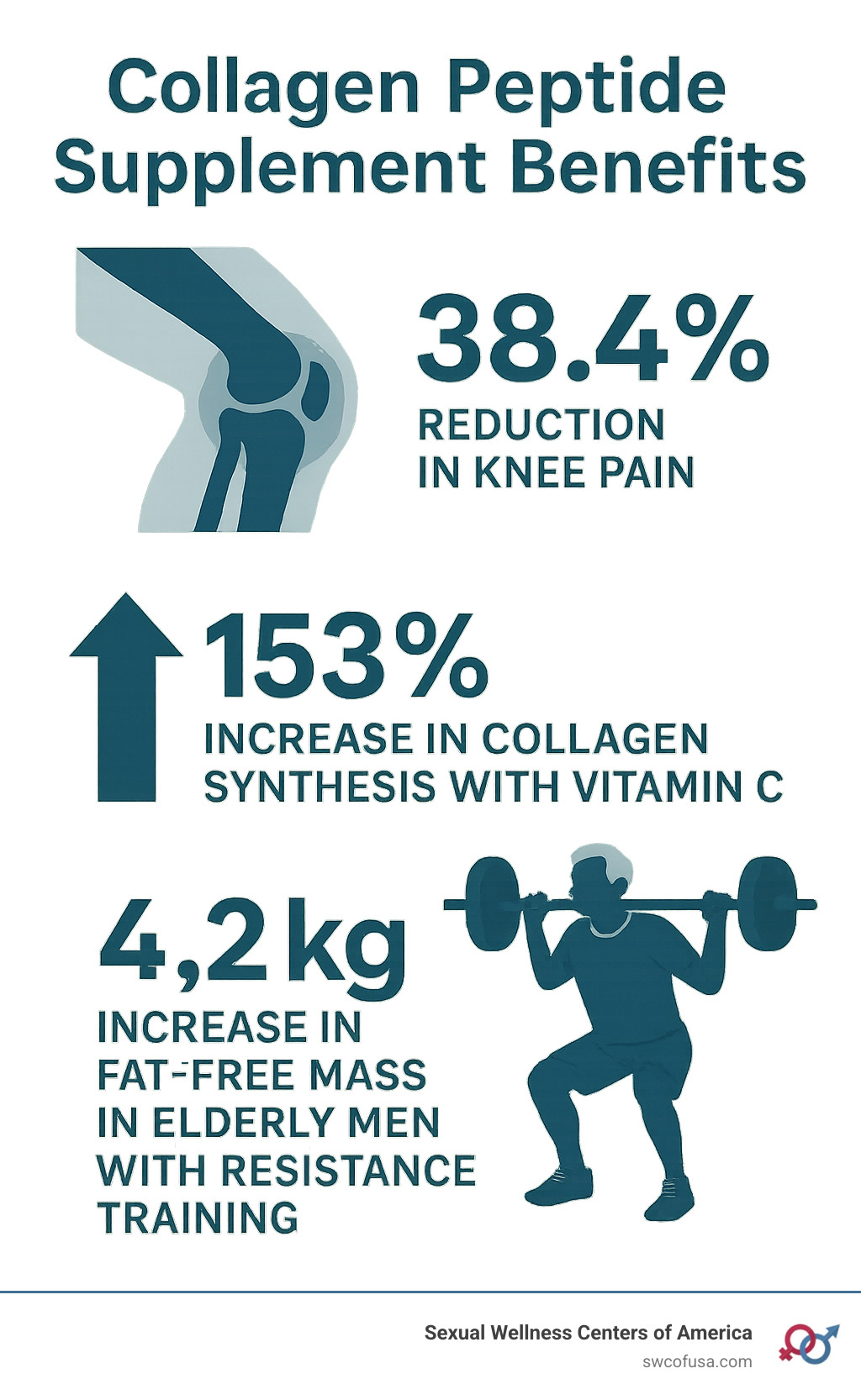
Scientific research on skin improvement shows that collagen synthesis can increase by up to 153% when you take 15 grams of collagen peptides with vitamin C, compared to just 54% with a placebo. That’s nearly three times the improvement.
The evidence for improved skin elasticity from randomized controlled trials is particularly strong. Participants consistently showed better skin texture, reduced wrinkles, and improved overall skin appearance after 8-12 weeks of consistent use.
Do Collagen Peptides Help with Hair and Nails?
The evidence for hair and nails isn’t as extensive as it is for skin, but what we do have is encouraging. A 2017 study on brittle nails followed 25 people with brittle nails who took 2.5 grams of collagen daily for 24 weeks. The results showed significant improvements in nail growth and reduced brittleness.
For hair health, the evidence is mostly anecdotal, though there’s solid science behind why it might work. Hair is primarily made of keratin, and collagen peptides provide the amino acids that support keratin production. Plus, better circulation and nutrient delivery that comes with improved collagen status could benefit your hair follicles.
While we can’t make definitive claims about hair growth based on current research, many people report shinier, stronger hair after several months of consistent collagen supplementation. The key player here seems to be glycine, which makes up about 22% of collagen and plays a crucial role in keratin synthesis.
At Sexual Wellness Centers of America, we understand that feeling confident in your appearance is part of overall wellness. While we specialize in sexual health optimization through treatments like HEshot®™ and SHEshot®™, we recognize that collagen peptide supplement benefits for skin, hair, and nails can contribute to the confidence and vitality that support healthy aging and personal wellness.
How Collagen Peptides Support Joint, Bone, and Muscle Health

If you’re tired of creaky joints or worried about losing muscle as you age, this is where collagen peptide supplement benefits really shine. Your joints, bones, and muscles rely heavily on collagen for their structure and function – and the research shows some pretty impressive results.
Think about it: your cartilage is about 60% collagen, your bones are roughly 30% collagen, and even your muscles depend on collagen-rich connective tissue to function properly. When collagen production declines with age, these systems start to break down. But here’s the good news – supplementing with collagen peptides can help turn things around.
Key Collagen Peptide Supplement Benefits for Joint and Bone Integrity
Let’s start with joint pain, because that’s what most people notice first. A comprehensive analysis of 41 different studies found that collagen supplementation significantly helps with osteoarthritis symptoms and supports cartilage repair. But what does that actually mean for your daily life?
In one study, 39 women with knee osteoarthritis took collagen supplements for three months. The results were striking – they experienced significantly less joint pain and increased joint movement compared to women who didn’t take the supplements. Another trial compared collagen to the popular glucosamine-chondroitin combination and found that people taking collagen had better pain relief and improved function after six months.
Here’s what really caught my attention: researchers followed 180 active adults aged 18 to 30 who dealt with joint discomfort. After taking collagen peptides, the group saw a 38.4% reduction in knee pain compared to just 27.9% in the placebo group. Even more impressive, their need for other pain management dropped by 59%.
For bone health, the research is equally compelling. A year-long study followed 102 postmenopausal women with low bone mineral density – the group most at risk for osteoporosis. Those who took 5 grams of collagen peptides daily saw significant increases in bone mineral density in both their spine and upper thigh compared to the placebo group.
What’s happening inside your body is fascinating. Collagen peptides provide the raw materials your body needs to maintain and repair cartilage and bone matrix. The amino acids get absorbed into your bloodstream and travel to areas where they’re needed most, essentially giving your body the building blocks to rebuild itself.
Can Collagen Peptides Improve Muscle Mass and Recovery?
Now here’s where things get really interesting for anyone who exercises or worries about age-related muscle loss (sarcopenia). While collagen isn’t a complete protein like some others, it offers unique benefits that other proteins simply can’t match.
Researchers studied 53 elderly men with sarcopenia who combined resistance training with either 15 grams of collagen peptides or a placebo for 12 weeks. The collagen group saw dramatically better results – they gained 4.2 kg of fat-free mass compared to just 2.9 kg in the placebo group, plus they lost more fat (5.4 kg vs. 3.5 kg).
For exercise recovery, the benefits are impressive too. A study of 20 healthy middle-aged men found that 10 grams of collagen peptides daily significantly reduced muscle soreness and fatigue after exercise. The improvements were substantial – lasting 24 to 48 hours post-exercise.
In premenopausal women, collagen supplementation led to greater increases in fat-free mass, decreases in body fat percentage, and improvements in hand-grip strength. While it didn’t improve leg strength, the hand-grip improvements suggest real benefits for functional, everyday strength.
The science behind this is pretty cool. Collagen is rich in glycine and arginine, which are building blocks for creatine synthesis. This could explain some of the performance and recovery benefits. Plus, collagen peptides may improve the mechanical properties of tendons and other connective tissues, leading to better force transmission and reduced injury risk.
At Sexual Wellness Centers of America, we see how foundational health support – including proper nutrition and supplementation – contributes to overall vitality and confidence. Our comprehensive approach often includes evaluating how nutrients like collagen peptides fit into each person’s wellness journey.
Safety, Risks, and How to Choose a Quality Supplement
Let’s talk about the reality of supplement regulation – it’s a bit of a wild west out there. Unlike prescription medications that go through rigorous FDA approval, collagen supplements fall into a gray area. The FDA doesn’t strictly regulate these products before they hit the shelves, which means quality and purity can vary dramatically between brands.
But here’s some reassuring news: collagen peptides are generally recognized as safe (GRAS) when you stick to typical doses of 2.5 to 15 grams daily. Most research studies have tracked people taking collagen supplements for up to 6 months with no significant side effects reported.
The potential downsides are pretty mild. Some people experience digestive discomfort like bloating, heartburn, or feeling unusually full after taking their supplement. These issues usually fade as your body gets used to the extra protein.
There’s also the concern about heavy metals and contaminants. Since collagen supplements come from animal parts – bones, skin, and connective tissues – they can potentially contain toxins that these animals were exposed to. This is why choosing a quality product matters so much.
Are Collagen Supplements Safe for Everyone?
For most people, collagen peptides are incredibly safe. The most common complaints are those mild digestive issues I mentioned – nothing too dramatic, but worth knowing about.
However, some people should exercise caution before adding collagen to their routine. If you have food allergies, pay close attention to the source. Collagen supplements come from fish, shellfish, eggs, or bovine sources, so check the label carefully if any of these trigger your allergies.
People with kidney disease should also be cautious since collagen supplements are high in protein, which might not be appropriate for compromised kidney function. And if you’re vegetarian or vegan, traditional collagen supplements won’t fit your dietary choices, though there are plant-based alternatives that support your body’s natural collagen production.
The bottom line? Consult with your healthcare provider if you’re taking medications or have any health conditions. It’s always better to be safe than sorry when adding new supplements to your routine.
Finding a High-Quality Supplement
Here’s where you need to put on your detective hat. Since supplements aren’t strictly regulated, you’ve got to be a savvy consumer to separate the good from the questionable.
Third-party testing is your best friend here. Look for products certified by independent labs like NSF International or USP. ConsumerLab has done some excellent work testing collagen products, and they found that most contain exactly what their labels claim. Only one product in their testing contained a contaminant – specifically cadmium – which shows that most reputable brands are doing their homework.
Source transparency is another crucial factor. Quality manufacturers will clearly tell you whether their collagen comes from bovine (cow), marine (fish), or chicken sources. Each has slightly different amino acid profiles, so knowing what you’re getting helps you make an informed choice.
When scanning ingredient labels, avoid products loaded with fillers, artificial sweeteners, or unnecessary additives. The best collagen supplements are often the simplest ones – just pure collagen peptides without a bunch of extras you don’t need.
Make sure you’re getting hydrolyzed collagen or collagen peptides, not regular collagen. Your body can’t absorb regular collagen effectively, so you’d essentially be wasting your money on something that passes right through you.
The reality is that collagen peptide supplement benefits are only as good as the quality of the product you choose. At Sexual Wellness Centers of America, we understand that optimal health requires attention to every detail – from the supplements you take to comprehensive hormone and vitamin panels that give you the full picture of your wellness status.
Natural Alternatives: Diet and Lifestyle Choices to Boost Collagen

While supplements can be helpful, we believe in a holistic approach to health. Your body is perfectly capable of making its own collagen – it just needs the right raw materials and conditions.
Foods That Support Natural Collagen Production
Your body builds collagen from amino acids, so eating protein-rich foods provides the building blocks. But some foods are particularly rich in collagen or the nutrients needed to make it:
Collagen-rich foods:
- Bone broth (the gold standard)
- Chicken skin and cartilage
- Fish with skin and bones
- Egg whites
- Spirulina (surprisingly rich in collagen)
Collagen-boosting foods:
- Citrus fruits (vitamin C is essential for collagen synthesis)
- Berries (antioxidants protect existing collagen)
- Leafy greens (provide vitamin C and other cofactors)
- Beans and legumes (rich in amino acids)
- Cashews and nuts (provide copper and zinc)
- Tomatoes (lycopene protects against collagen breakdown)
- Bell peppers (extremely high in vitamin C)
The key nutrients for collagen production are vitamin C, zinc, copper, and manganese. Without adequate vitamin C, your body literally cannot make collagen – that’s why sailors used to get scurvy on long voyages without fresh fruit.
Lifestyle Factors That Preserve Your Collagen
Sometimes protecting what you have is just as important as building more. These lifestyle factors can dramatically impact your collagen levels:
Sun protection: UV radiation is one of the biggest destroyers of collagen. Use SPF 30 or higher daily, wear protective clothing, and avoid tanning beds. This single step can prevent more collagen loss than any supplement can replace.
Don’t smoke: Smoking decreases collagen production and damages existing collagen, making it weak and brittle. If you smoke, quitting is the best thing you can do for your skin and overall health.
Limit sugar: Excess sugar creates harmful molecules called advanced glycation end products (AGEs) that make collagen stiff and weak. This is why diabetics often have poor wound healing.
Manage stress: Chronic stress increases cortisol, which breaks down collagen. Regular exercise, meditation, or whatever helps you relax can protect your collagen stores.
Get quality sleep: Your body repairs and rebuilds collagen during deep sleep. Aim for 7-9 hours nightly.
Frequently Asked Questions about Collagen Peptides
How long does it take to see results from collagen supplements?
Here’s the truth about collagen peptide supplement benefits – they don’t happen overnight. If you’re hoping for instant results, you’ll be disappointed. But if you’re willing to be patient and consistent, the research shows some pretty impressive timelines.
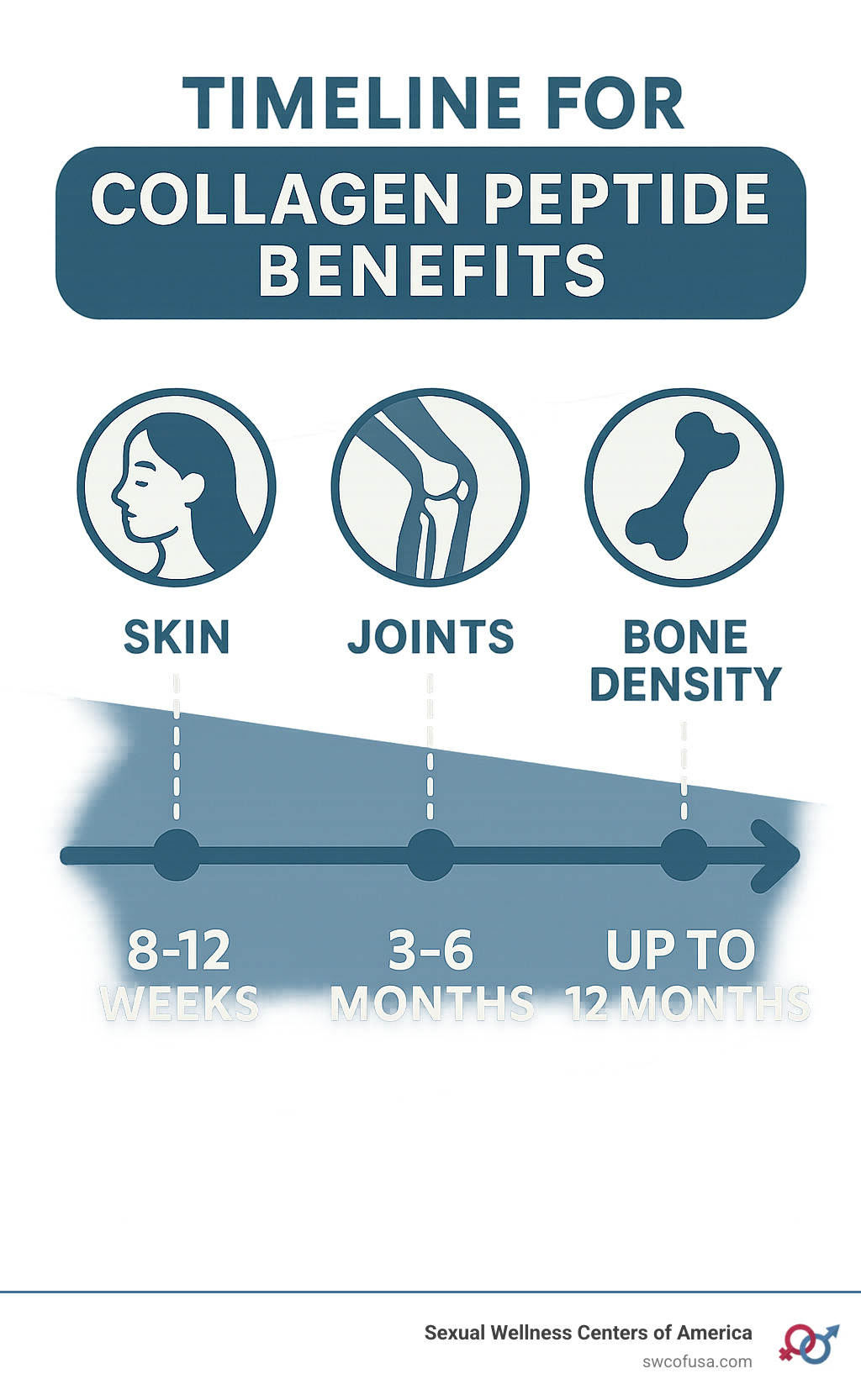
For skin improvements, most people start noticing changes after 8-12 weeks of daily use. That’s when you might see your skin looking more hydrated, feeling firmer, or developing that subtle glow that makes people ask if you’ve been getting more sleep.
Joint and bone health takes longer – we’re talking 3-6 months before you might notice less stiffness in your knees or easier movement when you get out of bed. For significant bone density improvements, some studies followed participants for a full year.
This timeline makes perfect sense when you think about it. Your body is constantly breaking down and rebuilding collagen, but it’s not a quick process. It’s like renovating a house – you don’t see the full change until the work is complete.
Several factors can speed up or slow down your results. Younger people often see changes faster than older adults. Your starting collagen levels matter too – if you’re severely depleted, it might take longer to see improvements. The dosage you take (most studies use 2.5-15 grams daily) and your overall health status also play a role.
Lifestyle factors like sun exposure, smoking, and stress levels can either help or hinder your progress. If you’re taking collagen but still smoking or skipping sunscreen, you’re working against yourself.
What is the best time of day to take collagen peptides?
I get this question a lot, and the honest answer is: there’s no magic time. The research doesn’t show that morning is better than evening, or that taking it with food beats taking it on an empty stomach.
Some people love adding collagen peptides to their morning coffee or smoothie – it dissolves easily and becomes part of their daily routine. Others prefer taking it at bedtime, especially since glycine (one of collagen’s main amino acids) might help with sleep quality.
The most important thing is consistency. Pick a time that works for your schedule and stick with it. If you’re someone who forgets to take supplements, choose a time when you’re already doing something else you never skip – like brushing your teeth or making coffee.
You can take collagen peptides with or without food – they’re well-absorbed either way. Some people find that taking them with vitamin C-rich foods or drinks might boost absorption, but it’s not necessary for the supplements to work.
Can you get enough collagen from your diet alone?
This is where things get interesting. Technically, yes – but practically speaking, it’s pretty challenging with modern eating habits.
Our ancestors ate very differently than we do today. They consumed bone broth regularly, ate organ meats, and used every part of the animal – including all the collagen-rich bits like skin, cartilage, and connective tissue. Most of us today eat primarily muscle meat and miss out on these collagen-rich parts.
To put this in perspective, research shows that Japanese women (who traditionally eat more collagen-rich foods) consume about 2 grams of collagen daily from food. Meanwhile, many supplement users take 5-10 grams from supplements alone. This suggests that even cultures with traditionally collagen-rich diets might not reach optimal levels through food alone.
The most effective approach combines both strategies. Eat a varied diet rich in collagen-building nutrients while using supplements to ensure you’re getting adequate amounts. This gives you the benefits of whole food nutrition plus the convenience and concentration that supplements provide.
Foods like bone broth, chicken skin, fish with bones, and egg whites provide actual collagen. Foods like citrus fruits, berries, and leafy greens provide the vitamin C and other nutrients your body needs to make its own collagen.
At Sexual Wellness Centers of America, we see this holistic approach work best for our clients. Collagen peptide supplement benefits are just one piece of the puzzle – they work best when combined with a healthy diet, proper sun protection, and overall wellness support.
Conclusion: Accept a Holistic Approach to Wellness
The science behind collagen peptide supplement benefits is genuinely exciting. We’ve seen how these supplements can boost skin hydration by 28%, reduce joint pain by up to 43%, and even help build muscle mass in older adults. The research shows real improvements in bone density, exercise recovery, and nail strength that go far beyond wishful thinking.
But here’s what I’ve learned through years of helping people optimize their health at Sexual Wellness Centers of America: supplements work best when they’re part of a bigger picture. True vitality isn’t just about taking the right pills – it’s about creating a foundation of health that supports everything else you want to achieve.
Think about it this way: collagen peptides can help rebuild your skin’s structure, but if you’re not protecting yourself from sun damage, you’re fighting an uphill battle. They can support joint health, but regular movement and proper nutrition amplify those benefits exponentially.
At our Colleyville location, we see this holistic approach in action every day. Our clients don’t just take supplements – they work with us to understand their unique hormone profiles, vitamin levels, and overall health status. Our personalized wellness plans, based on comprehensive hormone and vitamin panels, help people understand exactly what their bodies need to thrive.
Whether you’re dealing with creaky joints, skin that’s lost its glow, or just want to maintain your energy as you age, collagen peptides can be a valuable tool. Combined with our innovative treatments like regenMAX® technology and our comprehensive approach to wellness optimization, they help create that vibrant health that radiates from the inside out.
The key ingredients for success are simple: consistency with quality supplements, smart lifestyle choices that protect your existing collagen, and patience with the process. Real health changes take time – usually 8-12 weeks for skin benefits and up to 6 months for joint improvements.
The goal isn’t just to look younger. It’s to feel strong, confident, and energetic at every stage of life. When you combine targeted supplementation with proper nutrition, regular exercise, sun protection, and stress management, you’re not just adding years to your life – you’re adding life to your years.
That’s the kind of wellness worth investing in. And that’s exactly what we help people achieve every day.