
Understanding Your Coverage Options
Does insurance cover treatment for Peyronie’s disease? The answer is generally yes, but with important qualifications:
| Insurance Type | Coverage Rate | Common Requirements |
|---|---|---|
| Private Insurance | 54% have explicit policies | Curvature >30°, palpable plaque |
| Medicare | Yes, under Part B | Medical necessity documentation |
| Medicaid | Varies by state | Prior authorization usually required |
Most insurance policies recognize Peyronie’s disease as a significant medical condition requiring treatment when it affects sexual function. According to recent research, approximately 94% of eligible patients with commercial insurance pay little to nothing out-of-pocket for treatments like Xiaflex injections when properly documented and submitted.
Peyronie’s disease affects between 0.5% and 20% of men, causing penile curvature, pain, and potential erectile dysfunction due to fibrous scar tissue formation. This isn’t just a cosmetic issue—it’s a recognized medical condition that can significantly impact quality of life and intimate relationships.
If you’re concerned about insurance coverage for Peyronie’s treatment, you’re not alone. The complex landscape of insurance policies, medical necessity criteria, and treatment options can be overwhelming. However, understanding the basics of how coverage works can help you steer this journey more confidently.
I’m Jeff Nuziard, CEO of Sexual Wellness Centers of America, where we’ve helped hundreds of men secure insurance coverage for Peyronie’s disease treatment through our expertise in navigating the complex question of does insurance cover treatment for Peyronie’s disease. Our team specializes in verifying benefits, obtaining pre-authorizations, and assisting with appeals when necessary to ensure you receive the care you need.
Understanding Peyronie’s Disease & Current Treatment Landscape
When men first learn they have Peyronie’s disease, many feel overwhelmed. This condition, which causes curved, painful erections due to fibrous scar tissue inside the penis, affects approximately 3-13% of adult men – though many doctors believe this number is actually much higher because men often hesitate to discuss it.
Let’s break down what happens with this condition. Peyronie’s typically progresses through two distinct phases:
- The acute phase lasts about 3-12 months and brings active inflammation, pain during erections, and gradually worsening curvature
- The chronic phase begins after about a year when pain usually subsides, the curve stabilizes, and the plaque may harden (calcify)
The good news? Treatment options have expanded significantly in recent years.
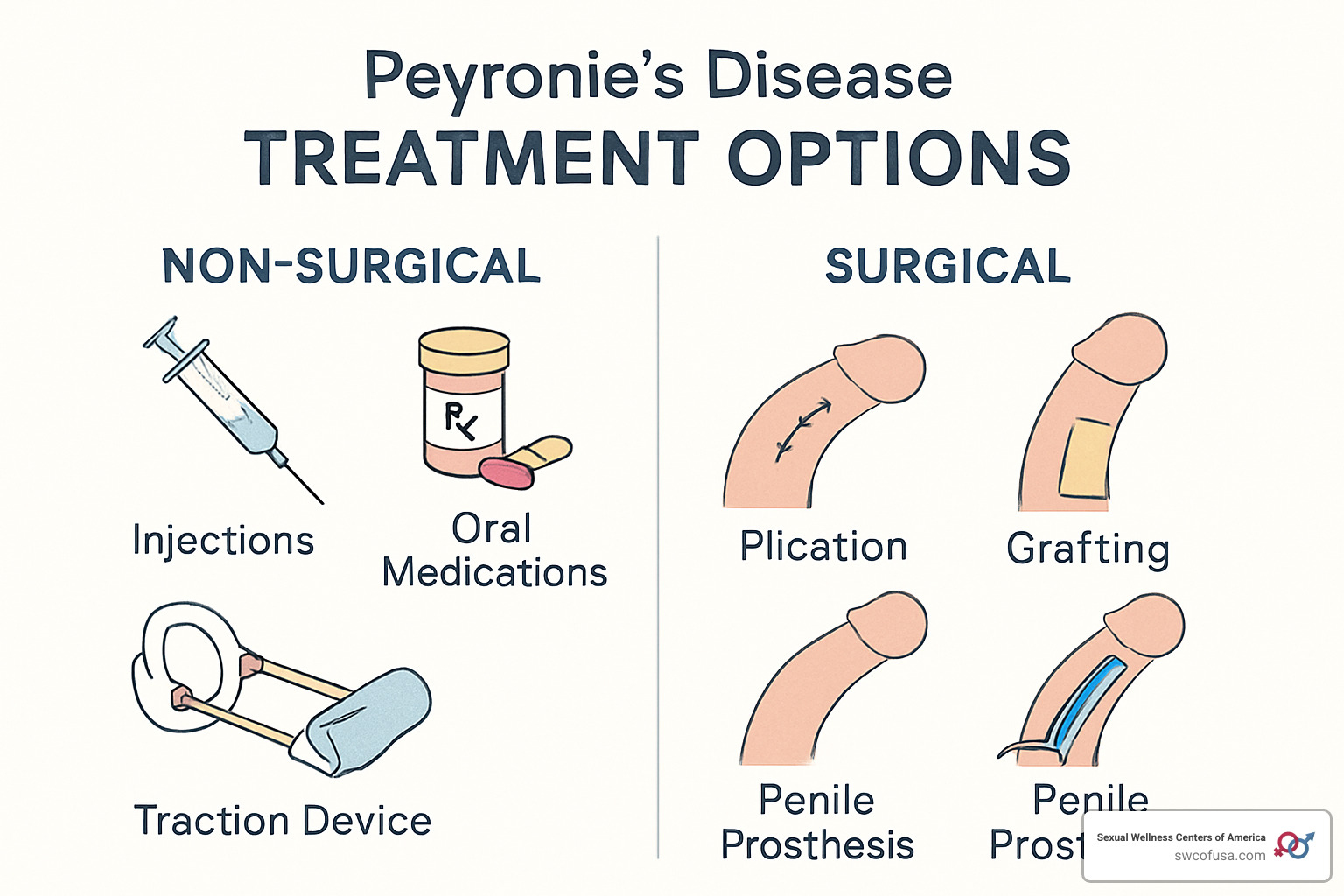
The American Urological Association (AUA) has established clear guidelines for treating Peyronie’s, with options ranging from non-surgical to surgical approaches depending on your specific situation.
For non-surgical treatment, Collagenase Clostridium Histolyticum (CCH/Xiaflex) leads the pack as the only FDA-approved injection therapy specifically for Peyronie’s. These injections work by breaking down the collagen in the plaque. Other options include verapamil injections (an off-label calcium channel blocker), penile traction therapy devices that gradually stretch the penis, and various oral medications with more limited evidence of effectiveness.
When non-surgical approaches aren’t enough, surgical options include penile plication (straightening the penis by placing stitches on the unaffected side), plaque incision with grafting (cutting into or removing the plaque and patching with tissue), and penile prosthesis implantation (particularly helpful for men experiencing both Peyronie’s and erectile dysfunction).
The cost differences between these treatments are substantial. A full course of CCH (Xiaflex) injections typically runs between $20,260 and $33,628, while penile plication surgery costs $3,039 to $11,419, and penile prosthesis implantation ranges from $13,183 to $40,994. This is why the question “does insurance cover treatment for Peyronie’s disease?” becomes so important for most patients.
How Common Is It & Why It Matters for Insurance
Peyronie’s disease affects between 0.5% and 20.3% of men, with most studies landing in the 3-13% range. This wide variation reflects both differences in diagnostic criteria and the reality that many men don’t report their symptoms.
From an insurance perspective, these numbers matter significantly. As awareness grows, more men are seeking treatment – annual treatment rates jumped from 23.2% to 35.4% between 2010 and 2016. This has prompted insurance companies to develop more explicit policies regarding coverage.
Without insurance, the cost burden can be overwhelming for most patients. And it’s not just about physical symptoms – insurers increasingly recognize the significant psychological and relationship effects of Peyronie’s disease.
Interestingly, the highest incidence of Peyronie’s disease occurs in the Southern United States, which unfortunately also has some of the highest uninsurance rates, creating potential care access disparities.
Clinical Criteria Insurers Use
When determining whether to cover Peyronie’s treatments, insurance companies typically look for specific clinical evidence:
Degree of curvature is perhaps the most common requirement, with most insurers wanting to see a curvature of at least 30 degrees during erection. You’ll also need documentation of a palpable plaque – in fact, 100% of insurers covering CCH require this physical evidence of the condition.
Many insurers require disease stability, meaning the condition hasn’t changed for at least 3-6 months. They’ll also look for evidence of functional impairment – documentation that the condition actually interferes with sexual function or causes significant distress.
For surgical options, most insurance companies want to see that you’ve tried and failed conservative therapy approaches first.
While these criteria generally align with clinical practice guidelines, they sometimes create barriers when patients have significant symptoms but don’t perfectly meet all requirements, or when documentation is incomplete. This is where working with experienced providers like our team at Sexual Wellness Centers of America can make a tremendous difference in navigating the insurance landscape.
Recent scientific research on prevalence and management continues to improve our understanding of this condition and how best to approach treatment and insurance coverage.
Does Insurance Cover Treatment for Peyronie’s Disease?
Yes, most insurance policies do cover treatment for Peyronie’s disease—but the details matter tremendously.
When patients first call our clinic, this is often their biggest worry. I understand the concern. Without insurance, some treatments can cost tens of thousands of dollars, putting them out of reach for many men who genuinely need help.
According to our research of the top 100 US insurance companies, only 54% have explicit written policies specifically addressing Peyronie’s disease. This doesn’t mean the others won’t cover it—just that they handle claims case-by-case without published guidelines. This “gray area” can actually work in your favor with proper documentation.
Let’s break down what coverage typically looks like across different insurance types:
Private/Commercial Insurance:
Most major carriers like Aetna, Blue Cross Blue Shield, Cigna, and UnitedHealthcare recognize Peyronie’s as a legitimate medical condition requiring treatment—especially when it affects sexual function. If you have an employer-sponsored plan, coverage details may differ from standard policies. And remember, HMOs almost always require referrals and pre-authorization before you can see a specialist.
Medicare:
Good news for Medicare patients—Part B covers outpatient treatments including Xiaflex injections when administered by a qualified provider. Typically, Medicare covers 80% of approved costs after you’ve met your annual deductible. If you have a Medicare Advantage plan, the basics must be covered, but your cost-sharing structure might differ.
Medicaid:
Here’s where things get more complicated. Medicaid coverage varies dramatically depending on which state you live in. One constant: prior authorization is almost always required, and the approval criteria tend to be more restrictive than private insurance.

The magic words across all insurance types? Medical necessity. Regardless of your carrier, you’ll need documentation showing your condition:
1. Impairs sexual function
2. Causes pain or discomfort
3. Creates psychological distress
4. Meets minimum physical criteria (typically a 30+ degree curvature)
One thing is nearly universal: purely cosmetic concerns (like minor curvature without pain or functional problems) won’t qualify for coverage.
Most Commonly Covered Therapies
Not all Peyronie’s treatments receive equal insurance support. Here’s what our experience and research shows gets covered most often:
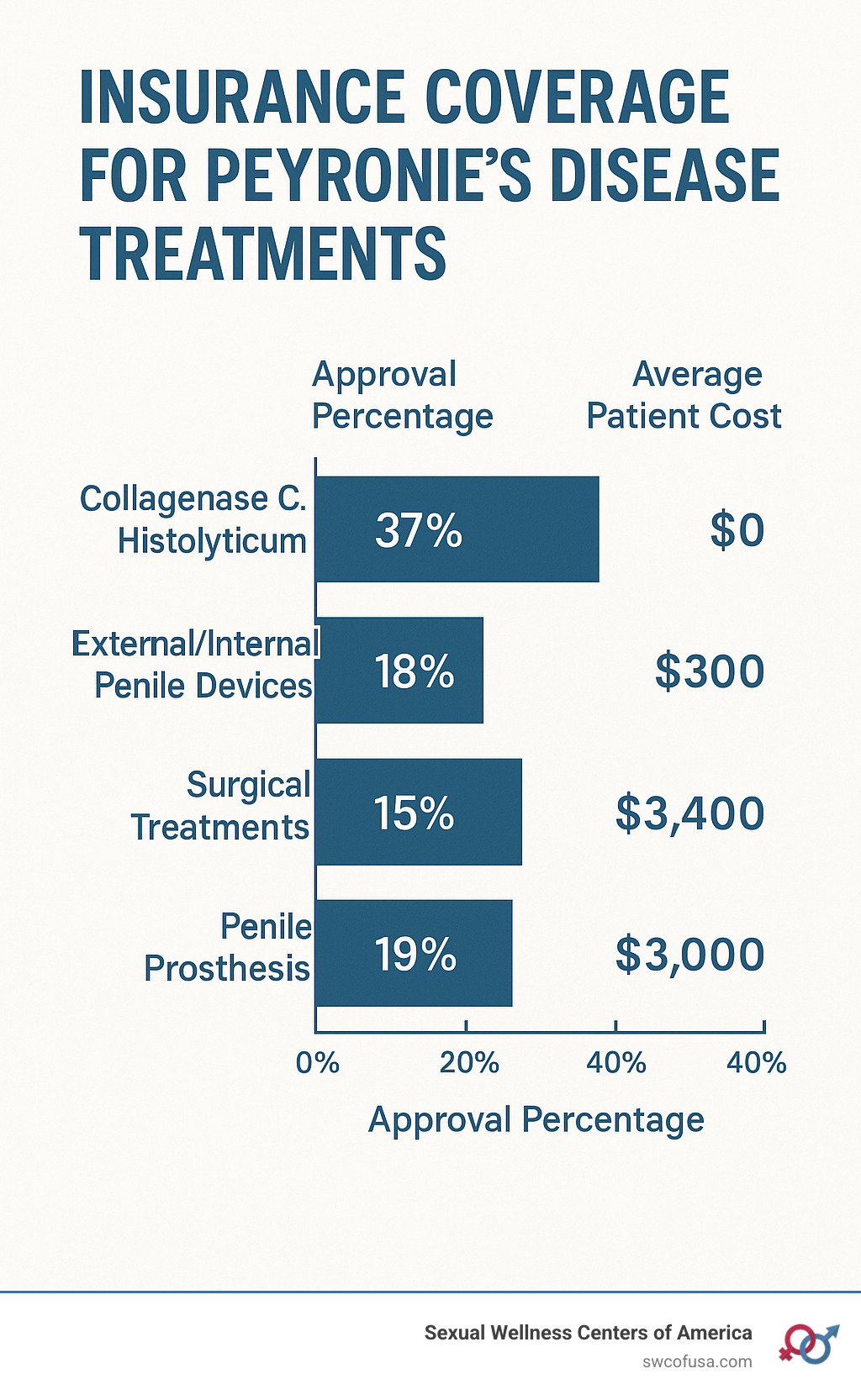
Collagenase Clostridium Histolyticum (Xiaflex) leads the pack, with 37% of insurers explicitly covering it in their policies. Every single one requires documentation of a palpable plaque. The really good news? About 94% of eligible patients end up paying very little out-of-pocket after insurance and manufacturer assistance programs work together.
External/Internal Penile Devices like vacuum erection devices and penile traction therapy have explicit coverage from about 18% of insurers. In practice, we see penile traction devices getting reimbursed in roughly 30% of cases when properly documented.
Surgical Treatments are addressed in 15% of insurance policies, with 60% of those providing actual coverage. The most common requirement is proof that you’ve tried and failed less-invasive treatments first.
Penile Prosthesis implantation is covered by 19% of insurers, with nearly 58% requiring documentation of failed conservative approaches. Coverage is typically best when both Peyronie’s disease and erectile dysfunction are present simultaneously.
Treatments Usually Denied or Limited
Unfortunately, some treatments face consistent coverage challenges regardless of your insurance:
Shock Wave Therapy is universally denied by all insurers with explicit policies—a full 100% rejection rate. Despite being mentioned in AUA guidelines as a palliative option, insurers still classify it as experimental.
Intralesional Verapamil injections, despite years of clinical use, are explicitly covered by only 2% of insurers. Most consider it off-label or experimental despite its presence in treatment guidelines.
Experimental Therapies like stem cell therapy and platelet-rich plasma (PRP) are uniformly classified as investigational and not covered by any major insurance plans.
Compounded Topicals such as verapamil creams applied to the skin typically don’t receive coverage due to limited evidence of effectiveness penetrating to the plaque.
Oral Medications like pentoxifylline, potaba, and colchicine, while sometimes prescribed, typically have limited coverage specifically for Peyronie’s disease because they’re being used off-label.
At Sexual Wellness Centers of America, we’ve helped hundreds of men steer these complex insurance waters. We know exactly what documentation is needed, which codes to use, and how to present your case in the strongest possible light to maximize your chances of coverage for does insurance cover treatment for Peyronie’s disease.
How Coverage Varies by Treatment Type & Policy
When it comes to does insurance cover treatment for Peyronie’s disease, think of coverage like a pyramid. The most widely accepted treatments sit at the top, while experimental options remain at the bottom with little to no coverage.
Insurance companies typically follow a tiered approach that prioritizes FDA-approved treatments and established surgical procedures. This hierarchy isn’t random – it’s based on clinical evidence, cost considerations, and treatment invasiveness.
First-Line Treatments (Highest Coverage):
Xiaflex injections stand as the gold standard for insurance coverage when you meet the criteria (that 30° curve and palpable plaque we mentioned). Penile traction devices receive moderate coverage, with about 30% of claims getting approved. Basic diagnostic testing is generally well-covered too, as insurers recognize the importance of proper evaluation.
Second-Line Treatments (Moderate Coverage):
After you’ve tried conservative approaches, surgical procedures like penile plication typically receive reasonable coverage. Similarly, if you’re experiencing both Peyronie’s and erectile dysfunction, a penile prosthesis often gets approved – insurers recognize the efficiency of addressing both issues simultaneously.
Limited or Case-by-Case Coverage:
Off-label injections like verapamil exist in a gray area. Though urologists have used them for years, insurance companies remain skeptical without FDA approval specifically for Peyronie’s. Similarly, plaque incision and grafting procedures may require additional documentation and appeals.
Typically Denied:
Despite some promising research, shock wave therapy consistently faces denial from insurers who classify it as experimental. The same goes for stem cell therapies and other regenerative approaches. And if your curvature is mild with no functional issues, purely cosmetic corrections almost never receive coverage.
The fine print in your policy matters tremendously. Prior authorization requirements are nearly universal for Xiaflex and surgical procedures – skip this step and you might be left with the entire bill. Many policies implement step therapy, requiring you to try and fail with less invasive options before covering surgery.
Working with in-network providers typically means paying significantly less out-of-pocket. At Sexual Wellness Centers of America, we’re in-network with many major insurance plans, helping maximize your coverage.
Timing matters too. If you’ve already met your annual deductible, scheduling treatment before your plan year resets can save thousands. Some policies also have lifetime limits on specific treatments, so understanding these caps before starting therapy is crucial.
Surgical vs Non-Surgical Cost Breakdown
The financial landscape varies dramatically between treatment approaches:
Non-Surgical Treatments:
The total cost for Xiaflex injections ranges from $20,260 to $33,628, but most patients with insurance end up paying between $0 and $1,000 out-of-pocket when combined with manufacturer assistance programs. Penile traction devices run $300-$525, with insurance covering about a third of cases. Verapamil injections cost $200-$400 each but face limited coverage.
Surgical Treatments:
Penile plication surgery typically costs $3,039-$11,419 total, with insured patients paying $1,000-$2,000 out-of-pocket. The more complex plaque incision/grafting procedures range from $6,000-$15,000, with typical out-of-pocket costs between $2,000-$3,000. Penile prosthesis implantation represents the highest investment at $13,183-$40,994 total, with insured patients typically responsible for $2,000-$5,000.
These figures break down into facility fees (where your procedure happens), professional fees (your surgeon and anesthesiologist), device costs, and follow-up care. At Sexual Wellness Centers of America in Colleyville, TX, we believe in transparency – you’ll receive detailed cost estimates before committing to any treatment plan.
Medicare & Medicaid Specific Rules
Does insurance cover treatment for Peyronie’s disease when you’re on Medicare? Yes, but with specific pathways:
Medicare Part B Coverage handles most Peyronie’s treatments as outpatient services, covering 80% of approved costs after you meet your annual deductible. Xiaflex falls under “Part B drugs” when administered in a medical setting. Documentation standards remain strict – you’ll need that 30° curve and palpable plaque clearly documented. For men with both Peyronie’s and erectile dysfunction, penile prosthesis may qualify as Durable Medical Equipment (DME).
If you have a Medicare Advantage Plan, you’re guaranteed at least the same coverage as Original Medicare, though your cost-sharing structure might differ. These plans typically require staying within network and obtaining prior authorization.
Medicaid presents more variability since each state runs its own program. Texas Medicaid may cover Peyronie’s treatment when properly documented as medically necessary, though prior authorization is virtually guaranteed. Medicaid often applies stricter criteria than Medicare or private insurance.
For dual-eligible beneficiaries (those with both Medicare and Medicaid), coordination between programs can significantly reduce out-of-pocket expenses, as Medicaid may cover Medicare’s copays and deductibles.
At Sexual Wellness Centers of America, we’ve developed expertise in navigating these complex systems. Our team works directly with Medicare and Texas Medicaid to maximize your coverage while minimizing paperwork headaches.
Navigating Your Policy, Appeals & Financial Assistance
Dealing with insurance for Peyronie’s disease can feel like navigating a maze, but you don’t have to do it alone. Let me walk you through how to handle this process with confidence.
Policy Verification Steps
Before starting any treatment, it’s crucial to understand exactly what your insurance covers. Start by calling your insurer directly and specifically asking about Peyronie’s disease coverage. Don’t just take verbal assurances—request written verification of coverage details, including the all-important procedure codes that will determine payment.
Make sure your urologist is in-network, as this can dramatically reduce your costs. Take time to understand your benefits structure: your deductible (what you pay before insurance kicks in), coinsurance (your percentage of costs after the deductible), and out-of-pocket maximum (your financial safety net).
“The single most important step is ensuring your doctor submits proper pre-authorization with complete documentation,” explains Jeff Nuziard, CEO of Sexual Wellness Centers of America. “This upfront work dramatically increases approval rates.”
When Coverage Is Denied
If you receive that dreaded denial letter, don’t lose hope! Does insurance cover treatment for Peyronie’s disease when they initially say no? Often, yes—with persistence. Experienced providers report over 90% success in overturning initial denials.
Request the specific reason for denial in writing, then carefully review your policy’s appeal process. Timing matters—appeals typically must be filed within 30-180 days, depending on your plan.
The strength of your appeal lies in documentation. Work with your urologist to gather compelling evidence: detailed medical records, photos documenting curvature, precise measurements showing >30 degrees of curvature, records of failed conservative treatments, and importantly, documentation of how the condition impacts your quality of life and sexual function.
A strong letter of medical necessity from your urologist can make all the difference. Consider requesting a peer-to-peer review, where your doctor speaks directly with the insurance medical director—this personal touch often resolves denials quickly.
If initial appeals fail, don’t give up. You can escalate to external review through your state’s Department of Insurance, where independent medical professionals review your case.

Financial Assistance Options
Even with insurance, treatment costs can add up. Fortunately, several assistance programs can help bridge the gap.
The HealthWell Foundation offers substantial support, providing up to $5,600 in copay or premium assistance for Peyronie’s disease treatments. Most patients use about $2,800 during the 12-month grant period—a significant help for managing out-of-pocket expenses.
If you’re prescribed Xiaflex, don’t miss out on the manufacturer’s assistance programs. Eligible patients with commercial insurance may pay as little as $0 for this otherwise expensive medication.
“We never want finances to prevent someone from receiving treatment,” says Nuziard. “At Sexual Wellness Centers of America, we offer flexible payment options for any uncovered portions of treatment, custom to each patient’s situation.”
Consider using pre-tax dollars from Health Savings Accounts (HSAs) or Flexible Spending Accounts (FSAs) to stretch your healthcare budget further. Many hospitals and clinics also offer charitable care programs based on financial need—it never hurts to ask.
Step-by-Step Checklist When Coverage Is Denied
When facing a denial, having a systematic approach helps. Start by requesting the specific denial reason in writing, then carefully review your policy’s appeal deadlines—missing these can forfeit your rights.
Gather compelling clinical evidence focusing on the measurements and impacts insurers care about most. A curvature greater than 30 degrees, confirmation of palpable plaque, and documentation of pain or sexual dysfunction are particularly persuasive.
A detailed letter from your urologist explaining medical necessity in clinical terms can be your most powerful tool. Consider requesting a peer-to-peer review, which often resolves denials without formal appeals.
If you’re still struggling, patient advocates (sometimes available through your employer or insurance) can help steer the process. As a last resort, escalating to your state’s Department of Insurance or requesting an external medical review can overturn unfair denials.
Cost-Effective Alternatives if You’re Paying Cash
If insurance coverage remains elusive, more affordable approaches are available. Some clinics offer modified CCH protocols that maintain effectiveness while reducing costs. Penile traction therapy devices ($300-$525) can be effective either alone or combined with other treatments.
Hybrid approaches—combining less expensive treatments—often provide good outcomes at lower costs. Utilizing telehealth for follow-up appointments can significantly reduce your overall treatment expenses.
In some cases, a one-time surgical procedure might actually be more cost-effective than multiple rounds of injections. At Sexual Wellness Centers of America in Colleyville, TX, we carefully analyze your specific condition, insurance coverage, and financial situation to find the most affordable and effective treatment path.
Remember—you’re not alone in this journey. With the right approach and support, effective treatment for Peyronie’s disease can be accessible and affordable.
Frequently Asked Questions about Does Insurance Cover Treatment for Peyronie’s Disease
Does insurance cover treatment for Peyronie’s disease if my curvature is mild?
When it comes to mild curvature, insurance coverage gets a bit tricky. Most insurance companies look for that magic number of 30 degrees before they’ll consider treatment “medically necessary.” If you’re under that threshold, you might face an uphill battle—but don’t lose hope!
Even with milder curvature, you may still qualify for coverage if you can document other significant impacts. Pain during intimacy, inability to engage in sexual activity, or documented psychological distress can all strengthen your case. Some men with milder curvatures also experience hourglass deformities or other penile abnormalities that affect function beyond simple curvature.
I recently worked with a patient whose curvature was only 25 degrees, but he experienced significant pain and anxiety. By thoroughly documenting these functional impacts, we successfully secured insurance coverage for his treatment. The key is working closely with your urologist to create comprehensive documentation that tells the full story of how this condition affects your life—not just the numbers on a protractor.
Does insurance cover treatment for Peyronie’s disease during the acute (painful) phase?
Getting insurance to cover treatment during the acute phase—those first 3-12 months—can feel like trying to hit a moving target. Most insurers prefer waiting until the disease stabilizes in the chronic phase, and honestly, their reasoning isn’t completely unfounded.
The condition might naturally improve during this early stage, the curvature could continue changing (affecting what treatment would work best), and most clinical guidelines do recommend a “wait and see” approach initially.
That said, there are absolutely exceptions where early intervention makes sense and can be covered:
Severe, unrelenting pain that doesn’t respond to basic management, rapidly worsening deformity, or participation in specific early intervention protocols can all justify treatment during the acute phase.
At Sexual Wellness Centers of America, we’ve successfully steerd early-phase coverage for numerous patients when their symptoms warranted intervention. We help build the medical necessity case and guide you through any appeals if needed. Insurance companies don’t live with your condition—you do—and sometimes early treatment is genuinely the right medical choice.
Does insurance cover treatment for Peyronie’s disease outside the United States?
For my American patients considering treatment abroad, I have to be straightforward: most U.S. insurance plans offer limited or no coverage for elective treatments outside the country. Medicare generally doesn’t cover foreign medical care at all, and standard commercial plans typically limit international coverage to emergencies only.
If you’re an international patient looking to receive treatment here in the U.S., your coverage situation depends entirely on your home country and specific plan. Many of our international patients opt for self-pay options, while others purchase short-term medical insurance specifically for their treatment visit.
I remember helping a Canadian patient steer his country’s insurance system for treatment at our Colleyville center. While initially denied, we were able to document how his severe case warranted the specialized care we provide that wasn’t available locally. Every international case is unique, but we’re committed to providing detailed cost estimates and coordinating with your home physicians regardless of where you call home.
At Sexual Wellness Centers of America, we believe geography shouldn’t limit your access to effective Peyronie’s treatment, and we’ll work with you to find the most affordable path forward, with or without insurance coverage.
Conclusion
Navigating insurance for Peyronie’s disease can feel like solving a puzzle, but understanding the process dramatically improves your chances of getting the coverage you deserve. The good news? Most insurance plans do cover Peyronie’s disease treatment when it’s properly documented as medically necessary.
Think of your medical documentation as your insurance passport. The more thoroughly your provider records your condition—including measurements, photos, and impact on your quality of life—the stronger your case becomes. This documentation isn’t just paperwork; it’s the foundation of your treatment journey.
Don’t be discouraged if you receive an initial denial. Many of our patients at Sexual Wellness Centers of America have successfully overturned these decisions through the appeals process. Insurance companies often deny claims initially, hoping you won’t pursue the matter further. Your persistence can pay off.
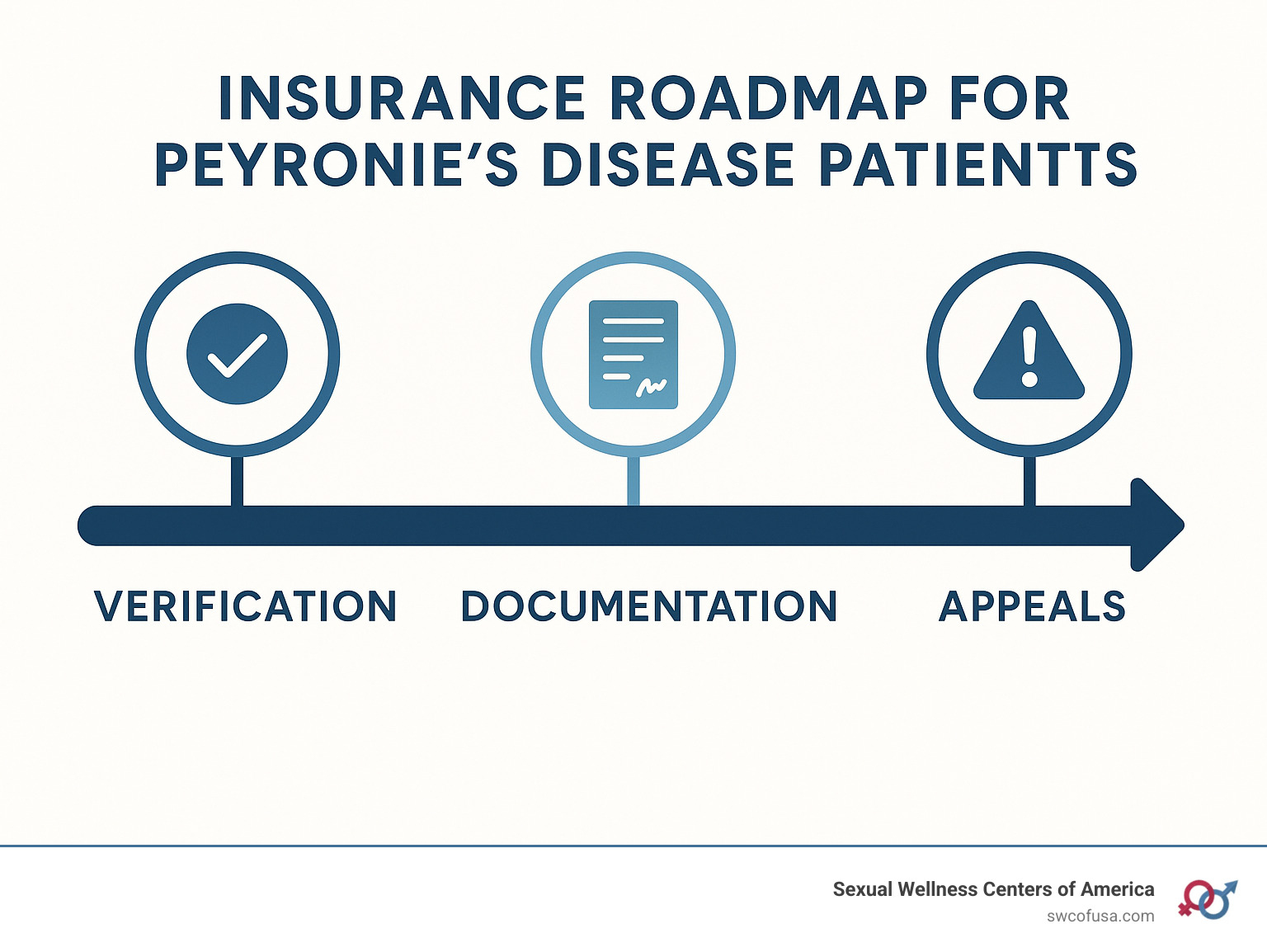
If your coverage is limited, don’t lose hope. Financial assistance programs like the HealthWell Foundation can provide significant support—up to $5,600 in many cases. Manufacturer programs for treatments like Xiaflex often mean eligible patients pay little to nothing out-of-pocket. These programs exist because there’s recognition that does insurance cover treatment for Peyronie’s disease shouldn’t be the determining factor in whether you receive care.
Working with experienced providers makes all the difference. At Sexual Wellness Centers of America in Colleyville, TX, we’ve guided hundreds of men through this process. Our team understands the specific insurance codes, documentation requirements, and appeal strategies that lead to successful outcomes. We offer:
- Free insurance verification before you commit to treatment
- Expert assistance with those tricky pre-authorization requirements
- Detailed documentation support to establish medical necessity
- Step-by-step appeal guidance if your coverage is initially denied
- Flexible payment options for any portions not covered by insurance
Our approach to Peyronie’s treatment is as comprehensive as our insurance support. We develop personalized treatment plans based on thorough evaluations, including hormone and vitamin panels that many other providers overlook. With a remarkable 97.2% efficacy rate in treating erectile dysfunction, we bring this same expertise and attention to detail to Peyronie’s disease management.
Don’t let insurance concerns keep you from addressing this condition. Peyronie’s disease impacts more than just physical health—it affects relationships, self-confidence, and overall wellbeing. With the right guidance and a bit of persistence, you can focus on healing rather than paperwork.
We’re here to help you steer both the medical and insurance aspects of your journey. Contact us today to discuss your specific situation and explore your treatment options. You deserve comprehensive care without the insurance headache.