Understanding Laser Vaginal Rejuvenation – Fact vs Fiction
Does laser vaginal rejuvenation work? Current scientific evidence shows limited effectiveness. High-quality studies including a 2021 JAMA trial found that laser treatments were no more effective than sham procedures for treating vaginal symptoms. While some women report short-term improvements in vaginal dryness and mild tightening, these benefits may be largely due to placebo effect.
If you’ve been researching solutions for vaginal changes that come with age, childbirth, or hormonal shifts, you’ve likely encountered glossy advertisements promising remarkable results from laser vaginal rejuvenation. As a woman considering your options, you deserve the honest truth beyond the marketing claims.
Does laser vaginal rejuvenation work for the concerns that matter most to you? This question deserves a thoughtful, evidence-based answer rather than simplified promises.
I’m Jeff Nuziard, CEO of Sexual Wellness Centers of America, and I’ve guided countless women through the complex landscape of intimate health treatments. What I’ve learned is that when it comes to vaginal rejuvenation, the reality is more nuanced than what’s typically advertised.
The scientific community has been working to separate fact from fiction. While many small studies suggest benefits, the gold-standard research—randomized controlled trials—tells a different story. The 2021 JAMA study, for example, found that laser treatments performed no better than sham procedures for most vaginal symptoms. This raises important questions about whether reported improvements might stem from the placebo effect rather than actual tissue changes.
This doesn’t mean laser treatments offer no benefits whatsoever. Some women do report temporary improvements in symptoms like vaginal dryness or mild laxity. However, these effects are often modest and may not justify the typical $2,000-$3,000 per-session price tag, especially considering insurance rarely covers these procedures.
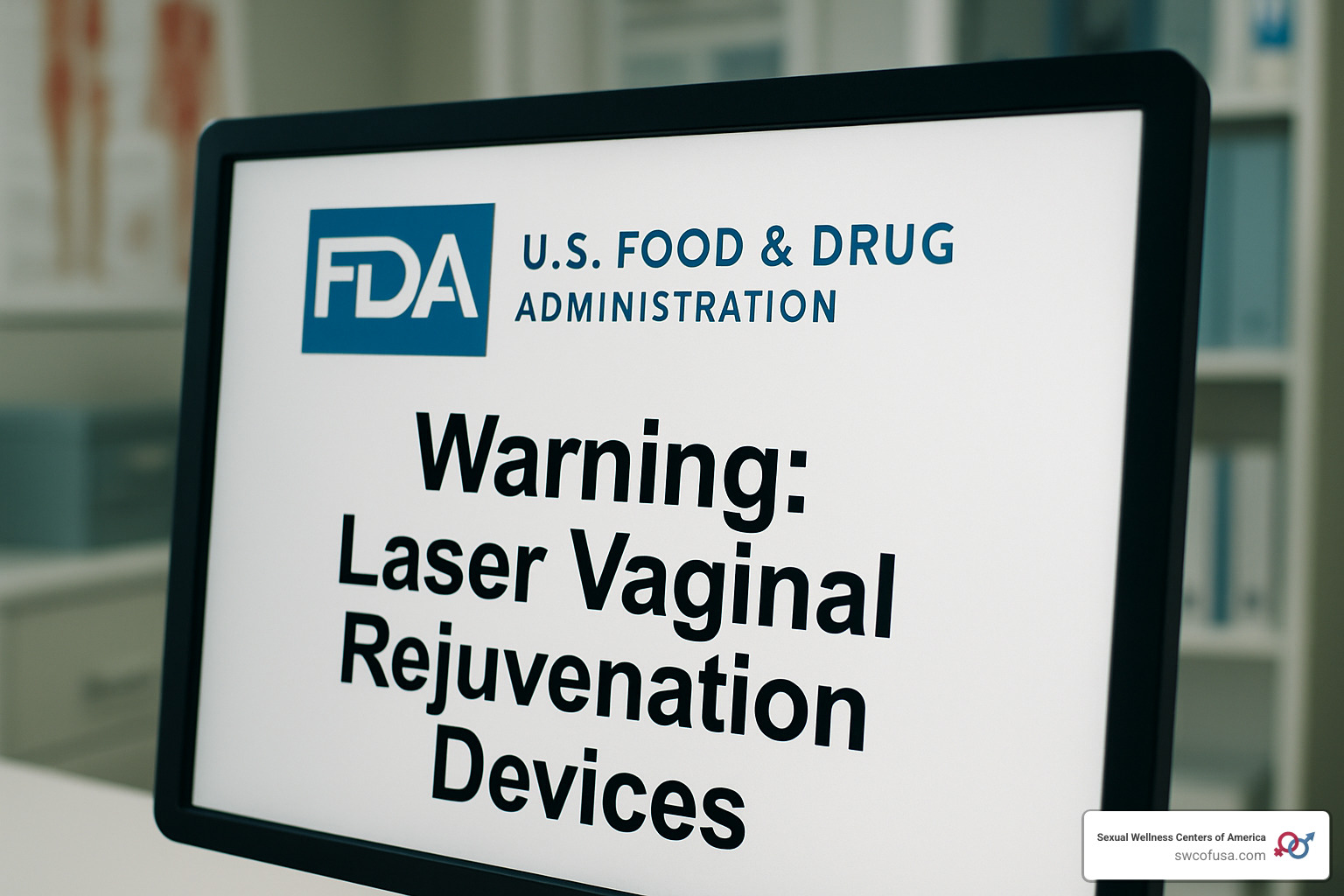
In 2018, the FDA expressed serious concerns about energy-based vaginal devices, warning that women could be harmed by procedures marketed with unsubstantiated claims. Their warning came after troubling reports of complications including burns, scarring, and persistent pain—side effects rarely mentioned in marketing materials.
At Sexual Wellness Centers of America, we believe in personalized care based on sound science. We take time to understand your specific concerns, whether they involve vaginal dryness, laxity, urinary symptoms, or sexual function. Our approach focuses on evidence-based solutions custom to your unique situation, rather than one-size-fits-all treatments with questionable effectiveness.
Before investing in laser vaginal rejuvenation, it’s worth exploring the full range of options available to you—some with stronger scientific backing and potentially fewer risks. In the following sections, we’ll explore exactly what the research shows about laser treatments for specific conditions, compare them with alternatives, and help you determine if they might be appropriate for your particular situation.
What Is Laser Vaginal Rejuvenation and How Does It Work?
When we talk about laser vaginal rejuvenation, we’re referring to non-surgical procedures that use focused light energy to treat vaginal tissue. Most providers use one of two main types: CO₂ (carbon dioxide) lasers, which penetrate deeper and create more heat, or Er:YAG (erbium-doped yttrium aluminum garnet) lasers, which work more on the surface with less thermal effect.
At their core, these treatments rely on a photothermal effect – a fancy way of saying they deliver controlled heat to vaginal tissues. This isn’t magic or science fiction; it’s simply using technology to create a specific healing response in your body.
“These aren’t magical devices,” explains Dr. Lauren Streicher, a gynecologist who studies these treatments. “They’re simply delivering controlled thermal injury to tissue, which then triggers a healing response.”
The theory is straightforward: the laser creates tiny micro-injuries in vaginal tissue. Your body then naturally responds by tightening existing collagen immediately, producing new collagen and elastin (called neocollagenesis), increasing blood flow to the area, and remodeling the connective tissue.
It’s worth noting that these devices entered the market through the FDA’s 510(k) clearance pathway – a process that doesn’t require clinical trials proving effectiveness for specific uses. Most were initially cleared for general skin or surgical purposes, not specifically for vaginal treatments.
Technology Basics
The technology uses what specialists call “fractional delivery.” Rather than treating the entire surface area (which could cause too much damage), the laser creates thousands of tiny treatment zones with untreated tissue in between. This approach aims to speed healing while still delivering therapeutic effects.
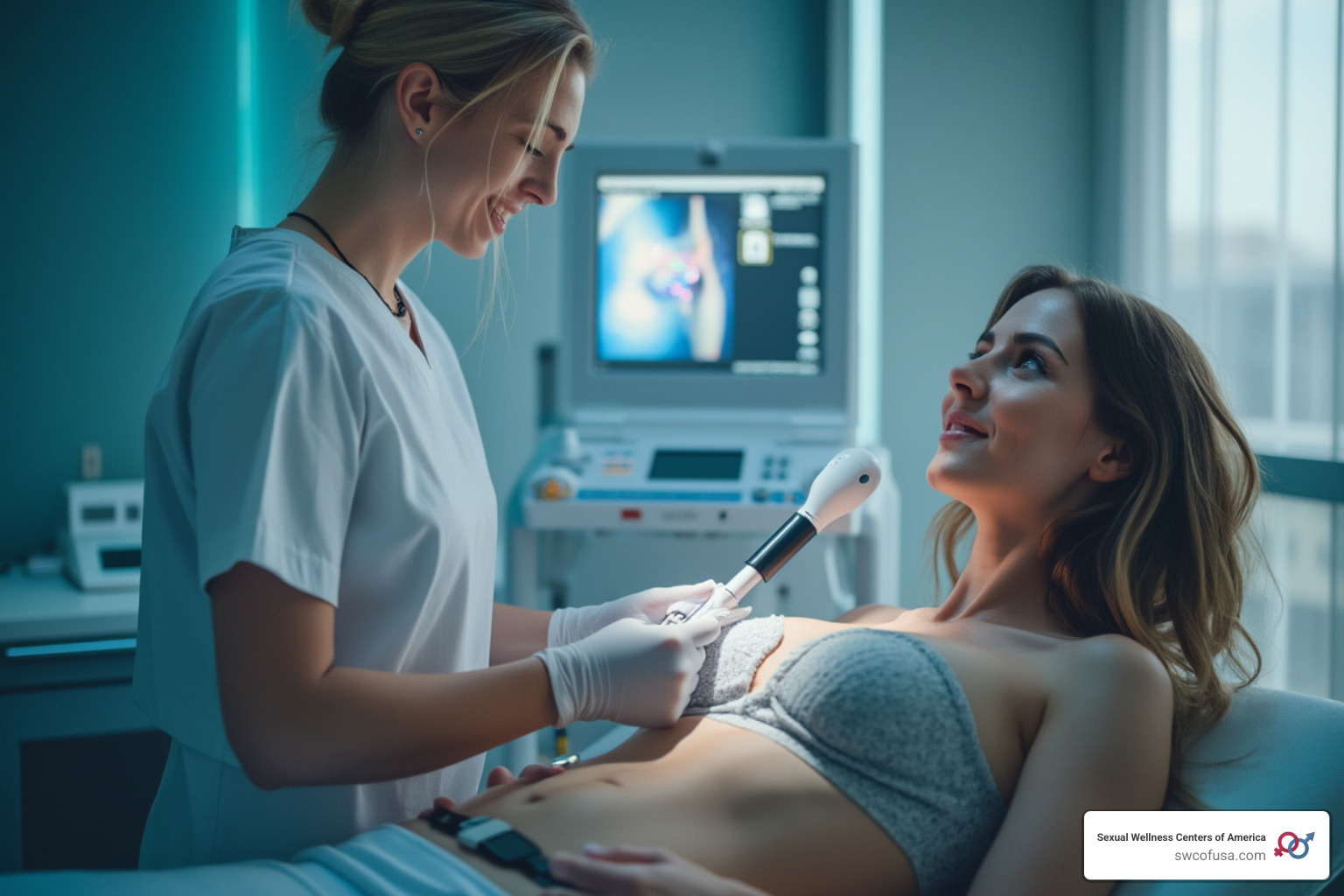
A typical procedure is surprisingly quick and straightforward. You’ll spend about 20-30 minutes in an outpatient setting, usually with just topical numbing cream rather than full anesthesia. The provider inserts a laser probe that delivers energy in a complete 360° pattern, making multiple passes with carefully controlled energy settings.
Most women return to normal activities immediately, though you’ll typically need to avoid sexual activity for 3-5 days afterward. The energy settings are crucial – too little may do nothing, while too much could cause burns or scarring.
Marketed Mechanisms
When you see advertisements for these procedures, they typically highlight three key mechanisms:
First, neocollagenesis – the production of new collagen fibers that supposedly restore elasticity and strength to vaginal tissues that may have weakened over time.
Second, mucosal thickening – increased thickness of the vaginal lining and glycogen content that may improve natural lubrication and tissue resilience.
Third, improved blood flow to the area, which could theoretically increase sensitivity and natural moisture.
These mechanisms sound promising in theory – but does laser vaginal rejuvenation work in practice? The marketing materials often show impressive before-and-after results, but the scientific evidence tells a more complex story.
While some research shows these physiological changes do occur, the real question is whether they translate to noticeable improvements in symptoms like dryness, laxity, or sexual function. The answer varies significantly from person to person, and the highest quality research suggests the effects may be more modest than marketing suggests.
Before investing in these treatments, it’s worth understanding what science actually tells us about their effectiveness for specific conditions – which we’ll explore in the upcoming sections.
Does Laser Vaginal Rejuvenation Work?
When women ask me “does laser vaginal rejuvenation work?” I always emphasize the importance of looking at what science actually tells us, not just marketing claims. After all, we’re talking about your intimate health—you deserve honest answers based on solid evidence.
The most trustworthy evidence comes from randomized controlled trials (RCTs), especially those that include sham treatments to account for the placebo effect. This is particularly important for treatments involving intimate wellness, where expectation can strongly influence perceived results.
Does Laser Vaginal Rejuvenation Work for Vaginal Laxity?
Many women seek laser treatments hoping to address vaginal looseness, especially after childbirth. It sounds promising—using heat to tighten tissue—but what does the research show?
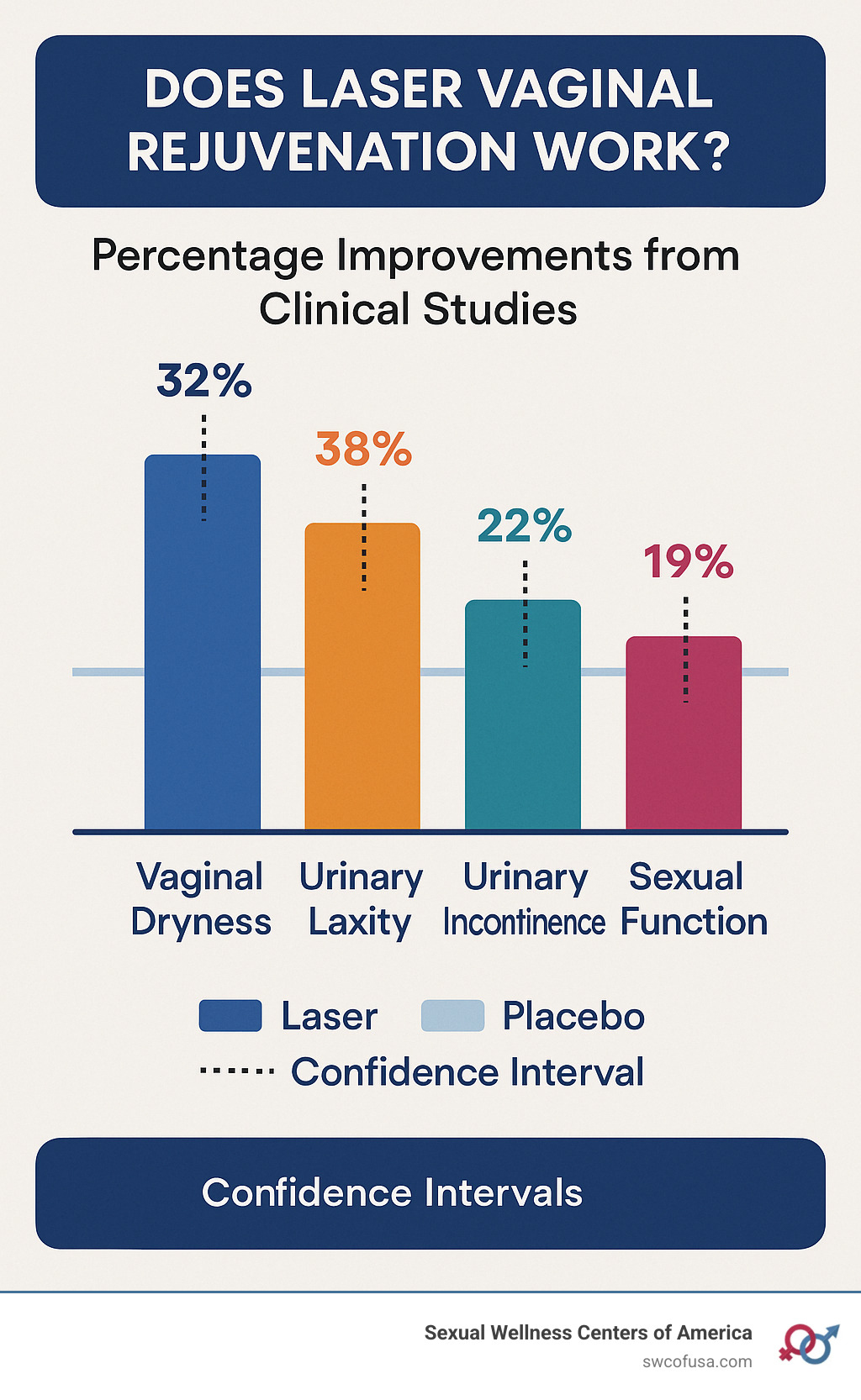
A landmark study published in JAMA in 2021 compared CO₂ laser treatment to a sham procedure for vaginal symptoms. The results were sobering: researchers found no significant difference between women who received the actual laser treatment and those who received the fake treatment. This was a double-blind study—neither patients nor evaluators knew who got the real thing—making it particularly reliable.
“We need much larger studies with long-term follow-up before we can establish best practices for these devices,” notes Dr. Cheryl Iglesia, a urogynecologist who has extensively researched these treatments.
When women report feeling “tighter” after treatment, they may be experiencing temporary tissue swelling from the heat, or—quite commonly—the powerful placebo effect. Any actual collagen contraction tends to be short-lived rather than a lasting solution.
Does Laser Vaginal Rejuvenation Work for Vaginal Dryness?
Vaginal dryness affects nearly half of all postmenopausal women, significantly impacting comfort and intimacy. While early, small studies suggested laser treatments might help, more rigorous research tells a different story.
A high-quality trial published in JAMA evaluated 85 women receiving either CO₂ laser treatment or a sham procedure. At the 12-month mark, the laser group showed no significant improvement in GSM symptoms, quality of life, or sexual function compared to the sham group. This is particularly telling because it controlled for the substantial placebo effect often seen in sexual wellness treatments.
When compared to established treatments like vaginal estrogen, lasers simply don’t measure up. As Dr. Mary Jane Minkin, a gynecologist and Yale School of Medicine clinical professor, bluntly puts it: “What’s wrong with estrogen? It’s well-studied, it’s cheap, and it works.”
Does Laser Vaginal Rejuvenation Work for Urinary Incontinence?
That little leak when you laugh, cough, or exercise—stress urinary incontinence (SUI)—affects millions of women. Laser treatments claim to help by tightening the surrounding tissues to better support the urethra. But does this actually work?
A multicenter clinical trial with 101 patients specifically evaluated CO₂ laser for treating stress incontinence. The results? No subjective or objective improvement compared to sham treatment. In plain English: the laser was no better than placebo.
For perspective, established SUI treatments have much stronger evidence behind them. Pelvic floor physical therapy helps 60-80% of women, while midurethral sling surgery boasts success rates of 85-90%. Compared to these proven options, laser treatments currently fall short on evidence.
Does Laser Vaginal Rejuvenation Work for Sexual Function?
Many women are drawn to laser treatments hoping to improve overall sexual satisfaction—a perfectly understandable goal. Most studies use the Female Sexual Function Index (FSFI) to measure outcomes like arousal, lubrication, and orgasm.
While some small, uncontrolled studies report FSFI improvements after laser treatments, a critical fact is often overlooked: a meta-analysis showed that placebo accounts for about 68% of treatment effects in female sexual dysfunction trials. This means much of the benefit women report may come from their expectations rather than the treatment itself.
The JAMA study mentioned earlier found no significant improvement in sexual function at 12 months between laser and sham groups. This suggests that any short-term benefits seen in less rigorous studies may be largely attributable to the placebo effect.
“Sexual functioning is multidimensional and should be treated as such,” emphasizes Dr. Michael Krychman, a sexual medicine specialist. “The brain-body connection is of paramount importance.”
At Sexual Wellness Centers of America, we believe in offering treatments with solid evidence behind them. While we continue to monitor emerging research on laser treatments, we currently focus on proven approaches to sexual wellness that address both physical and emotional aspects of intimacy.
Comparing Laser, Radiofrequency, and Surgical Options
When you’re weighing your options for vaginal rejuvenation, it helps to understand how laser treatments stack up against other available approaches. I’ve found that patients make better decisions when they can see the full picture of what’s available—not just what’s being marketed most heavily.
Energy-based devices like lasers and radiofrequency (RF) systems work on similar principles but deliver their heat in different ways. While laser treatments create microscopic columns of thermal injury, RF devices like ThermiVa® use electromagnetic waves to generate heat more deeply and uniformly in the tissue. This difference might matter depending on your specific concerns.
“Many patients come in asking specifically for laser, not realizing there are multiple approaches we might consider,” says Dr. Susan Hardwick-Smith, a gynecologist who specializes in women’s sexual health. “The best treatment really depends on what’s causing your symptoms.”
For those with urinary incontinence, a mid-urethral sling procedure has robust evidence supporting its effectiveness—far more than any energy-based device. Similarly, if your concern is specifically about the appearance of your labia, a surgical labiaplasty provides more definitive results than non-surgical options.
The trade-off, of course, is downtime. While laser and RF treatments typically allow you to return to normal activities immediately (with just a few days of abstaining from sexual activity), surgical procedures require weeks of recovery. This practical consideration matters tremendously in real life.
Perhaps most importantly, the durability of results varies significantly. Does laser vaginal rejuvenation work long-term? The honest answer is that maintenance treatments are typically needed every 6-12 months, whereas surgical interventions may last for years.
Benefits & Limitations Side-by-Side
Let’s break down how these options compare across several important factors:
| Treatment Type | How It Works | Evidence Quality | Average Cost | Downtime | Durability |
|---|---|---|---|---|---|
| CO₂ Laser | Microablative fractional laser creates controlled thermal injury | Low-Moderate (mostly case series) | $2,000-3,000 per session (3 sessions typical) | 3-5 days of abstinence | 6-12 months, maintenance needed |
| Er:YAG Laser | Non-ablative thermal effect, less intense than CO₂ | Low-Moderate (mostly case series) | $1,500-2,500 per session (3 sessions typical) | 3-5 days of abstinence | 6-12 months, maintenance needed |
| Radiofrequency | Uses electromagnetic waves to heat tissue more deeply than lasers | Low-Moderate (mostly case series) | $1,000-2,000 per session (3-4 sessions typical) | 1-3 days of abstinence | 6-12 months, maintenance needed |
| Surgical Vaginoplasty | Removes excess vaginal lining, tightens underlying muscles | Moderate (longer clinical experience) | $6,000-12,000 (single procedure) | 6-8 weeks recovery | Long-lasting (5+ years) |
| Pelvic Floor Therapy | Targeted exercises to strengthen muscles | High (multiple RCTs) | $100-200 per session (8-12 sessions typical) | None | Ongoing with maintenance |
| Vaginal Estrogen | Improves tissue quality and lubrication | High (multiple RCTs) | $30-150 per month | None | Ongoing while using |
What stands out in this comparison is that the options with the strongest evidence—pelvic floor therapy and vaginal estrogen—are actually the least invasive and least expensive. This doesn’t mean they’re right for everyone, but it’s worth noting that “newer” and “more expensive” don’t automatically mean “better.”
The invasiveness of each option correlates roughly with its durability. Surgical approaches like vaginoplasty offer more dramatic and lasting results for vaginal laxity but come with longer recovery periods and higher risks. These procedures physically tighten the vaginal canal by removing excess tissue and repairing the underlying muscles—a more direct approach than trying to stimulate tissue remodeling through heat.
At Sexual Wellness Centers of America, we believe in having honest conversations about all available options. We want you to understand not just what each treatment involves, but also how strong the evidence is supporting its use. Your goals, values, and lifestyle should guide this deeply personal decision—not marketing hype or what happens to be trending on social media.
Risks, Regulation, and What Authorities Say
If you’re considering vaginal rejuvenation, understanding the risks and what health authorities say about these treatments is just as important as knowing potential benefits.
Back in July 2018, the FDA issued a pretty serious warning about laser and radiofrequency devices used for vaginal rejuvenation. Then-Commissioner Scott Gottlieb didn’t mince words, stating, “We are deeply concerned women are being harmed.” This wasn’t just cautionary language – it came after real women reported experiencing painful complications.
The FDA’s concern centered on a troubling reality: these devices had never actually been approved for treating menopausal symptoms, urinary incontinence, or sexual function issues. They were only cleared for specific gynecological uses like removing abnormal cervical tissue or genital warts – not the “rejuvenation” purposes being heavily marketed.
Reported Complications
The stories of women who’ve experienced negative outcomes are important to know. When researchers analyzed the FDA’s MAUDE database (where adverse events get reported), they found several recurring issues.
Pain tops the list of reported problems, followed by numbness and burning sensations that some women described as debilitating. Scarring and vaginal wall adhesions were also documented in multiple cases.
In one particularly heartbreaking case report, a woman experienced such severe vaginal pain after laser treatment that she considered suicide. While this represents an extreme scenario, it highlights how devastating complications can be.
Other documented issues include tissue necrosis (where tissue actually dies), excessive scarring, persistent painful intercourse, and altered sensation that didn’t resolve with time. Some women even required surgical intervention to correct adhesions that formed after treatment.
What’s particularly concerning is that we don’t know the true frequency of these complications. Since there’s no mandatory reporting system, many adverse events likely go undocumented, making it difficult to assess the real risk level.
Regulatory Status & Oversight
Here’s something many women don’t realize: these devices entered the market through what some experts call a regulatory loophole.
The FDA’s 510(k) clearance pathway doesn’t require the rigorous testing that formal approval demands. Manufacturers only need to show their device is “substantially equivalent” to something already on the market – not prove it’s effective for specific uses like vaginal rejuvenation.
This regulatory situation has raised red flags with major medical organizations:
The American College of Obstetricians and Gynecologists (ACOG) has taken a firm stance, stating these procedures aren’t medically indicated and that marketing claims about vaginal rejuvenation might actually be deceptive.
The North American Menopause Society (NAMS) recommends sticking with established therapies like vaginal estrogen as first-line treatments before even considering laser options.
Health Canada followed the FDA’s lead with its own notice warning about the risks associated with these procedures.
At Sexual Wellness Centers of America, we believe in transparency. We take these warnings seriously and make sure our patients understand both potential benefits and risks before making any treatment decisions. When someone asks “does laser vaginal rejuvenation work,” we believe the answer must include a full picture of safety considerations, not just possible benefits.
The bottom line? While some women report positive experiences with these treatments, the regulatory concerns and potential complications mean proceeding with caution and having thorough conversations with healthcare providers who will be honest about what we know – and don’t know – about these procedures.
Evidence-Based Alternatives You Should Know
When it comes to vaginal health concerns, laser treatments aren’t your only option – and honestly, they’re far from the most proven. Let’s explore treatments with stronger scientific backing that might better address your symptoms without the hefty price tag or questionable effectiveness of laser procedures.
Hormone Therapy & Non-Hormonal Treatments
For women struggling with vaginal dryness and other GSM symptoms, several well-established treatments have decades of research supporting them.
Low-dose vaginal estrogen remains the gold standard for treating vaginal dryness. Available as creams, tablets, or rings, these treatments deliver tiny amounts of estrogen directly to vaginal tissues, restoring moisture and elasticity with minimal systemic absorption. At $30-150 monthly, they’re also significantly more affordable than laser sessions.
“Estrogen works directly on the tissues to restore elasticity and moisture,” explains Dr. Susann Clifford. “It’s our gold standard treatment for a reason.”
For women who prefer to avoid direct estrogen, DHEA vaginal suppositories (Prasterone) offer an excellent alternative. These FDA-approved treatments convert to estrogen locally in vaginal tissues, effectively treating moderate to severe painful intercourse related to menopause.
Don’t overlook the simple effectiveness of hyaluronic acid gels and other moisturizers. When used regularly (2-3 times weekly), these affordable products ($10-30 monthly) can dramatically improve comfort. Water-based lubricants during intimacy provide immediate relief as well. These non-hormonal options are particularly important for women with hormone-sensitive cancers who need to avoid estrogen completely.
At Sexual Wellness Centers of America, we don’t just throw treatments at symptoms. We offer comprehensive hormone testing to identify underlying imbalances that might be causing your discomfort, then create personalized hormone optimization plans addressing the root causes of vaginal dryness and sexual dysfunction.
Physical & Behavioral Therapies
For vaginal laxity and urinary issues, your own body’s natural abilities might be your best resource.
Pelvic floor physical therapy delivers impressive results for both incontinence and sexual function concerns. Working with a specialized physical therapist, you’ll learn customized exercises to strengthen pelvic floor muscles, often using biofeedback to ensure you’re targeting the right muscle groups. With success rates of 60-80% for treating incontinence and the added bonus of improved sexual sensation, this therapy offers substantial benefits – and it’s typically covered by insurance.
As Dr. Mary Jane Minkin bluntly puts it: “What’s wrong with Kegels? They’re free, and they work at any age. Please, just do some Kegels.”
For bladder control issues, behavioral techniques like scheduled voiding and urge suppression strategies can significantly reduce frequency and urgency without any side effects or risks. Simple lifestyle modifications also make a big difference – losing weight if needed, staying properly hydrated, getting enough fiber to prevent constipation, and limiting bladder irritants like caffeine and alcohol.
When it comes to sexual function concerns, your mind plays as important a role as your body. Sexual counseling and therapy addresses psychological and relationship factors that impact intimacy, teaching techniques to improve comfort and pleasure either individually or with a partner.
Dr. Michael Krychman emphasizes this holistic approach: “Sexual functioning is multidimensional and should be treated as such. The brain-body connection is of paramount importance.”

At Sexual Wellness Centers of America, we believe sexual wellness requires addressing all aspects of health – physical, hormonal, and psychological. When asking “does laser vaginal rejuvenation work,” we encourage you to consider the full spectrum of evidence-based options that might better address your specific concerns. Our regenMAX technology and personalized treatment plans offer comprehensive approaches backed by science rather than marketing claims.
Who Is (and Isn’t) a Candidate & Cost Considerations
Thinking about laser vaginal rejuvenation? Let’s have an honest conversation about who might benefit from these treatments—and who should probably look elsewhere. Understanding this can save you time, money, and potentially disappointment.
Laser treatments aren’t for everyone, and that’s perfectly okay. At Sexual Wellness Centers of America, we believe in matching patients with treatments that truly fit their needs, not just what’s trending or being marketed heavily.
Potential Candidates
You might consider laser treatments (after exploring evidence-based alternatives first) if you fall into these categories:
Postmenopausal women experiencing mild to moderate vaginal symptoms who either can’t use hormone therapy or prefer not to are potential candidates. Women with mild vaginal laxity concerns who aren’t ready for surgical options might also consider laser treatments. And if you’ve tried first-line treatments without adequate relief, laser therapy could be worth discussing with your doctor.
Dr. Lauren Streicher makes an important observation about patient selection: “Only a third of the patients who come to my clinic and ask for a laser get one. At a med-spa, chances are that 100 percent of women who ask for a laser will get one.”
This highlights something crucial—a reputable provider will carefully assess whether you’re truly a good candidate rather than simply providing the treatment to anyone willing to pay.
Who Should Avoid Laser Treatments
For safety reasons, several groups should steer clear of vaginal laser treatments:
Pregnant women or those planning pregnancy soon should definitely avoid these procedures. The same goes for women with active vaginal or cervical infections or undiagnosed abnormal vaginal bleeding. If you have certain pelvic cancers or a history of pelvic radiation, these treatments aren’t appropriate. Women with significant pelvic organ prolapse (grade 3-4) or severe vaginal atrophy should also avoid laser treatments, as the latter may actually increase the risk of tissue injury.
Cancer survivors deserve special consideration here. Many breast cancer survivors experience severe vaginal symptoms due to anti-estrogen therapies and might be drawn to laser treatments as a non-hormonal option. However, given the limited evidence for effectiveness and potential complications, these women should be particularly cautious and thoroughly informed about risks versus benefits.
Cost Considerations
Let’s talk money—because this is a significant factor. Does laser vaginal rejuvenation work well enough to justify its cost? That’s something only you can decide, but here are the facts to help you evaluate:
Laser vaginal rejuvenation is typically considered cosmetic or experimental by insurance companies, meaning you’ll likely pay entirely out-of-pocket. The average cost per session runs $2,000-$3,000, and most protocols recommend three initial sessions—that’s $6,000-$9,000 total. And it doesn’t end there. Maintenance treatments every 12-18 months at $500-$1,500 each are usually recommended to sustain any benefits.
For perspective, established treatments like vaginal estrogen might cost $30-150 per month, while pelvic floor physical therapy (often covered by insurance) typically involves 8-12 sessions at $100-200 each if paying out-of-pocket.
Some facilities offer financing options, and you might be able to use Flexible Spending Accounts (FSAs) or Health Savings Accounts (HSAs) for these procedures, though you should verify this with your plan administrators.
At Sexual Wellness Centers of America, we prioritize transparency about costs and insurance coverage, helping you understand the financial implications of all your treatment options.
Questions to Ask Your Provider Before Booking
If you’re still considering laser vaginal rejuvenation after weighing the evidence and costs, here are essential questions to ask any provider you’re considering:
“What specific device will you use, and what is its FDA clearance status?” This helps you understand exactly what you’re getting and its regulatory standing.
“What training and experience do you have with this specific device?” Experience matters tremendously with these sophisticated technologies.
“Can you share before/after results and patient satisfaction data from your practice?” A good provider should have this information readily available.
“What scientific evidence supports this treatment for my specific symptoms?” The answer should go beyond marketing materials.
“What alternatives should I consider before trying laser therapy?” A reputable provider will discuss other options first.
“What results can I realistically expect, and how long will they last?” Be wary of promises that sound too good to be true.
“What is your protocol for managing complications?” This tells you how prepared they are for potential problems.
“Will I need maintenance treatments, and how often?” Understanding the long-term commitment is important.
“What is the total cost, including initial and maintenance treatments?” Get clarity on all expenses upfront.
A trustworthy provider will answer these questions thoroughly and patiently, never pressuring you into making a quick decision. You’re in charge of your healthcare choices, and you deserve complete information before proceeding.

Frequently Asked Questions about Laser Vaginal Rejuvenation
Is the treatment FDA-approved for sexual wellness claims?
No, and this surprises many women. While the devices used in laser vaginal rejuvenation have received FDA clearance through the 510(k) pathway, they are not FDA-approved specifically for vaginal rejuvenation, improving sexual function, or treating menopausal symptoms.
In fact, the FDA has taken a strong stance against marketing these devices for such purposes. They’ve explicitly stated: “The FDA has not cleared or approved any energy-based medical device for vaginal ‘rejuvenation’ or vaginal cosmetic procedures, or for the treatment of vaginal symptoms related to menopause, urinary incontinence, or sexual function.”
This distinction between “clearance” and “approval” isn’t just bureaucratic fine print—it reflects the lack of rigorous clinical trials demonstrating safety and effectiveness for these specific uses.
How many sessions are typically recommended?
Most providers recommend an initial series of three treatments spaced about 4-6 weeks apart. After completing this initial series, you’ll likely need maintenance treatments every 12-18 months to maintain any benefits you might experience.
I should point out that these recommendations come primarily from the device manufacturers rather than long-term clinical studies showing when effects diminish. This need for ongoing maintenance significantly increases the lifetime cost of laser treatments compared to one-time interventions or daily therapies.
Think of it like coloring your hair—the initial service creates the change, but without regular touch-ups, you’ll gradually return to your natural state.
Can laser treatments replace estrogen therapy?
Does laser vaginal rejuvenation work as well as estrogen therapy? Current scientific evidence suggests no. The highest quality studies consistently show that estrogen remains more effective for treating vaginal dryness, irritation, and pain during intercourse.
As Dr. Susann Clifford explains: “This nonhormonal, noninvasive intervention goes a long way to restore vaginal tissue to premenopausal levels. We’re stimulating the body to heal itself.” However, she also acknowledges it’s not meant to replace estrogen therapy for those who can safely use it.
For women who cannot use estrogen—such as those with certain types of breast cancer—laser therapy might be considered as an alternative. But it’s important to understand that the evidence supporting its effectiveness is much weaker than for estrogen therapy.
How painful is the procedure?
Most women report minimal discomfort during laser vaginal rejuvenation. Typically, your provider will apply a topical numbing cream before treatment to ensure your comfort. You’ll likely feel warmth or mild pressure during the procedure, but rarely pain.
After treatment, you might experience mild symptoms for a few days, including a slight burning sensation, minor swelling, or increased vaginal discharge. These side effects typically resolve within 48 hours.
The good news is that most women can return to normal daily activities immediately after treatment. However, you’ll need to abstain from sexual activity for about 3-7 days to allow tissues to heal properly.
How soon will I see results?
The timeline for results varies considerably among women. Some report noticing changes after just one treatment, while for others, it takes longer. Most studies suggest optimal results appear after completing the full series of three treatments.
The full effect may take 3-6 months as collagen remodeling continues beneath the surface. Your body needs time to respond to the treatment by producing new collagen and improving blood flow to the area.
It’s worth noting, however, that in placebo-controlled studies, women receiving sham treatments often reported similar improvement timelines. This suggests that some of the perceived early results may be influenced by the placebo effect or simply the attention given to addressing the problem.
What’s the difference between CO₂ and Er:YAG lasers?
The two most common laser types used for vaginal rejuvenation work in slightly different ways:
CO₂ Lasers (like MonaLisa Touch and FemiLift) use a wavelength of 10,600 nm. They penetrate more deeply into tissue, create more heat, and trigger a stronger tissue response. They’re slightly more ablative, meaning they remove thin layers of tissue. While potentially more effective for some women, they may carry a slightly higher risk of side effects.
Er:YAG Lasers (like IntimaLase and Juliet) use a wavelength of 2,940 nm. They have a more superficial tissue effect with less thermal damage to surrounding tissue. This makes them gentler and less ablative, but they might require more sessions to achieve similar results.
Despite these technical differences, the clinical significance remains unclear. There aren’t enough head-to-head comparisons, and high-quality studies haven’t shown clear superiority of one type over the other. The choice often comes down to which device your provider has available and their experience with it.
At Sexual Wellness Centers of America, we believe in providing you with all the facts so you can make an informed decision about your sexual health. Our team is happy to discuss whether laser vaginal rejuvenation works for your specific concerns or if alternative treatments might better address your needs.
Conclusion
After diving deep into scientific evidence, regulatory statements, and expert opinions, what’s the real story about laser vaginal rejuvenation?
Does laser vaginal rejuvenation work? The honest answer, based on the most rigorous scientific research, is that these treatments offer minimal benefits beyond placebo effect for most women. The highest-quality randomized controlled trials simply haven’t shown significant advantages over sham treatments or well-established therapies like vaginal estrogen.
Yes, some women do report improvements after laser treatments. But we need to consider that these benefits might be coming from:
- The powerful placebo effect (which can account for up to 67.7% of improvement in sexual function studies)
- Temporary tissue changes that feel better initially but don’t create lasting improvements
- Selection bias in which results get reported and published
I’m particularly concerned about the FDA’s warning regarding potential harm from these devices. While complications aren’t common, they can be serious – including burns, scarring, painful intercourse, and chronic pain that persists long after treatment.
For most women experiencing vaginal dryness, laxity, urinary symptoms, or sexual concerns, I strongly recommend trying evidence-based alternatives first:
Vaginal estrogen for dryness and atrophy is still our gold standard when not contraindicated. Pelvic floor physical therapy works wonderfully for laxity and mild incontinence issues. Simple lubricants and moisturizers can make a world of difference for comfort during intimacy. And don’t underestimate the value of a comprehensive sexual health assessment that looks at psychological, relationship, and physical factors together.
At Sexual Wellness Centers of America, we believe in giving women honest, accurate information about all available options. Our approach isn’t about pushing the latest trendy procedure – it’s about evidence-based treatments custom to your unique body and circumstances. We offer thorough hormone testing and personalized treatment plans that address the root causes of your sexual health concerns rather than just masking symptoms.
If vaginal symptoms are affecting your quality of life and happiness, I’d encourage you to schedule a consultation at our Colleyville, TX location. Our caring team can help you steer the sometimes confusing landscape of treatment options and develop a plan that truly aligns with your goals, values, and medical history.
Sexual wellness isn’t one-dimensional. It involves physical, hormonal, and psychological aspects that all work together. The most effective approaches address all these dimensions rather than focusing on a single technology or technique.
For more information about our comprehensive sexual wellness services, visit Sexual Wellness Centers of America.