
You may be dealing with erectile changes, reduced sensitivity, hormone symptoms, or sexual discomfort while also managing sleep, weight, diabetes, stress, or another health concern. That combination can make a single treatment sound appealing, but sexual function rarely has one isolated cause. A careful evaluation should connect symptoms with hormones, metabolic health, tissue condition, medications, and personal goals.
That broader perspective is central to how Dr. Kenneth Baird is presented in North Texas. Rather than approaching sexual wellness as a single-device problem, his model places regenerative treatment within a longer family-medicine and wellness background. The practical question isn't which procedure to choose. It's whether the clinician understands the health factors that may be affecting sexual function in the first place.
Table of Contents
- Who Dr Kenneth Baird Is and Why Patients Seek Him Out
- How Dr Baird Evaluates a New Sexual Wellness Patient
- Inside the REGENmax Protocol and Its Core Modalities
- REGENwave and How Acoustic Therapy Fits In
- What Treatment Looks Like for Men and Women
- Hormone, Peptide, and Supportive Therapies Around the Protocol
- Booking, Locations, and Patient Questions Answered
Who Dr Kenneth Baird Is and Why Patients Seek Him Out
A patient may arrive after medication has provided limited help, after unreliable erections have affected intimacy, or after noticing that low desire and poor sleep occur together. Another may be dealing with penile curvature, discomfort, or gradual changes without one obvious cause. These situations call for a medical conversation before a procedure is selected.
Dr. Kenneth Baird brings more than 35 years of experience to this work. He graduated from North Kansas City Hospital in 1989, beginning a medical career rooted in family medicine. His practice has been associated with North Texas locations, including Carrollton and Colleyville, giving him long experience caring for patients in the Dallas–Fort Worth area. The Sexual Wellness Centers of America team provides further background on the practice and its clinicians.
A primary-care foundation matters
Family medicine trains a physician to connect a sexual complaint with the rest of a patient's health. Erectile difficulty can involve vascular health, endocrine function, sleep, medication effects, psychological strain, or metabolic disease. Low libido may also overlap with hormone changes, inadequate sleep, and other medical concerns. That background does not eliminate the need for focused sexual-wellness assessment, but it supports a broader clinical review before treatment is chosen.
This foundation shapes how Dr. Baird uses regenerative care. REGENmax is presented as a proprietary, multi-modality protocol rather than a single-device service. Its purpose is to add regenerative sexual wellness to a medical approach informed by primary care, hormone-related concerns, sleep, and metabolic context.
The trade-off is straightforward. A broader medical perspective may require more discussion and more careful selection than a procedure-first visit, yet it can help clarify whether a patient is suited to regenerative treatment, supportive care, or another evaluation. Patients seeking treatment for one symptom may therefore value a clinician who considers the health factors surrounding it.
Practical rule: A regenerative plan should begin with the patient's health picture, not with a preselected package.
Patients who want to understand the practice setting and clinical team can review the team information before scheduling.
How Dr Baird Evaluates a New Sexual Wellness Patient
The first appointment should answer two questions. What is contributing to the problem, and what does the patient want to improve? Those answers determine whether regenerative treatment belongs in the plan, whether supportive care should come first, or whether another medical evaluation is more appropriate.
A Dr. Baird evaluation is built around a structured intake rather than a device demonstration. The conversation should cover the onset and pattern of symptoms, erection quality, libido, orgasm or sensitivity concerns, pain, curvature, medications, sleep, medical history, and the patient's goals. A patient who wants firmer erections may need a different pathway from someone whose primary concern is low desire, discomfort, or hormone-related symptoms.
The diagnostic sequence
Hormone and vitamin blood panels provide the objective layer of the assessment. Lab results can help identify issues that may influence energy, libido, tissue response, metabolic health, or recovery. They don't replace the patient interview, and they shouldn't be interpreted in isolation, but they give the clinician information that a symptom checklist can't provide.
The next step is translation. Dr. Baird's approach uses the clinical history and laboratory findings to shape an individualized treatment plan. That may mean discussing REGENmax, supportive hormone care, lifestyle factors, or a combination of services. The important distinction is that customization happens before treatment selection, not after a generic package has already been chosen.
| Evaluation Element | Purpose |
|---|---|
| Medical and sexual history | Establishes the timing, severity, pattern, and context of symptoms |
| Hormone blood panel | Identifies hormonal factors that may influence desire, energy, and sexual function |
| Vitamin testing | Looks for nutritional issues relevant to overall wellness and treatment planning |
| Sleep and metabolic review | Considers contributors such as sleep disruption, weight concerns, or diabetes-related factors |
| Goal-setting discussion | Defines the changes the patient wants to pursue |
| Individualized plan | Matches recommendations to findings, candidacy, and priorities |
What patients should bring
Bring a current medication and supplement list, prior laboratory results when available, and a clear description of what has changed. It helps to explain whether symptoms are consistent or situational, whether pain or curvature is present, and whether sleep or energy has shifted at the same time.
A good consultation also includes limits. Not every patient is a candidate for every modality, and no responsible clinician should promise a guaranteed outcome. The value of the intake is its ability to separate a plausible treatment pathway from an intervention that doesn't match the underlying problem.
Inside the REGENmax Protocol and Its Core Modalities
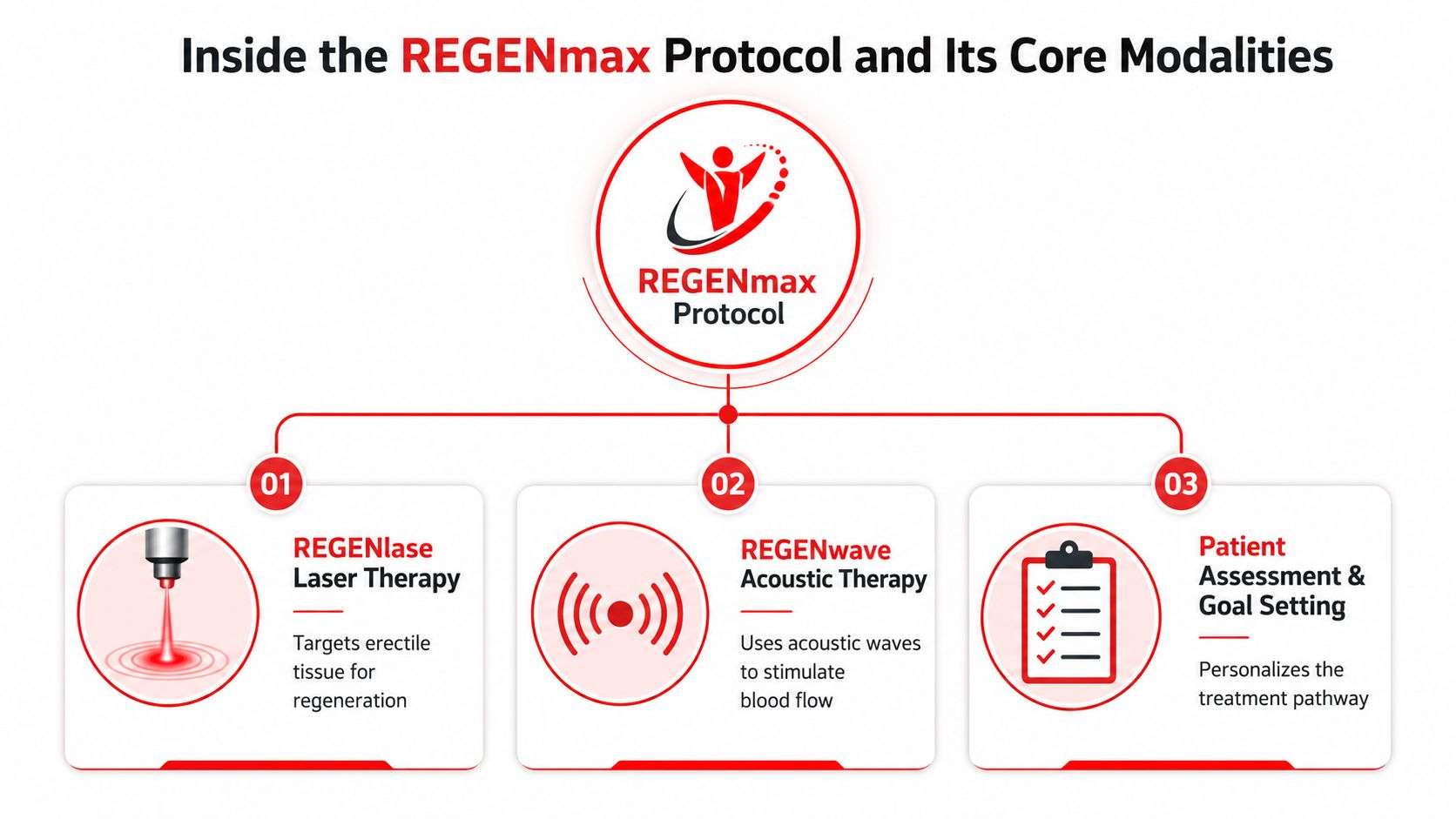
REGENmax is described as a multi-modality protocol rather than a standalone procedure. Its structure combines REGENlase laser therapy, REGENwave acoustic therapy, and the concentrated HEshot injection protocol. The reasoning is straightforward: different modalities can be assigned different roles, while the patient assessment determines how they fit together.
REGENlase
REGENlase uses focused laser energy as part of a tissue-focused treatment pathway. For a non-medical reader, the simplest analogy is a controlled light stimulus directed at erectile tissue, rather than an incision or surgical reconstruction. The clinic positions it as targeting erectile tissue for regeneration.
Laser treatment isn't a substitute for diagnosis. Its role depends on the patient's condition, goals, and the rest of the plan. The practical advantage is that it can be incorporated into a non-surgical program, while the trade-off is that patients need realistic expectations about the pace and extent of tissue response.
REGENwave
REGENwave uses acoustic energy directed toward the treatment area. Think of it as a mechanical stimulus delivered through sound waves, with the intended goal of supporting blood flow and tissue response. The clinic places REGENwave within a broader sexual-performance protocol rather than presenting acoustic therapy as the entire solution.
Acoustic therapy may appeal to patients who want a non-surgical option, but the treatment experience and clinical value depend on how the provider selects and applies it. A device name alone doesn't tell you whether the treatment is appropriate.
HEshot
HEshot is a concentrated regenerative injection protocol. In practical terms, the injection component introduces a biological treatment into the pathway rather than relying only on external energy. Patients should ask what is being used, how candidacy is determined, what risks apply, and how follow-up is handled.
The three modalities therefore have distinct jobs. REGENlase supplies a light-based tissue stimulus, REGENwave supplies an acoustic stimulus, and HEshot adds an injection-based regenerative component. The central clinical idea is layering, but layering only makes sense when the assessment supports it. Patients can read what the REGENmax injection therapy involves before discussing whether the protocol fits their needs.
REGENwave and How Acoustic Therapy Fits In
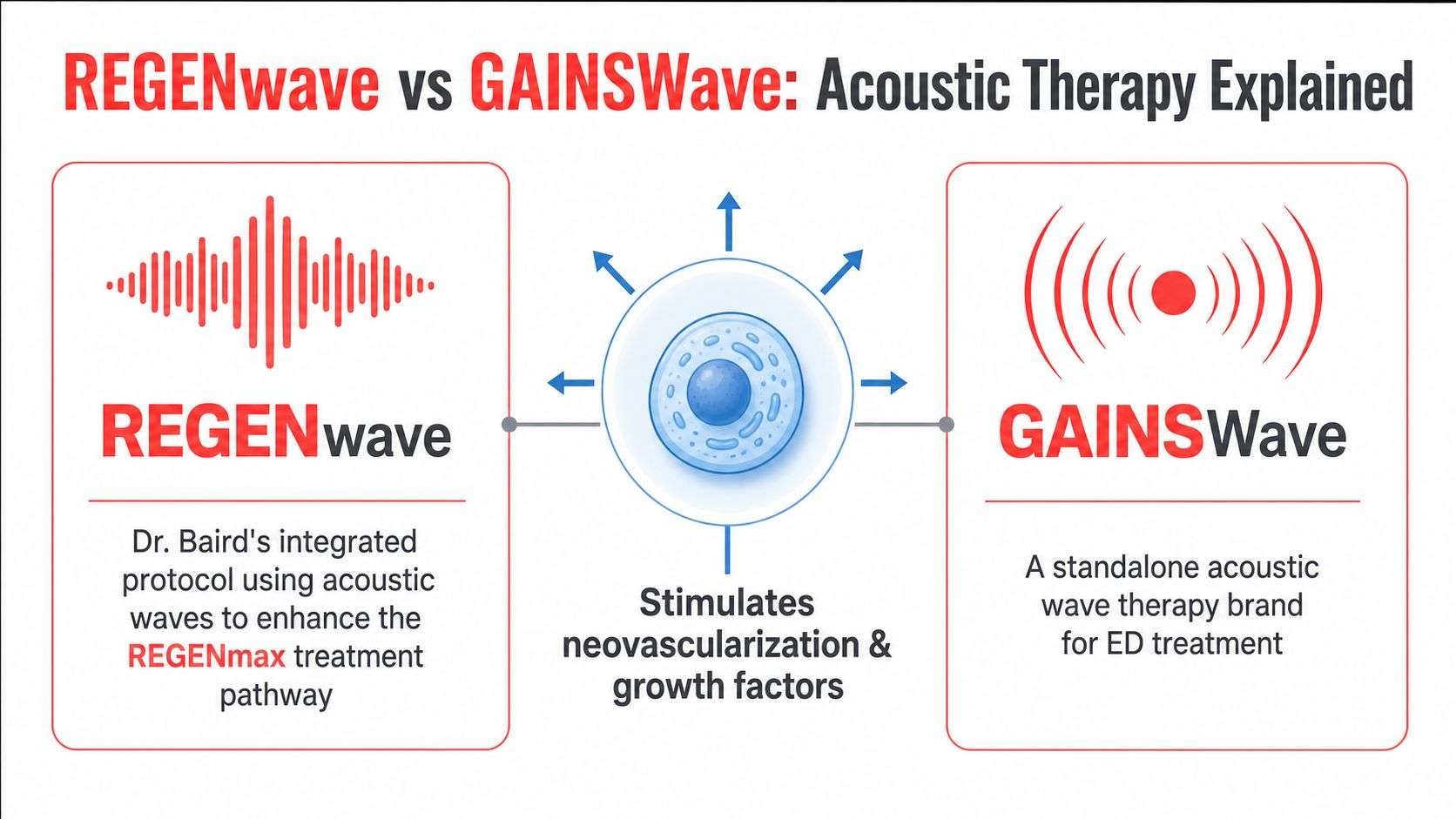
A patient may encounter acoustic therapy as a branded service, a generic device procedure, or one part of a broader regenerative plan. The shared approach directs acoustic energy toward erectile tissue, with the intended goal of supporting blood-flow and tissue responses. The more useful question is how the treatment fits the patient's health history, goals, and overall care plan.
REGENwave is Dr. Baird's acoustic therapy pathway within REGENmax. His background in family medicine shapes that distinction. Acoustic therapy is not presented as an isolated procedure by default. At SWCOFA, the stated model begins with assessment and may combine REGENwave with REGENlase and HEshot when those modalities suit the patient.
What to ask before booking
Ask whether the provider reviews hormones and relevant health factors, how the pathway is selected, what follow-up includes, and whether acoustic therapy is intended to stand alone. Ask how the clinic approaches penile curvature, diabetes-related concerns, medication use, or symptoms that may point to a non-sexual medical condition.
| Feature | REGENwave at SWCOFA | Generic acoustic wave therapy |
|---|---|---|
| Clinical position | Integrated into the REGENmax pathway | May be offered as a standalone service |
| Assessment | Built around individual evaluation and goals | Varies by provider |
| Adjunct modalities | May be paired with REGENlase and HEshot when appropriate | May not include additional regenerative modalities |
| Patient decision | Based on the broader treatment plan | Often centered on acoustic therapy |
| Follow-up | Connected to the clinic's ongoing care model | Depends on the practice |
Patients can review the REGENwave treatment page for the clinic's description of its protocol. The decision should reflect the problem being treated, not a simple preference for one procedure. Medication may help manage symptoms, while surgery may be considered for structural or severe problems. REGENmax occupies a different position, offering a non-surgical, tissue-focused pathway for adults seeking an integrated plan.
What Treatment Looks Like for Men and Women
The patient experience depends on the anatomy being treated, the diagnosis, and the selected modalities. Men may seek care for erectile dysfunction, Peyronie's disease, or declining sexual performance. Women may seek help for reduced sensitivity, dryness, changes after menopause, or concerns about vaginal function. The consultation should keep those goals distinct rather than forcing both into one protocol.

For men
A man with ED typically begins with a discussion of erection quality, timing, libido, medications, cardiovascular or metabolic concerns, sleep, and prior treatment. If REGENmax is selected, the pathway may include REGENlase, REGENwave, and HEshot as separate components of the broader plan. The clinic describes these procedures as non-surgical, with little to no downtime, but patients should still ask about expected tenderness, activity restrictions, and follow-up instructions for the specific treatment performed.
Peyronie's disease requires a more focused conversation because curvature, pain, plaque, and erectile function may not respond in the same way. Regenerative modalities may be discussed as treatment options, but a patient should receive an individualized assessment rather than assume that a protocol designed for general ED addresses every structural concern.
For women
The SHEshot injection protocol is designed for women seeking support for sexual function. Vaginal rejuvenation therapies may be considered when dryness, laxity, comfort, or reduced orgasmic response is part of the concern. Hormone evaluation can be relevant for perimenopausal or postmenopausal patients, especially when sexual symptoms occur alongside changes in sleep, energy, or desire.
The physical experience should be explained before treatment. Patients deserve to know how the area is prepared, what sensations are possible, what aftercare involves, and when sexual activity can resume. If you're researching energy-based approaches for vaginal concerns, an overview of high intensity focused ultrasound treatment can provide useful general background, although the appropriate treatment still depends on an in-person clinical assessment.
Follow-up is part of the treatment
Patients commonly want to know how many visits are needed and when improvements might appear. Those answers vary according to the plan, baseline health, tissue response, and whether supportive therapies are added. A clinic that gives one fixed timeline to every patient may be oversimplifying the process.
Patient question to ask: “What will I feel during treatment, what should I avoid afterward, and how will we decide whether the plan is working?”
Hormone, Peptide, and Supportive Therapies Around the Protocol
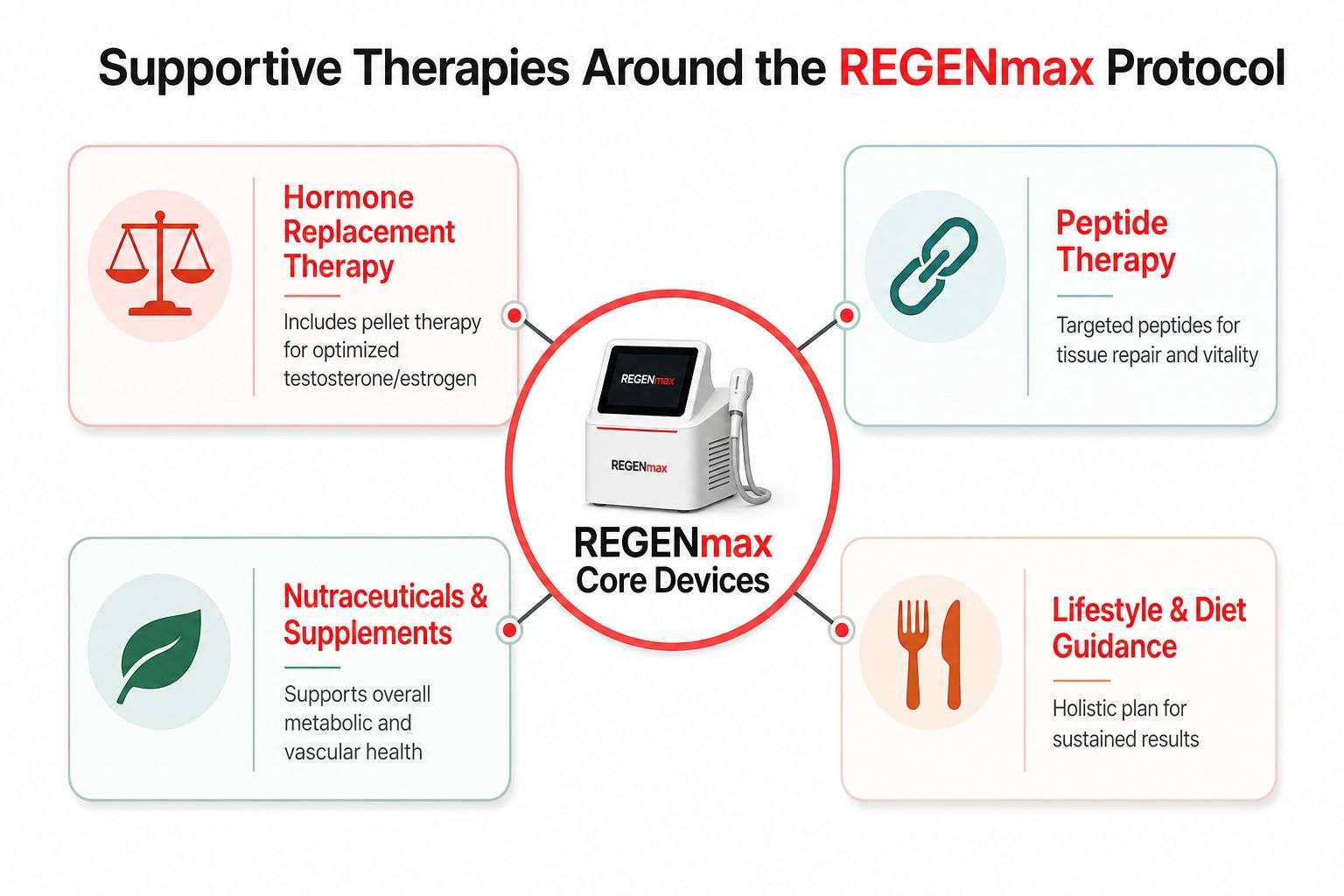
Regenerative devices don't operate separately from the rest of the body. Hormones, sleep, nutrition, metabolic health, and weight can influence energy, libido, vascular function, and a patient's ability to participate in recovery. That's why Dr. Baird's broader model includes services that surround the core regenerative treatment.
Hormone replacement therapy may include pellets and other modalities for men and women. Peptide therapy and targeted supplementation can be guided by laboratory findings, while IV infusions and IM injections provide additional supportive options. These treatments aren't automatically appropriate for every patient, and lab-guided prescribing matters because more treatment isn't necessarily better treatment.
The supporting framework
Sleep apnea and snoring treatment may be relevant when poor sleep is part of the patient's symptom pattern. Weight management and diabetes-related strategies can address health factors that may overlap with erectile difficulties. The clinical trade-off is that supportive care may require more patience and monitoring than a single procedure, but it can produce a more coherent plan when several contributors are present.
The Maintenance Membership Program is intended to support ongoing follow-up rather than treating sexual wellness as a one-time transaction. That structure can help patients revisit symptoms, review laboratory information, adjust supportive therapies, and discuss maintenance needs as their health changes.
Clinical perspective: A device may address one treatment target. A patient still needs care for the conditions affecting the whole treatment response.
Booking, Locations, and Patient Questions Answered
Dr. Baird's North Texas practice is associated with Carrollton and Colleyville, and the Sexual Wellness Centers of America clinic is located in Colleyville, Texas. Patients should contact the clinic directly for scheduling, current financing information, treatment availability, and guidance for out-of-town visits. Traveling patients can also ask how consultations, procedures, laboratory work, and follow-up are coordinated.
Common questions
Who may be a candidate? Adults with ED, Peyronie's disease concerns, sexual-performance changes, hormone-related symptoms, or women's sexual wellness concerns may request an evaluation. Candidacy depends on medical history, examination, laboratory findings, goals, and the clinician's judgment.
Is there downtime? The clinic describes its protocols as non-surgical with little to no downtime. Your actual instructions depend on the modality performed, injection details, treatment area, and individual response.
How long do results last? Duration varies. Ask what follow-up is recommended, how the clinic measures progress, and whether maintenance care is appropriate for your situation.
What does membership provide? The Maintenance Membership Program supports continuing care and follow-up. Ask the team what visits, monitoring, and adjustments are included before enrolling.
Sexual Wellness Centers of America offers individualized evaluation and non-surgical sexual wellness protocols, including REGENmax, hormone optimization, and supportive care in its Colleyville clinic. If you're ready to discuss whether Dr. Kenneth Baird's approach fits your goals, visit Sexual Wellness Centers of America to review the services and request an appointment.