
If you've already tried pills, watched the first few attempts work only halfway, and started wondering whether the next step is either endless medication or something more invasive than you want, you're not alone. That's the exact point where a different kind of urology and wellness conversation becomes useful, one that looks at tissue health, vascular support, and hormone balance instead of treating the erection problem as a single isolated symptom.
Dr. Roy Harris sits at the center of that conversation in Colleyville. His name comes up because he built a practice model around regenerative, non-surgical sexual wellness, not because he offers a one-size-fits-all fix, and that distinction matters if you're trying to decide whether the approach fits your situation.
Table of Contents
- When Pills Stop Working and Surgery Feels Too Far
- Credentials and Clinical Philosophy
- The REGENmax Program and Its Core Modalities
- How REGENwave Differs From Standard Acoustic Therapy
- Who Is a Good Candidate for Treatment
- Reported Outcomes and Realistic Expectations
- Booking a Consultation at the Colleyville Clinic
When Pills Stop Working and Surgery Feels Too Far
A common patient story is simple. The medication worked at first, then the response became less reliable, or the side effects became hard to ignore, or the whole routine started to feel like a workaround instead of a solution. At that stage, many men are not ready for surgery, and many don't want a lifetime of guessing whether tonight will be a good night.
That's where Dr. Roy Harris's clinical lane makes sense. He's associated with a model that tries to move beyond symptom control and toward tissue-level repair, using a mix of regenerative and hormone-focused tools rather than pushing every patient down the same road. For men who want a non-surgical path, that's a real difference, not a marketing phrase.
Why this profile matters
Dr. Harris is not a new face in this field. His practice history in the greater Sacramento medical community goes back to 2001, when he began offering laser skin treatments alongside Botox and dermal fillers, and his academic background includes Biochemistry at the University of California, Davis and medical training at the University of California, San Francisco (meet the team). That mix of long practice history and specialized aesthetic medicine helps explain why his work later expanded into regenerative protocols.
Practical rule: if a clinic only talks about the symptom and never discusses the vascular, hormonal, or lifestyle pieces, it's probably not offering a true regenerative evaluation.
People looking up Dr. Roy Harris also need to sort out identity carefully, because multiple unrelated profiles exist under the same name. The clinical question isn't just who he is, it's whether the current office, scope of care, and follow-up structure match what you need.
Credentials and Clinical Philosophy
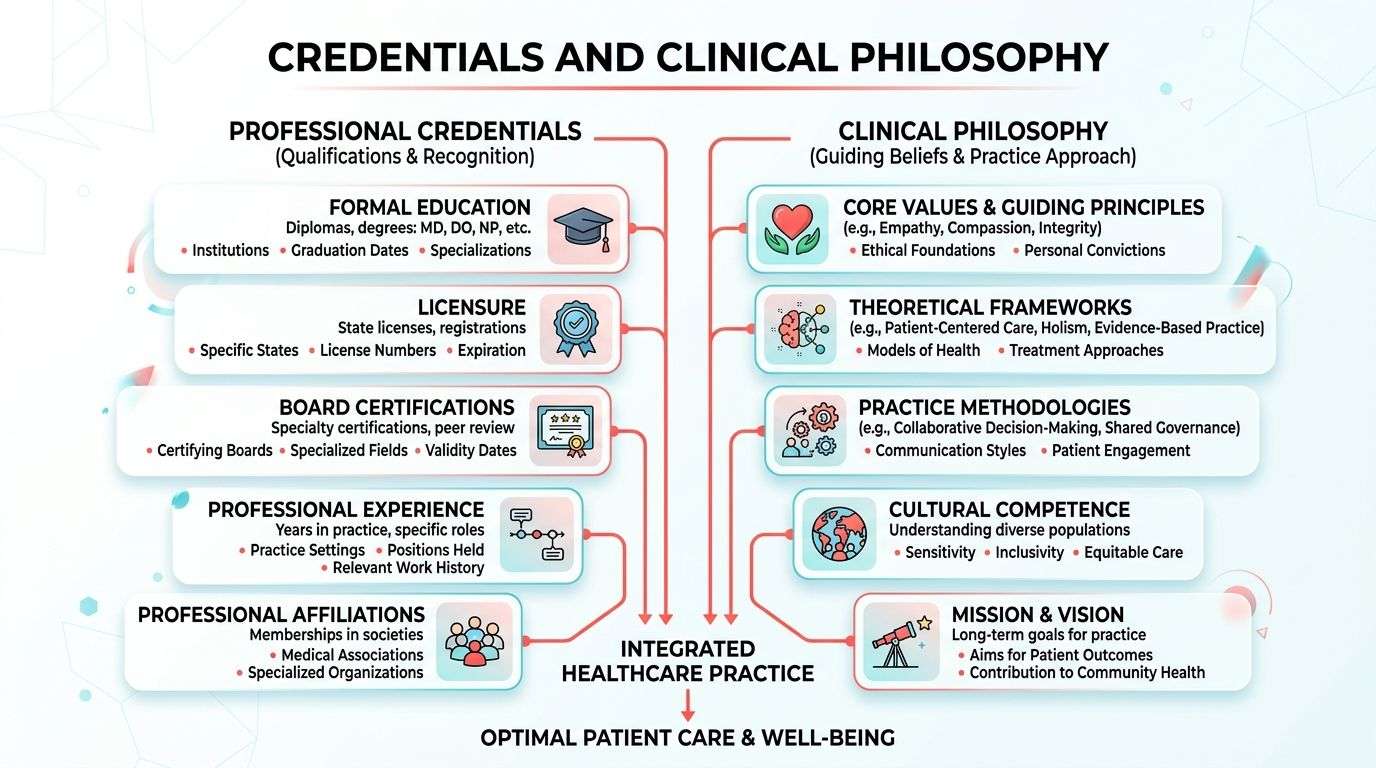
Dr. Harris's credentials matter because the work he oversees extends beyond a single procedure or a single complaint. The available record describes him as a board-certified physician, with medical training at UCSF, an undergraduate degree in Biochemistry from UC Davis, and a clinical career in the Sacramento area since 2001. His public profile also notes his background as an All-American track athlete in college, which fits the way his messaging keeps returning to performance, recovery, and day-to-day function. If you want the clinic's own summary of that background, the details are on the team page.
That mix of training and clinical history matters in sexual wellness because these concerns rarely sit in one category. Erectile dysfunction, libido changes, energy decline, and recovery problems often overlap with metabolic health, hormone shifts, medication effects, sleep quality, and vascular function. A clinician who has spent years working across broader patient wellness is usually better positioned to connect those pieces than someone who only treats the complaint in isolation.
How that philosophy shows up in practice
The approach starts with the patient as a whole person. Then it looks for modifiable drivers such as circulation, hormone patterns, weight-related stress, sleep problems, and chronic disease burden. After that, the plan needs room to change over time, because a rigid protocol can miss what the body is doing from one visit to the next.
For patients, that kind of work also depends on clean documentation and disciplined follow-through. Any regulated medical program has to hold up on the administrative side, which is why resources like Dallas-Fort Worth clinic compliance support can matter to practice leaders who want their systems set up correctly from the start.
The REGENmax Program and Its Core Modalities
REGENmax® is the name attached to the clinic's flagship non-surgical protocol. The program combines shockwave therapy, laser therapy, regenerative injection, and hormone optimization, and the clinic describes it as having a 97.2% success rate in clinical studies with results lasting up to 18 months when maintained annually (REGENmax details).
The important point is not just that the protocol has multiple parts. It's that each part is meant to support a different layer of function. One modality targets tissue signaling, another supports local circulation, another delivers regenerative material directly, and hormone optimization tries to remove internal friction that can blunt the response. That's a very different design from using one tool in isolation and hoping the rest sorts itself out.
How the pieces fit together
| Modality | How It Works | Role in the Protocol |
|---|---|---|
| Shockwave therapy | Uses acoustic energy to stimulate local tissue response | Supports blood flow and vascular remodeling |
| Laser therapy | Applies light-based energy to target tissue | Aims to encourage repair and regeneration |
| Regenerative injection | Delivers concentrated regenerative material into targeted tissue | Provides a direct local treatment component |
| Hormone optimization | Uses lab-informed hormone support | Addresses systemic barriers to sexual function |
The logic of layering matters clinically. Patients with more than one driver of dysfunction often do better when treatment reflects that complexity. A man with vascular impairment and suboptimal hormone status is not the same as a man with purely situational performance concerns, and the protocol is built to respect that difference.
The right question is rarely, “Which single treatment is best?” The better question is, “Which combination is most plausible for this patient's biology?”
The full protocol description is laid out in the clinic's own REGENmax material, which is the most direct place to understand how the pieces are packaged and maintained (program overview). If you're trying to explain it, think of it as a structured, multi-modal attempt to improve function rather than a quick symptom patch.
How REGENwave Differs From Standard Acoustic Therapy
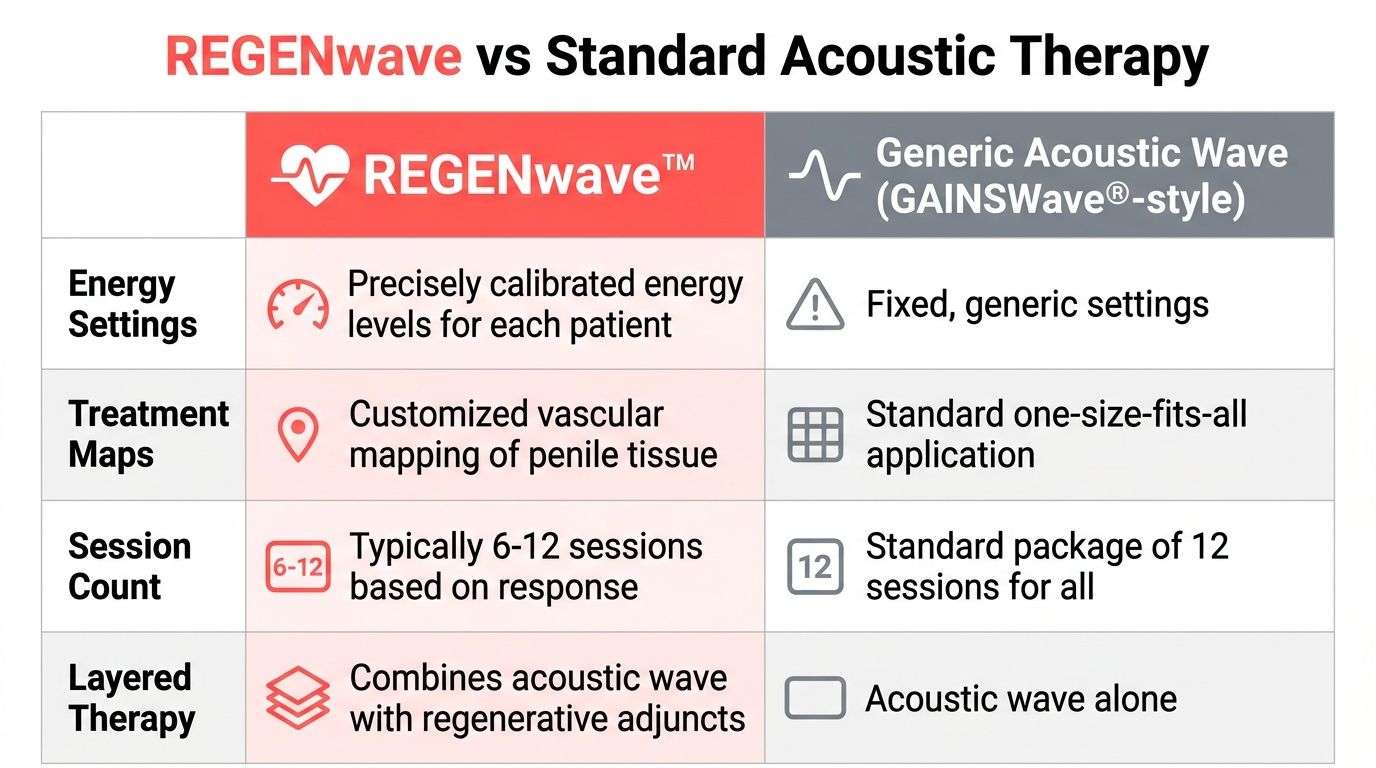
Not all acoustic therapy is designed the same way. Some clinics deliver acoustic waves as a stand-alone service, while REGENwave™ is positioned as part of a broader regenerative plan. That difference matters because acoustic energy alone may be useful, but it can also be too limited if the patient's problem has hormonal, metabolic, or tissue-injury components.
What to ask before booking
A serious consultation should answer a few concrete questions:
- How is energy selected? The clinic should be able to explain whether settings are individualized or just applied as a preset.
- What is being mapped? Ask whether the treatment pattern is customized to the tissue problem or delivered in a generic sequence.
- What else is being addressed? If hormones, vitamins, and chronic conditions are relevant, acoustic therapy should not be treated like a solo solution.
- What happens after the series ends? A good protocol should include follow-up and maintenance planning, not just a final session.
The point is not to dismiss acoustic therapy. It's to separate a thoughtful protocol from a shallow offering. A clinic can use the same broad technology category and still produce very different patient experiences depending on how carefully it integrates the therapy with diagnostics and follow-up.
For the clinical framing of this approach, the practice's own shock-wave erectile dysfunction page is the most relevant internal reference (shock wave erectile dysfunction). That's where the broader treatment philosophy sits in context.
Who Is a Good Candidate for Treatment
The best candidates tend to be patients whose problems are real, persistent, and still responsive to biologic support. Men with mild to moderate ED who want to reduce reliance on daily pills often fit the model well. So do men with diabetes-related vascular damage, because the issue is frequently not just desire, it's supply, signaling, and tissue quality.
Common profiles that usually deserve a closer look
- Men with early erectile decline. They may still respond to medication, but not well enough to feel satisfied.
- Patients with diabetes or metabolic disease. Chronic vascular stress can make erections less reliable over time.
- Men with early Peyronie's changes. Mild curvature or discomfort can justify a regenerative discussion before things harden into a more fixed problem.
- Women with hormone-related changes. Perimenopause, post-hysterectomy hormone loss, and postpartum changes can all affect comfort and function, which is why SHEshot® and vaginal rejuvenation enter the conversation for appropriately selected patients.

That candidate list makes more sense when you remember Dr. Harris's broader clinical background. Independent physician directories show a procedural and diagnostic mix including diabetes, diabetic complications, cholesterol disorders, depression, ADHD, preventive care, Botox, and weight-loss-related care (Vitals profile). That pattern points to a practice style built around longitudinal management, not just a narrow procedure visit.
What the intake should include
A responsible first visit should start with history, not hardware. Expect a review of symptoms, medications, chronic disease burden, and the timing of the problem. If the clinic is doing this right, it should also use blood work to look at hormone and vitamin status before recommending a path.
If a patient is never asked about diabetes control, sleep, medication list, or recent lab work, the evaluation is too thin.
The practical goal is to identify whether the issue looks reversible, partially reversible, or better handled with a different strategy. That's the kind of triage a good regenerative clinic should do before anyone commits to treatment.
Reported Outcomes and Realistic Expectations
The numbers the clinic cites need to be handled carefully. REGENmax® is described as having a 97.2% success rate in clinical studies, and the site also references a separate 98% study figure, with results lasting up to 18 months before annual maintenance is used to support durability (REGENmax details). Those figures are relevant, but they are not the same thing as a universal promise for every patient.
What they do tell you is that the clinic is tracking outcomes as a protocol, not as a random assortment of one-off procedures. That's useful, because it suggests a system with defined follow-up rather than a loose collection of services. What the numbers do not prove is that every man will respond the same way, or that the protocol outperforms every other approach in every setting.
How to interpret the timeline
Most patients are said to resume normal activity the same day, which is a meaningful trade-off for people who want treatment without much disruption (REGENmax details). That low-downtime profile is part of the appeal, but it also means expectations should stay grounded. Regenerative care usually works best as a measured process, not as a dramatic overnight event.
A good follow-up plan should answer three questions clearly:
- What should improve first?
- How will progress be checked?
- When does maintenance start?
The answer to the last question matters because a temporary gain is not the same thing as durable change. A clinic that speaks directly about annual maintenance is acknowledging that biology needs upkeep, not miracle language.
The honest expectation is incremental improvement with structured follow-up, not instant restoration.
That's the trade-off patients should understand before they book. The upside is a non-surgical framework that tries to work with tissue biology. The downside is that it requires patience, monitoring, and a willingness to follow the plan instead of chasing the fastest possible shortcut.
Booking a Consultation at the Colleyville Clinic
If you're considering the protocol, arrive prepared. Bring recent labs if you have them, a list of current medications and supplements, and a short timeline of when symptoms started, what changed, and what you've already tried. That gives the clinician something concrete to work with instead of making you reconstruct your history from memory under pressure.
The clinic also notes financing options, guidance for out-of-town guests, and a structured Maintenance Membership Program for follow-up care (clinic information). That combination matters for patients who need a treatment plan that extends beyond a single appointment, especially if travel is involved.
What to ask at the first visit
- Which diagnosis fits my case best? You want a clear clinical label, not vague reassurance.
- What parts of my problem are structural, hormonal, or vascular? A good plan separates those drivers.
- What follow-up is built in? Maintenance only works if it's scheduled and reviewed.
- What can be done if I'm traveling in for care? Out-of-town planning should be part of the first conversation.
For travelers, telehealth pre-screening can help narrow the visit so you're not guessing about timing or logistics. If the clinic thinks you're a candidate, ask how many in-person steps are needed and how follow-up is handled after you leave.
If you're looking for a clinic that treats sexual wellness as a medical problem with moving parts, not a quick-fix sales pitch, Sexual Wellness Centers of America is set up for that kind of conversation. Visit Sexual Wellness Centers of America to review the REGENmax® approach, ask about consultation logistics, and decide whether a regenerative, non-surgical plan fits your goals.