
Why Improve Emotional Intimacy Matters for Your Relationship
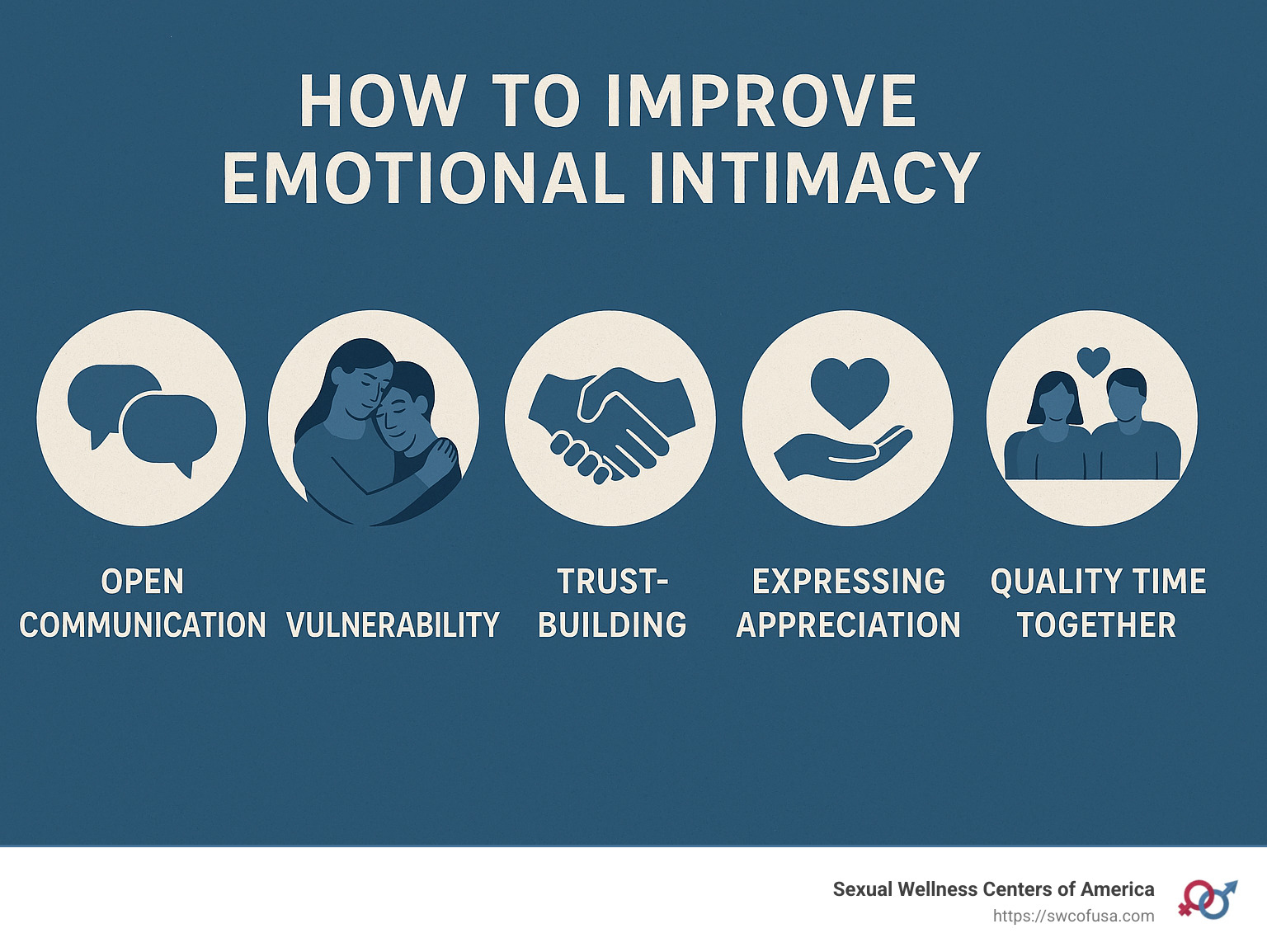
Improve emotional intimacy to deepen your connection, improve relationship satisfaction, and boost your individual well-being. Here’s how you can quickly start strengthening that bond today:
- Open up: Share your real thoughts and feelings honestly.
- Listen actively: Be fully present when your partner speaks; avoid distractions.
- Show affection: Express warmth both physically and verbally.
- Prioritize quality time: Set regular moments to connect deeply without interruptions.
- Express gratitude daily: Notice and appreciate specific things your partner does.
When you focus on emotional intimacy, you’re building a foundation for a happier, more satisfying partnership. As John Gottman, a renowned relationship researcher, explains:
“There’s a habit of mind that the masters have… They are scanning their social environment for things they can appreciate and say ‘thank you’ for.”
I’m Jeff Nuziard, CEO of Sexual Wellness Centers of America, and I’ve spent my career helping men and women improve emotional intimacy and sexual wellness. With extensive experience providing personalized support for closeness and connection, I’m here to guide you toward healthier, happier relationships.
Easy improve emotional intimacy word list:
– how to improve intimacy in marriage
– how to improve sexual intimacy
What Is Emotional Intimacy?
Emotional intimacy is that warm, secure feeling you get when someone truly sees and understands you. It’s the deep, comforting sense of connection that lets you share your authentic self—warts and all—without fear of being judged or rejected.
When you have strong emotional intimacy, you feel deeply known and accepted by your partner. It’s about being able to open up and share your inner world—the hopes, fears, dreams, and even insecurities—knowing they’ll listen with empathy and understanding.
“Emotional intimacy is a feeling of closeness and connection with someone. It’s a sense of being deeply seen, known, and understood. It requires vulnerability, empathy, a high level of trust, and finely-attuned communication skills.”
Unlike physical intimacy that involves touch and closeness through physical acts, emotional intimacy is rooted in your heart and mind. It’s built on psychological connection, trust, and vulnerability. And just like physical intimacy, strengthening emotional intimacy takes effort and intentionality.
You don’t build emotional intimacy overnight. It’s a gradual process that happens through consistent, honest interactions. Each time you and your partner choose to be open, actively listen, and respond with compassion, you build trust and deepen your bond.
When you intentionally improve emotional intimacy, you’re essentially saying to your partner, “I see you. I hear you. And I accept you exactly as you are.” This creates a wonderful cycle—the more you share and feel accepted, the safer you feel to open up even more. Over time, these moments of vulnerability and acceptance become the glue that keeps your relationship strong, even through life’s toughest challenges.
At Sexual Wellness Centers of America, we’ve seen how emotional intimacy directly influences physical intimacy and overall relationship satisfaction. Couples who come to us seeking help for physical intimacy issues often find that enhancing emotional connection is key to nurturing their partnership as a whole.
By the way, if you’re curious about improving the physical side of your relationship, check out our dedicated articles on how to improve intimacy in marriage and how to improve sexual intimacy. Emotional and physical intimacy are deeply interconnected—working on one often helps strengthen the other.
Signs of Emotional Intimacy
Emotional intimacy isn’t always easy to pinpoint, but when you have it, you just know. It’s that special feeling of closeness and understanding that makes your partnership feel secure, comforting, and deeply connected. Wondering if you’ve reached that point in your relationship? Here are some clear signals you’ve created a powerful emotional bond with your partner:

One of the biggest signs is a genuine sense of safety and trust. You feel completely comfortable sharing your deepest fears, wildest dreams, and most vulnerable moments, knowing your partner will handle them gently and respect your privacy. It’s that feeling of “this person has my back, no matter what.”
Another strong indicator is open communication. You can effortlessly talk about anything—from the trivial details of your day to your most profound desires, doubts, and hopes—without worrying about judgment or negative reactions. Conversations flow easily because you both value honesty, empathy, and curiosity about each other’s inner worlds.
Do you share those special glances or private jokes no one else seems to get? This sense of shared humor—those goofy inside jokes, silly moments, and spontaneous laughter—is a clear signal of emotional intimacy. In fact, research has shown that couples who laugh frequently together enjoy better relationship health and stronger bonds overall.
Physical touch also plays a key role. Emotional intimacy doesn’t always involve sex; instead, it’s reflected in relaxed, affectionate touch like holding hands, cuddling on the couch, or giving each other hugs throughout the day. This kind of physical affection strengthens your emotional bond and creates feelings of warmth and closeness.
It’s also about being each other’s biggest cheerleader. If you find yourself willingly making sacrifices to support your partner’s dreams or rooting for their successes, you’ve reached a deeper level of mutual support. You actively encourage each other’s goals and ambitions because their happiness genuinely matters to you.
Have you ever noticed how comfortable you feel simply being together without speaking? Comfortable silence is another subtle yet powerful sign. You don’t feel pressure to fill every quiet moment with chatter. Instead, you enjoy peaceful silences that speak volumes about your comfort with one another.
Another clear sign you’ve achieved emotional intimacy is an almost effortless intuitive understanding. Often, just a glance or a subtle change in body language tells you exactly what your partner is thinking or feeling. You “get” each other, even without words.
Emotional intimacy also shines through in the way you manage disagreements. Couples with strong emotional connections tend to handle conflicts more effectively. You practice healthy conflict resolution, focusing on understanding each other’s perspective rather than resorting to hurtful comments or tactics.
Remaining consistently curious about each other is another hallmark. You both show genuine interest by regularly asking questions, staying engaged, and exploring each other’s thoughts and feelings. You continue to find new things about each other, no matter how long you’ve been together.
Finally, true emotional intimacy means you’re both emotionally available—present and willing to support each other during times of stress or sadness. You don’t shy away from being there when your partner needs comfort, reassurance, or simply a shoulder to lean on.
When these signs are present, it’s clear you’ve built a strong foundation of emotional intimacy. But like any important aspect of your relationship, emotional intimacy requires ongoing care and attention to thrive over the long term. At Sexual Wellness Centers of America, we specialize in helping couples improve emotional intimacy through personalized support and innovative sexual wellness treatments.
Why Emotional Intimacy Is Important
Emotional intimacy isn’t just an optional “nice-to-have” in your relationship—it’s the glue that holds couples together through life’s ups and downs. When you make intentional efforts to improve emotional intimacy, you’re investing in the happiness, health, and longevity of your partnership.
Foundation for Relationship Satisfaction
“Emotional intimacy is the foundation of a deep, fulfilling connection between partners.”
Science backs this up, too. Research published in the Journal of Sex & Marital Therapy found that couples who feel emotionally close report greater relationship satisfaction and stability. Simply put, the more emotionally connected you feel, the happier and more secure you’ll both be.
Mental and Physical Health Benefits
It may surprise you, but emotional closeness doesn’t just feel good emotionally—it benefits your physical and mental health as well.
Studies consistently show that couples who share a strong emotional bond experience lower stress levels, reduced risk of depression and anxiety, and even improved immune function. Feeling deeply connected to your partner can lower your blood pressure, too, and may even add years to your life.
One particularly fascinating finding is that people in emotionally intimate relationships tend to heal faster when they get sick, experiencing less severe symptoms and quicker recovery times. It’s as if your emotional connection creates a protective shield that helps you weather life’s storms more effectively.
Buffer Against Life’s Challenges
Life throws curveballs—job changes, financial stress, health scares, family issues, and loss. Couples who share strong emotional intimacy handle these challenges better than those without it. Because they’re deeply connected and trust one another, they naturally rely on each other for support.
Instead of letting stress push them apart, emotionally intimate partners draw closer together, facing tough situations as a united team. This emotional strength and resilience helps relationships weather difficulties without breaking under pressure.
Improved Sexual Connection
At Sexual Wellness Centers of America, we’ve seen how emotional intimacy directly strengthens sexual intimacy. For many couples—especially those in long-term relationships—feeling emotionally connected and safe with each other is essential for fulfilling sexual experiences.
When you deepen your emotional bond, physical intimacy naturally becomes more satisfying and meaningful. You become more open to expressing your desires, needs, and vulnerabilities, resulting in a richer and more authentic sexual connection. If you’ve ever wondered how emotional closeness translates into better intimacy, you can explore this further through our guide on how to improve sexual intimacy.
Individual Growth and Self-Understanding
Finally, emotional intimacy also fosters personal growth and self-understanding. When you’re with someone who sees and accepts you just as you are, it’s easier to explore and understand your true self. This safe environment encourages honest reflection, helping you uncover insights and strengths you might not have recognized before.
Feeling genuinely seen and valued leads to greater self-acceptance and confidence. It creates a positive feedback loop: the more comfortable you feel being yourself, the more connected you’ll feel in your relationship. Over time, this authenticity becomes a powerful driver for both individual happiness and a deeper couple connection.
At Sexual Wellness Centers of America, we believe that emotional well-being and sexual health go hand-in-hand. By taking steps to improve emotional intimacy in your relationship, you’re investing not just in your partnership—but also in your individual health, happiness, and personal fulfillment.
Common Barriers to Enhancing Emotional Intimacy
Building a deeper connection with your partner is truly rewarding, yet many couples find themselves hitting roadblocks along the way. Understanding these common barriers can help you take the first steps to improve emotional intimacy and nurture the closeness you both deserve.
Past Traumas
Past experiences can create invisible barriers that keep emotional intimacy just out of reach. Whether from childhood wounds or previous romantic relationships, unresolved traumas can cause you to hold back emotionally, afraid to trust or become vulnerable again. These protective walls might feel safer, but they prevent you from fully connecting with your partner and experiencing the profound joy of genuine emotional intimacy.
Attachment Styles
Attachment styles—patterns of how we relate emotionally—also play a significant role. Our earliest relationships with caregivers form the template for how we approach love as adults. There are four main styles that shape your emotional connections:
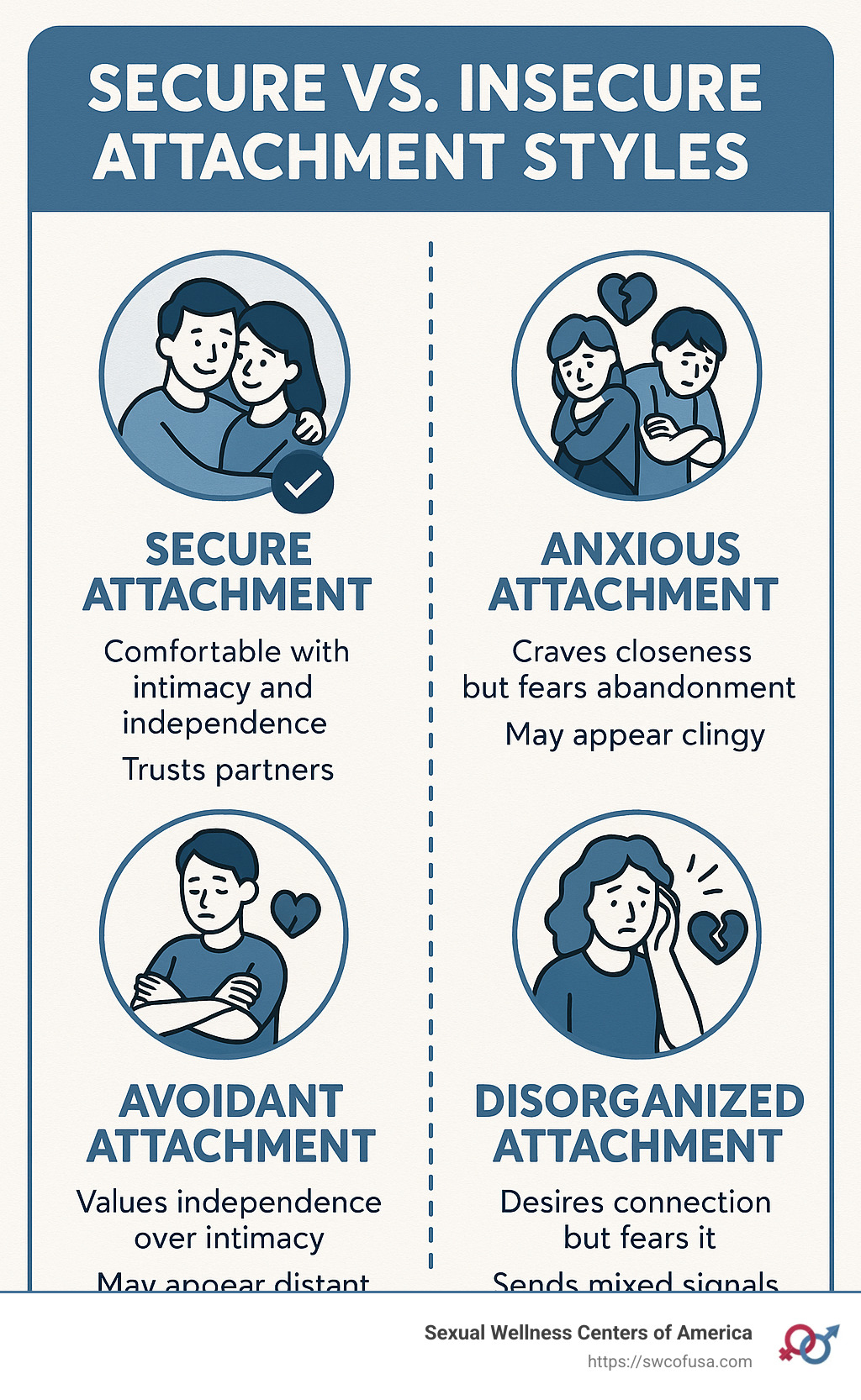
People with a secure attachment style find it easier to be emotionally close, trusting their partners while comfortably balancing independence and intimacy. On the other hand, those with an anxious attachment style deeply crave closeness, yet fear abandonment, often leading them to feel clingy or insecure.
Individuals with an avoidant attachment style value independence highly and may struggle with closeness, often pulling away when intimacy deepens. Meanwhile, the disorganized attachment style creates confusion: people long for connection yet fear it, sending mixed signals that can leave both partners feeling frustrated.
Recognizing your own style (and your partner’s) can help you both steer these differences and gradually shift toward healthier attachment patterns together.
Poor Communication Habits
Another common hurdle is poor communication. Effective communication means clearly expressing yourself, truly listening, and remaining receptive even during tough conversations. Unfortunately, many couples fall into habits that create emotional distance rather than closeness.
These destructive habits include criticism, defensiveness, stonewalling (shutting down during conflicts), and assuming your partner automatically knows your thoughts and feelings. Instead of understanding each other, conversations devolve into arguments focused on “winning,” leaving emotional intimacy behind.
Technology Interference
Technology—while convenient—can also quietly sabotage intimacy by stealing attention away from your partner. This phenomenon, known as “technoference,” is incredibly common today. One study found that regularly glancing at phones or laptops during quality time leads to increased arguments, lower relationship satisfaction, and even greater feelings of loneliness and depression.

Every notification, text, or email risks interrupting meaningful moments together. If you’re serious about enhancing emotional intimacy, make it a priority to set aside device-free time for connecting face-to-face.
Stress and Busyness
Life moves at lightning speed these days, and couples often struggle to make emotional intimacy a priority amid careers, parenting, and endless daily tasks. Stress and busyness create exhaustion, leaving little energy or mental bandwidth for nurturing your emotional bond. Over time, this constant pressure can cause partners to drift apart and feel disconnected.
Fear of Vulnerability
One of the deepest-rooted barriers to improve emotional intimacy is our fear of vulnerability. Opening up about your true thoughts, insecurities, and feelings can feel scary, risking rejection, judgment, or emotional pain. Many people cope by keeping conversations at the surface level or hiding behind an image of strength and independence.
The truth is, vulnerability is essential for intimacy. It takes courage and trust to share your inner world, but the rewards—deeper connection, greater happiness, and true acceptance—are well worth the risk.
At Sexual Wellness Centers of America, we understand these challenges and specialize in helping couples steer and overcome them together. Whether you’re struggling with past traumas, communication problems, or simply need help understanding attachment styles, we’re here to support your journey to a more connected, emotionally fulfilling relationship.
How to Improve Emotional Intimacy
Now that we’ve explored what emotional intimacy is and why it’s so important, let’s dive into practical strategies you and your partner can use to improve emotional intimacy and create a deeper, more fulfilling connection.
Practice Open and Honest Communication
Good communication isn’t just talking—it’s truly connecting. To improve emotional intimacy, practice active listening. Give your partner your full attention: no phones, no TV, no multitasking. Look them in the eye, nod occasionally, and reflect back what you’ve heard to make sure you understand. This simple act shows your partner that their feelings matter.
When it’s your turn to speak, express your feelings directly and kindly. Use “I” statements to describe your feelings without blaming your partner. For example, say, “I feel distant when we don’t spend time together,” instead of, “You never make time for me.” This helps your partner understand without feeling criticized.
Create a safe space for sharing by responding to vulnerability with empathy and support—not judgment or unsolicited advice. Start small, sharing little things about yourself before gradually moving onto deeper topics. Opening up about your feelings doesn’t mean jumping straight into your most embarrassing moments.
At Sexual Wellness Centers of America, we’ve seen how improving communication skills often leads to breakthroughs in emotional and physical intimacy for couples.
Spend Quality Time Together
Life gets busy—and it’s easy to lose quality time with your partner amid daily demands. To genuinely connect, schedule distraction-free time. It doesn’t have to be elaborate or fancy—simply turn off your phones, TVs, and devices, and spend time fully present with each other.
Consider creating special daily or weekly rituals, like enjoying a cup of coffee together, taking evening walks, or exploring new activities as a couple. Trying something new together—even if it’s something you’re both hilariously bad at—can create wonderful memories and deepen your emotional bond.
One couple who visited our center tried attending their first tennis match on a whim. They ended up bonding over it and now proudly call themselves “tennis nerds,” enjoying matches together regularly. These shared experiences boost closeness and improve your emotional intimacy naturally.

Show Appreciation and Affection
Expressing gratitude and affection regularly helps create a warm, loving atmosphere. Be specific in your appreciation—rather than a vague “thanks,” tell your partner exactly what you appreciate and why it matters to you. For example: “Thanks for making dinner—I was exhausted, and it made me feel so loved that you took care of me.”
Affectionate touch also helps build closeness. Research shows that non-sexual physical affection like hugs, holding hands, or cuddling releases oxytocin, the hormone that helps us bond emotionally. Keep affectionate touch separate from initiating sex to ensure your partner doesn’t feel pressured, making affection a safe and comforting gesture.
Another great way to improve emotional intimacy is learning each other’s love languages—words of affirmation, acts of service, receiving gifts, quality time, or physical touch. When you express love in your partner’s preferred way, it sends a powerful message that you truly understand them.
Accept Vulnerability
Being vulnerable—allowing your partner to see your true self, imperfections and all—can feel scary, but it’s essential for deep emotional intimacy. Vulnerability means sharing your inner thoughts, fears, hopes, and dreams honestly and openly.
True intimacy grows gradually. Start by sharing smaller, less intimidating feelings or experiences. Try a new hobby or activity together where you’re both beginners, making mistakes and laughing together. This shared vulnerability builds trust and comfort, ultimately making it easier to open up about bigger topics.
When your partner is vulnerable with you, respond supportively and compassionately. Showing empathy and acceptance encourages continued openness. As one relationship expert beautifully puts it:
“The more someone means to you, the more their opinion of you matters. This makes sharing your inner world feel super vulnerable—but this authentic revealing is where the deepest emotional intimacy comes from.”
Create Rituals of Connection

Consistency helps emotional intimacy flourish. Creating simple rituals—daily check-ins, greeting and goodbye rituals, weekly dates, or annual traditions—strengthens your bond by providing reliable connection points throughout your hectic lives.
A daily check-in can be as simple as sharing highlights from your day over coffee each morning or reflecting on your day together at night. Make goodbyes and hellos meaningful—a special kiss, hug, or phrase you always share fosters continual closeness.
Weekly date nights prioritize your relationship. Whether you go out or stay home, intentionally setting aside time to reconnect sends an important message: your relationship matters.
Rituals don’t need to be fancy to work. As one expert says, “It’s not about the specific actions you choose—it’s about consistently prioritizing meaningful time together.”
Manage Conflict Effectively
Every relationship experiences disagreements—the key is handling them constructively. Effective conflict management can actually improve emotional intimacy, creating space for deeper understanding and growth.
When conflicts arise, aim to understand your partner’s point of view rather than simply trying to “win.” Focus on respectful communication, express your feelings without blame, and listen carefully to your partner.
If emotions become overwhelming, it’s okay to take breaks. Agree to pause the conversation and return to it calmly later. Always make efforts to reconnect afterward—apologize sincerely, express affection, or use humor to rebuild closeness.
Addressing issues early prevents resentment from building up. At Sexual Wellness Centers of America, we frequently observe how resolving emotional conflicts can also improve sexual intimacy. You can give your sex drive a healthy boost with pellet therapy as part of a holistic approach to intimacy.
Address Past Traumas and Attachment Styles
Our past experiences impact how we connect emotionally today. Unresolved traumas or challenging childhood experiences can make emotional intimacy difficult. Understanding your attachment patterns—whether secure, anxious, avoidant, or disorganized—can also help you steer your emotional connections better.
Take time to reflect on how your past shapes your current relationships. Practice self-compassion, recognizing that these patterns developed to protect you. Communicate openly with your partner about triggers and reactions; understanding each other’s histories fosters empathy and closeness.
If past issues persistently interfere with intimacy, seeking professional therapy can be incredibly beneficial. Research shows attachment styles can evolve positively with secure relationship experiences and therapeutic support. You deserve a healthy, emotionally intimate relationship—don’t hesitate to seek help.
Limit Technology Interference
In our digitally-connected age, technology can easily distract and separate couples. Create intentional tech-free zones or times—such as dinner, evenings, or the bedroom—to prioritize your relationship.
Agree on clear digital boundaries that respect your quality time together. Use technology intentionally to improve closeness, like sharing meaningful content or exploring new interests together.
Genuine emotional intimacy grows from undivided attention and connection, something increasingly difficult if screens constantly interrupt your relationship.
Seek Professional Help When Needed
Sometimes, despite your best efforts, you may need extra support to improve emotional intimacy. Seeking professional guidance is a powerful step toward a healthier relationship—there’s no shame in getting help.
Couples therapy provides expert tools to improve communication, manage conflicts, and deepen intimacy. Sex therapy addresses both the emotional and physical aspects for couples experiencing relationship challenges in the bedroom.
Additionally, physical factors like hormonal imbalances or sexual dysfunction can impact emotional intimacy. At Sexual Wellness Centers of America, we offer comprehensive treatments custom to your needs, ensuring both physical and emotional closeness thrive.
Taking proactive steps to nurture emotional intimacy means investing in the long-term health and happiness of your relationship. We’re here to support your journey every step of the way.
Practical Exercises to Improve Emotional Intimacy
Improving your relationship doesn’t have to be complicated—small, consistent steps can lead to deeper, lasting connections. Here are some enjoyable and effective exercises you and your partner can try to actively improve emotional intimacy in your daily lives.
The 36 Questions
Originally developed by psychologist Arthur Aron, this famous set of thoughtfully crafted questions encourages gradually deeper sharing between partners. It’s surprising how quickly intimacy can grow just by taking turns answering meaningful questions. In fact, couples from Aron’s study reported feeling closer than ever after only 45 minutes.
Examples of these questions include: “What would a perfect day look like for you?” or “If you could change something about how you were raised, what would it be?” You can approach these questions casually over dinner or even on a cozy evening at home. The goal is simply to open doors to deeper understanding and vulnerability.
Daily Appreciation Practice
One of the easiest yet most powerful ways to improve emotional intimacy is to regularly express appreciation. Every day, share at least one specific thing you value about your partner. Be detailed—mention exactly what they did and how it made you feel. For example, “I really appreciated how you took care of dinner tonight. I was feeling overwhelmed, and it made me feel so supported.”
This simple habit encourages ongoing gratitude and positive sentiment, becoming a daily reminder that your partner notices and values you.
The “Remember When” Game
Shared memories form the foundation of your relationship. To keep positive memories fresh, try spontaneously saying, “Remember when…” and recalling a happy, fun, or meaningful moment you experienced together. One couple we worked with referred to this as “dredging up the past—in the best possible way!”
This playful exercise can be a quick way to reconnect, boost your mood, and remind you both why your relationship is special.
Mindful Listening Exercise
Good communication isn’t just about speaking—it’s equally about listening. Take turns spending five minutes each speaking without interruption while the other partner listens quietly and attentively. At the end, the listener summarizes what they heard before switching roles.
This exercise helps build better listening skills, patience, empathy, and makes both partners feel deeply heard and valued.
Shared Meditation
Meditating together might sound a bit quirky at first, but research suggests it can significantly boost intimacy. Simply sit together, face-to-face or side-by-side, hold hands comfortably, and meditate quietly for about 10 minutes.
This shared mindfulness experience can lead to increased closeness, trust, and openness to sharing your innermost thoughts and feelings.
Curiosity Questions
Even if you’ve been together for years, there’s always more to find. Once a week, set aside time to ask each other a curiosity-driven, open-ended question to uncover something new or interesting. Examples might include, “What’s a secret dream you’ve never told me about?” or “When did you feel most proud this past year?”
These questions keep your relationship fresh, engaging, and full of surprises—helping you both feel continually understood and valued.
Physical Connection Practice
Physical touch doesn’t have to be sexual to deepen your emotional connection. Spend 10 minutes simply holding each other comfortably without any expectation of sex. This helps rebuild non-sexual affection, something essential for feeling emotionally close and secure.
For couples facing physical intimacy challenges, hormonal imbalances may sometimes be the underlying issue. At Sexual Wellness Centers of America, we’ve seen how addressing hormonal health can dramatically improve emotional and physical closeness. Learn more about how hormone replacement therapy can improve sexual health to support your overall relationship wellness.
By incorporating these practical exercises into your relationship routines, you’ll find yourself feeling closer, more connected, and deeply bonded with your partner—every single day.
Maintaining Emotional Intimacy Over Time

When you first fall in love, emotional intimacy can feel effortless. But keeping that closeness alive through years—or even decades—of life’s ups and downs takes intention. Maintaining your connection isn’t something you check off once and never revisit; it’s an ongoing journey filled with growth, change, and plenty of humor along the way.
Adapt to Life Transitions
Life is full of changes, and every couple faces transitions that put stress on emotional bonds. Major events like having children, career changes, empty nesting, retirement, or health challenges can shift the dynamics of your relationship. Successful couples steer these transitions by communicating openly about their feelings and needs.
Instead of expecting things to stay the same, they adapt roles and expectations to fit their new reality. This might mean creating new rituals, like reconnecting each evening after kids move out or celebrating small milestones during retirement. Seeking outside support—whether from friends, family, or professional counseling—is also a smart move during especially tough changes.
It’s completely normal for big life transitions to shake things up. Being willing to accept these changes together rather than resisting them helps improve emotional intimacy and keeps your partnership strong.
Prevent Complacency
Let’s face it—long-term relationships can easily slip into autopilot mode. After all, routines feel comfortable and predictable. But too much comfort can also make your emotional intimacy flatline. That’s why the happiest long-term couples make efforts to keep things fresh.
First, continue finding new things about each other. People naturally change over time, so stay curious about your partner’s thoughts, dreams, and desires. Ask questions and actively listen, even if you think you know everything already (spoiler alert: you don’t!).
Second, introduce novelty into your relationship. Trying new activities together—like traveling to a new place, taking a class, or diving into a new hobby—sparks excitement, fun, and laughter. Keep challenging assumptions about what your partner likes or wants, and don’t be afraid to mix up your connection rituals occasionally.
In short, a little effort goes a long way toward keeping your relationship vibrant and preventing the dreaded relationship boredom.
Balance Togetherness and Independence
A common myth is that maintaining emotional intimacy means being together constantly. But real closeness actually thrives when you balance connection and independence. It’s healthy and beneficial to support each other’s individual interests and friendships. Pursuing separate hobbies, social groups, or personal goals allows both of you to grow individually, making you even more interesting and engaged partners when you come back together.
Respecting each other’s need for solitude and personal space is equally important. Giving one another room to breathe prevents resentment and helps maintain genuine fondness. As one wise couple in their 30th year of marriage remarked, “We’ve found that having our separate hobbies actually makes our shared time way more fun. There’s always something fresh to talk about.”
Recommit Regularly
Above all, lasting intimacy requires an ongoing choice to keep investing in your relationship. Regularly share what’s working well, and be honest about areas needing attention. Use these check-ins to express gratitude for the positives in your partnership and remember why you chose each other in the first place.
Celebrating anniversaries and milestones is another powerful tradition for renewing your commitment. Whether it’s your first year together or your 25th anniversary, marking these occasions reminds you both that your relationship matters deeply—and deserves nurturing.
One couple married over 40 years shared with us something beautiful and true: “We’ve had to fall in love with several different versions of each other over the decades. Each time, we’ve finded something new to appreciate.”
At Sexual Wellness Centers of America, we understand that nurturing emotional intimacy is a lifelong journey. We offer personalized support to help you steer life’s changes together, strengthening your emotional and physical connection every step of the way.
Frequently Asked Questions about Enhancing Emotional Intimacy
How Does Emotional Intimacy Impact Overall Relationship Satisfaction?
Emotional intimacy plays a huge role in your relationship satisfaction—it’s essentially the foundation of a truly fulfilling partnership. According to research published in the Journal of Sex & Marital Therapy, couples who regularly improve emotional intimacy in their relationship report feeling happier and closer overall.
When you and your partner feel emotionally connected, you’re more likely to communicate openly and honestly. This open communication makes conflict resolution easier by preventing misunderstandings and fostering mutual respect. It also builds trust, creating a sense of security where both partners feel safe being vulnerable.
As emotional intimacy deepens, physical intimacy often becomes more meaningful and satisfying too. Feeling emotionally close can boost passion, helping you and your partner genuinely enjoy your time together.
In short, focusing on your emotional connection creates a positive cycle: the closer you feel emotionally, the easier it becomes to steer life’s challenges together, deepening your bond even further.
How Can Past Traumas Affect Emotional Intimacy?
Past traumas, whether from previous relationships or early childhood experiences, can significantly impact your ability to improve emotional intimacy in your current relationship. Trauma often makes vulnerability feel risky, leading to trust issues and difficulties opening up to your partner.
People who’ve experienced trauma may struggle with emotional regulation. They might shut down emotionally during conflicts or have intense reactions that don’t seem to match the situation. Certain situations (known as triggers) can cause these emotional reactions, even if they seem harmless to others.
Additionally, past trauma can lead to patterns of avoidance—where you might actively avoid situations that require emotional exposure or vulnerability. This protective instinct, meant to prevent further hurt, unfortunately also keeps intimacy at a distance.
However, there’s good news: it’s entirely possible to heal from these traumas and start building deeper emotional connections. With patience, understanding from your partner, and sometimes professional support, you can learn new ways to feel safe, manage emotions, and foster intimacy. At Sexual Wellness Centers of America, we understand how past experiences can shape your current relationships and provide holistic support to help you overcome these barriers.
What Role Does Communication Play in Fostering Emotional Intimacy?
Communication isn’t just important—it’s essential if you want to truly improve emotional intimacy with your partner. Open, honest conversations let you share your authentic self, including your thoughts, fears, hopes, and dreams. This genuine sharing helps your partner learn who you really are, leading to a deeper emotional connection.
Effective communication involves actively validating your partner’s feelings—not necessarily agreeing with everything they say, but genuinely acknowledging and accepting their emotions. That kind of validation creates emotional safety, which encourages both of you to keep opening up.
Healthy communication also allows you to resolve conflicts constructively, ensuring disagreements don’t create distance between you. Instead, conflicts become opportunities for deeper understanding. Communication also gives you both the means to repair any hurt feelings quickly, before they escalate into long-term resentments.
Dr. Brené Brown perfectly describes the importance of communication in intimacy, saying:
“I define connection as the energy that exists between people when they feel seen, heard, and valued; when they can give and receive without judgment; and when they derive sustenance and strength from the relationship.”
That kind of meaningful connection only grows from consistent, authentic, and compassionate communication.
Conclusion
Enhancing emotional intimacy isn’t something you check off your to-do list once and forget about. It’s an ongoing, beautiful journey—a daily practice of showing up, opening up, and nurturing the bond that makes your relationship truly special.
It’s perfectly normal for emotional intimacy to ebb and flow over time. No relationship is always at a peak state of connection. What truly matters is your consistent intention to turn toward each other, stay curious about one another’s inner worlds, and create a safe, supportive space for genuine closeness.
At Sexual Wellness Centers of America, we deeply understand how emotional intimacy and physical intimacy are intertwined. When you improve emotional intimacy, you’re also nurturing the overall health and happiness of your relationship—including your sexual wellness. Our practiced team in Colleyville, TX, is dedicated to guiding couples through this interconnected journey, offering personalized plans based on hormone and vitamin panels. Our innovative treatments, such as the HEshot®™, SHEshot®™, and regenMAX technology, boast a remarkable 97.2% efficacy in reversing erectile dysfunction and addressing physical intimacy challenges.
Whether you’re looking to deepen an already satisfying relationship or reconnect after a challenging period, the strategies we’ve shared in this guide can help you improve emotional intimacy and build the kind of relationship you desire. If you’d like further support on this journey, we’re here and ready to help. Explore our Sexual Health Services or reach out directly to Sexual Wellness Centers of America to find how we can support both the emotional and physical aspects of your relationship.
Taking the effort today to nurture your emotional bond creates a lasting foundation of connection, trust, and mutual understanding. After all, having a loving partner by your side through life’s ups and downs is one of life’s greatest gifts. By actively working to improve emotional intimacy, you honor that gift—creating a relationship that not only endures life’s challenges but also thrives through them, offering deep fulfillment for you both.