
You're standing in front of a mirror with a ruler, trying to get a number that feels more “real” than the one in your head. The reading is smaller than expected, and the immediate thought is usually the same, something must be wrong.
Most of the time, nothing is wrong with your anatomy. The problem is measurement technique, and home methods commonly miss the part of the shaft hidden by the pubic fat pad. In clinic, urologists use a bone-pressed, dorsal measurement because it gives a truer number and makes readings comparable over time, especially when body fat changes the visible starting point of the penis (urology measurement review).
Table of Contents
- Why Your Measurement Is Probably Wrong
- Tools and Setup You Need Before Measuring
- Measuring Length Using the Bone-Pressed Dorsal Method
- Measuring Girth for Device Fit and Tracking
- Common Measurement Mistakes and How to Fix Them
- When Measurement Becomes a Medical Conversation
Why Your Measurement Is Probably Wrong
The most common home mistake is simple. A man starts at the skin surface near the base, measures along the top with a soft tape, and calls that the length. That number often looks shorter than expected because the tape starts where the body meets the shaft, not where the shaft begins at the pubic bone.
Why the starting point matters
Urology guidance converges on the same point, press through the fat pad and measure from the pubic bone to the tip of the glans. That standard exists because soft tissue can hide part of the shaft, and the effect is more noticeable in men with a larger prepubic fat pad (bone-pressed dorsal method guidance). If two people have the same underlying penile anatomy, the one who measures from skin level can record a systematically smaller result.
Practical rule: if the ruler is starting on skin instead of bone, the number is probably low.
This is why a casual mirror-and-tape approach can feel emotionally loaded but clinically meaningless. The reading isn't a judgment, it's just the result of a different method. If you want to compare your number with a doctor's note, a research protocol, or a tracking log over time, you need the same reference point every time.
That matters in sexual medicine too. A person worried about shortening after weight gain, injury, or curvature needs a measurement that separates true change from apparent shortening caused by the fat pad. If you're looking at whether measurements should be interpreted as a clinical issue or just a cosmetic concern, the discussion about size changes and treatment context is more useful than guesswork.
Tools and Setup You Need Before Measuring
Set up the measurement before you start. For length, use a rigid ruler, not a flexible tape. For girth, use a flexible sewing tape or a string that does not stretch, because circumference has to follow the curve of the shaft instead of pulling it into a straight line.
What to prepare first
A private room helps because you need the same position and enough time to repeat the reading if needed. Room temperature matters too, especially for flaccid measurements, because cold makes the penis retract and warmer conditions allow a more relaxed baseline. If you want to compare one reading with another, a steady environment gives you a cleaner result.
Use the same body position every time. Standing is usually easiest for length, since that matches the way many clinical protocols are done, but consistency matters more than the exact pose if you track the same way each time. If you are measuring a stretched or erect state, keep the conditions similar from one attempt to the next.
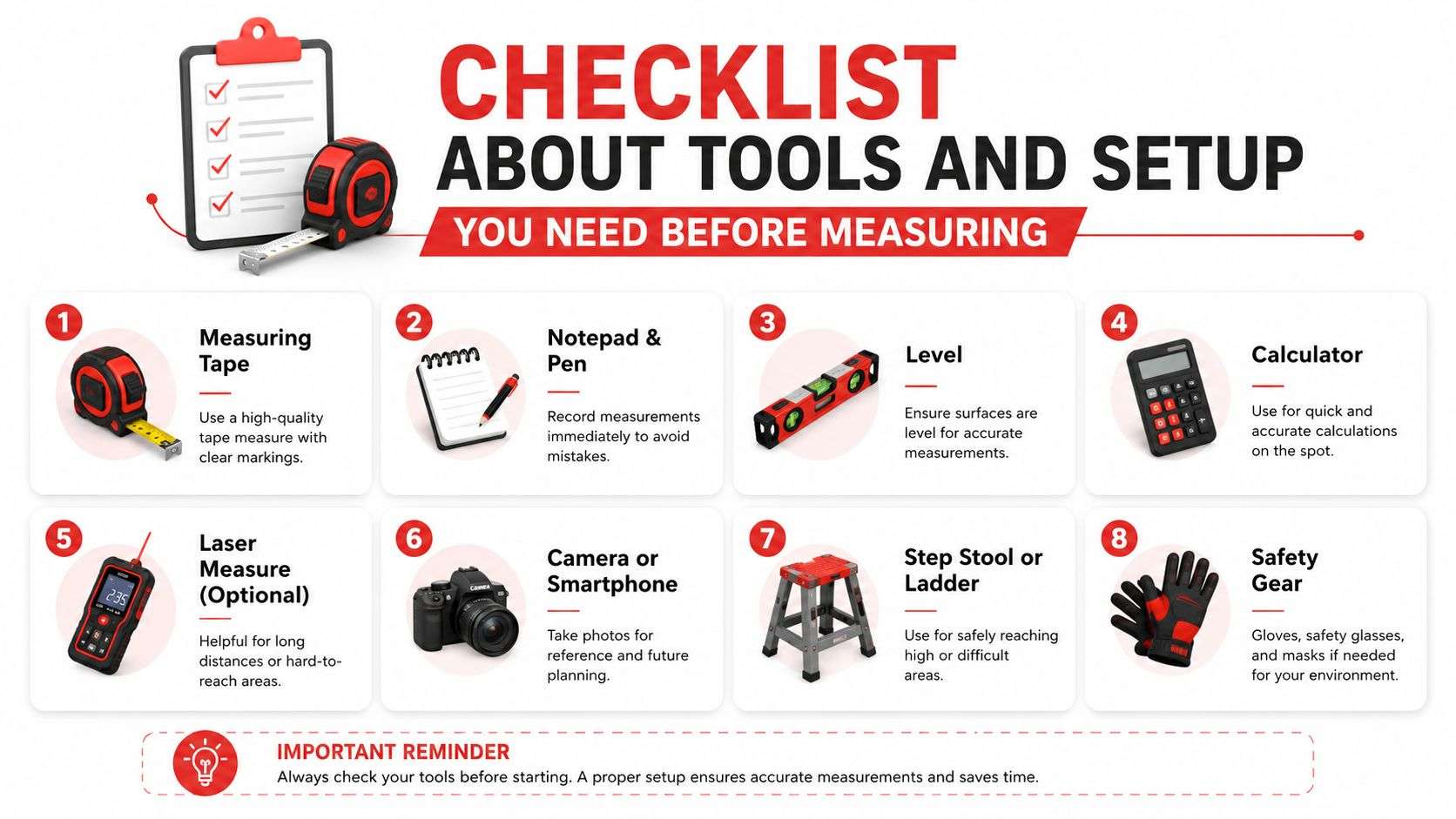
A simple way to organize it is this. The ruler gives you length, the tape gives you circumference, and the room gives you repeatability. Without all three, you are mostly collecting noise.
Keep your tools simple. A rigid ruler for length and a soft tape for girth cover almost every accurate home measurement.
For a flaccid or stretched reading, the clinical literature treats stretched penile length as the more reproducible clinic surrogate, because it can be standardized more easily than a full erection. That does not replace the bone-pressed method, it just means the setup has to match the question you are trying to answer.
Measuring Length Using the Bone-Pressed Dorsal Method
A tape measure against the skin gives you a flattering number, not the clinical one. The standard urologists use is bone-pressed dorsal length, because it starts at the pubic bone and removes the hidden effect of the pubic fat pad. Place a rigid ruler on the top, or dorsal, side of the penis, press it firmly through the soft tissue until it meets bone, then extend the penis to its maximum non-painful length and read the number at the tip of the glans.
The exact sequence that reduces error
Anchor the ruler against the bone first. That starting point is what makes the reading comparable, since skin thickness and fat pad depth change how a skin-based measurement lands.
Extend gently, not forcefully. Pain tightens the shaft and can shorten the measurement, so the goal is a firm but comfortable stretch that reflects the true clinical length rather than a strained one.
Read the ruler where it meets the tip of the glans, not the foreskin, not the skin ridge below it, and not the end of the shaft. The dorsal bone-pressed method is used in research and clinical follow-up because it reduces variation from the prepubic fat pad and gives a better basis for comparing one visit with another. That matters in real care, including tracking change over time in conditions such as Peyronie's disease and fitting devices that depend on a stable length estimate.
Two men can have the same anatomy and still report different numbers if one starts at the skin and the other starts at the pubic bone. The difference is not the penis, it is the measurement protocol. Starting at bone standardizes the reading.
If you are checking whether a treatment, curvature change, or device fit is affecting size, repeat the same method every time. Changing the ruler, the body position, or the start point makes the number harder to interpret. The goal is not the biggest reading, it is the most reproducible one. For people who also need guidance on fit decisions, a guide to choosing the right condoms for erectile dysfunction can help connect the number to practical use.
Measuring Girth for Device Fit and Tracking
Girth matters because it affects device fit, condom selection, and whether a measurement tells you something useful over time. For circumference, use a flexible tape at the mid-shaft or the widest erect point, wrap it snugly, and do not compress the tissue. General health guidance recommends this approach because it gives a more usable reading for fit and follow-up.
How to read the tape correctly
The tape should lie flat around the shaft. If it digs in, the number comes out artificially small. If it sits loosely, the number comes out artificially large. The right tension is snug enough to stay in place and gentle enough that it does not deform the tissue.
Erection quality affects the result. A partial or inconsistent erection can change circumference enough that one reading does not mean much by itself, so repeated measurements are more useful than trusting the first pass. A simple clinical habit is to take 2 to 3 repeated measurements and average them, especially if body position or erection firmness varies from one attempt to the next.
For purchasing decisions, girth often matters more than length. A tape reading can be more useful than a ruler reading if you are trying to choose a condom that fits properly. If that is your main concern, use the practical guidance in condom choice and sizing and treat the number as a fit tool, not a status marker.
Clinical habit: take the same girth measurement more than once, then use the average. One reading is a snapshot, not a decision-making tool.
If you are tracking changes after treatment, illness, or weight change, write down the location, the erection state, and whether the tape was snug or compressed. Those details explain why one number may differ from another, and they make later comparisons more meaningful.
Common Measurement Mistakes and How to Fix Them
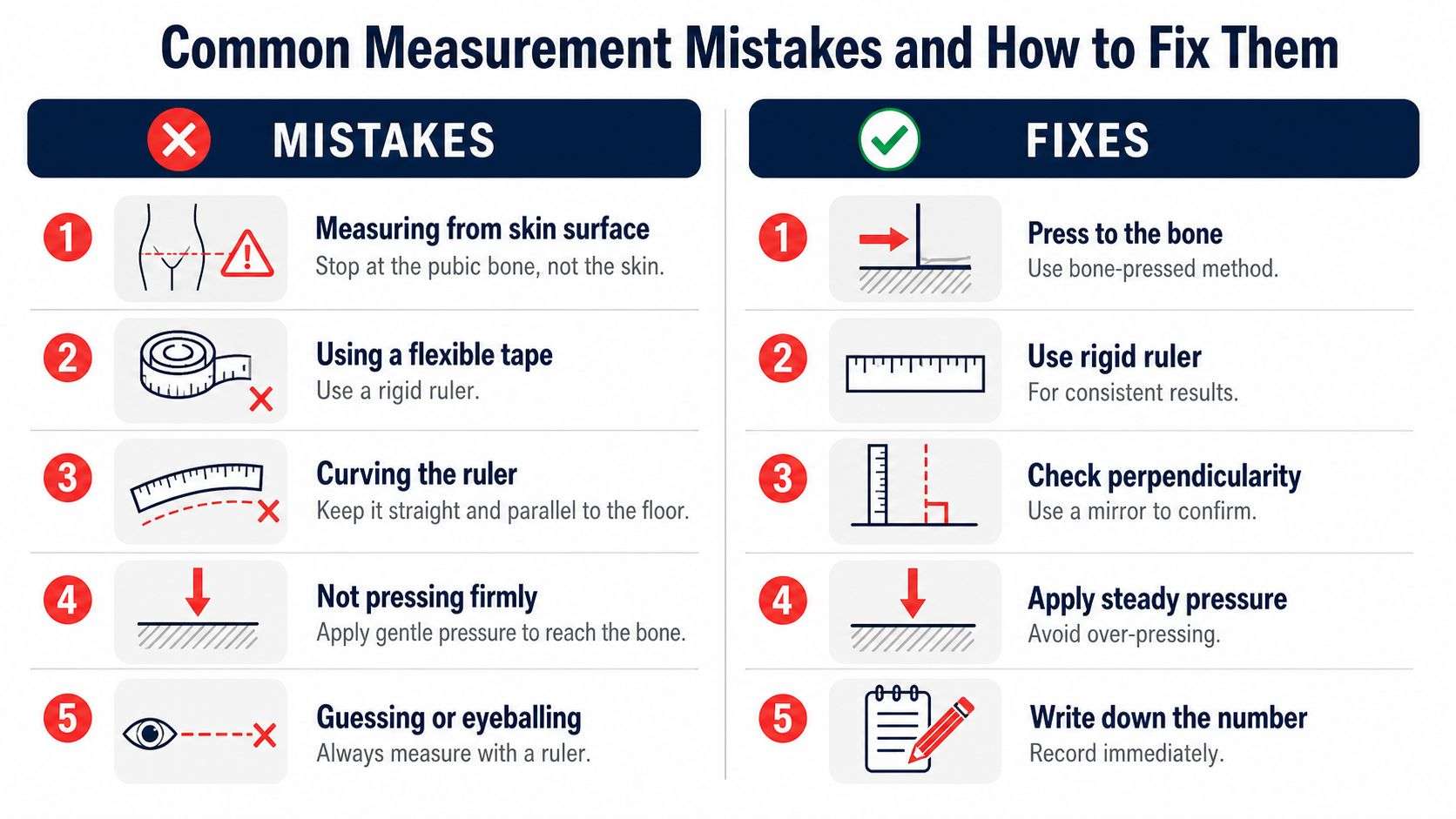
The biggest errors are usually ordinary. A ruler held at the wrong angle, a tape pulled too tightly, or a start point on skin instead of bone can all change the number enough to make it misleading.
The mistakes that change the number
- Starting on skin instead of bone. Press through the fat pad until you feel the pubic bone, then begin there.
- Using a flexible tape for length. Use a rigid ruler so the line stays straight and does not bow.
- Measuring at an angle. Keep the ruler aligned along the dorsal side, not slanted across the shaft.
- Over-tightening the girth tape. Snug is enough. Compression makes the reading smaller than it should be.
- Trusting one attempt. Repeat the measurement and compare the readings before you treat it as accurate.
The same logic applies to stretched penile length. Standardized protocols use a consistent, gentle traction force, and repeating the stretch helps reduce variation (stretched length evidence summary). You do not need to measure the pull at home. You do need to apply the same gentle force each time instead of changing it by feel.
A measurement taken from the underside can also drift because it changes the reference path. The dorsal method uses the top side, the pubic bone, and a straight line down the shaft. Stay on that path every time, or the numbers will not compare well from one session to the next.
Measure the same way each time, or do not expect the numbers to compare.
For people tracking change after treatment or over months, that consistency is what separates a useful trend from a confusing notebook. If the concern is curvature, shortening, or device fit, keep the record tied to the same method and the same landmarks. If the curve is new or getting worse, the question can shift from measurement to Peyronie's disease evaluation. A consistent technique tells you whether the body changed. A sloppy one only tells you that the method did.
When Measurement Becomes a Medical Conversation
Sometimes the number is less important than the reason you're measuring in the first place. If you're noticing new or worsening curvature, pain, or a visible loss of length after injury or weight gain, the question isn't vanity anymore. It's whether there's a condition that needs evaluation, especially Peyronie's disease when curvature changes are new or getting worse.
What deserves a closer look
A bone-pressed measurement helps separate true shortening from the illusion created by a larger fat pad. That distinction matters after weight changes, because the visible base can move without the shaft changing. If the bone-pressed number is stable but the penis looks shorter from the outside, the issue may be apparent length, not structural loss.
Pain during erection or during measurement also deserves attention. So does a sudden shift in erectile quality, especially if the change came after trauma. Those are the moments when the measurement becomes part of a larger clinical story rather than a standalone number.
A useful habit is to document what changed, when it changed, and whether the change affects function. For a structured way to keep that kind of record, the habit of perfect your head to toe notes is a good reminder that good documentation makes symptoms easier to interpret later. If you want a focused overview of curvature-related symptoms and treatment questions, see Peyronie's disease.
If you're only checking fit, a measurement is a practical tool. If you're checking because something feels different, that's a medical conversation worth having.
If you're worried about a change in size, curvature, or erectile function, Sexual Wellness Centers of America can help you sort out what's normal variation and what needs treatment. Visit Sexual Wellness Centers of America to learn more about evaluation and care options, especially if you want a clinician to review your measurement technique and discuss next steps in a private setting.