
You may have noticed it gradually. Sex still feels good, but not as vivid as it used to. You need more stimulation to get the same response. Reaching orgasm takes longer. Sometimes erections feel less responsive too, which makes it harder to tell whether the problem is sensitivity, firmness, or both.
That concern is common, and it deserves a real medical answer. Reduced penile sensitivity can come from several different pathways: blood flow changes, nerve irritation, medication effects, hormones, pelvic floor tension, or conditioning from masturbation habits. The right fix depends on which of those is driving your symptoms.
A useful approach starts simple and gets more targeted only when needed. That means checking for warning signs, cleaning up the everyday factors that dull sensation, correcting pelvic floor dysfunction when it's present, and then considering medical support or regenerative treatment if the problem persists. If you want to know how to increase penis sensitivity, the key isn't trying random tips. It's matching the treatment to the cause.
Table of Contents
- Introduction
- First Steps in Understanding and Assessing Your Sensitivity
- Reclaiming Sensation Through Lifestyle and Behavioral Changes
- The Critical Role of Pelvic Floor and Nerve Rehabilitation
- Exploring Medical Support Hormones and Medications
- Advanced Regenerative Protocols for Lasting Restoration
- Your Personalized Pathway to Restored Sensitivity
Introduction
Reduced penile sensitivity can feel confusing because it rarely shows up in a clean, obvious way. One man notices weaker pleasure during intercourse. Another feels numbness at the glans. Someone else can get partly erect but needs intense stimulation to stay engaged. Those are different experiences, but they often get lumped together as the same problem.
They aren't the same problem.
A man with pelvic floor tension needs a different strategy than a man with diabetic nerve changes. Someone whose symptoms started after a medication change needs a different workup than someone who's conditioned his body to respond only to a very forceful masturbation style. That's why broad advice online often disappoints. It tells you what might help, but not why it would help you.
Reduced sensitivity is a symptom, not a diagnosis.
The practical question is where to begin. Start by identifying whether the issue is mild and habit-related, or whether it points to something that needs medical evaluation. Then work through the lowest-risk, highest-yield changes first. In many cases, that means improving circulation, reducing nerve compression, changing overstimulating habits, and restoring healthy pelvic floor mechanics before moving to more advanced care.
If those steps don't produce enough progress, that doesn't mean you're stuck. It means the next layer of treatment should focus more directly on tissue quality, nerve health, hormonal status, and blood flow support. That stepwise path is what gives men the best chance of restoring sensation in a lasting way.
First Steps in Understanding and Assessing Your Sensitivity
What reduced sensitivity can actually mean
Some men describe a true drop in touch sensation. Others mainly notice delayed orgasm, weaker erotic response, or the sense that intercourse doesn't provide enough stimulation. Those can overlap, but they don't always come from the same cause.
A few broad categories are worth considering early:
- Vascular factors can reduce the quality of blood delivery to erectile tissue, which can make arousal feel muted.
- Neurological factors can interfere with the nerve signals that carry touch and pleasure.
- Hormonal issues can lower libido, decrease sexual responsiveness, and change how stimulation is perceived.
- Behavioral conditioning can teach the body to respond best to a narrow type of stimulation, especially very high pressure or speed.
- Pelvic floor dysfunction can create local tension, compress nerves, and blunt sensation.
Sexual function rarely fits a single-body-part model. If you want a useful framework, the effective treatment for complex conditions often comes from looking at physical, behavioral, and psychological contributors together rather than isolating only one.
Red flags that need prompt medical attention
Not every case belongs in a self-help plan. Some symptoms should push you toward a prompt medical visit.
Seek evaluation sooner if you have:
- Sudden numbness that appears quickly rather than gradually
- Pain, burning, or electric sensations in the penis, scrotum, or perineum
- Symptoms after an injury to the pelvis, spine, or genitals
- New weakness, back pain, or bowel and bladder changes
- A major medication change followed by a clear drop in sexual sensation
- Diabetes with numbness elsewhere, especially in the feet or hands
- Persistent erectile dysfunction alongside reduced sensitivity
If diabetes is part of your health history, it's worth understanding how nerve and vascular changes can overlap in sexual symptoms. This overview of diabetic neuropathy and ED is a useful starting point.
If the symptom is new, severe, or paired with pain, don't assume it's just aging.
A practical self-assessment
Before treatment, get specific. Vagueness leads to bad decisions.
Ask yourself these questions:
| Question | Why it matters |
|---|---|
| Did this change happen suddenly or slowly? | Sudden changes raise more concern for injury, medication effect, or acute nerve irritation. |
| Is sensation reduced during sex, masturbation, or both? | If only one setting feels dull, conditioning or technique may be involved. |
| Is orgasm delayed, weaker, or absent? | That helps distinguish pleasure loss from erection issues alone. |
| Do you sit for long periods, cycle often, or clench your core and pelvic muscles? | Mechanical nerve compression becomes more likely. |
| Have erections become softer too? | Reduced blood flow and reduced sensation often travel together. |
| Did symptoms start around stress, new medication, or lower libido? | That points toward a broader systemic contribution. |
Write the answers down. A clear timeline, pattern, and trigger list often reveals the most likely cause faster than guessing from memory.
Reclaiming Sensation Through Lifestyle and Behavioral Changes

Fix the habits that blunt nerve response
When men ask how to increase penis sensitivity, they often expect a product. More often, the first gains come from removing the inputs that keep the tissue underperforming.
Start with circulation. Smoking, poor glucose control, inactivity, and chronic sleep disruption all work against healthy nerve signaling and erectile response. The penis depends on blood flow not just for erection mechanics, but for tissue nourishment. If that support is poor, sensation usually suffers with it.
A few changes matter more than most men think:
- Improve glucose control if you have diabetes. Nerves don't do well in a high-glucose environment.
- Stop smoking if you smoke. Ongoing vasoconstriction is the opposite of what penile tissue needs.
- Break up long sitting periods. Get up, walk, and reduce constant perineal pressure.
- Review your medication list. If symptoms changed after a prescription change, bring that timeline to your clinician.
- Protect sleep. Low-quality sleep often worsens libido, stress, and erection quality at the same time.
Address death grip patterns directly
One of the most overlooked causes of reduced sensation is learned desensitization from masturbation technique. If your hand delivers more pressure, speed, and friction than partnered sex can match, your nervous system can adapt to that input. Then normal stimulation feels underpowered.
Blunt honesty helps. If you grip tightly, rush, watch highly stimulating content, and train your body to finish one specific way, that pattern can absolutely become part of the problem.
Clinical guidance on pelvic rehabilitation notes that pelvic floor physical therapy can improve penile sensitivity within 8 to 12 weeks of weekly treatment, with reports of enhanced sensation, finer erection quality, and improved ejaculatory control, particularly in cases tied to death grip syndrome. That matters because behavioral desensitization often isn't just about the skin. It also involves pelvic muscle tension, nerve irritation, and a narrowed arousal pattern.
Build a short reset plan
A useful reset doesn't need to be dramatic. It needs to be consistent.
Try this approach:
- Reduce intensity. Use a lighter grip and slow the pace.
- Use lubrication. Remove the need for forceful friction.
- Change position and rhythm. Don't repeat the exact same motor pattern every time.
- Shift attention to whole-body arousal. Breath, touch, movement, and anticipation all matter.
- Take strategic breaks if needed. Some men do better with a short pause from masturbation before reintroducing gentler stimulation.
Practical rule: If your body only responds to one very specific kind of pressure, retraining has to reduce that pressure first.
Men often look for a trick that restores sensitivity overnight. That usually isn't how this works. The nervous system responds to repetition. If you want it to become more responsive to natural stimulation, you have to give it natural stimulation often enough for that to become the new standard.
The Critical Role of Pelvic Floor and Nerve Rehabilitation
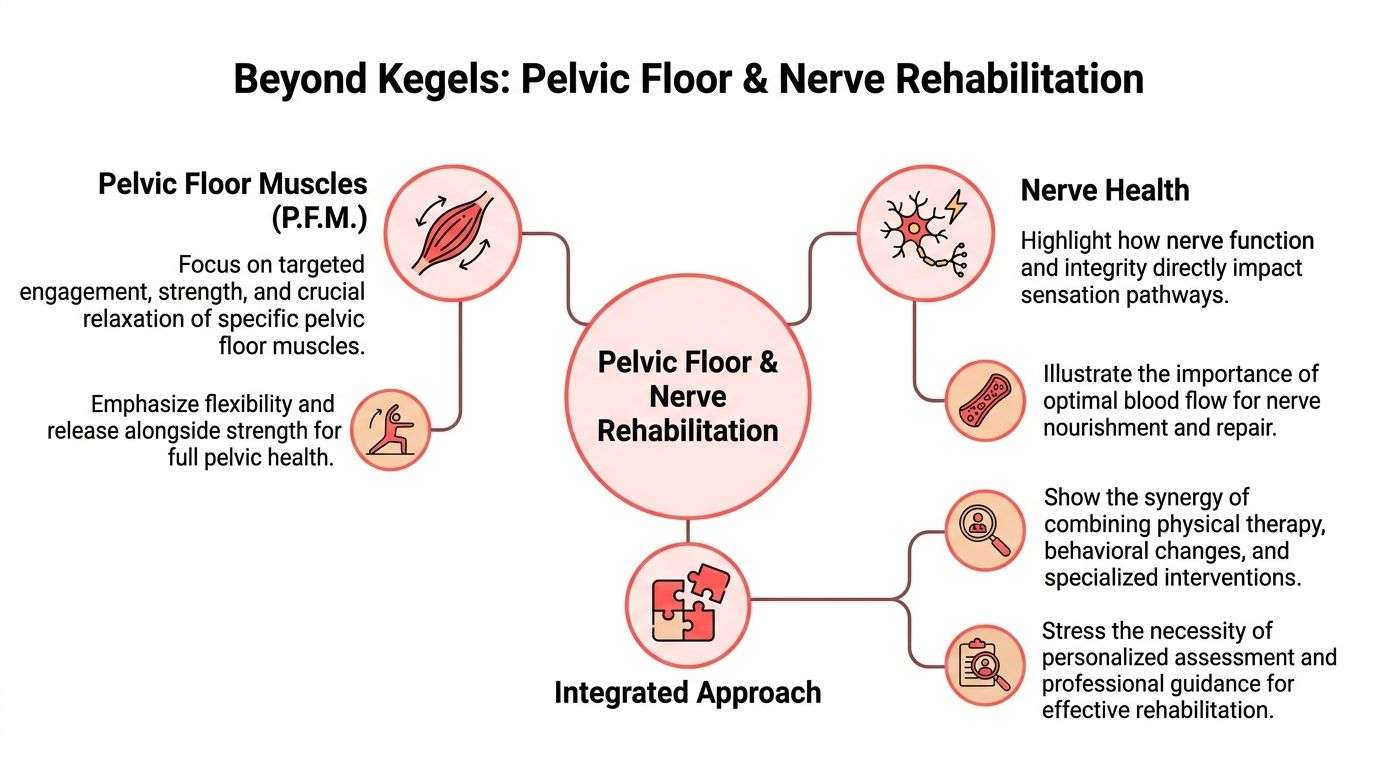
Why Kegels aren't always the answer
A lot of men get told to do Kegels for any sexual complaint. That advice is incomplete. In some cases, it makes the problem worse.
An overly tight pelvic floor can irritate the pudendal nerve and reduce blood flow. When that happens, the answer isn't stronger squeezing. It's learning how to let go. That distinction matters because evidence summarized here notes that 60 to 70% of men with reduced sensitivity have underlying pelvic floor dysfunction requiring targeted relaxation, not just strengthening, and that excessive tension can compress the pudendal nerve and reduce blood flow.
That's one reason so many generic guides miss the mark. They treat pelvic floor work as a strength problem when many men have a tension problem.
How to relax a hypertonic pelvic floor
If you spend long hours sitting, hold stress in your core, brace your abdomen constantly, or feel tightness in the perineum, hips, or low back, down-training the pelvic floor may help more than isolated contractions.
Focus on release-based work:
- Diaphragmatic breathing. Inhale into the belly and lower ribs. Let the pelvic floor soften rather than brace.
- Reverse Kegels. Instead of squeezing up and in, practice the feeling of gently dropping or releasing the pelvic floor.
- Hip and inner-thigh mobility. Tight adductors and hips often travel with a tight pelvic floor.
- Gentle positions such as happy baby or child's pose. Stay relaxed. Don't force the stretch.
- Posture changes during the day. Reduce constant pressure on the perineum and avoid clenching while seated.
A simple routine done consistently is usually more useful than aggressive exercise done occasionally.
The men who improve often stop trying to overpower the problem and start removing the tension feeding it.
When guided therapy matters most
Some cases need more than self-directed stretching. If you have persistent pelvic tightness, pain with ejaculation, urinary urgency, post-void dribbling, erectile inconsistency, or a history that suggests nerve irritation, formal pelvic floor physical therapy can be a strong next step.
The right therapist doesn't just hand out Kegels. They assess tone, coordination, breath mechanics, trigger points, movement patterns, and how your symptoms behave under load and relaxation. For men dealing with broader repair goals, education around BPC-157, nerve regeneration, and blood flow can also help frame why tissue healing and nerve support are often discussed together in restorative care.
A common trade-off is time. Pelvic rehab asks for repetition, patience, and body awareness. But when tension is the driver, it addresses the mechanism rather than covering the symptom.
Exploring Medical Support Hormones and Medications
Hormones affect sensitivity more than most men realize
Men often think of testosterone only in terms of libido. In practice, hormone status affects sexual interest, energy, mood, recovery, tissue health, and the intensity of arousal. When hormone levels are off, sensation can feel flat even if touch itself isn't completely absent.
That's why a medical workup matters when reduced sensitivity appears alongside fatigue, lower morning erections, depressed mood, reduced sexual desire, or slower physical recovery. Hormonal imbalance doesn't always create numbness, but it can lower the entire sexual signal so that stimulation feels less rewarding.
A good hormone review should look at symptoms and labs together. Treating numbers without context isn't good medicine. Ignoring symptoms because erections still happen isn't good medicine either.
Where medications help and where they fall short
Oral erection medications can be useful, especially when reduced firmness is part of the picture. By improving blood flow mechanics, they may help some men feel more responsive during sex. That said, they don't directly regenerate irritated nerves, reverse tissue decline, or retrain a maladapted pelvic floor.
Topicals and enhancement products have similar limits. Some increase friction or alter blood flow temporarily. Others mainly change the surface experience. If the deeper issue is nerve compression, pelvic hypertonicity, medication side effects, diabetes-related change, or hormonal imbalance, those approaches won't solve the root problem.
That doesn't mean medications are worthless. It means they should be placed correctly.
| Approach | Best use | Main limitation |
|---|---|---|
| Oral erection medication | Supports erection quality when blood flow is part of the issue | Doesn't directly restore nerve sensitivity |
| Topical products | May change immediate sensation or stimulation | Usually temporary and symptom-focused |
| Hormone optimization | Helps when low libido and systemic sexual decline are present | Won't fix every local mechanical cause |
| Pelvic and behavioral care | Addresses function patterns and conditioning | Takes consistency and time |
Questions worth asking your clinician
A productive visit usually starts with direct questions:
- Could my symptoms be medication-related?
- Should I have hormone testing based on my symptoms?
- Is this more likely a blood flow issue, nerve issue, or both?
- Would pelvic floor dysfunction fit my pattern?
- What would count as a reasonable trial of conservative care before escalating treatment?
The men who make progress usually stop chasing a single magic bullet. They build the right stack of care for the specific problem they have.
Advanced Regenerative Protocols for Lasting Restoration
What regenerative care is trying to change
When conservative care helps only partly, the next question is whether the tissue itself needs a stronger repair signal. That's where regenerative strategies enter the conversation.
The goal isn't to create a temporary boost for one night. The goal is to improve the biological environment that supports erection quality and sensation: healthier blood supply, better tissue responsiveness, and a stronger foundation for nerve signaling. Men with reduced sensitivity often have overlapping problems in those areas, especially when symptoms have been present for a long time or travel with erectile dysfunction.
This is why advanced care tends to outperform one-dimensional fixes in persistent cases. A pill can assist performance in the moment. Regenerative treatment aims to improve the underlying tissue over time.
How combination protocols work
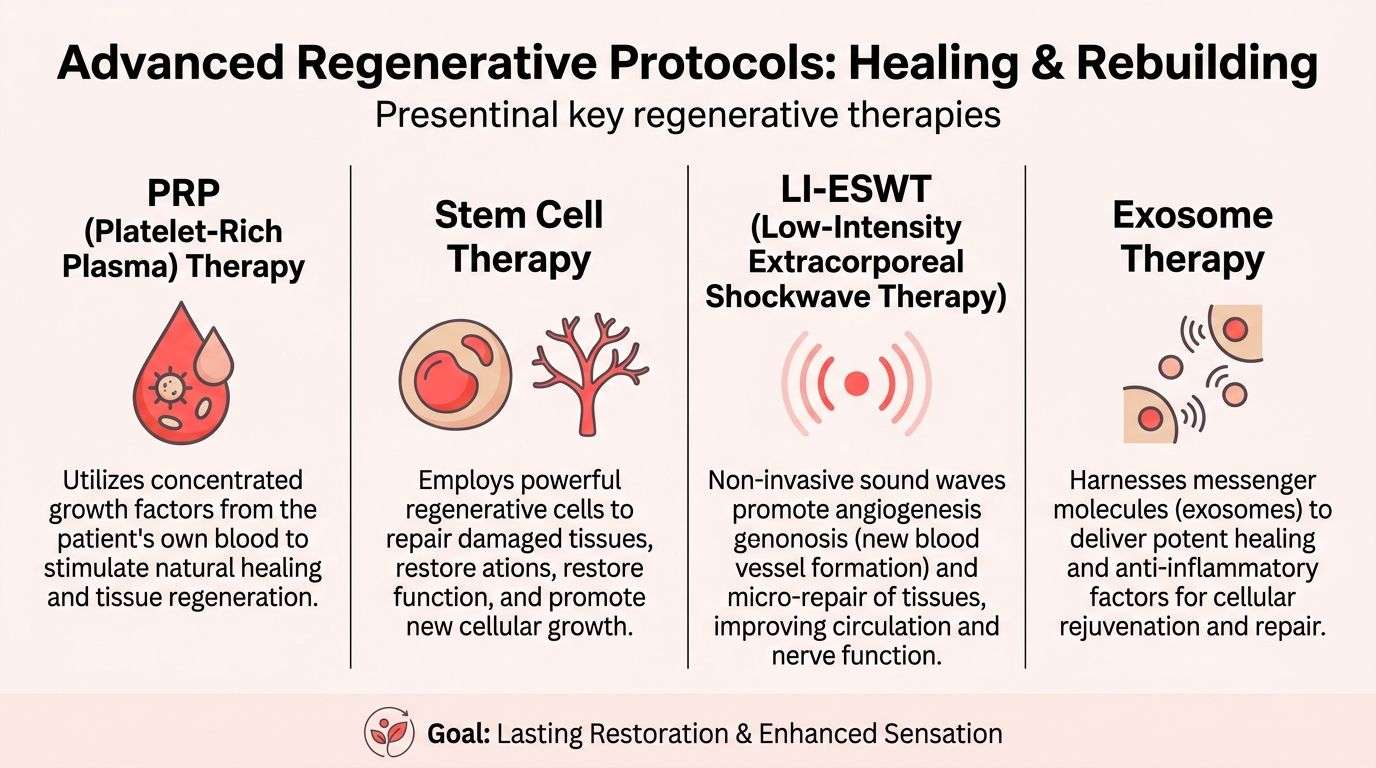
Different regenerative tools target different parts of the problem.
Acoustic wave therapy is used to stimulate repair activity and support new blood vessel development. Better circulation matters because nerves and erectile tissue depend on oxygen-rich blood delivery to function well. For readers exploring that mechanism in more depth, this summary of shockwave therapy for ED success and what the studies show explains why clinicians often use it in restoration-focused protocols.
Laser-based regenerative therapy is designed to deliver controlled energy that supports tissue rejuvenation. In a sexual health setting, the goal is usually to improve tissue quality rather than trigger an immediate effect.
Regenerative injection protocols are used to deliver concentrated healing signals directly to the target area. The rationale is straightforward: if local tissue repair is part of the problem, local biologic support may help create a more favorable healing response.
Some clinics also discuss related regenerative categories such as platelet-rich plasma, stem cell-based strategies, exosome-based approaches, and low-intensity shockwave protocols. What matters most is not the marketing term. It's whether the plan is individualized, medically appropriate, and matched to the patient's exam findings and goals.
A temporary erection aid can be helpful. It isn't the same thing as tissue restoration.
Who should consider this level of treatment
Advanced regenerative care usually makes the most sense for men who fit one or more of these patterns:
- They've already improved habits but still feel dulled sensation or weak erectile response.
- They have long-standing symptoms rather than a brief fluctuation.
- They have both sensitivity loss and erection decline, which often points to a deeper tissue and circulation issue.
- They want a non-surgical approach focused on restoration rather than symptom management alone.
- They need a plan that can be layered with hormone optimization, pelvic rehabilitation, and other medical support.
There are trade-offs. Regenerative care is more involved than taking a medication. It usually requires evaluation, a personalized protocol, and follow-up rather than one quick intervention. But for men with persistent dysfunction, that extra complexity is often what makes the treatment more rational. The physiology is complex, so the solution often has to be as well.
Your Personalized Pathway to Restored Sensitivity
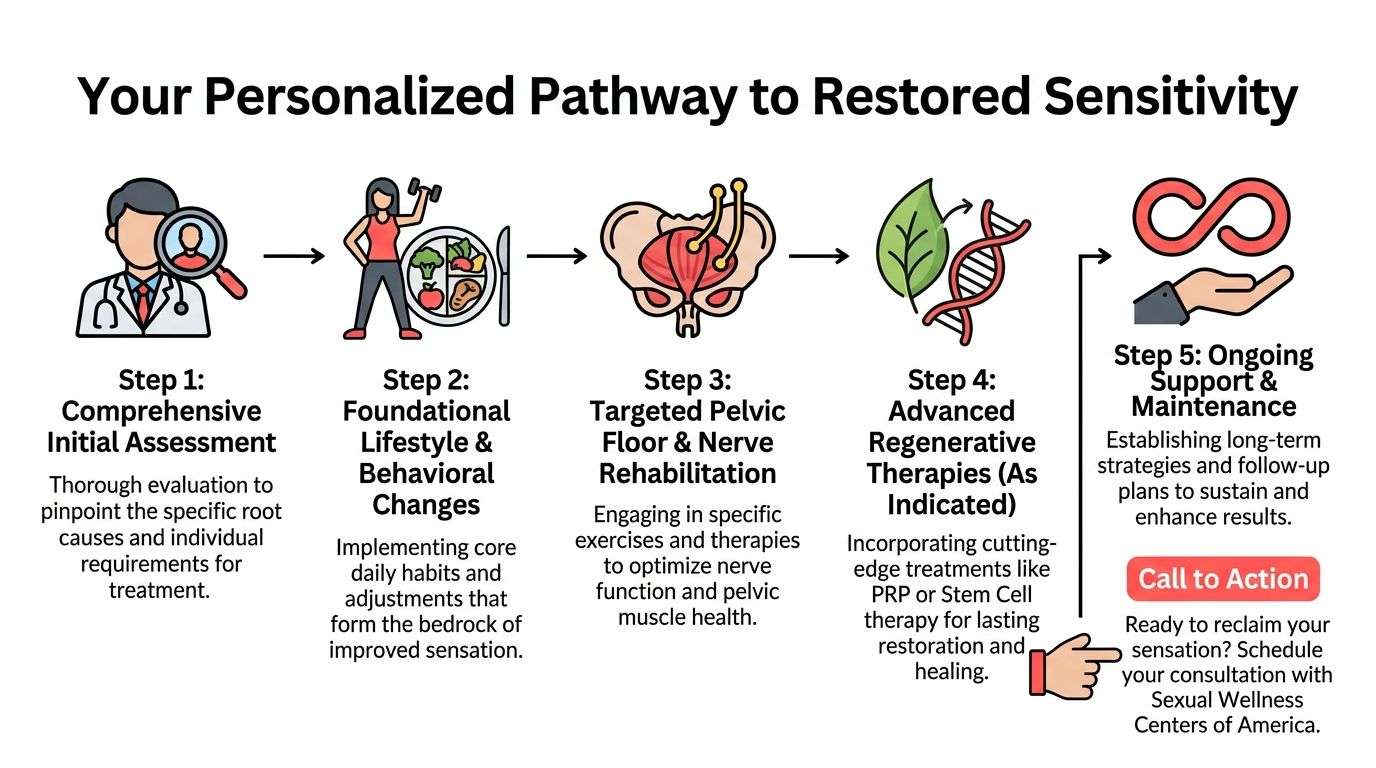
A simple decision framework
If you're trying to decide what to do next, keep it practical.
Start with self-assessment. If symptoms are mild, gradual, and clearly tied to habits, begin with the basics: improve circulation-related behaviors, reduce high-pressure masturbation patterns, and stop assuming more force equals more function. If you have signs of pelvic tension, add down-training work and consider formal pelvic floor therapy.
Move to medical evaluation sooner if you have red flags, diabetes, medication concerns, hormonal symptoms, pain, or erectile dysfunction that's becoming more frequent. At that point, guessing wastes time.
A straightforward pathway looks like this:
- Identify the pattern. Gradual dulling behaves differently than sudden numbness.
- Clean up modifiable inputs. Sitting, smoking, poor glucose control, sleep loss, and overstimulating habits all matter.
- Correct pelvic floor dysfunction if it fits. Tight muscles can sabotage nerve function.
- Check systemic contributors. Hormones, medications, and nerve health need review when symptoms persist.
- Escalate to regenerative care when root-cause restoration is needed. That's often the right move for chronic or mixed-mechanism cases.
What progress should feel like
Progress doesn't always mean a dramatic overnight return of sensation. More often, men notice a sequence of changes: stronger arousal, easier erections, less need for extreme stimulation, better orgasm quality, and a more natural response during partnered sex.
That pattern matters. It tells you the system is becoming more responsive overall, not just producing a short-lived effect.
If you've been trying to figure out how to increase penis sensitivity, the most important shift is this: stop looking for one universal fix. Reduced sensitivity has multiple causes, and lasting improvement comes from choosing the next logical step based on your symptoms, not on generic advice.
If you want expert help building that next step, schedule a confidential consultation with Sexual Wellness Centers of America. Their team evaluates sexual health concerns with a medical, personalized approach and can help determine whether lifestyle changes, pelvic rehabilitation, hormone support, or advanced regenerative care belongs in your plan.