
Understanding IM Injections: The Foundation of Effective Treatment
IM injections (intramuscular injections) are a medical technique used to deliver medication directly into muscle tissue. For those looking to understand the basics quickly:
| What is an IM Injection? | A medication delivery method where substance is injected directly into muscle tissue |
|---|---|
| Common Sites | Deltoid (upper arm), Vastus lateralis (thigh), Ventrogluteal (hip), Dorsogluteal (buttocks) |
| Needle Size | 22-25 gauge, 1-1.5 inches for adults |
| Injection Angle | 90 degrees (perpendicular to skin) |
| Benefits | Faster absorption than oral medications, bypasses digestive system |
When administered correctly, IM injections provide faster medication absorption than oral routes because muscles have rich blood supply. This delivery method is essential for certain medications that would be destroyed by stomach acids or need to reach the bloodstream quickly.
Proper technique is crucial not only for the medication’s effectiveness but also for patient safety and comfort. Poor injection practices can lead to complications like pain, tissue damage, or ineffective treatment.
I’m Jeff Nuziard, CEO of Sexual Wellness Centers of America, where we specialize in hormone therapy and other treatments often delivered through IM injections to help patients achieve optimal sexual health and wellness. My extensive experience with injectable therapies has shown me how proper administration techniques directly impact treatment success and patient satisfaction.
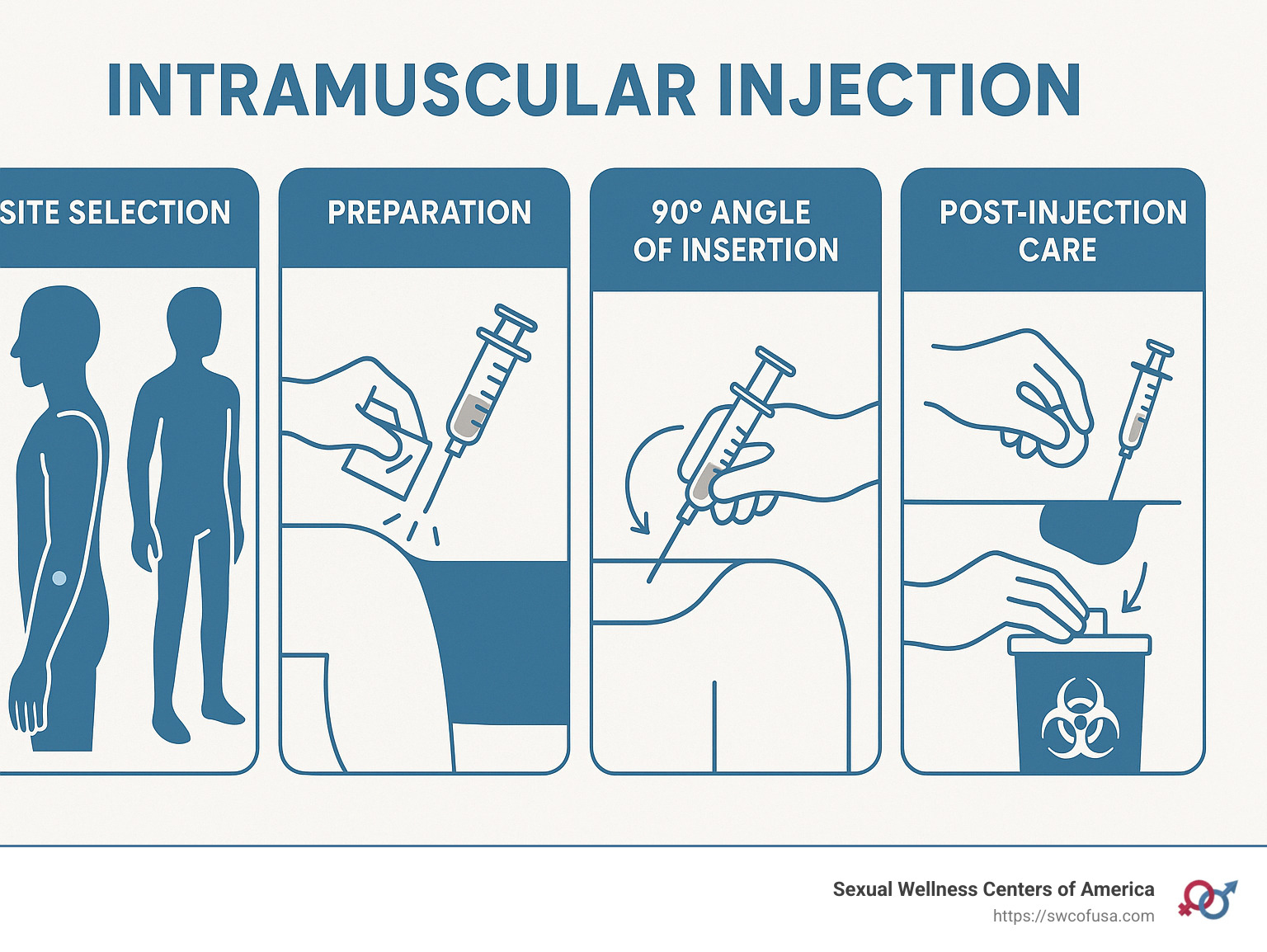
IM Injections basics:
Method 1: Choosing the Right Injection Site for IM Injections
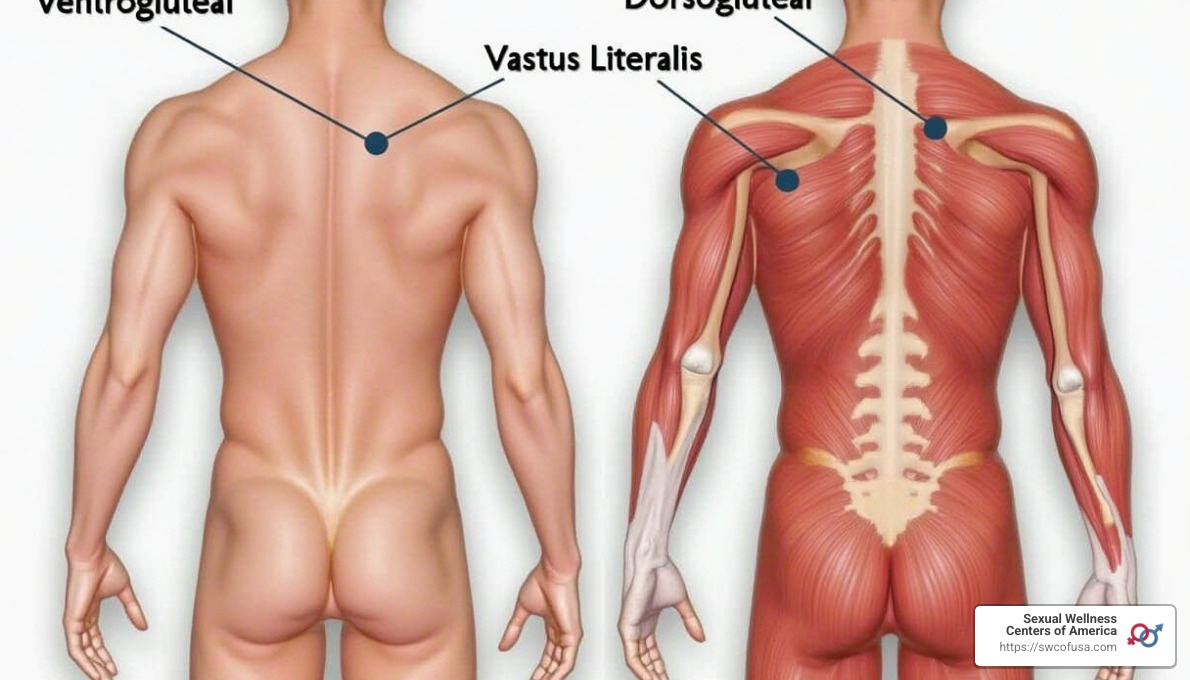
Picking the perfect spot for an IM injection is a bit like real estate – it’s all about location, location, location! The site you choose can make the difference between a comfortable, effective treatment and an unnecessarily painful experience. Let’s explore the main muscle groups we can use and when each one shines brightest.
Deltoid Muscle
The deltoid muscle, located in your upper arm, is probably the most familiar injection site for many of us. Think of all those flu shots you’ve received over the years!
To find this spot correctly, fully expose the arm and locate the acromion process (that bony point at the top of your shoulder). Place 2-3 fingers below this point and you’ve found the sweet spot – right in the thickest, central portion of the muscle.
The deltoid works wonderfully for adults and children over 3 years who have well-developed arm muscles. However, it has its limitations – it can only handle small volumes (1-2 mL maximum), making it perfect for vaccines but not ideal for larger medication doses or repeated injections.
Vastus Lateralis Muscle
On the outer side of your thigh sits the vastus lateralis – a true champion among injection sites. This large, accessible muscle is my go-to recommendation for parents of infants and young children.
Finding it is straightforward: mentally divide the thigh into three equal parts from hip to knee, then aim for the middle third on the outer side. This site is remarkably versatile, suitable for all age groups from tiny babies to adults, and can comfortably accommodate up to 5 mL in adults (3 mL in children).
The only downside? Some patients report slightly more discomfort here compared to other sites. That said, the vastus lateralis remains one of the safest options available, especially for our younger patients.
Ventrogluteal Site
The ventrogluteal site on the hip has been gaining popularity in recent years, and for good reason! Unlike some traditional sites, it keeps a safe distance from major nerves and blood vessels.
Locating this site takes a bit more practice: place your palm on the patient’s greater trochanter (the bony prominence of the hip), position your index finger on the anterior superior iliac spine, and spread your middle finger to create a V-shape. The injection goes right in the center of this V.
This site works beautifully for adults and children older than 7 months and can handle up to 4 mL of medication. The main drawback? It’s virtually impossible to self-administer – you’ll need a helping hand for this one.
Dorsogluteal Site
The dorsogluteal site – commonly known as the “buttock injection” – has fallen somewhat out of favor in modern practice due to its proximity to the sciatic nerve. However, it still has its place in certain situations.
To find this site safely, divide the buttock into four imaginary quadrants and aim for the upper outer quadrant, staying at least 5 cm below the iliac crest. This site can accommodate up to 4 mL of medication but should be reserved for adults only when other sites aren’t viable.
The risk of sciatic nerve injury, difficulty with self-administration, and unsuitability for children make this a less-than-ideal first choice for most IM injections.
At Sexual Wellness Centers of America in Colleyville, TX, we don’t believe in one-size-fits-all approaches. We carefully evaluate each patient, considering the medication type, volume needed, and your individual anatomy before selecting the optimal injection site. This personalized touch ensures you get the maximum benefit with minimal discomfort.
More info about IM Injections Colleyville TX
Special Considerations for IM Injections in Different Populations
Infants and Children
Let’s face it – giving injections to little ones requires extra care and a gentle touch. When it comes to IM injections for our youngest patients:
The vastus lateralis is the gold standard for children under 3 years. Its substantial muscle mass keeps the needle safely away from nerves and blood vessels, and it’s easy to access even when dealing with a squirmy toddler!
Needle length matters tremendously here – typically 16-25 mm for infants and 25-32 mm for toddlers. For very thin children, we might use the “bunching” technique, gently pinching the muscle to provide adequate depth.
And don’t underestimate the power of distraction! A favorite toy, a silly song, or a captivating story can work wonders in reducing anxiety and pain. As one of my young patients’ parents once told me, “The bubbles you blew during the shot were more memorable than the injection itself!”
Elderly Patients
As we age, our bodies change in ways that affect how we approach IM injections. Muscle atrophy is common in older adults, often requiring us to use shorter needles to avoid hitting bone.
The ventrogluteal site becomes particularly valuable for elderly patients because it typically maintains its muscle mass better than other sites. We also take extra care to assess for anticoagulant use, which can increase bleeding risk, and always allow additional time for position changes and comfort measures.
I’ve found that elderly patients particularly appreciate a thorough explanation of what to expect and why we’re choosing a specific site. This communication, combined with proper technique, creates a much more positive experience.
Overweight Patients
For patients with a BMI over 30, we make several important adjustments to ensure effective IM injections:
Longer needles (1.5 inches or more) are often necessary to reach past subcutaneous fat into the muscle tissue. The ventrogluteal site frequently becomes our preferred location due to its relatively consistent depth across different body types.
Finding anatomical landmarks can be challenging in patients with higher BMIs, making proper assessment and careful technique absolutely essential. We often employ the Z-track method (which we’ll discuss in Method 3) to minimize leakage and tissue irritation.
“Poor technique and incorrect landmarking of injection sites can lead to site reactions, sub-optimal medication absorption and adverse events,” notes the Royal Children’s Hospital Melbourne guidelines on IM injections. This is why at Sexual Wellness Centers of America, we take the time to properly assess each patient individually.
Scientific research on injection sites
Method 2: Mastering the Standard Technique for IM Injections
Let’s face it – giving an injection isn’t exactly on most people’s list of favorite activities. But when it comes to IM injections, mastering the proper technique makes all the difference between a smooth experience and an uncomfortable one. Whether you’re a healthcare professional or learning for personal care, these steps will help you deliver medications safely and effectively.
Step-by-Step Standard Technique
Think of administering an IM injection as a careful dance that begins well before the needle comes out of its package.
First things first – wash those hands! A thorough 20-second scrub with soap and water (about the time it takes to hum “Happy Birthday” twice) or an alcohol-based sanitizer sets the stage for a clean procedure.
Before you do anything else, double-check what I like to call the “medication mantra” – the six rights: right patient, right drug, right dose, right time, right route, and right documentation. This simple check has prevented countless medication errors over the years.
Getting your patient comfortable is crucial. For deltoid injections, a seated position works well, while ventrogluteal or vastus lateralis injections might be better with the patient lying down. Remember – a relaxed muscle makes for a less painful injection!
When you’re locating the injection site, take your time with those anatomical landmarks. Once you’ve found the perfect spot, clean it with an alcohol swab using gentle circular motions from inside out. Let that alcohol dry completely – it’s not just about preventing stinging; it’s ensuring proper antisepsis.
Now comes the moment of truth. Remove the needle cap with a straight pull (no twisting!), and use your non-dominant hand to slightly stretch the skin at the injection site. Take a deep breath, and with a quick, confident motion – like throwing a dart – insert the needle at a 90-degree angle to the skin.
Slow and steady wins the race when injecting the medication – about 10 seconds per milliliter gives the muscle time to accommodate the fluid without causing unnecessary pressure and pain.
When you’re finished, withdraw the needle smoothly along the same path it went in, and immediately apply gentle pressure with a cotton ball or gauze. Resist the urge to massage the area – this can actually irritate the tissue and push medication into subcutaneous layers where it’s not intended to go.
Safety first! Dispose of your needle and syringe in a proper sharps container right away without recapping – this prevents accidental needle sticks.
Finally, document everything promptly. As we say at Sexual Wellness Centers of America, “If it isn’t documented, it didn’t happen!”
The angle of your needle makes all the difference in whether your medication reaches its muscular destination. While a perfect 90-degree angle (completely perpendicular to the skin) is the traditional approach, current practice often recommends a slight angle between 72-90 degrees. This slight adjustment can help ensure you’re hitting the muscle properly while maintaining a comfortable insertion.
Equipment Preparation for IM Injections
Choosing the right tools for an IM injection is a bit like selecting the right golf club – using the wrong one can seriously impact your results!
When it comes to needles, both gauge (diameter) and length matter tremendously. Think of gauge like this: the smaller the number, the bigger the needle. Most IM injections work well with a 22-25 gauge needle. If your medication looks thick like honey, you’ll want to lean toward the thicker end of that spectrum (22 gauge).
Length is where many injection errors happen. Too short, and you’re delivering medication into fat instead of muscle. Too long, and you risk hitting nerves or blood vessels. Your patient’s size, the injection site, and even their body composition all influence the right choice.
For adults of average weight (60-90 kg), a 1-1.5 inch needle works well for most sites. However, our larger patients (over 90 kg) often need a longer 1.5-2 inch needle, especially for gluteal injections where subcutaneous tissue can be thicker. For our smaller patients and children, shorter needles prevent going too deep.
Here’s a handy reference for needle length selection:
| Patient Population | Deltoid Site | Vastus Lateralis | Ventrogluteal |
|---|---|---|---|
| Infants (<12 months) | Not recommended | 16-25 mm (5/8-1″) | Not recommended |
| Children (1-12 years) | 16-25 mm (5/8-1″) | 25-32 mm (1-1.25″) | 25-32 mm (1-1.25″) |
| Adults <60 kg (130 lbs) | 25 mm (1″) | 25-38 mm (1-1.5″) | 38 mm (1.5″) |
| Adults 60-90 kg (130-200 lbs) | 25-38 mm (1-1.5″) | 38 mm (1.5″) | 38-51 mm (1.5-2″) |
| Adults >90 kg (>200 lbs) | 38 mm (1.5″) | 38-51 mm (1.5-2″) | 51 mm (2″) |
As for syringes, keep it simple – 1-5 mL syringes are perfect for most IM injections. Match your syringe size to your medication volume; using a 5 mL syringe for 0.5 mL of medication makes accurate delivery challenging. If you have a choice, Luer-lock syringes provide that extra security against needle detachment (something nobody wants mid-injection!).
When it comes to cleaning the injection site, a 70% isopropyl alcohol swab is your best friend. Clean with purpose – start at the center and work outward in expanding circles. Then be patient! Let that alcohol dry completely for about 30 seconds. Injecting through wet alcohol not only causes unnecessary stinging but defeats the purpose of cleaning in the first place.
At Sexual Wellness Centers of America in Colleyville, we take equipment selection seriously. Our team undergoes regular training to ensure we’re using the most appropriate needle sizes and equipment for each individual patient. This attention to detail is one reason our patients consistently report minimal discomfort during their IM injection treatments.
Method 3: Utilizing the Z-track Method for IM Injections
The Z-track method is a game-changer when it comes to administering IM injections. Think of it as the premium technique that creates a sealed pathway for medication, keeping it exactly where it belongs—in the muscle tissue. I’ve seen how this method can dramatically reduce discomfort and prevent those telltale medication stains that sometimes occur with standard techniques.
What is the Z-track Method?
Imagine creating a secret tunnel for medication that seals itself after delivery—that’s essentially what the Z-track method accomplishes. By temporarily displacing the skin and subcutaneous tissue before inserting the needle, you create a zigzag path. When you release the skin after the injection, the different tissue layers slide back into their natural position, effectively trapping the medication in the muscle where it belongs.
This technique is particularly valuable for patients receiving hormone therapies like testosterone at our clinic. The zigzag pathway prevents medication from seeping back through the needle track and irritating sensitive subcutaneous tissues.
Steps for Z-track Technique
The beauty of the Z-track method lies in its simplicity. While it requires just a slight modification to standard technique, the benefits are substantial:
First, position your patient comfortably based on which injection site you’ve selected. Clean the area thoroughly with an alcohol swab and give it time to dry completely—rushing this step can cause unnecessary stinging.
Next comes the defining move of the Z-track: use your non-dominant hand to pull the skin laterally about 1-1.5 inches away from the injection site. Hold this position firmly throughout the entire procedure. With your dominant hand, insert the needle at a 90-degree angle using a quick, confident motion—hesitation here only increases discomfort.
Take your time injecting the medication—about 10 seconds per milliliter is ideal. After finishing, wait an additional 10 seconds before withdrawing the needle. This pause allows the medication to disperse properly within the muscle tissue.
When you remove the needle, do so smoothly but quickly, and immediately release the displaced skin. This instant release is what creates the zigzag pathway that seals in the medication. Apply gentle pressure with a gauze pad if needed, but avoid massaging the area, which could push medication into subcutaneous tissue.
As the Royal Children’s Hospital Melbourne guidelines explain: “A technique used to prevent medication leakage, particularly for oily injections. Displace the skin and subcutaneous tissue by pulling the skin laterally or downward from the injection site. Holding it taut, quickly and smoothly insert the needle into the muscle at a 90-degree angle.”
At Sexual Wellness Centers of America, we’ve refined this technique to ensure optimal delivery of hormone therapies and other medications that benefit from precise muscle placement.
Scientific research on Z-track method
When to Use the Z-track Method for IM Injections
Not every IM injection calls for the Z-track method—but for certain medications and patients, it’s absolutely worth the extra effort. Let me share when this technique truly shines:
Indications for Z-track
The Z-track method becomes particularly valuable when dealing with medications that might stain or irritate tissue. Iron preparations are the classic example—they can leave permanent dark marks if they leak into subcutaneous tissue.
Similarly, certain antibiotics and chemotherapy medications that irritate tissues benefit tremendously from this technique. I always recommend Z-track for patients receiving repeated injections at the same site, as it helps maintain tissue integrity over time.
For our thinner patients with minimal subcutaneous tissue, the Z-track method provides an extra layer of protection against medication leakage. When there’s not much tissue between skin and muscle, creating that zigzag path becomes even more important.
Viscous or Irritating Medications
Oil-based solutions and suspensions practically beg for the Z-track technique. These thicker formulations move slowly through tissue and can cause significant irritation if they end up in the wrong place.
Medications with a pH significantly different from body pH also benefit from direct muscle placement with minimal tracking back along the needle path. As one clinical guideline notes, “The Z-track technique is preferred for most patients, reserving the bunching technique for cases with minimal muscle mass.”
Depot Injections
Depot injections are designed to release medication gradually over time, making proper placement absolutely critical. These slow-release formulations include hormone therapies like testosterone, long-acting antipsychotics, and certain contraceptives.
The Z-track method is particularly valuable for these medications for three key reasons: it ensures the medication stays exactly where it’s supposed to be in the muscle; it prevents medication loss through backtracking along the needle path; and it significantly reduces the risk of sterile abscesses that can form when these medications leak into subcutaneous tissue.
At Sexual Wellness Centers of America, we routinely use the Z-track method when administering hormone therapies. Many of these medications are oil-based and designed for slow release, making proper muscle placement essential for optimal results. Our patients appreciate the reduced discomfort and improved effectiveness that comes with this specialized technique.
Method 4: Deciding on Aspiration During IM Injections
If you’ve ever received an injection, you might have noticed the healthcare provider pulling back slightly on the syringe before injecting the medication. This practice, known as aspiration, has been part of injection technique for decades – but is it always necessary? Let’s explore this surprisingly controversial topic in IM injections.
The Aspiration Debate
Aspiration involves pulling back on the syringe plunger after needle insertion to check for blood return before pushing the medication in. Traditionally, this was considered an essential safety step for all IM injections.
The thinking was straightforward: if blood appears in the syringe during aspiration, you’ve accidentally hit a blood vessel and need to start over. This would prevent potentially dangerous situations where medication meant for muscle tissue ends up directly in the bloodstream.
However, modern medicine has evolved, and so have our injection techniques. Many leading health organizations, including the World Health Organization and the CDC, have updated their guidelines to no longer recommend routine aspiration for most injection sites.
“Aspiration is not recommended before administering a vaccine,” states the CDC clearly in their current guidelines – a significant shift from what many healthcare providers were taught in their training.

Why the change? It comes down to a better understanding of anatomy and a focus on patient comfort. The recommended injection sites – deltoid, vastus lateralis, and ventrogluteal – simply don’t contain large blood vessels that would pose significant risks. Plus, the extra time spent aspirating means the needle stays in longer, potentially causing more pain and anxiety for patients.
Safety Considerations
The move away from routine aspiration isn’t just about saving time – it’s backed by solid reasoning:
First, anatomical safety is key. When you’re using the recommended injection sites and proper landmark techniques, the risk of hitting a major blood vessel is extremely low.
Second, patient comfort matters tremendously. That extra time spent aspirating? It’s not just a few more seconds of an uncomfortable procedure – it can significantly increase pain and anxiety, especially in patients who are already nervous about needles.
Third, the act of aspirating can cause needle movement within the tissue. This subtle shifting can actually create more tissue damage than a smooth, single-motion injection.
Finally, there’s the practical matter of time efficiency. In settings like mass vaccination clinics, eliminating unnecessary steps can make a meaningful difference in how many patients can be treated.
When Aspiration May Be Necessary
Despite the general shift away from routine aspiration, there are specific situations where it’s still considered best practice:
If you’re using the dorsogluteal site (upper outer quadrant of the buttock), aspiration remains recommended. This site is closer to the gluteal artery, increasing the risk of accidental intravascular injection.
Some high-risk medications might warrant aspiration regardless of injection site. These include medications that could cause severe adverse effects if accidentally administered directly into a blood vessel.
Patient-specific factors should always be considered. Those with known vascular anomalies or bleeding disorders might benefit from the extra caution that aspiration provides.
Finally, it’s worth noting that some healthcare facilities maintain institutional policies requiring aspiration as part of their standard protocols, regardless of current guidelines.
At Sexual Wellness Centers of America, we take a thoughtful, evidence-based approach to this question. Rather than applying a one-size-fits-all rule, we consider the specific medication being administered, the chosen injection site, and your individual health factors before deciding whether aspiration is appropriate.
Scientific research on aspiration in IM injections
Evidence-Based Practices for Aspiration in IM Injections
Current research supports a nuanced approach to aspiration during IM injections. Let’s break down what the evidence tells us about best practices:
Different injection sites have different risk profiles. The deltoid, vastus lateralis, and ventrogluteal sites have very few major blood vessels, making aspiration generally unnecessary. The dorsogluteal site, however, is close to the gluteal artery, so aspiration is still recommended if this site must be used.
The type of medication also matters. For vaccines, the CDC explicitly states that aspiration isn’t recommended. For hormones (which we commonly administer at Sexual Wellness Centers of America), practices vary, and we follow medication-specific guidelines. Antibiotics generally don’t require aspiration when given in recommended sites, while anticoagulants might warrant more caution.
If aspiration is performed, it should be done for 5-10 seconds – long enough to allow blood return if a vessel has been entered, but not so long that it causes unnecessary discomfort.
Reducing Patient Discomfort
When aspiration is necessary, we use several techniques to minimize any added discomfort:
We stabilize the syringe with a firm grip to prevent the needle from moving during aspiration, which can cause additional tissue damage and pain. We keep the aspiration brief, limiting it to just the necessary time to check for blood return. We employ distraction techniques appropriate for adult patients, and most importantly, we communicate clearly about what we’re doing to reduce anxiety.
Time Efficiency
In busy clinical settings, efficiency matters – but never at the expense of safety. We balance the theoretical risk of intravascular injection against the practical benefits of streamlined procedures. Our staff receives regular training on current, evidence-based practices, and we emphasize proper landmark identification to minimize risks.
As the CDC succinctly puts it: “Aspiration is not recommended before administering a vaccine.” This recommendation acknowledges that recommended injection sites don’t contain large blood vessels, and aspiration adds unnecessary pain and time to the procedure.
At Sexual Wellness Centers of America, we stay current with evolving evidence and guidelines. Our injection protocols are regularly updated to reflect the latest research while ensuring your safety remains our top priority. When you receive an IM injection at our Colleyville, TX center, you can be confident that every aspect of the procedure – including the decision whether to aspirate – has been carefully considered with your specific needs in mind.
Method 5: Enhancing Patient Comfort During IM Injections
Let’s face it – nobody loves getting shots. The good news? There’s plenty we can do to make IM injections more comfortable. After giving thousands of injections at our clinic, I’ve seen how the right techniques can transform a patient’s experience from dreadful to merely momentary.
Pain Reduction Techniques
The sting of an injection doesn’t have to be something to fear. For patients who are particularly anxious or sensitive, we offer several effective options to minimize discomfort.
A little preparation goes a long way. Topical numbing creams like EMLA (containing lidocaine and prilocaine) can work wonders when applied 30-60 minutes before your appointment. For a quicker solution, vapocoolant sprays provide immediate numbing right before injection.
Something as simple as ice application can make a remarkable difference. Applying ice to the injection site for just 1-2 minutes beforehand temporarily numbs the area and reduces nerve sensitivity. Many of our patients at Sexual Wellness Centers of America are surprised by how effective this simple technique can be.
The temperature of the medication matters too. Cold medication can sting more, so we always ensure medications are at room temperature before injection. This small detail makes a noticeable difference in comfort.

Distraction Methods
The mind is powerful – when it’s focused elsewhere, pain perception decreases significantly. This is why we train our staff to be expert distractors.
Conversation is one of our best tools. When we engage you in interesting discussion, your brain has less bandwidth to process pain signals. We might ask about your weekend plans or an upcoming vacation right as the needle goes in.
Breathing techniques work wonders too. A simple “take a deep breath in… and slowly exhale” not only relaxes tense muscles but gives your mind something specific to focus on. Some patients benefit from the cough technique – a quick cough at the moment of needle insertion can temporarily block pain signals.
For those who prefer technological distractions, music or podcasts through headphones can provide effective mental transportation. Some clinics are even exploring virtual reality options with promising results.
Proper Injection Speed
How quickly the medication enters your muscle dramatically affects comfort. Think of it like pouring water on a sponge – too fast and it overflows (causing pressure and pain), too slow and the procedure drags on unnecessarily.
The sweet spot? About 10 seconds per milliliter of medication. This gentle pace allows the muscle tissue to accommodate the fluid without creating painful pressure. Our providers at Sexual Wellness Centers of America are trained to maintain this optimal injection speed, helping ensure your experience is as comfortable as possible.
Post-Injection Care for IM Injections
What happens after your injection matters just as much as the technique used during it. Proper aftercare prevents complications and speeds recovery.
Immediately after your injection, we’ll apply gentle pressure with a gauze pad for about 30 seconds. While it might seem helpful, we actually recommend against massaging the injection site – this can irritate tissues and potentially cause medication to leak into surrounding areas.
Some tenderness at the injection site is normal. Cold compresses work well for the first 24 hours if you’re experiencing discomfort. After that initial period, warm compresses can help if any swelling persists. Most minor reactions resolve within a day or two.
We always make sure our patients know which warning signs warrant a call to our office:
- Severe pain lasting more than 48 hours
- Increasing redness, warmth, or swelling
- Fever or chills
- Severe itching or rash
- Difficulty moving the limb
Safe Disposal of Needles
Safety doesn’t end when your injection is complete. Proper needle disposal protects everyone from accidental needlesticks.
In our clinic, we follow strict protocols – needles go directly into approved sharps containers without recapping. For patients who self-administer injections at home, we provide guidance on safe disposal options, including returning filled containers to pharmacies or designated collection sites.
“Needles should never be thrown in regular trash,” I always remind patients who take treatment home. “Even capped needles can puncture garbage bags and injure sanitation workers.”
At Sexual Wellness Centers of America, we believe that comfort and safety go hand in hand. Our comprehensive approach to IM injections – from preparation through aftercare – ensures you receive not just effective treatment but a positive experience worth returning for.
More info about Health and Wellness
Frequently Asked Questions about IM Injections
How do I choose the correct needle size for an IM injection?
Choosing the right needle for your IM injection is a bit like picking the right tool for a home project – it needs to match the specific job at hand!
When it comes to needle length, you want something that can reach the muscle without going too far. For most average-sized adults (around 130-152 pounds), a 1-inch needle works perfectly for deltoid injections. If you’re on the larger side (over 152 pounds), you’ll likely need a slightly longer 1-1.5 inch needle to ensure you’re reaching the muscle tissue. For those with more body mass, a 1.5-2 inch needle might be necessary. Children, of course, need shorter needles – typically between 5/8-1 inch, depending on their size and age.
The needle gauge (thickness) matters too. Most IM injections use needles between 22-25 gauge. The gauge numbering system is a bit counterintuitive – lower numbers mean thicker needles! If your medication is thick and syrupy, you’ll need a thicker needle (lower gauge number) to help it flow properly. Thinner needles (higher numbers) generally hurt less but might not work for all medications.
As one clinical guideline puts it: “The needle gauge and length are determined by an assessment of the client’s age, sex, weight, muscle mass, adipose tissue, and the volume and viscosity of the vaccine, as well as whether multiple injections are being administered.”
At Sexual Wellness Centers of America, we don’t take a one-size-fits-all approach. We carefully assess each person’s unique factors to select the perfect needle size that balances comfort with effective delivery of your medication.
Can I self-administer an IM injection at home?
Absolutely! With proper training, many people successfully give themselves IM injections at home. Whether it’s hormone therapy, vitamin injections, or other prescribed medications, self-administration can be a convenient option once you know how.
Your thigh (vastus lateralis muscle) is typically your best friend for self-injections. It’s easy to reach, see, and has a large muscle mass to work with. The upper arm (deltoid) is possible but can be tricky to reach properly on yourself. The hip and buttock sites are generally not recommended for self-injection – they’re simply too awkward to reach with proper technique.
Before attempting self-injection, proper training is absolutely essential. At Sexual Wellness Centers of America, we take time to teach our patients through hands-on practice. We recommend setting up in a clean, well-lit space with all your supplies within reach. Having a mirror can help you see what you’re doing, and it’s smart to have someone nearby during your first few attempts.
Never reuse needles or syringes (not even once!), and always dispose of them properly in a sharps container. Many patients find it helpful to practice on injection pads first or to record their healthcare provider demonstrating the technique for later reference.
As one patient education resource explains: “A medication administered into a muscle is known as an intramuscular (IM) injection. The IM route allows for rapid absorption of specific medications. Choosing a muscle is dependent on the medication volume and the age or size of the patient.”
What should I do if I experience complications after an IM injection?
Most IM injections go smoothly, but it’s important to know the difference between normal reactions and true complications that need attention.
It’s completely normal to experience mild pain, slight redness, minor swelling, or a bit of bruising after your injection. These typically resolve on their own within a day or two. A little muscle soreness is also expected – after all, you just put medication directly into that muscle!
However, some symptoms shouldn’t be ignored. If you’re experiencing severe or persistent pain that lasts beyond 48 hours, it’s time to reach out to your healthcare provider. Cold compresses and over-the-counter pain relievers can help in the meantime.
Watch for signs of infection: increasing redness, warmth, swelling, any discharge from the site, or if you develop a fever. These require prompt medical attention.
Allergic reactions can range from mild (localized itching or rash) to severe. If you experience difficulty breathing, facial swelling, widespread rash, or dizziness after an injection, don’t wait – call 911 immediately. These could be signs of a life-threatening reaction.
Nerve injuries may cause persistent numbness, tingling, weakness, or a burning sensation along a nerve pathway. Vascular injuries might present as excessive bleeding, severe bruising, or a pale or cool extremity. Both require prompt medical attention.
As one patient resource warns: “Call 911 if the person develops a rash, feels itchy, has trouble breathing, or experiences swelling of the mouth, lips, or face. Call the provider for questions about the injection, if the person gets a fever or sick, or if a lump, bruise, or swelling at the injection site doesn’t go away.”
At Sexual Wellness Centers of America, your safety is our priority. We make sure you know exactly what to expect after your injection and when you should seek help. Our team is always available to address your concerns and provide follow-up care when needed.
Conclusion
Mastering the art of IM injections isn’t just about following procedures—it’s about creating a positive experience that promotes healing. Throughout this guide, we’ve explored five essential methods that combine technical skill with compassionate care.
When you understand the importance of selecting the right injection site, you’re not just targeting a muscle—you’re choosing the safest, most effective pathway for medication delivery. Each patient’s body is unique, and recognizing the specific advantages of the deltoid, vastus lateralis, ventrogluteal, or dorsogluteal sites allows you to personalize your approach.
The standard technique we’ve discussed forms the foundation of successful injections. From that first moment of hand hygiene to the final documentation, each step builds upon the last to create a seamless process that protects both patient and provider. Proper angle, that steady hand, that moment of gentle pressure afterward—these details matter tremendously.
For those special situations requiring extra care, the Z-track method offers a neat solution. By creating that zigzag path through the tissues, you’re ensuring medications stay exactly where they need to be, especially those irritating or depot formulations that require precise placement.
The evolution of thinking around aspiration reflects how evidence-based practice continually refines our approach. By understanding when aspiration is truly necessary and when it simply adds unnecessary discomfort, you demonstrate a commitment to both safety and comfort.
And speaking of comfort—those techniques we explored for enhancing the patient experience transform what could be an anxiety-producing moment into something manageable. Whether it’s the simple application of cold, thoughtful distraction, or careful attention to injection speed, these approaches show patients you care about their entire experience.
At Sexual Wellness Centers of America in Colleyville, TX, we witness daily how these techniques impact treatment outcomes. When hormone therapies are delivered with precision and care, patients notice the difference. Our 97.2% efficacy rate in treatments like erectile dysfunction reversal stems partly from this attention to detail in every aspect of care.

Whether you’re a healthcare provider honing your skills or a patient wanting to understand your treatment better, I hope this guide has illuminated the careful thought and precision behind effective IM injections. These aren’t just mechanical procedures—they’re moments of care that, when done well, can significantly impact treatment success.
For those in the Colleyville area seeking specialized care that accepts these best practices, we welcome you to explore our services further. Our team combines technical expertise with genuine compassion, ensuring each IM injection supports your journey toward improved health and wellness.
More info about IM Injections Colleyville TX
We believe that true wellness encompasses body, mind, and spirit—and that even seemingly small details like injection technique play an important role in that holistic picture. By bringing together advanced medical knowledge with thoughtful, personalized care, we create treatment experiences that respect your comfort while maximizing effectiveness.
For more insights into our approach to health and wellness, including how properly administered IM injections complement our innovative treatment protocols, we invite you to visit our blog.
More info about Health and Wellness Blog