
Understanding the OTC Options for Peyronie’s Condition
If you’re searching for over the counter treatment for Peyronie’s disease, here’s what you need to know:
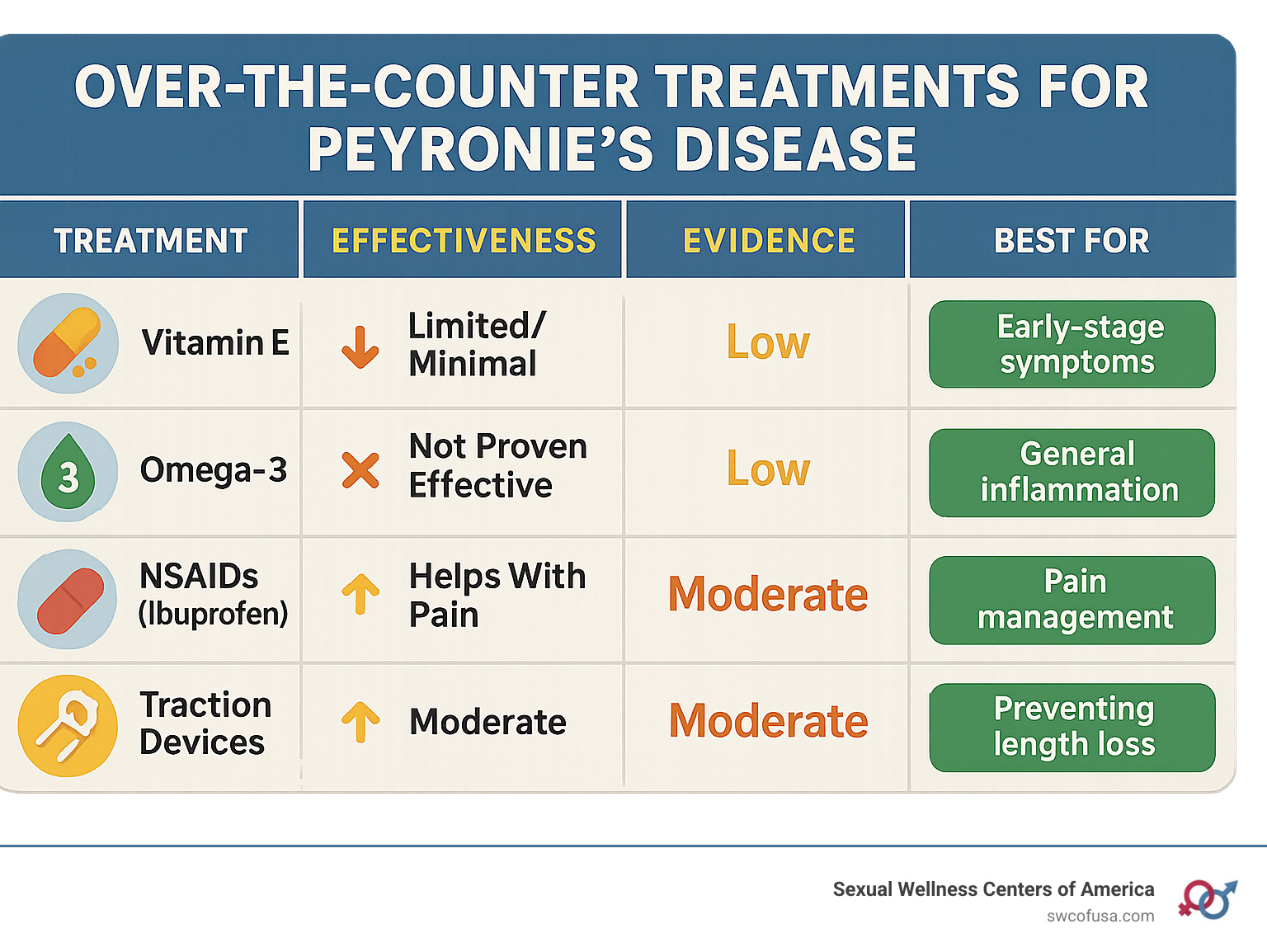
| OTC Treatment Option | Effectiveness | Evidence Quality | Best For |
|---|---|---|---|
| Vitamin E | Limited/Minimal | Low (Not recommended by AUA) | Early-stage symptoms |
| Omega-3 Fatty Acids | Not proven effective | Low | General inflammation |
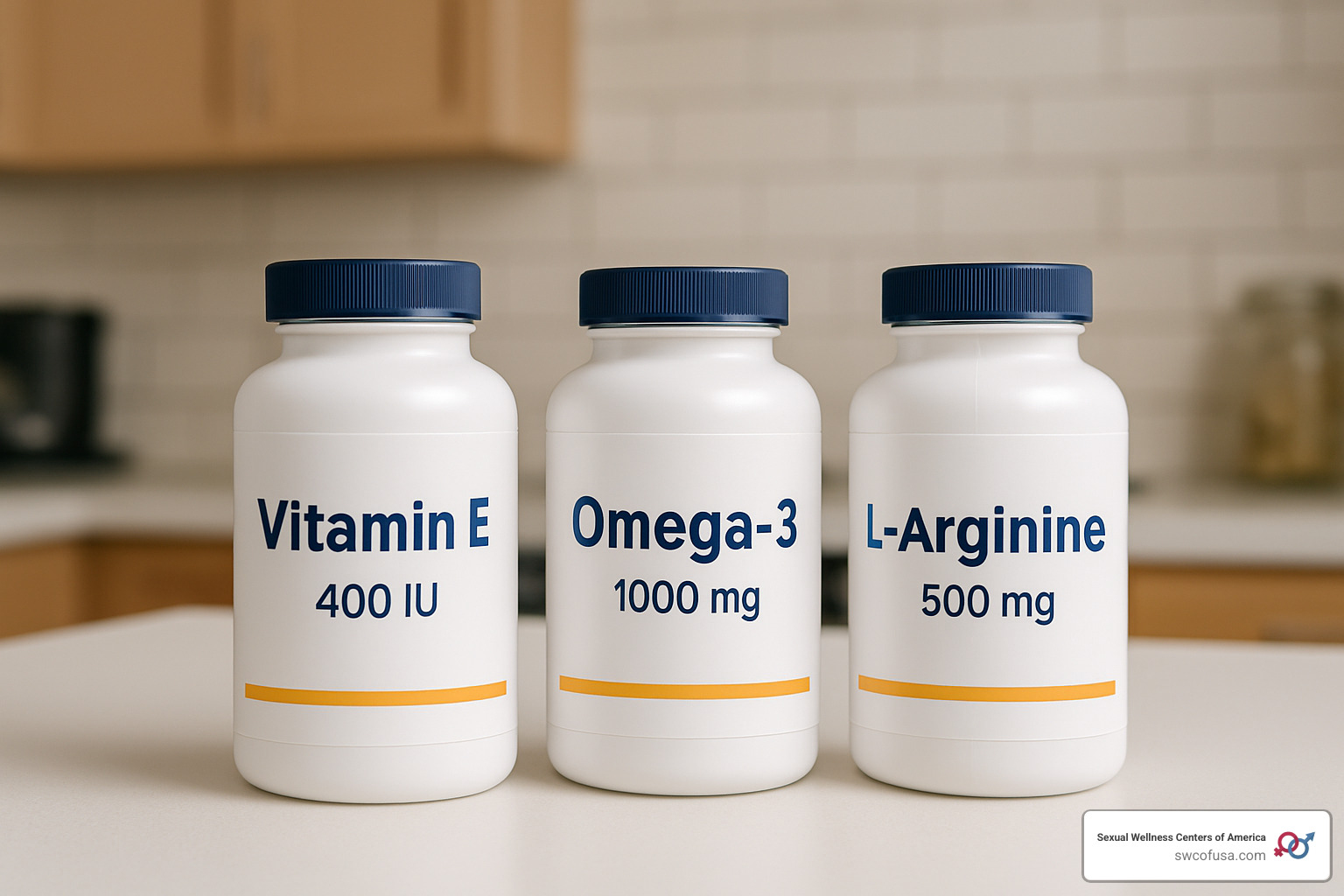
| L-Arginine | May help with ED symptoms | Limited | Supporting erectile function |
| NSAIDs (Ibuprofen) | Helps with pain only | Moderate | Pain management |
| Traction Devices | Moderate evidence | Moderate | Preventing length loss |
| PABA Supplements | Limited | Low | Alternative to prescription Potaba |
Over the counter treatment for Peyronie’s disease options have become increasingly popular as men seek accessible solutions for this challenging condition. Peyronie’s disease, characterized by a curved or bent erection due to fibrous scar tissue (plaque) formation within the penis, affects approximately 1 in 10 adult men. While many hope for a simple pill or cream to resolve the issue, the reality is more nuanced.
The journey to finding effective non-prescription solutions can be frustrating. Most over-the-counter options have limited scientific evidence supporting their effectiveness, despite widespread use. Supplements like vitamin E and omega-3 fatty acids are commonly tried, but multiple placebo-controlled studies show minimal benefit for reducing curvature or plaque size.
As Sexual Wellness Centers of America, we’ve guided countless men through the complex landscape of over the counter treatment for Peyronie’s disease, helping them understand when these options might help with symptoms versus when medical intervention becomes necessary.
Understanding Peyronie’s Disease: Causes, Phases, Diagnosis
Peyronie’s disease is a wound-healing disorder of the penis that leads to the formation of fibrous scar tissue (plaque) in the tunica albuginea – the fibrous sheath surrounding the erectile tissue. This condition was first described by François Gigot de la Peyronie, a French surgeon, in 1743 while serving King Louis XIV.
The development of Peyronie’s disease typically follows penile trauma or microinjury, often occurring during sexual activity. These injuries initiate an abnormal healing response in genetically predisposed individuals, leading to excessive collagen deposition and plaque formation. The resulting scar tissue is less elastic than normal tissue, causing the penis to bend during erection.
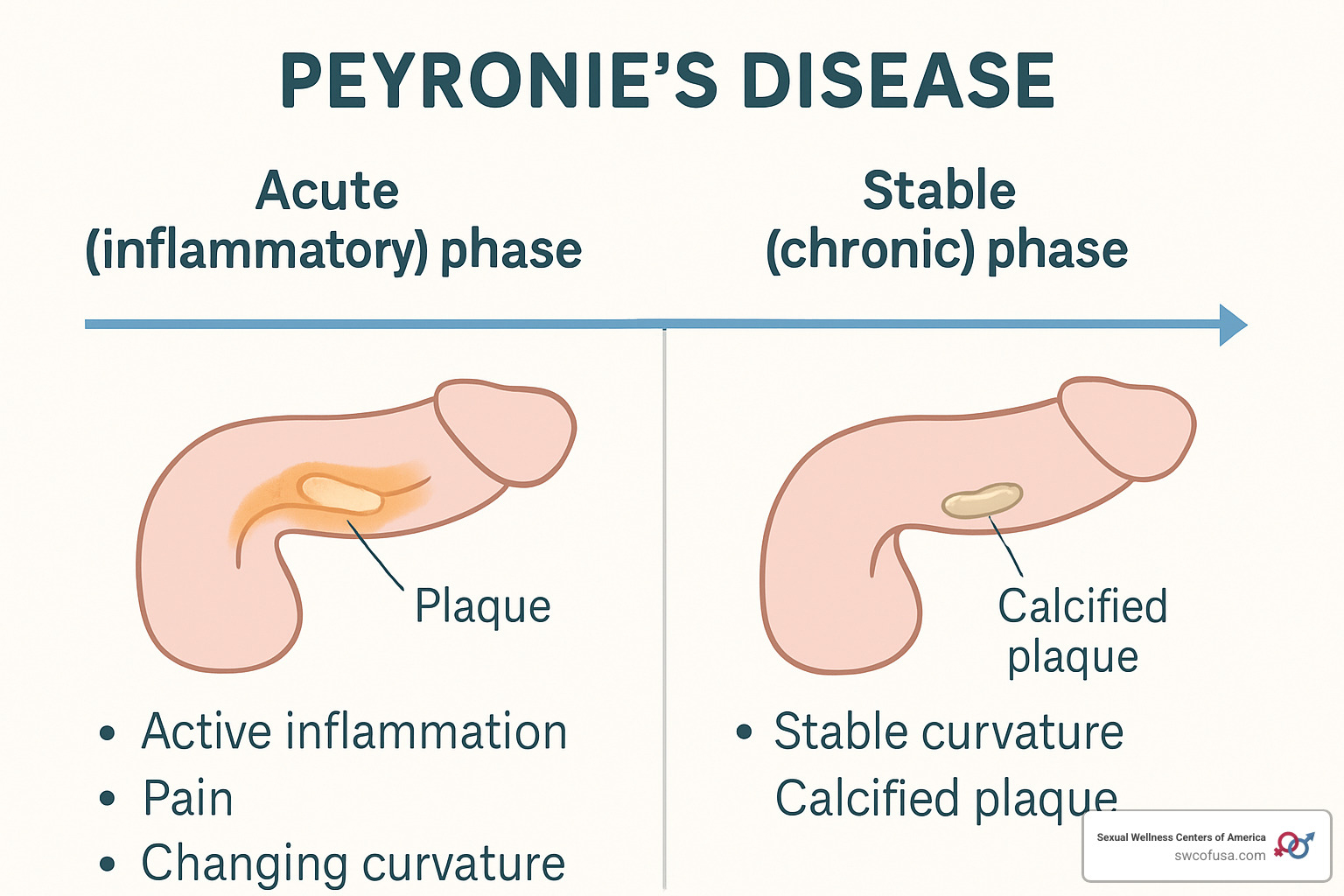
Peyronie’s disease progresses through two distinct phases:
-
Acute phase: Lasting approximately 6-18 months, characterized by active inflammation, progressive changes in curvature, and often painful erections. This is when the disease is most dynamic and when intervention may be most beneficial.
-
Stable (chronic) phase: Begins when curvature has remained unchanged for at least 3-6 months and pain has typically resolved. The plaque becomes more calcified and harder to treat with non-surgical methods.
It’s worth noting that approximately 13% of Peyronie’s disease cases resolve spontaneously without any treatment, according to the Urology Care Foundation. However, most cases either stabilize or worsen over time without intervention.
Beyond the physical symptoms, Peyronie’s disease can have significant psychological impacts. Studies show that about 50% of men with this condition experience symptoms of depression and anxiety related to sexual performance, self-image, and relationship concerns.
Symptoms & How Doctors Confirm PD
The hallmark symptoms of Peyronie’s disease include:
- Pain during erection: Particularly common during the acute phase
- Palpable lump or plaque: Firm, non-cancerous tissue that can be felt under the skin of the penis
- Penile curvature: Typically ranging from 30° to 90° in any direction (upward, downward, or to either side)
- Erectile dysfunction: Difficulty achieving or maintaining an erection
- Penile shortening: Loss of length due to scar tissue contraction
- Indentation or “hourglass” deformity: Narrowing of the penis at the plaque location
Diagnosis typically involves:
-
Medical history and physical examination: A urologist will examine the flaccid penis to feel for plaques and discuss symptoms.
-
Self-photography: Patients are often asked to take photos of their erect penis at home from different angles to document the degree and direction of curvature.
-
Penile Doppler ultrasound with injection: This specialized ultrasound is performed after injecting a medication to cause an erection, allowing visualization of the plaque, measurement of curvature, and assessment of blood flow.
-
IIEF-5 questionnaire: The International Index of Erectile Function helps quantify any associated erectile dysfunction.
Early diagnosis is crucial, as treatments tend to be more effective during the acute inflammatory phase when the plaque is still forming and more responsive to intervention.
For more comprehensive information on Peyronie’s disease, you can visit the Johns Hopkins Medicine resource page.
Over the Counter Treatment for Peyronie’s Disease: What Really Works?
When you’re dealing with Peyronie’s disease, it’s natural to look for solutions you can try right away without a prescription. But which over the counter treatment for Peyronie’s disease options actually deliver results? Let’s cut through the marketing claims and look at what science tells us.
I should mention something important upfront: the American Urological Association (AUA) specifically recommends against certain popular supplements for Peyronie’s treatment. Their guidelines state that doctors should not recommend vitamin E, tamoxifen, omega-3 fatty acids, or vitamin E with L-carnitine combinations. Why? Multiple controlled studies show these options perform no better than placebos.
That said, many men still try these accessible, relatively affordable options. Let’s examine what the research actually shows about each one.
“Over the Counter Treatment for Peyronie’s Disease” – Antioxidant & Anti-Inflammatory Supplements
Vitamin E is probably the most commonly used supplement for Peyronie’s. As an antioxidant, the theory is that it might help reduce inflammation in the developing plaque.
Unfortunately, the research doesn’t back this up. A 2007 randomized trial with 236 men found absolutely no difference in penile curvature between groups taking vitamin E, carnitine, both, or placebo. Multiple other studies show similar disappointing results for pain, curvature, plaque size, and sexual function.
Despite this lack of evidence, vitamin E remains widely used, likely because it’s inexpensive and generally considered safe. Most protocols recommend 400-800 IU daily, though some go up to 1,200 IU. Just be aware that high-dose vitamin E (400 IU/day) has been linked to increased prostate cancer risk in the SELECT trial, so long-term use deserves caution.
“Over the Counter Treatment for Peyronie’s Disease” – Amino Acids, Fatty Acids & Herbal Blends
L-arginine works differently than other supplements. This amino acid helps produce nitric oxide, which is crucial for healthy erections. While it doesn’t directly target the plaque, L-arginine may help with the erectile dysfunction that often accompanies Peyronie’s.
Some research suggests L-arginine works particularly well alongside PDE-5 medications like sildenafil. Animal studies even hint that this combination might reduce collagen in Peyronie’s plaques, though human studies are needed.
Omega-3 fatty acids sound promising for their anti-inflammatory benefits, but again, the research disappoints. A rigorous 2009 study with 224 patients found omega-3 supplements didn’t improve plaque volume, curvature, pain, or erectile function compared to placebo.
If you still want to try omega-3s, choose pharmaceutical-grade products verified for purity and potency. The quality of fish oil supplements varies dramatically, and many don’t contain what their labels claim.
As for herbal blends marketed for Peyronie’s (containing ingredients like Gotu kola or horse chestnut), there’s virtually no scientific evidence supporting their effectiveness. These products may claim traditional uses for improving circulation, but specific research for Peyronie’s disease is essentially non-existent.
Pain Control & Symptom Relief with Everyday Medicines
For managing pain during the acute inflammatory phase, good old NSAIDs like ibuprofen and naproxen can be genuinely helpful. These medications won’t fix the underlying plaque or curvature, but they can make you more comfortable while other treatments do their work.
For ibuprofen, 400-800 mg every 6-8 hours as needed usually helps with pain. If you prefer naproxen, 220-440 mg every 8-12 hours is typical. Always take these with food to protect your stomach, and remember they’re meant for short-term use. If you have a history of ulcers, kidney problems, or heart issues, check with your doctor first.
Supportive Devices & Topicals You Can Buy Online
Now for some better news: penile traction therapy (PTT) devices are probably the most promising over-the-counter option for Peyronie’s. These devices apply gentle, consistent stretching to the penis, which may help remodel the plaque over time.
Traction therapy is actually the only treatment proven to improve penile length in Peyronie’s patients – a significant benefit since loss of length is a common concern. Studies show using traction devices for 3-8 hours daily can provide modest improvements in curvature (typically 5-25° reduction) and prevent length loss. You’ll see the best results when starting early in the disease process and sticking with it consistently for several months.
Vacuum erection devices (VEDs) might also help maintain penile length and potentially improve curvature. Just be careful not to use these during the acute, painful phase, as they could potentially worsen injury.
For those interested in topical treatments, H-100 gel (containing nicardipine, superoxide dismutase, and emu oil) has shown some promise. A small controlled study found that applying this gel twice daily for six months led to a 40.8% reduction in curvature, 22.6% increase in penile length, and 85.7% reduction in pain. About 10% of patients did experience skin rash, however, and larger studies are needed to confirm these findings.
| Treatment Approach | Over-the-Counter Options | Prescription Options |
|---|---|---|
| Oral Medications | Vitamin E, L-arginine, Omega-3, PABA | Pentoxifylline, Colchicine, PDE-5 inhibitors |
| Topical Treatments | H-100 gel | Verapamil gel |
| Mechanical Devices | Traction devices, Vacuum pumps | Same (medically supervised) |
| Injections | None | Collagenase (Xiaflex), Verapamil, Interferon |
| Surgical Options | None | Plication, Grafting, Implants |
At Sexual Wellness Centers of America, we often see men who’ve tried various over the counter treatment for Peyronie’s disease options with limited success. While we understand the appeal of accessible solutions, we also believe in setting realistic expectations about what these treatments can and cannot do. Many men find the best results come from combining carefully selected OTC approaches with professional medical guidance.
Benefits, Risks & Limitations of OTC Options vs Prescription or Surgical Care
When you’re searching for over the counter treatment for Peyronie’s disease, it’s natural to wonder how these accessible options stack up against medical treatments. Let’s have an honest conversation about what you can realistically expect.
The appeal of OTC options is obvious – you can start today, without appointments or prescriptions. They’re generally more affordable than medical treatments, and there’s something empowering about taking that first step on your own terms, in the privacy of your home. Most OTC approaches also carry fewer serious side effects than prescription medications or surgical interventions.
But here’s where we need to have a heart-to-heart: the science simply doesn’t strongly support most over-the-counter options. The American Urological Association has reviewed the evidence and explicitly recommends against offering vitamin E, omega-3 fatty acids, and similar supplements as treatments. Not because they’re harmful, but because they just don’t seem to work very well.
This creates a concerning situation where men might spend months or even years trying various supplements while their condition progresses beyond the early, more treatable phase. During this time, the plaque can become more calcified and resistant to treatment.
In contrast, prescription medications like pentoxifylline have shown more promising results. A substantial study from 2010 involving 228 patients found that pentoxifylline significantly improved both curvature and plaque volume compared to placebo. Only 11% of those taking pentoxifylline saw their condition worsen, compared to 42% in the placebo group. That’s a meaningful difference.
Similarly, FDA-approved Xiaflex injections have demonstrated significant improvements in clinical trials – about 17° curvature reduction versus just 9° with placebo. These aren’t miracle cures, but they’re backed by stronger evidence than most supplements.
It’s worth mentioning that many men experience notable placebo effects with Peyronie’s treatments. This might explain why you’ll find passionate testimonials for almost every treatment option out there, even ones without scientific support. Your friend’s success with vitamin E might be real to him, but the research suggests it was likely more about timing and natural disease fluctuation than the supplement itself.
When to See a Urologist Immediately
While exploring non-prescription options, please don’t ignore these warning signs that require prompt medical attention:
If you notice your penis curvature rapidly worsening (more than 5° change in a month), that’s not something to wait on. Similarly, severe pain during erections that doesn’t respond to over-the-counter pain relievers deserves professional attention.
Significant erectile dysfunction or a complete inability to achieve erections alongside Peyronie’s symptoms should prompt a call to your doctor. The emotional toll shouldn’t be underestimated either – if you’re experiencing psychological distress that’s affecting your daily life or relationships, that’s reason enough to seek help.
From a physical standpoint, curvature greater than 30° that interferes with sexual function, an hourglass deformity, or any plaque that involves the urethra causing pain or difficulty urinating all warrant immediate medical evaluation.
At Sexual Wellness Centers of America in Colleyville, TX, we’ve seen how early intervention can make a meaningful difference. The first 3-6 months after symptoms appear is often the most responsive window for treatment. Waiting until the disease has fully stabilized often means fewer effective options.
Seeking professional help isn’t admitting defeat – it’s making an informed choice to address your health with the full range of available options. There’s no badge of honor for suffering in silence when effective treatments might be available to you.
Lifestyle Tweaks & Home Remedies to Complement OTC Treatments
Living with Peyronie’s disease extends beyond just taking supplements or using devices. The lifestyle choices you make every day can significantly impact your healing journey and improve the effectiveness of any over the counter treatment for Peyronie’s disease you might be trying.
Your diet plays a surprisingly important role in managing Peyronie’s. Focusing on anti-inflammatory foods can help reduce overall inflammation in your body, potentially slowing the progression of plaque formation. Try incorporating more fatty fish like salmon or mackerel into your meals – they’re packed with those beneficial omega-3s that fight inflammation. Colorful fruits and vegetables provide antioxidants that combat oxidative stress, while cutting back on processed foods, sugary snacks, and alcohol can prevent worsening inflammation. And don’t forget about water! Staying well-hydrated supports healthy tissue function throughout your body, including penile tissue.
If you’re a smoker, here’s another compelling reason to quit: tobacco significantly impairs blood flow and tissue healing, two factors that can directly worsen Peyronie’s disease. Many of our patients at Sexual Wellness Centers of America report noticeable improvements in their overall penile health after quitting smoking, which can make other treatments more effective.

Exercise matters too, but with some important cautions. While regular physical activity improves circulation and general health, certain activities might actually aggravate your condition. If you’re a cyclist, make sure your bike seat is properly fitted to avoid pressure on the perineum. Activities that might cause trauma to the genital area should be approached carefully or avoided during active phases of the disease. Instead, focus on gentle cardiovascular exercise that improves overall circulation without risking further injury.
Your pelvic floor health deserves attention as well. Many men don’t realize that tension patterns in these muscles can contribute to pain and erectile issues that accompany Peyronie’s. Simple Kegel exercises performed regularly can strengthen these muscles and potentially improve symptoms. Some of our patients have found significant relief through formal pelvic floor physical therapy, which addresses these often-overlooked muscles.
Don’t underestimate the impact of stress on your condition. When you’re stressed, your body remains in an inflammatory state, which can interfere with healing. Taking time for stress reduction through meditation, deep breathing exercises, or even just regular walks in nature can make a meaningful difference. Many men tell us they notice their symptoms feel worse during particularly stressful periods in their lives – that’s not coincidental.
Perhaps most importantly, address the emotional side of Peyronie’s disease. The psychological impact can be profound, affecting your self-image and intimate relationships. Having open, honest conversations with your partner about your condition helps prevent misunderstandings and reduces anxiety about sexual performance. Professional counseling can provide strategies for coping with the emotional challenges of this condition – something we take very seriously at Sexual Wellness Centers of America. We’ve seen how addressing the emotional aspects of Peyronie’s is often just as important as treating the physical symptoms.
These lifestyle modifications aren’t replacements for medical care, but they can create an optimal environment for healing while you explore over the counter treatment for Peyronie’s disease options. Small changes in your daily habits can add up to significant improvements in your overall response to treatment.
Frequently Asked Questions about Over the Counter Treatment for Peyronie’s Disease
Do any OTC supplements straighten the penis?
I wish I could tell you there’s a magic pill that straightens penile curvature, but I’d be doing you a disservice. The truth is, despite what those flashy supplement ads might claim, science hasn’t found any oral supplement that significantly improves Peyronie’s curvature on its own. Those vitamin E and omega-3 bottles might be tempting, but when researchers put them to the test in controlled studies, they performed about the same as sugar pills.
That said, not all hope is lost in the OTC world. Penile traction therapy shows the most promise among non-prescription options. These devices work by applying gentle, consistent stretching to the penis – think of it as physical therapy for Peyronie’s. With diligent use (several hours daily over 3-6 months), many men see modest improvements in curvature, typically between 5-25 degrees. As a bonus, traction is the only treatment proven to help preserve or even regain penile length, which is often a concern with Peyronie’s.
Is vitamin E safe and effective for Peyronie’s?
Vitamin E has been the go-to supplement for Peyronie’s for decades, almost by tradition rather than evidence. Despite its popularity, a substantial 2007 study involving 236 men found vitamin E performed no better than placebo for improving curvature. It’s a bit like chicken soup for a cold – it probably won’t hurt, but don’t expect miracles.
On the safety front, vitamin E is generally well-tolerated in the short term at doses between 400-800 IU daily. However, I should mention a caution flag: the SELECT trial found that long-term supplementation at 400 IU daily was associated with increased prostate cancer risk. This doesn’t mean you should panic if you’ve taken it occasionally, but it does suggest that extended, high-dose use deserves a conversation with your doctor, especially if you have prostate cancer risk factors.
If you’re still considering vitamin E despite these limitations:
– Consider using it only during the early inflammatory phase
– Keep doses modest (400 IU or less) unless your doctor suggests otherwise
– Don’t rely on it as your only approach
– Always loop in your healthcare provider, particularly if you’re taking other medications
Can I combine OTC options with prescription drugs?
Combining approaches often makes good sense – it’s the “all hands on deck” strategy. Some combinations show particular promise, though you should always coordinate this with your medical provider to avoid unwanted interactions.
L-arginine paired with PDE-5 inhibitors (like sildenafil) can be particularly helpful if erectile function is a concern alongside your Peyronie’s. Animal studies suggest this combo might even help with plaque formation.
Traction therapy alongside injectable treatments like collagenase (Xiaflex) makes logical sense too. The injections help break down the plaque, while traction helps reshape the tissue during healing – like having orthodontics adjust your teeth after the bands loosen them.
Here at Sexual Wellness Centers of America, we often develop personalized treatment plans that thoughtfully combine appropriate OTC approaches with medical interventions. We tailor these combinations based on your specific curvature, disease phase, and how you respond to initial treatments.
One final tip that might seem obvious but is surprisingly often overlooked: always tell your doctor about every supplement you’re taking. That “natural” supplement might interact with prescription medications in ways you wouldn’t expect. Being transparent ensures everyone’s on the same page with your treatment plan.
Conclusion & Next Steps
The journey of finding an effective over the counter treatment for Peyronie’s disease can feel overwhelming. After exploring all these options, you might be wondering what’s truly worth your time and investment. The truth is both encouraging and sobering.
Most men hope for a simple pill or cream solution, but the reality is that most OTC options provide modest benefits when used alone. Penile traction therapy stands out as the most scientifically supported approach, offering real potential to preserve penile length and potentially improve curvature—but only with consistent, dedicated use.
Despite their popularity, supplements like vitamin E and omega-3 fatty acids haven’t shown significant benefits in controlled studies. They may complement other treatments, but expecting them to resolve curvature on their own often leads to disappointment.
The good news? OTC pain relievers can effectively manage discomfort during the acute phase, giving you some relief while pursuing more comprehensive solutions.
Timing makes all the difference. Early intervention during those first 6-18 months (the acute inflammatory phase) typically yields much better results than waiting until the disease has stabilized and the plaque has hardened. This is why we encourage men to seek evaluation soon after noticing symptoms.
Here at Sexual Wellness Centers of America in Colleyville, TX, we understand the frustration, embarrassment, and uncertainty that comes with Peyronie’s. We’ve guided countless men through this journey, combining evidence-based treatments with genuine care that addresses both the physical curve and the emotional toll it takes.
Our approach goes beyond the limitations of OTC options. We conduct comprehensive evaluations including hormone and vitamin panels to identify underlying factors that might contribute to your condition. This allows us to develop truly personalized treatment plans rather than one-size-fits-all solutions.
While approximately 13% of Peyronie’s cases resolve spontaneously, waiting and hoping isn’t always the best strategy. Taking proactive steps—whether through carefully selected OTC approaches or medical treatment—can help you regain confidence and sexual function sooner rather than later.
If you’ve been trying OTC treatments without satisfactory results, or if you’re newly diagnosed and seeking the most effective path forward, we’re here to help. With the right combination of treatments and support, most men experience significant improvement in both symptoms and quality of life.
More info about Peyronie’s Disease services