
Why Hair Loss Affects More Than Just Your Appearance
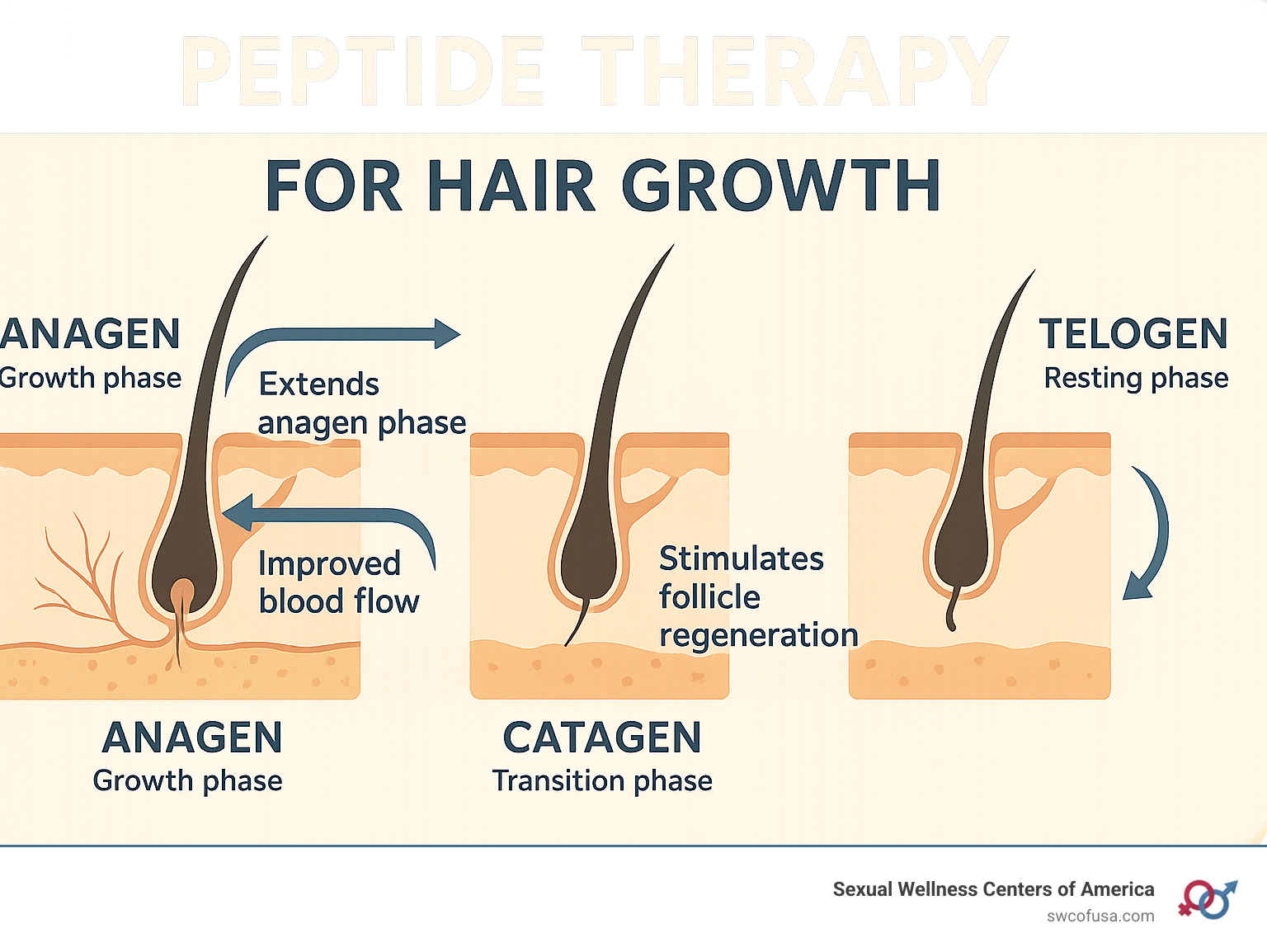
Peptide therapy for hair growth represents a breakthrough approach that targets the root causes of hair loss at the cellular level. Unlike traditional treatments that often come with unwanted side effects, peptides work by:
• Stimulating blood flow to hair follicles through angiogenesis
• Reducing inflammation that damages follicle health
• Activating growth pathways like Wnt/β-catenin signaling
• Extending the anagen phase where hair actively grows
• Blocking DHT production that causes follicle miniaturization
Hair loss affects over 50 million Americans, with androgenic alopecia being the most common cause. While minoxidil and finasteride remain popular options, they often fall short due to limited effectiveness and concerning side effects like sexual dysfunction and scalp irritation.
Recent research shows that peptides like GHK-Cu can promote hair regrowth faster than FDA-approved minoxidil, with hair follicles entering the growth phase in just 6 days versus 8-9 days for traditional treatments. Studies also demonstrate that topical peptide delivery improved by three-fold using advanced microemulsion systems.
The promise lies in peptides’ ability to address multiple pathways simultaneously – from boosting collagen production to enhancing nutrient delivery through improved blood vessel formation. This comprehensive approach makes peptide therapy particularly appealing for those seeking natural, effective alternatives.
I’m Jeff Nuziard, CEO of Sexual Wellness Centers of America, where I’ve helped thousands of patients restore confidence through innovative peptide therapy for hair growth treatments. My experience in sexual wellness and regenerative medicine has shown me how hair restoration directly impacts overall well-being and intimate confidence.
Simple peptide therapy for hair growth glossary:
– peptides for skin
– peptide supplements
– peptide therapy for arthritis
Why Peptide Therapy for Hair Growth Beats Traditional Options
Let’s be honest – the traditional hair loss treatments you’ve probably heard about aren’t exactly perfect. Minoxidil might help, but it can leave your scalp feeling irritated and requires twice-daily applications for life. Even worse, some people develop unwanted facial hair growth from the treatment spreading beyond the scalp.
Then there’s finasteride, which blocks DHT production but comes with side effects that frankly scare a lot of my patients. We’re talking about potential sexual dysfunction, mood changes, and something called “post-finasteride syndrome” that can persist even after you stop taking it. Not exactly confidence-inspiring when you’re already dealing with hair loss affecting your self-esteem.
Peptide therapy for hair growth takes a completely different approach that addresses the root causes without these concerning side effects. Scientific research on androgenic alopecia shows us that when DHT binds to hair follicles, it causes them to gradually shrink and weaken. But peptides can actually interrupt this destructive process through multiple healing pathways.
The real game-changer is how peptides activate something called the Wnt/β-catenin signaling pathway. Think of this as your hair follicles’ natural regeneration system. Research shows that GHK-Cu treatment significantly increases this pathway’s activation compared to doing nothing, leading to faster regrowth and noticeably thicker hair density.
| Treatment | How It Works | Common Side Effects | When You See Results |
|---|---|---|---|
| Minoxidil | Opens blood vessels only | Scalp irritation, unwanted hair growth | 3-6 months |
| Finasteride | Blocks DHT only | Sexual problems, mood changes | 3-12 months |
| Peptide Therapy | Multiple healing pathways | Minimal to none | 6 days to 3 months |
What really excites me about peptides is their ability to promote angiogenesis – the formation of new blood vessels around your hair follicles. This dramatically improves nutrient delivery while creating an optimal healing environment. At the same time, peptides reduce the chronic inflammation that slowly damages follicle health over time.
How peptide therapy for hair growth works at the follicle level
When I explain peptide therapy for hair growth to patients at our Colleyville clinic, I like to start with what’s actually happening inside each hair follicle. Every follicle has something called dermal papilla cells – think of them as the control center that decides whether your follicle produces thick, healthy hair or gradually shrinks into dormancy.
GHK-Cu, our most researched peptide, works by binding directly to these control center cells and triggering a cascade of healing responses. The peptide stimulates production of VEGF (vascular endothelial growth factor) and HGF (hepatocyte growth factor). These powerful molecules promote new blood vessel formation and cellular repair throughout your scalp.
This improved circulation is like upgrading your hair follicles’ supply chain – essential nutrients flow in more efficiently while waste products that can damage follicles get cleared out faster. The result is an environment where healthy hair growth can actually flourish.
Sermorelin takes a different but equally effective approach by stimulating your body’s natural growth hormone production. Growth hormone improves protein synthesis throughout your entire body, including the keratin proteins that literally form your hair strands. This systemic support benefits not just hair growth but overall scalp health and vitality.
PT-141 might surprise you since it’s primarily known for treating sexual wellness issues, but emerging research shows it activates melanocortin receptors that regulate both inflammation and pigmentation. This means PT-141 may reduce scalp inflammation while supporting healthy hair color – addressing both growth and appearance simultaneously.
Who should try peptide therapy for hair growth
After treating thousands of patients, I’ve learned that peptide therapy for hair growth works best for specific types of hair loss and patient situations. We see the most dramatic success with androgenic alopecia – that’s male and female pattern baldness – especially when we catch it in early to moderate stages before follicles become completely dormant.
The ideal candidates include men and women experiencing thinning hair or receding hairlines who want alternatives to traditional treatments. Many of my patients come to us specifically because they’re concerned about finasteride’s side effects or have already tried other options without success.
We also see excellent results with patients dealing with hormonal imbalances affecting their hair growth. Our comprehensive hormone and vitamin panels often reveal underlying issues like thyroid dysfunction, insulin resistance, or nutrient deficiencies that contribute to hair loss. When we address these root causes alongside peptide therapy, the results can be truly transformative.
Stress-related hair loss (telogen effluvium) responds particularly well to peptide therapy since the anti-inflammatory properties help calm an overactive stress response while promoting healing. Even some autoimmune cases like alopecia areata can benefit, though we approach these situations more carefully.
At our clinic, patients with active autoimmune conditions need special consideration since some peptides might stimulate immune responses. However, the anti-inflammatory properties of peptides like GHK-Cu can actually benefit autoimmune-related hair loss when used appropriately under medical supervision.
The key is creating a personalized treatment plan based on your specific type of hair loss, overall health, and treatment goals. That’s why we always start with comprehensive testing to understand what’s really driving your hair loss before recommending any peptide protocols.
How We Selected the Best Peptide Products
When I started researching peptide therapy for hair growth options for our patients at Sexual Wellness Centers of America, I quickly realized that not all peptide products are created equal. The market is flooded with products making bold claims, but very few have the science to back them up.
Our selection process starts with clinical evidence – and I mean real, peer-reviewed research, not testimonials from influencers. We dig deep into studies that show measurable improvements in hair density, thickness, and growth rates. The Scientific research on GHK-Cu delivery was particularly eye-opening, demonstrating how ionic liquid microemulsion systems can improve peptide delivery by three times compared to basic formulations.
Delivery technology is where many products fail miserably. You can have the most powerful peptide in the world, but if it can’t penetrate your scalp effectively, you’re essentially applying expensive water to your head. The products we recommend use advanced delivery methods like ionic liquid microemulsions that actually get peptides where they need to go, liposomal encapsulation that protects peptides from breaking down, and pH-optimized solutions that keep peptides stable and active.
We also look for formulations that work well with microneedling synergy – because combining peptides with proper microneedling can dramatically boost results. The Cu-peptide microemulsion technology we’ve seen in recent studies shows particularly promising results when paired with controlled micro-injuries to the scalp.
Safety profiles matter enormously, especially since hair loss treatments are typically used for months or years. Unlike some traditional options that come with concerning side effects, the peptides we select show minimal adverse reactions in clinical studies. GHK-Cu actually supports overall skin health while promoting hair growth – that’s what I call a win-win.
Finally, cost-effectiveness ensures our patients can stick with treatment long enough to see real results. While peptide therapy requires an upfront investment, the lack of serious side effects and superior outcomes often make it more economical than cycling through multiple treatments that don’t work.
At our Colleyville clinic, we’ve seen how the right peptide products can transform not just hair growth, but confidence and overall well-being. That’s why we’re so particular about what we recommend.
The Best Peptide Products for Hair Growth Right Now
Finding the right peptide therapy for hair growth can feel overwhelming with so many options available. After working with thousands of patients at our Colleyville clinic, I’ve seen which products consistently deliver real results. Let me walk you through the five categories that have transformed hair growth for our patients.
Each product addresses different aspects of hair loss, which is why we often create customized combinations based on your specific needs. Some patients need to jumpstart dormant follicles, while others want to strengthen existing hair or improve overall scalp health.
GHK-Cu Copper Peptide Serum
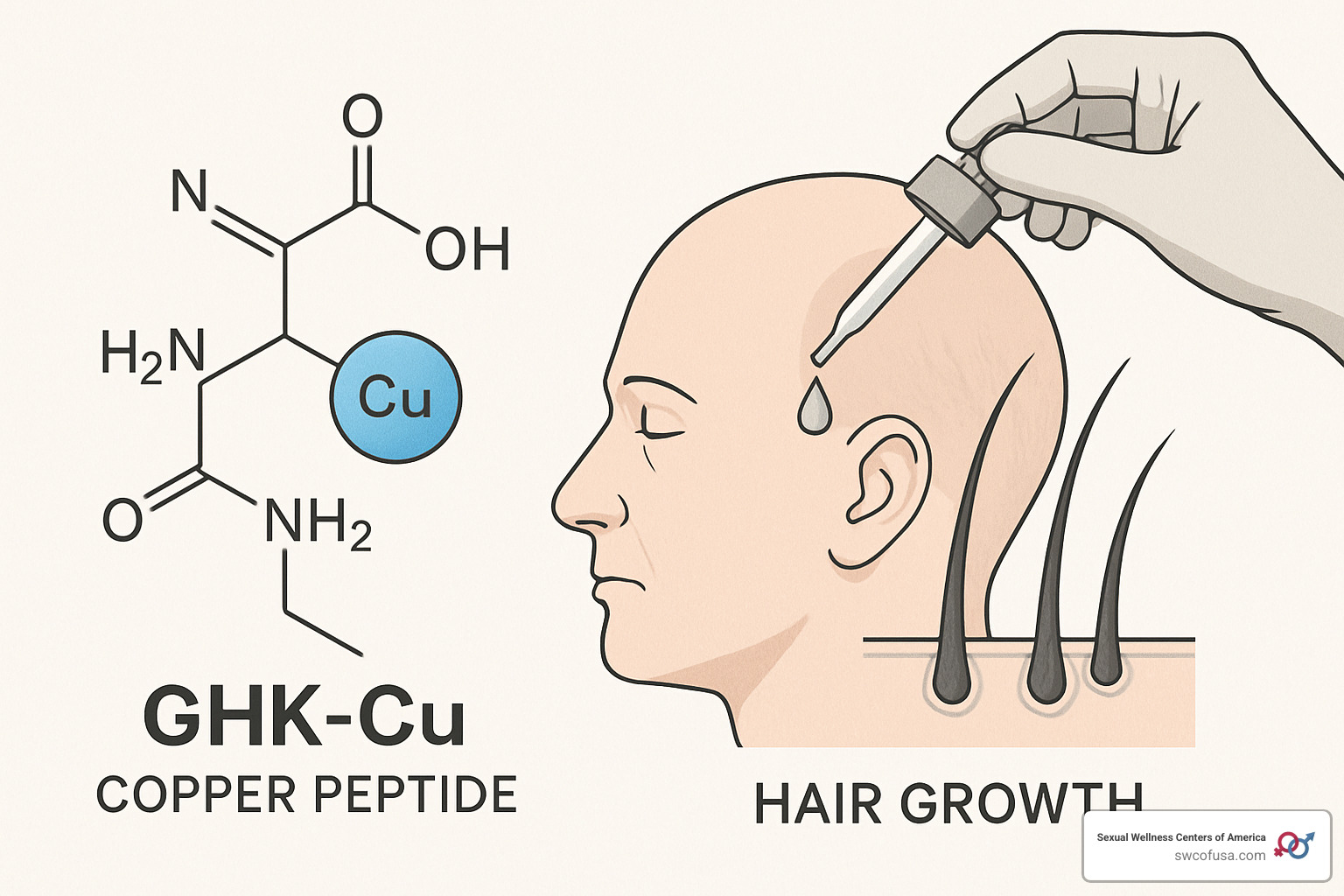
If I had to choose just one peptide therapy for hair growth product, GHK-Cu copper peptide serum would be it. This remarkable peptide combines three simple amino acids with copper to create something truly special for hair regeneration.
What makes GHK-Cu so effective is its angiogenesis boost – it literally helps your scalp grow new blood vessels around hair follicles. Think of it like upgrading your follicles’ delivery system. Better blood flow means more nutrients reach your hair roots while inflammatory waste gets cleared away faster.
The speed of results often surprises patients. Research shows hair follicles entering the fast anagen entry phase in just 6 days with GHK-Cu treatment. That’s significantly faster than traditional treatments that can take weeks to show any activity.
Beyond speed, GHK-Cu stimulates production of VEGF and HGF – growth factors that don’t just wake up sleeping follicles but help them produce thicker, healthier hair. Animal studies reveal not only more hair follicles but stronger ones that resist future damage.
Using GHK-Cu serum is refreshingly simple. Apply 2-3 drops to clean, dry scalp areas twice daily. The serum absorbs quickly without that greasy feeling that makes you want to wash your hair immediately. Most patients easily work it into their morning and evening routines.
Sermorelin Peptide Spray
Sermorelin takes a completely different approach to peptide therapy for hair growth by working from the inside out. Instead of treating just your scalp, it stimulates HGH production throughout your entire body, supporting the protein synthesis needed for healthy hair growth.
As we age, our growth hormone levels naturally decline, affecting everything from muscle mass to hair quality. Sermorelin gently nudges your pituitary gland to release more growth hormone in natural rhythms, avoiding the harsh side effects of synthetic hormones.
The protein synthesis boost from sermorelin provides the building blocks for stronger keratin – the protein that actually forms your hair strands. Patients often notice their hair feels thicker and more resilient within 2-3 months, even before seeing significant new growth.
What I love about sermorelin is how it supports scalp repair at the cellular level. Your scalp skin becomes healthier, creating better conditions for hair follicles to thrive. Many patients report improvements in overall scalp comfort and reduced irritation.
The nasal spray format makes treatment convenient and ensures consistent absorption. Most patients use 2-3 sprays before bedtime when natural growth hormone release peaks, working with your body’s natural cycles.
PT-141 Nasal Peptide
PT-141 might seem like an unusual choice for hair growth since it’s primarily known for treating sexual dysfunction. However, its melanocortin activation offers unique benefits for hair health that we’ve observed in clinical practice.
The key lies in PT-141’s powerful inflammation control. Chronic scalp inflammation is like having a constant low-grade fire that damages hair follicles over time. PT-141 helps cool that inflammation, creating a healthier environment where hair can actually grow.
Vascular support from PT-141 improves blood flow to your scalp through different mechanisms than traditional treatments. This improved circulation delivers nutrients while supporting the formation of new blood vessels around follicles – similar benefits to topical treatments but achieved systemically.
Interestingly, some patients report improvements in hair color and reduced graying with PT-141 treatment. While we need more research to fully understand this effect, it likely relates to melanocortin’s role in pigmentation processes.
The nasal spray delivery ensures rapid absorption and system-wide distribution. Patients typically use PT-141 2-3 times per week, making it easy to maintain long-term treatment protocols without daily applications.
Collagen & Keratin Peptide Supplements
While collagen and keratin peptides don’t directly stimulate new hair growth like GHK-Cu, they dramatically improve the structural strength and appearance of your existing hair. Think of them as the construction materials your hair needs to look and feel its best.
Collagen peptides work primarily on your scalp, improving elasticity and hydration to create optimal growing conditions. They also strengthen hair shafts from within, reducing the breakage that makes thinning hair look even worse. Marine collagen peptides are particularly effective due to their smaller molecular size.
Keratin peptides directly repair damaged hair structure by filling microscopic gaps in your hair cuticle. This restoration process improves shine dramatically while reducing frizz and protecting against environmental damage. It’s like giving your hair a structural renovation.
The breakage reduction from these supplements often surprises patients. Hair that was breaking off and looking thin suddenly appears fuller simply because more strands survive to their full length. Combined with improved texture, the overall change can be remarkable.
Quality matters enormously with oral peptide supplements. Look for hydrolyzed peptides with molecular weights under 3,000 daltons for optimal absorption. Taking supplements on an empty stomach maximizes bioavailability, though some patients prefer taking them with light meals to avoid stomach upset.
L-Carnitine–Peptide Scalp Tonic
L-carnitine peptide formulations target something often overlooked in hair loss treatments – the energy metabolism of hair follicles themselves. Growing hair requires tremendous energy, and follicles running low on fuel often shut down prematurely.
The follicle vitality boost from l-carnitine helps hair follicles maintain active growth phases longer. This amino acid derivative acts like a cellular taxi service, transporting fatty acids into mitochondria where they’re converted to usable energy (ATP).
When combined with growth-promoting peptides, l-carnitine creates a comprehensive follicle support system. The improved energy production supports every aspect of hair growth, from initial follicle activation through sustained protein synthesis for healthy hair formation.
Topical application delivers l-carnitine directly where it’s needed without affecting your entire system. The scalp tonic format allows for easy application and combines beautifully with other peptide treatments for improved results.
Most patients apply the tonic once daily to affected areas, massaging gently to improve absorption. Results typically become visible within 2-3 months of consistent use, with many patients noticing improved hair texture even before seeing significant new growth.
Smart Stacking: Combining Peptides for Maximum Results
The real magic happens when you combine different peptides strategically. Think of it like building a dream team – each player brings unique strengths, but together they create something extraordinary. Our experience at Sexual Wellness Centers of America shows that peptide therapy for hair growth combinations often deliver results that blow single treatments out of the water.
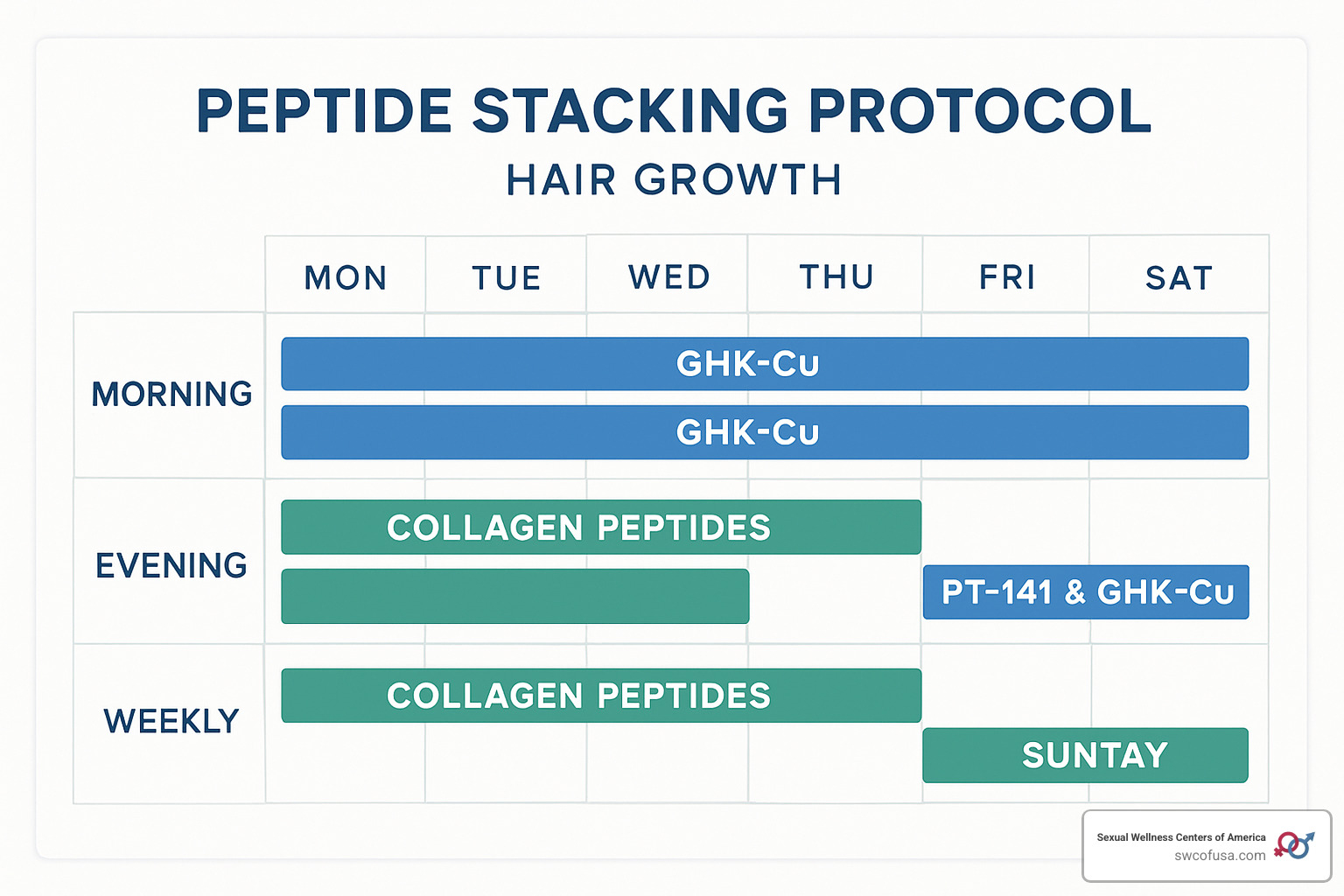
Understanding timing makes all the difference in synergistic dosing. GHK-Cu works best as your morning and evening routine – apply it twice daily when your skin is clean and ready to absorb. Sermorelin should become part of your bedtime ritual since it aligns perfectly with your body’s natural growth hormone release during sleep. PT-141 fits nicely into a 2-3 times weekly schedule without stepping on the toes of your other treatments.
The topical plus systemic mix creates a powerful one-two punch. Picture this: you’re applying GHK-Cu directly to your scalp while taking collagen peptides internally. The topical treatment stimulates follicles right where you need it, while the oral supplements provide building blocks throughout your entire system. It’s like watering your garden while also enriching the soil.
Cycling protocols keep your body responsive and prevent that frustrating plateau effect. We recommend treating peptides like a workout routine – go strong for 8-12 weeks, then give your receptors a 2-4 week break to reset. This approach maintains effectiveness while your progress continues building.
Safe combination rules
Starting smart means starting simple. Always test one peptide at a time before creating your personal cocktail. Your skin needs to tell you how it feels about each new addition. Patch testing isn’t just a suggestion – it’s your insurance policy against unwanted reactions, even with peptides you’ve used successfully before.
Physician oversight becomes your safety net when you’re combining multiple treatments. Our hormone and vitamin panels at the Colleyville clinic help us spot potential interactions before they become problems. Regular monitoring keeps your treatment plan both safe and effective – think of it as fine-tuning a high-performance engine.
Timing your doses properly prevents peptides from interfering with each other and maximizes what your body can absorb. Space topical applications at least 2 hours apart, giving each treatment its moment to shine. Take oral supplements on an empty stomach when possible – your digestive system will thank you with better absorption.
Devices & delivery improvers
Microneedling transforms good peptide absorption into exceptional penetration. Those tiny channels created by dermal rollers or professional treatments act like express highways, delivering peptides directly to the deeper layers where your hair follicles live and work.
Ionic-liquid carriers represent the cutting edge of delivery technology. Research shows these biocompatible systems can triple peptide delivery compared to standard formulations. When your peptides penetrate three times better, your results follow suit.
Red-light therapy pairs beautifully with peptide therapy for hair growth. The photobiomodulation effects boost cellular energy production while calming inflammation – essentially creating the perfect environment for your peptides to work their magic. It’s like giving your follicles both fuel and a peaceful workspace.
Frequently Asked Questions about Peptide Therapy for Hair Growth
Are peptide products safer than finasteride or minoxidil?
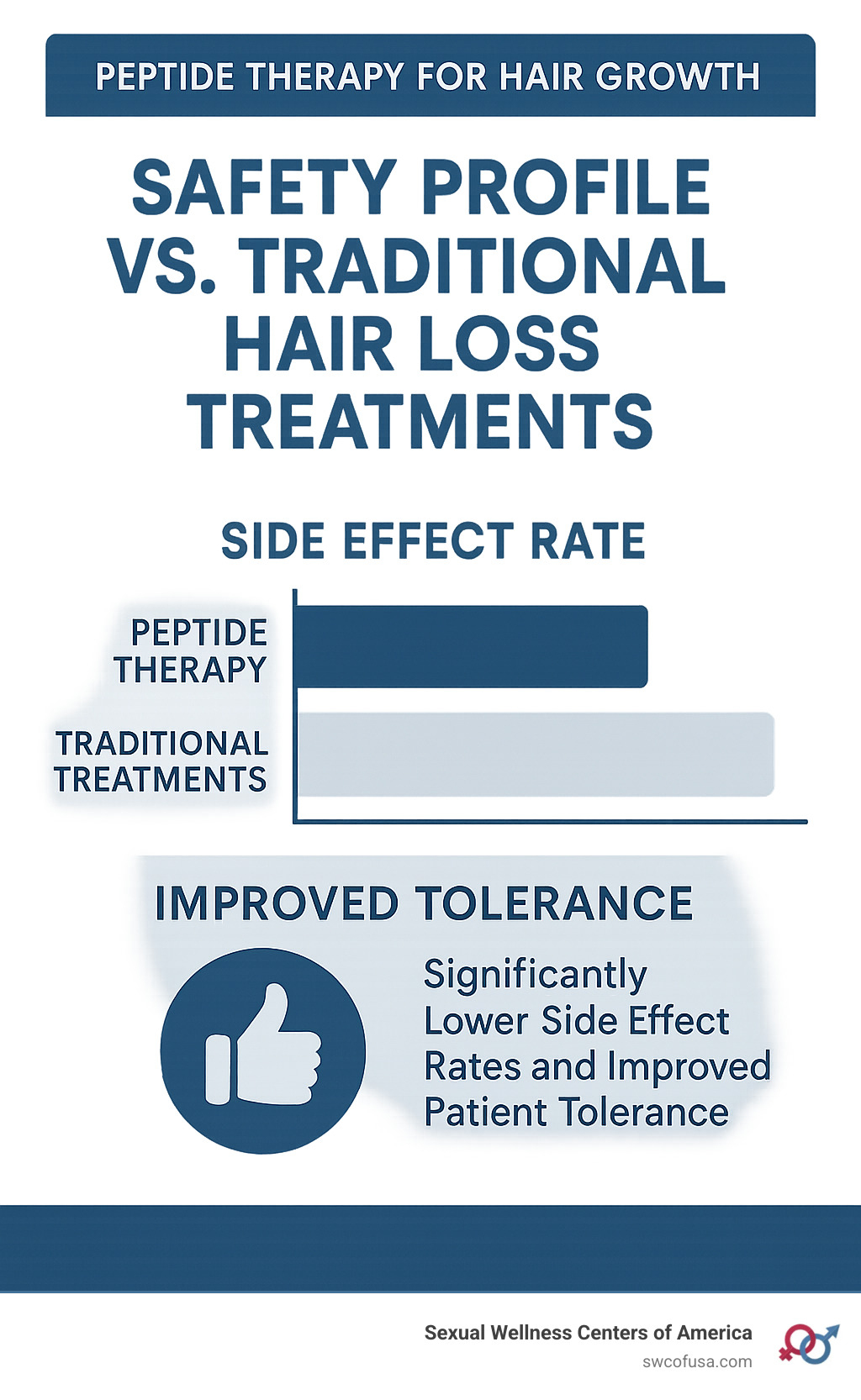
Yes, peptide therapy for hair growth demonstrates significantly better safety profiles than traditional treatments. While finasteride carries risks of sexual dysfunction, depression, and post-finasteride syndrome, peptides like GHK-Cu show minimal side effects in clinical studies.
The biocompatibility of peptides stems from their natural occurrence in the body. GHK-Cu, for example, is naturally present in human plasma and decreases with age. Supplementing with identical peptides simply restores natural levels rather than introducing foreign substances.
Minoxidil’s side effects include scalp irritation, unwanted facial hair growth, and potential cardiovascular effects. Peptides rarely cause irritation and actually improve overall scalp health through anti-inflammatory and regenerative effects.
The only common side effect from peptide therapy is mild skin irritation in sensitive individuals, which typically resolves with continued use or formulation adjustments.
How long before I see visible regrowth?
Results from peptide therapy for hair growth typically follow a predictable timeline. Most patients notice improved hair texture and reduced shedding within 4-6 weeks of starting treatment. This initial improvement reflects better follicle health and stronger hair shaft structure.
Visible regrowth usually becomes apparent around 12-16 weeks, as new hair follicles complete their first growth cycle. The hair growth cycle naturally takes 2-4 months, so patience is essential for optimal results.
Maximum benefits typically occur between 6-12 months of consistent treatment. Research shows that GHK-Cu can help follicles enter the growth phase in just 6 days, but visible length requires sustained growth over months.
Individual factors affect timeline significantly. Younger patients with recent hair loss often respond faster than those with long-standing baldness. Hormonal balance, nutrition, and overall health also influence response speed.
Can I DIY peptide microneedling at home?
Home microneedling with peptides can be effective when done properly, but professional guidance is essential for safety and optimal results. We recommend starting with professional treatments to learn proper technique before attempting home protocols.
Needle depth is critical – home devices should use needles no longer than 0.5mm to avoid damage. Deeper penetration requires professional expertise and sterile conditions to prevent infection and scarring.
Sterilization protocols must be followed religiously. All equipment should be thoroughly cleaned and disinfected before and after use. Single-use needle cartridges are preferable to reusable options for safety.
Peptide quality matters significantly for home use. Only use pharmaceutical-grade peptides from reputable sources, as contaminated products can cause serious adverse reactions when applied to microneedled skin.
Conclusion
When I started helping patients with hair loss at Sexual Wellness Centers of America, I never expected to see the profound impact that peptide therapy for hair growth would have on their lives. It’s not just about getting hair back – it’s about feeling confident again, both in the bedroom and in everyday life.
The science speaks for itself. Peptides like GHK-Cu don’t just mask symptoms like traditional treatments do. They actually fix what’s broken at the cellular level, helping your follicles remember how to grow healthy hair again. And they do it faster than FDA-approved treatments while being gentler on your body.
What excites me most is how we can personalize these treatments. Every patient who walks into our Colleyville clinic gets a unique approach based on their hormone panels, vitamin levels, and individual goals. Some need the angiogenesis boost from GHK-Cu, others benefit from sermorelin’s systemic approach, and many see amazing results from smart peptide combinations.
I’ve watched patients transform not just their hairlines, but their entire sense of self. When you feel good about how you look, it shows up everywhere – in your relationships, your work confidence, and especially in intimate moments with your partner.
The future of hair restoration is here, and it’s built on peptide therapy for hair growth that works with your body’s natural healing processes. No more worrying about sexual side effects from finasteride or dealing with scalp irritation from minoxidil. Just clean, effective science that gives you back what time took away.
Ready to see what peptides can do for your hair and confidence? Our team at Sexual Wellness Centers of America has been perfecting these regenerative approaches for years. More info about regenerative therapies shows how we’re using cutting-edge science to help people feel their best again.
Let’s start with a comprehensive evaluation that looks at your whole picture – hormones, nutrition, and the specific type of hair loss you’re experiencing. Your journey back to thick, healthy hair is just one conversation away. Contact us today and let’s create a peptide protocol that’s perfectly custom to you.