
If you're reading about PRP penis injections, there's a good chance you're tired of short-term fixes. Many men reach this point after cycling through pills that work inconsistently, trigger side effects, or feel too dependent on timing. Others are dealing with Peyronie's disease and want help with curvature, discomfort, or declining rigidity without jumping straight to surgery.
PRP interests people because it aims at a different target. Instead of forcing an erection for a few hours, it's used as a regenerative treatment intended to support tissue health, blood flow, and erectile quality. That distinction matters. It also creates confusion, especially when online marketing blurs the line between improving function and promising enlargement.
This guide is the practical version I'd want a patient to read before booking anything. It covers what PRP is, how the injections are typically done, what the evidence supports, where the limits are, and why expectation-setting is the difference between a good decision and a disappointing one.
Table of Contents
- Introduction Why Men Are Turning to PRP Injections
- How PRP Works on a Cellular Level
- The Typical PRP Injection Procedure Journey
- Clinical Evidence and Expected Functional Outcomes
- Candidacy Risks and Choosing a Qualified Provider
- Comparing PRP with Other ED Treatments
- Recovery Aftercare and Cost Considerations
- Frequently Asked Questions About PRP for Penile Health
Introduction Why Men Are Turning to PRP Injections
The men who ask about PRP usually aren't looking for hype. They want a treatment that makes sense. They've often learned that erections depend on vascular health, nerve signaling, tissue integrity, hormones, and overall metabolic status. When one or more of those systems declines, symptom-based treatment can help, but it doesn't always feel like enough.
That's why PRP penis injections have drawn attention in sexual medicine. The appeal is straightforward. The treatment uses a patient's own blood-derived platelet concentrate and places it into erectile tissue with the goal of supporting repair and improving function from within the tissue itself.
Why the interest has grown
PRP fits the mindset of men who want a non-surgical option and are willing to consider an investigational therapy if the biology is plausible and the safety profile appears acceptable. It's especially attractive to patients who still have some erectile response but feel their erections are weaker, less reliable, or less sustainable than they used to be.
For Peyronie's disease, the interest is a little different. These patients may be trying to reduce curvature-related problems, pain, and the secondary erectile changes that often follow scarring and altered blood flow.
PRP is best understood as a restorative strategy for tissue quality and erectile performance, not as a cosmetic enlargement procedure.
Why expectations matter from the start
Much online information becomes misleading on this point. Marketing language often suggests that any injection into the penis must also produce lasting size change. That's not how the evidence should be interpreted. Patients do better when the goal is framed accurately: better erectile quality, not a bigger penis.
Major urological groups still treat PRP as investigational. The Sexual Medicine Society of North America's patient guidance on PRP says there may be regenerative potential, but the evidence is still not strong enough to recommend it as standard treatment. That's the right lens. Promising, biologically sensible, but not settled science.
How PRP Works on a Cellular Level
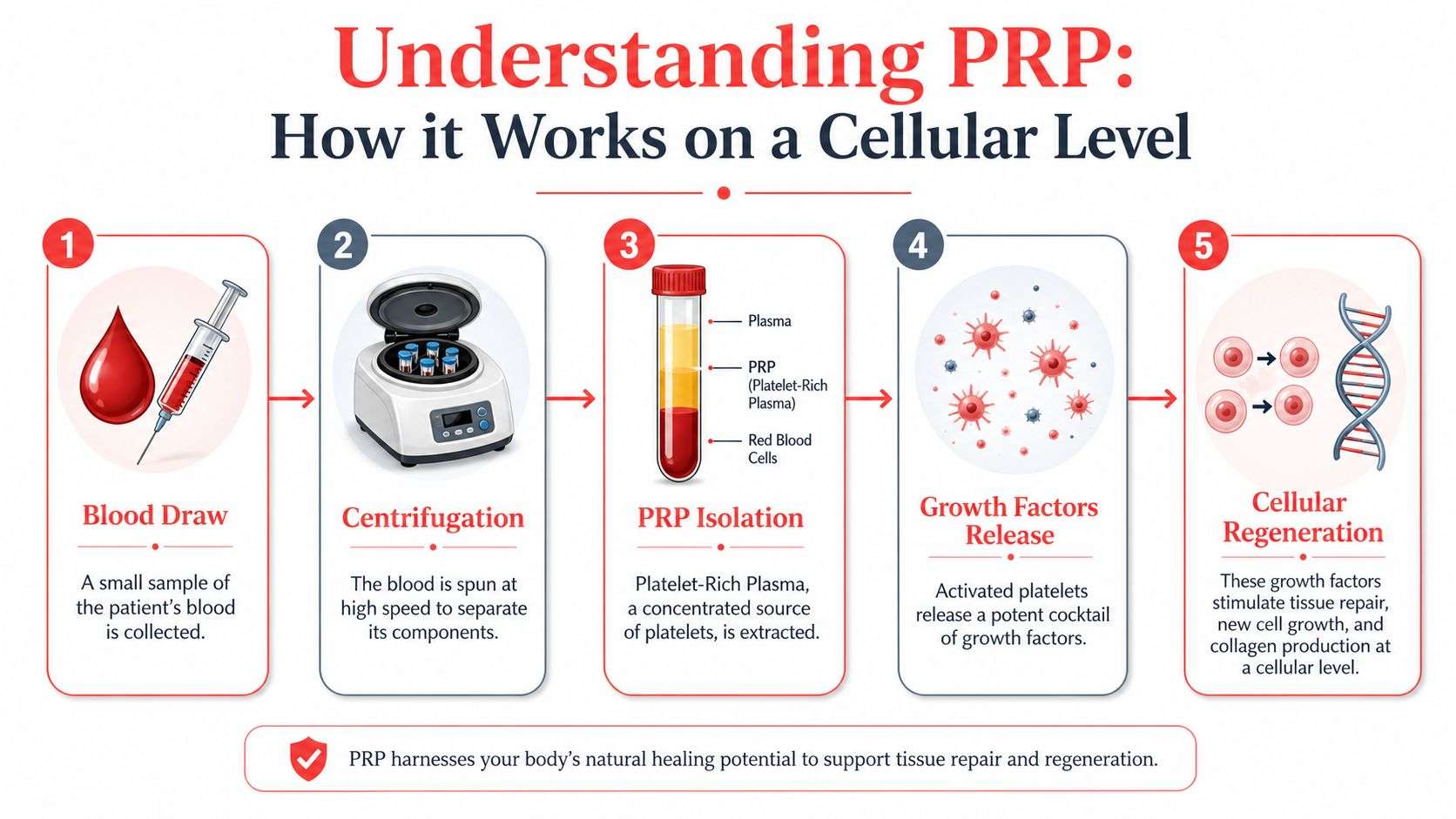
PRP is easier to understand when you stop thinking of it as a “shot” and start thinking of it as a cellular repair crew. The procedure begins with a blood draw. That sample is processed so the platelet-rich portion can be separated and concentrated, then injected into targeted penile tissue.
What PRP actually is
Platelets are best known for their role in clotting, but that's only part of the story. They also carry signaling molecules that influence tissue repair. In penile regenerative care, the key idea is that platelet-derived factors such as PDGF and VEGF can stimulate endothelial cell proliferation and angiogenesis inside the corpora cavernosa.
A review discussing intracavernosal PRP describes direct delivery of these growth factors into erectile tissue and reports a mean 57% improvement in IIEF erectile function scores from baseline in clinical case series, with benefits discussed through later follow-up in selected patients (International Journal of Reconstructive Urology review).
Why blood vessel health matters
An erection is a hydraulic event. If the small vessels and lining of the erectile tissue aren't working well, rigidity suffers even when desire is present. That's why regenerative therapies focus so heavily on endothelial health and perfusion.
If you want a simple refresher on the circulation side of sexual performance, the SEMEX guide to blood flow science gives useful background on why vascular signaling matters so much to erection quality.
Here's the practical version of the biology:
- Better signaling: PRP aims to deliver bioactive factors where tissue quality has declined.
- Vascular support: Angiogenesis means new or healthier microvascular networks may form over time.
- Tissue environment: The goal isn't instant expansion. The goal is a healthier erectile tissue bed.
Practical rule: Treatments that improve erection quality work by improving blood flow, tissue response, or both. That's different from treatments designed to add volume.
That distinction keeps expectations grounded. PRP penis injections are about function and tissue health first.
The Typical PRP Injection Procedure Journey
Most men imagine the visit will be more dramatic than it is. In a proper clinic setting, the process is usually structured, brief, and familiar from a procedural standpoint.
What happens before treatment
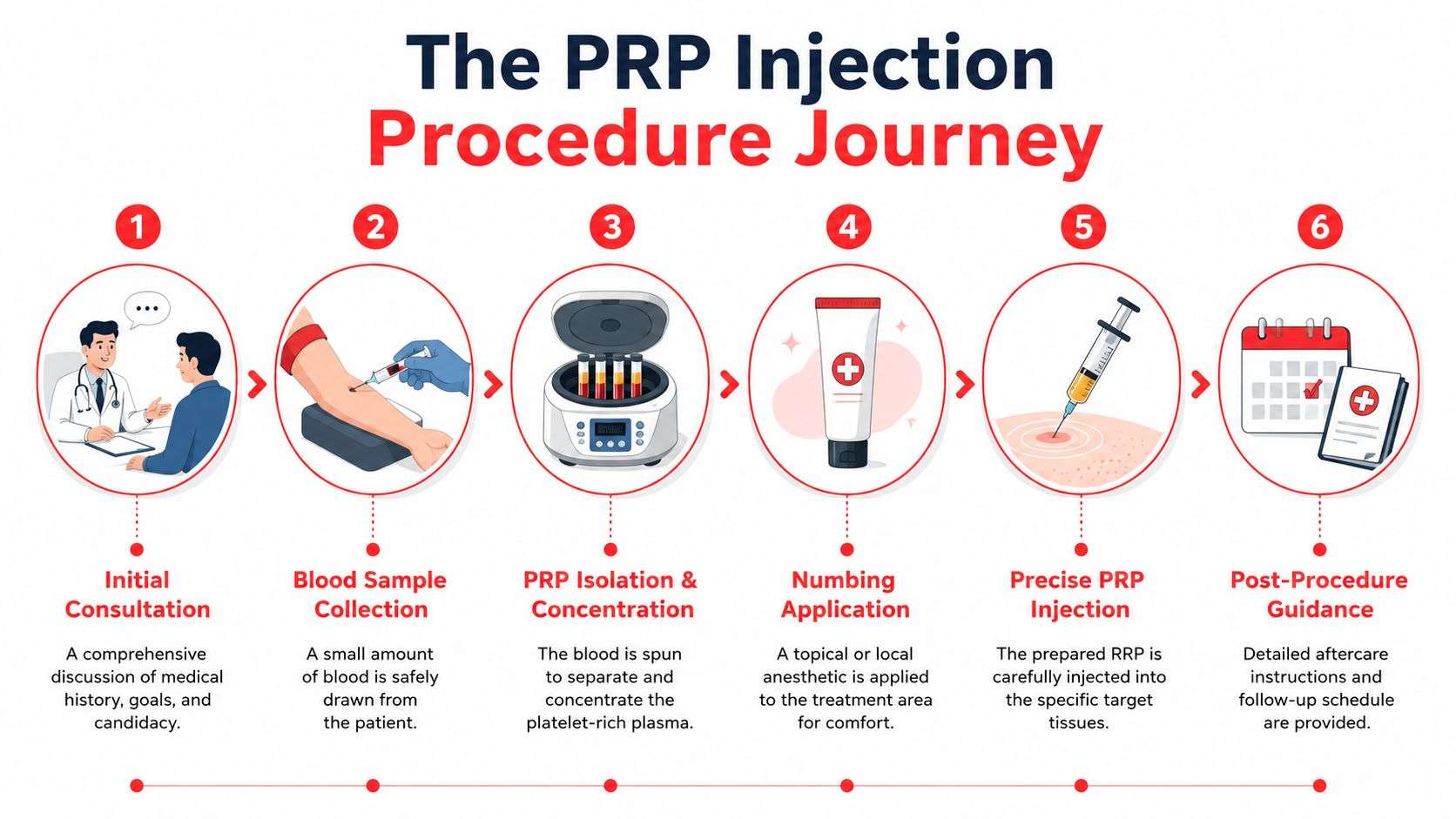
The first step should be an honest evaluation, not a sales script. The clinician needs to know whether the problem looks vascular, neurogenic, hormonal, medication-related, psychological, structural, or mixed. Men with Peyronie's disease also need an exam that defines plaque, curvature pattern, pain history, and erectile function.
A good consult should cover:
- Your actual complaint. Trouble getting firm, staying firm, loss of morning erections, penile curvature, pain, or all of the above.
- Medical context. Diabetes, cardiovascular disease, prior pelvic surgery, medications, smoking, and hormone issues can all change candidacy.
- Treatment aim. Functional improvement is a legitimate goal. Enlargement is not a realistic promise.
For men who feel anxious about the word “injection,” even a simple procedural explainer like this step-by-step guide to giving an IM injection can make the mechanics of office-based injection care feel less intimidating, even though PRP for penile tissue is a different procedure performed by a trained medical provider.
What the office visit usually feels like
After the evaluation, blood is drawn and processed to isolate PRP. The treatment area is then numbed, commonly with topical or local anesthesia depending on technique and provider preference. Once comfort is established, the PRP is injected into specific target tissues.
Patients usually describe the experience as more uncomfortable in theory than in reality. The bigger issue is often anticipatory anxiety.
A typical visit includes:
- Blood collection and processing
- Numbing phase
- Targeted injection
- Short observation period
- Aftercare instructions
The quality of the consultation matters as much as the injection. If a clinic can't explain where the PRP is going and why, that's a problem.
Most men return to routine activity quickly, though clinicians may recommend short-term restrictions depending on the protocol used.
Clinical Evidence and Expected Functional Outcomes
PRP has enough evidence to justify serious discussion, but not enough to justify inflated promises. That's the balanced view.
What the strongest evidence shows
A meta-analysis of randomized controlled trials in men with primary organic erectile dysfunction found that intracavernosal PRP produced a statistically significant improvement in erectile function compared with placebo, with a mean difference of 3.28 points on the IIEF scale and a 95% confidence interval of 1.46 to 5.11; the analysis also reported a risk difference favoring PRP of 42% and a 10.32 cm/s higher penile systolic velocity in the PRP group (PubMed meta-analysis summary).
Those are meaningful findings. They support the idea that some men experience real functional benefit, especially in the short-term follow-up windows studied. At the same time, that same evidence base shows heterogeneity across studies, and pooled results did not consistently hit the minimal clinically important difference in every analysis.
That's why I tell patients to think in terms of possible improvement, not guaranteed reversal.
If you're comparing regenerative options more broadly, this review of shockwave therapy for ED and what the studies show is useful context because vascular therapies are often discussed side by side in clinic.
What PRP does not do
This is the myth that needs a direct answer. PRP is not a proven penis enlargement procedure. High-quality evidence from a randomized trial and later reviews indicates that PRP injections do not reliably demonstrate permanent increases in penile length or girth, and the treatment is better classified as a biologic therapy for blood flow and tissue function rather than structural resizing.
That point matters because men often judge results by the wrong metric. If a patient comes in expecting a larger penis, even an improvement in firmness may feel disappointing. If the patient comes in seeking better erectile performance, the same result may feel worthwhile.
A realistic list of expected outcomes looks like this:
- More relevant outcome: Better erection quality or rigidity in some patients
- Reasonable hope: Improved tissue responsiveness and vascular function
- Poor goal: Permanent size enlargement
- Still uncertain: How durable results are for every patient over the long term
Candidacy Risks and Choosing a Qualified Provider
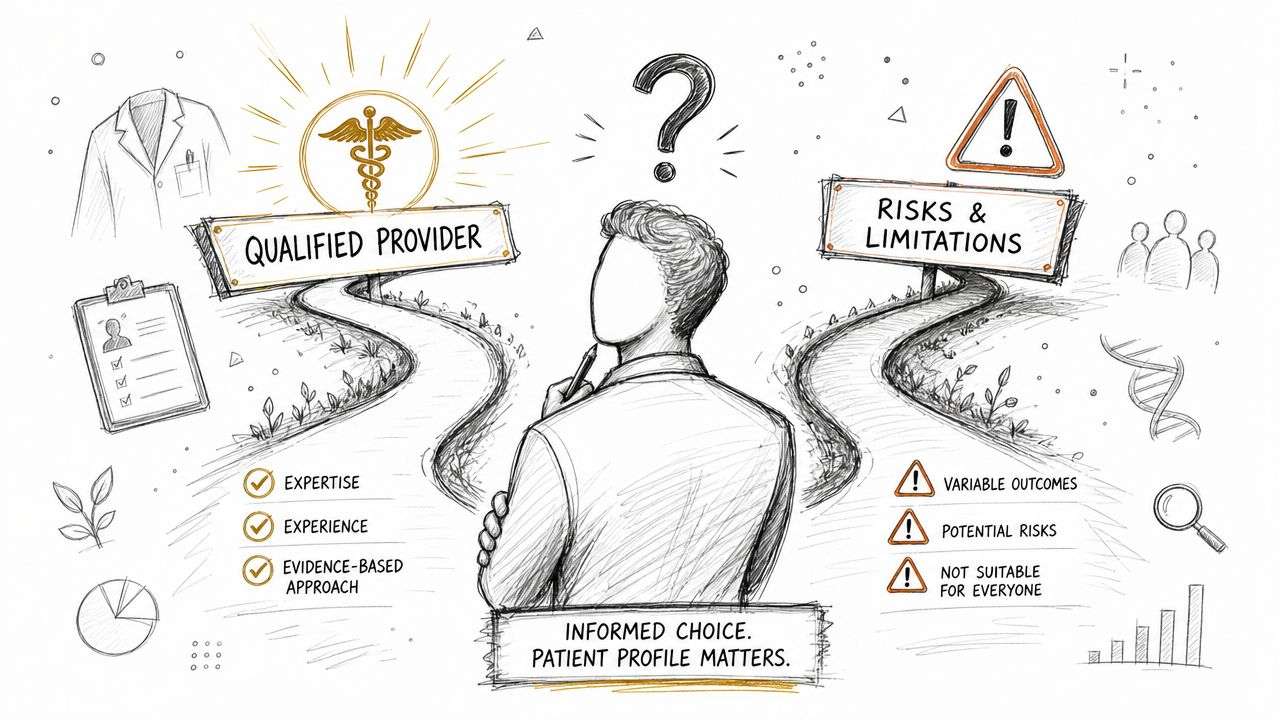
Not every man with ED is a good PRP candidate. The strongest logic tends to be in men whose dysfunction has a vascular component and who still have some baseline erectile capacity. In Peyronie's disease, candidacy depends on symptom pattern, severity, and whether the primary goal is pain relief, curvature improvement, erectile support, or some combination.
Who tends to be a reasonable candidate
The ideal patient usually wants functional improvement and understands the treatment is investigational. He's open to a plan that may include more than one modality and knows that vascular health, hormone status, metabolic disease, and lifestyle still matter.
For Peyronie's disease, PRP has shown encouraging signals. A review reports mean curvature reduction of 16.88° to 17.27°, along with significant pain reduction and improved erectile function, with only grade 1 complications such as superficial hematoma or mild injection-site pain reported in prospective studies (Peyronie's disease PRP review).
That doesn't mean every curved penis should be injected. It means selected patients may have a reasonable non-surgical discussion.
How to evaluate a clinic
Provider skill matters more here than many patients realize, partly because PRP isn't standardized across every office. Preparation methods differ. Injection protocols differ. Patient selection differs.
Ask direct questions:
- Who performs the injections? It should be a licensed medical provider with experience in sexual medicine and procedural anatomy.
- What are you treating? Vascular ED, Peyronie's disease, post-procedural tissue recovery, or something else.
- How do you set expectations? If a clinic leads with enlargement claims, that's a warning sign.
- What is the full plan? Some practices use PRP as one part of a broader erectile restoration program.
Sexual Wellness Centers of America is one example of a clinic that offers regenerative sexual health care through in-office protocols that may combine injections with other non-surgical modalities depending on the patient's presentation.
A qualified provider should be comfortable saying, “This may help, but it isn't standard of care, and it isn't a size treatment.”
Risks are generally local and procedural. Because PRP is autologous, the biologic compatibility is favorable, but bruising, temporary swelling, and soreness can still happen. Technique and sterile handling remain essential.
Comparing PRP with Other ED Treatments
The easiest way to understand PRP is to compare it to what it isn't. It's not a pill that forces a temporary physiologic response. It's not an implant that creates mechanical rigidity. It's not a filler used to alter girth. It sits in the regenerative middle ground.
A practical side-by-side view
| Treatment | Mechanism | Time to Effect | Primary Goal |
|---|---|---|---|
| PRP injections | Biologic regenerative signaling within erectile tissue | Gradual | Improve erectile function and tissue health |
| Oral ED medication | Enhances erectile response during a dosing window | Short-term | Improve erection performance for planned sexual activity |
| Acoustic wave therapy | Mechanical stimulation intended to support vascular response | Gradual | Improve blood flow and erectile quality |
| Penile implant surgery | Mechanical prosthetic rigidity | After surgical recovery | Reliable erections when other treatments fail |
| Penile filler procedures | Volume addition under tissue planes | Immediate to near-immediate | Change girth appearance, not erectile tissue regeneration |
That table clears up the common confusion. Different tools serve different goals.
For a broader look at non-surgical and surgical pathways, this overview of available treatments for erectile dysfunction is a useful companion resource.
Where combination care can make sense
PRP is often discussed alongside acoustic wave therapy because both aim at vascular and tissue-level improvement, though they work differently. In Peyronie's disease and ED, some published discussion suggests the benefits of PRP may be amplified when paired with low-intensity shockwave therapy, rather than used as a standalone intervention, as noted earlier in the evidence on Peyronie's disease.
That doesn't mean every patient needs every treatment. It means monotherapy isn't always the smartest way to think about restorative sexual medicine.
A practical decision framework looks like this:
- Choose symptom relief first if you need reliability right away and restoration isn't your immediate priority.
- Choose regenerative care if your goal is tissue support and you're comfortable with an investigational approach.
- Choose surgery when the dysfunction is severe, refractory, or structurally beyond what non-surgical treatment can reasonably address.
Patients also do better when they understand that sexual performance isn't only about erections. Sleep, hormones, stress, cardiometabolic health, and relationship context matter too. For a broader wellness perspective, NexiHerb's sexual wellness guide is a helpful general resource.
Recovery Aftercare and Cost Considerations
Recovery after PRP penis injections is usually straightforward. Most men don't need prolonged downtime, and many return to ordinary daily activity quickly. The main short-term issues are local tenderness, bruising, mild swelling, or temporary sensitivity at the injection area.
What recovery is usually like
Aftercare instructions vary by protocol, but the themes are similar. Keep the area clean. Follow activity guidance from the clinic. Report anything that seems out of proportion to normal soreness or bruising.
Some clinicians may also include adjunctive support measures such as a vacuum erection device, especially when the broader goal is to encourage oxygenation, tissue expansion during recovery, or blood flow support. That recommendation isn't universal, so it should come from the treating provider rather than from general internet advice.
Common practical guidance includes:
- Use the aftercare plan you were given. Don't improvise with supplements, pumps, or sexual activity timing unless your clinician has addressed it.
- Expect variability. Some men notice changes gradually rather than immediately.
- Track function, not appearance. Erections, rigidity, confidence, and curvature-related function are better markers than tape-measure thinking.
Recovery is easy for most men. Expectation management is usually harder than the physical aftercare.
What to know about pricing and value
PRP is generally considered an elective treatment, so insurance coverage is uncommon. Cost varies by region, clinic expertise, whether the treatment is packaged into a larger program, and whether follow-up visits or adjunctive therapies are included.
The right way to judge value isn't by the lowest advertised price. It's by the quality of the evaluation, the clarity of the indication, the skill of the injector, and whether the clinic is honest about what PRP can and can't do. A cheaper treatment with poor candidate selection is often more expensive in the long run because it leads to disappointment.
Frequently Asked Questions About PRP for Penile Health
How long do results last
This is one of the biggest unanswered practical questions. The evidence is mixed. A review discussing treatment frequency notes that some meta-analyses show significant IIEF-EF improvements at 1, 3, and 6 months, while other reviews conclude the evidence is still too limited to confirm long-term durability, with some results appearing to diminish and some protocols suggesting a second session in 3 to 6 months or even annual maintenance (review on treatment frequency and durability).
So the honest answer is that there isn't a single settled maintenance schedule.
Is P-Shot the same as PRP
P-Shot is a branded label commonly used for a PRP-based penile injection concept. PRP is the underlying biologic material. The exact preparation method and injection protocol can vary by practice, so branded names don't guarantee the same formulation or technique from one clinic to another.
Does PRP make the penis bigger
Not reliably. That's the most important myth to clear up. PRP penis injections should be approached as a treatment for erectile function and tissue health, not as a permanent length or girth procedure.
Is the procedure painful
Most practices use topical numbing, local anesthesia, or both. Men are often surprised that the anticipation is worse than the treatment itself. Mild soreness or bruising afterward is more common than severe pain.
Who should be cautious
Men with unrealistic expectations, untreated underlying medical issues, or a desire for guaranteed enlargement are poor candidates from the start. Men do best when they want functional improvement and understand the investigational nature of the therapy.
If you're considering PRP penis injections and want a medical evaluation that focuses on erectile function, Peyronie's disease, and realistic treatment planning, Sexual Wellness Centers of America offers in-clinic sexual health assessments and non-surgical regenerative care options for adults.