
Regenerative medicine research is no longer a side topic. A 2024 industry brief put the global market at US$30.44 billion in 2023 and projected US$168 billion by 2034, which tells you this is now a serious development sector with money, trials, and infrastructure behind it. The same brief reported 1,751 active clinical trials globally as of April 2024, so the question isn't whether the field exists, it's how to read the evidence without getting lost in marketing language. [^1]
That matters for anyone trying to understand sexual wellness protocols, because the clinic conversation often mixes biology, devices, injections, and outcome claims in one breath. The useful questions are simple. What's being repaired, what's only being stimulated, what's been studied, and what still needs better evidence?
Table of Contents
- Why Regenerative Medicine Research Matters Right Now
- How Regenerative Medicine Works
- The Hardest Problem in the Field
- What the Clinical Evidence Shows
- Safety, Regulation, and Questions to Ask Any Clinic
- How Research Becomes a Real Clinic Protocol
- The Evidence Gap Most Articles Skip
- What to Do Next as a Patient or Researcher
Why Regenerative Medicine Research Matters Right Now
The size of the field is one clear sign that regenerative medicine research has moved from a narrow scientific topic into active clinical development. A 2024 brief reported US$30.44 billion in global market value in 2023, with a projection of US$168 billion by 2034 (CCRM quick facts brief). It also said US$11.7 billion was raised in 2023, and that there were 2,848 cell and gene therapy developers worldwide, spread across North America, Asia Pacific, and Europe. That points to a broad research ecosystem, not a single-region story.
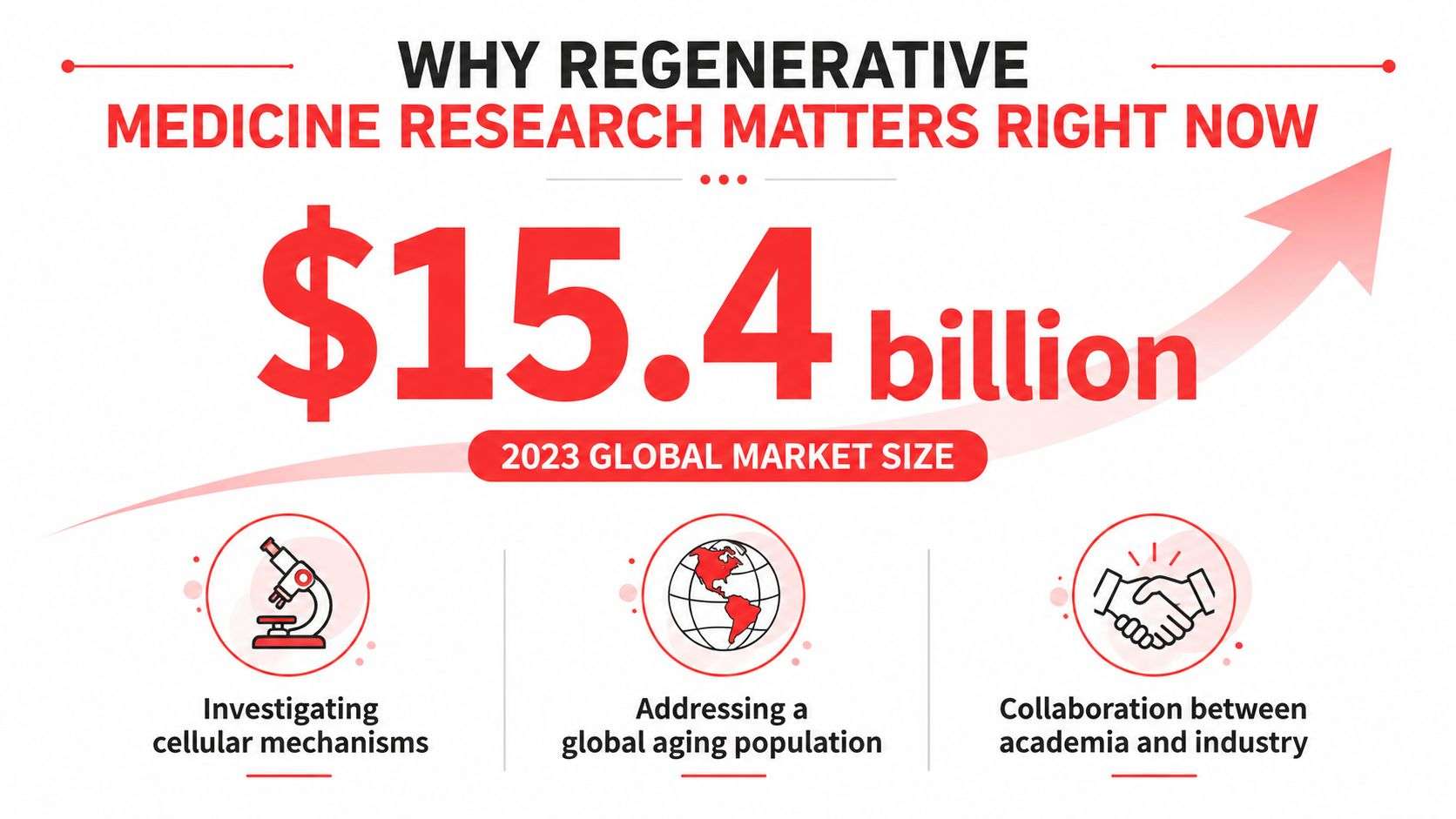
That scale changes how clinic claims should be read. A field with active trials and significant investment still has uneven evidence, but it also has real translational momentum. In the United States, the National Institute of Dental and Craniofacial Research reported investing over US$73 million in regenerative medicine research in fiscal year 2024, and a U.S. House briefing noted nearly 900 active regenerative medicine and cell therapy clinical studies, including 776 clinical trials.
For patients, the right frame is not “miracle cure” versus “fake treatment.” It is a spectrum of interventions, some better supported than others, all tied to mechanisms that need to be understood before they are used. A good explainer should do four jobs. It should explain how the biology works, summarize what the clinical evidence shows, separate safety and regulation from hype, and show how research becomes a protocol in an adult sexual wellness clinic.
Practical rule: if a clinic cannot explain the mechanism in plain language, it probably cannot explain the evidence clearly either.
The best patient-facing resources connect lab science to real-world decision-making without pretending the science is settled. If you are comparing options or looking for a structured clinic model, the discussion around regenerative wellness care is most useful when it starts with biology and ends with outcomes, not the other way around.
How Regenerative Medicine Works
Regenerative medicine starts from a different question than ordinary symptom treatment. Instead of asking only how to reduce what a patient feels, it asks how to change the tissue environment so the body can repair, remodel, or recover function more effectively. That is why the field brings several toolkits together instead of depending on one intervention.
Four Mechanism Families Used in Regenerative Medicine Research
| Mechanism | What It Does | Typical Clinical Role |
|---|---|---|
| Stem cells and exosomes | Deliver cells or cell-derived signals that can support repair and reduce inflammatory signaling | Used when the goal is tissue support, not just symptom relief |
| Platelet-rich plasma, or PRP | Concentrates platelets to release growth factors that can signal local healing | Often used as a biologic trigger in soft tissue and sexual wellness protocols |
| Peptide signaling | Uses short signaling molecules to influence repair pathways and cellular communication | Usually framed as an adjunct to broader regenerative programs |
| Acoustic wave and laser modalities | Use energy-based stimulation to influence circulation, tissue response, and local remodeling | Commonly paired with biologic therapies in non-surgical protocols |
The logic chain matters. Regenerative medicine research is not only about introducing something biologically active. It is about creating a tissue environment that can respond. The NIH and review summary describes the field as combining engineered biomaterials with gene editing, while newer reviews highlight CRISPR-Cas9, exosome-based therapeutics, and nanotechnology-enabled delivery systems as major enablers of patient-specific repair. That sounds technical, but the clinical meaning is straightforward. Signals are being delivered more precisely, and they are being aimed at narrower targets.
For sexual wellness, that usually appears as combination care rather than a single isolated product. A protocol may use a growth-factor trigger, an energy-based modality, and a regenerative injection strategy because each piece is aimed at a different part of the repair process. One is meant to stimulate local signaling, another to support circulation, and another to support tissue remodeling biology. Those layers should not be treated as interchangeable.
Clinical translation tip: a treatment is easier to evaluate when you separate “signal delivery,” “circulation support,” and “tissue remodeling” instead of calling everything “regenerative.”
That separation also helps patients ask better questions. Ask whether the goal is to improve signaling, perfusion, cellular activity, or structural repair. Those outcomes are related, but they are not the same, and they should not be sold as if they were.
The Hardest Problem in the Field
A 58-year-old man comes in with vascular erectile dysfunction. He starts a protocol built around PRP and acoustic wave therapy, and at first the response looks encouraging. He notices more consistent firmness, then the effect plateaus. That pattern is common enough to matter because the problem isn't always that nothing is happening. Sometimes the tissue is getting a signal, but it isn't building a durable structure that can keep performing under real physiologic demand.
The engineering bottleneck is usually vascularization and host integration, not making cells grow. PNAS describes successful regenerative strategies around three problems, recapitulating tissue architecture with scaffolds and 3D bioprinting, integrating grafts with host vasculature and innervation, and changing the host environment through cell infusion or immune modulation (PNAS). In plain language, tissue has to be supplied with blood, connected to the body, and functionally wired in, or it won't behave like the original tissue.
That's why some promising approaches work better in theory than in lived clinic reality. Thick grafts fail when they can't get enough perfusion. Without oxygen and nutrient delivery, you can't expect durable tissue function. That's also why growth-factor release, scaffold design, and vascular cell seeding keep showing up in regenerative medicine research. They're not decorative details, they're the difference between a biologic signal and a lasting repair process.
For sexual function, this distinction is especially important. Erectile tissue isn't only a structure, it's a vascular and neurologic system. If a protocol only nudges circulation for a short period, the result may fade. If it also supports integration and functional recovery, the response is more likely to hold up.
The most common mistake is to assume a visible early change means the tissue has fully repaired itself. Often, it hasn't.
That's the part most adult patients don't hear clearly enough. A clinic can report early improvement without showing whether the tissue environment changed in a durable way. The question is whether the protocol is doing more than temporarily boosting response. That's where regenerative medicine research becomes clinically useful, and where it still has limits.
What the Clinical Evidence Shows
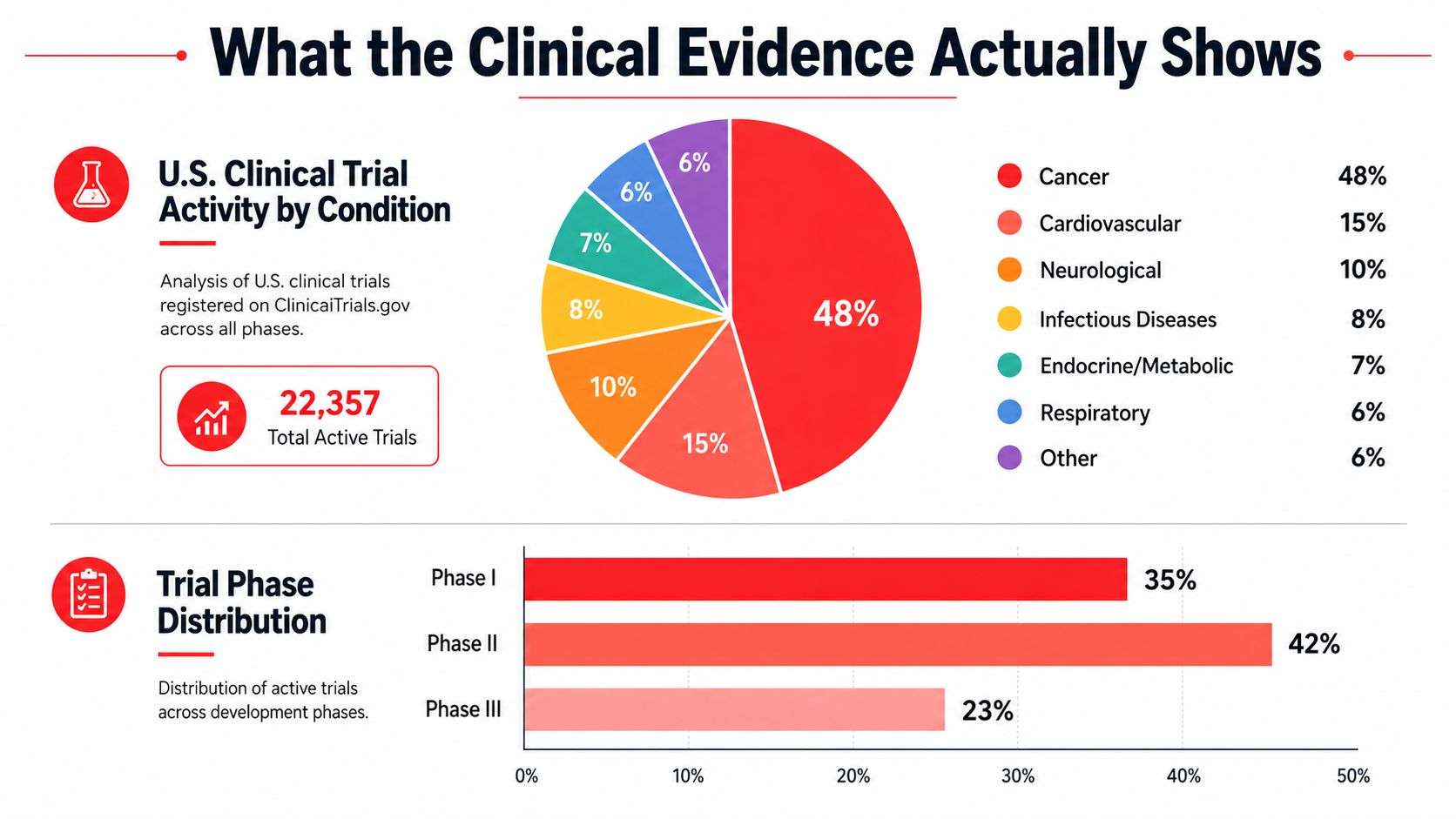
The current research pipeline is active, but the mix of diseases studied shows how wide the field really is. A U.S. House briefing noted nearly 900 active regenerative medicine and cell therapy clinical studies in the United States, and 776 of those were clinical trials. Cancer accounted for 48% of the studies, followed by musculoskeletal conditions at 11%, and neurological and cardiovascular conditions at 6% each. Sexual wellness sits inside that much larger research ecosystem, so it should be interpreted as one clinical use case among many, not as the center of the field.
Patients often ask whether a protocol “works.” The clearer question is what the study calls success. In many clinic-style programs, success means being able to achieve and maintain an erection after the protocol is completed. That outcome matters, but it is not the same as showing cellular regeneration in the tissue itself.
The material provided for this article reports 97.2% efficacy in one trial context and 98% in a separate study context. Those figures describe protocol outcomes, not proof that every patient will respond the same way. They are most useful when you ask what population was studied, how success was measured, and whether the response held after treatment ended. If a claim does not define the endpoint, it does not give you enough to judge the result.
A useful way to examine the evidence is to separate mechanism evidence from patient outcome evidence. Mechanism evidence asks whether the biologic step makes sense, for example, whether a growth-factor trigger or an energy-based modality plausibly changes local tissue behavior. Outcome evidence asks whether patients function better afterward. The two are related, but they are not identical, and a clinic should be able to explain both.
For readers who want a closer look at biologic repair logic before it reaches clinical use, the TB-500 preclinical data overview is a useful mechanism reference. It helps show how peptide-centered repair is discussed at the bench before it is translated into patient care. That background matters more than polished outcome claims when you are trying to decide what is plausible and what is still experimental.
The same logic applies to acoustic wave protocols. The broader evidence discussion around shockwave therapy for ED success is most useful when you read it as part of a combination program, not as a standalone solution. In clinic-grade sexual wellness care, stem cells, PRP, acoustic wave, and laser are usually framed as parts of a larger protocol, so the question is not just whether one part can trigger a response, but whether the full plan matches the patient's vascular, neurologic, and tissue-healing needs.
Safety, Regulation, and Questions to Ask Any Clinic
Safety starts with a simple distinction. FDA-cleared devices and investigational biologics are not the same thing, and patients should ask which category each part of a protocol falls into. A device may be cleared for a specific use while the biologic injection or personalized regenerative component is still being studied. That can be appropriate in this field, but the clinic should say so in plain language.
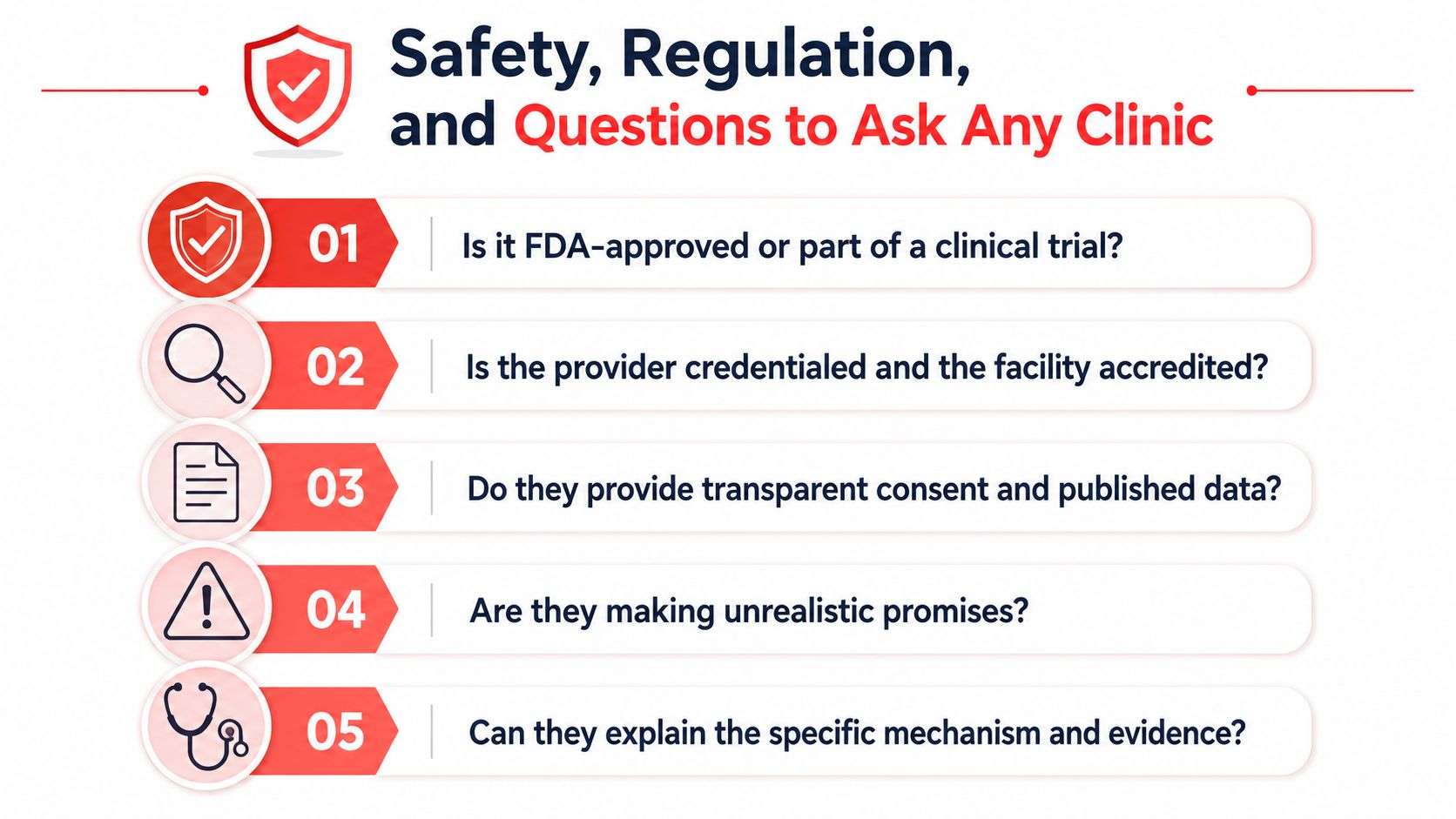
Use a checklist when you talk to any clinic.
- Is it FDA-approved or part of a clinical trial? If the answer is vague, ask what part of the protocol is a device and what part is a biologic.
- Is the provider credentialed and the facility accredited? Training and setting matter when a treatment depends on handling tissue, blood products, or personalized preparation.
- Do they provide transparent consent and published data? You want to know the expected benefit, the limits, and the follow-up plan before anything is done.
- Are they making unrealistic promises? A legitimate clinic won't promise universal results or imply that every body will respond the same way.
- Can they explain the specific mechanism and evidence? If they can't explain why the intervention should help, they probably can't explain where the evidence is strongest.
The evidence base also has gaps that affect who gets studied and who does not. A PubMed review on disparities says regenerative medicine research is “notably limited” and points to barriers tied to complex manufacturing, specialized delivery, and personalization (PubMed review on disparities). That matters in sexual wellness care, where the protocol may combine stem cells, PRP, acoustic wave, or laser, and where response can vary with vascular health, hormonal status, and tissue injury patterns. Informed consent should cover the source of each component, how it is prepared, and what the clinic does if the result is weaker than hoped.
For clinics building internal standards, staff training compliance templates can help document roles, safety checks, and escalation steps. Patients do not need the paperwork, but they do need to know that a real clinic can describe its process with the same clarity it expects from its staff. That is especially important in a field where a single visit can involve both a device-based procedure and a biologic product.
The internal education page on REGENmax injection therapy protocol is most useful when it helps patients ask better questions, not when it replaces medical judgment.
How Research Becomes a Real Clinic Protocol
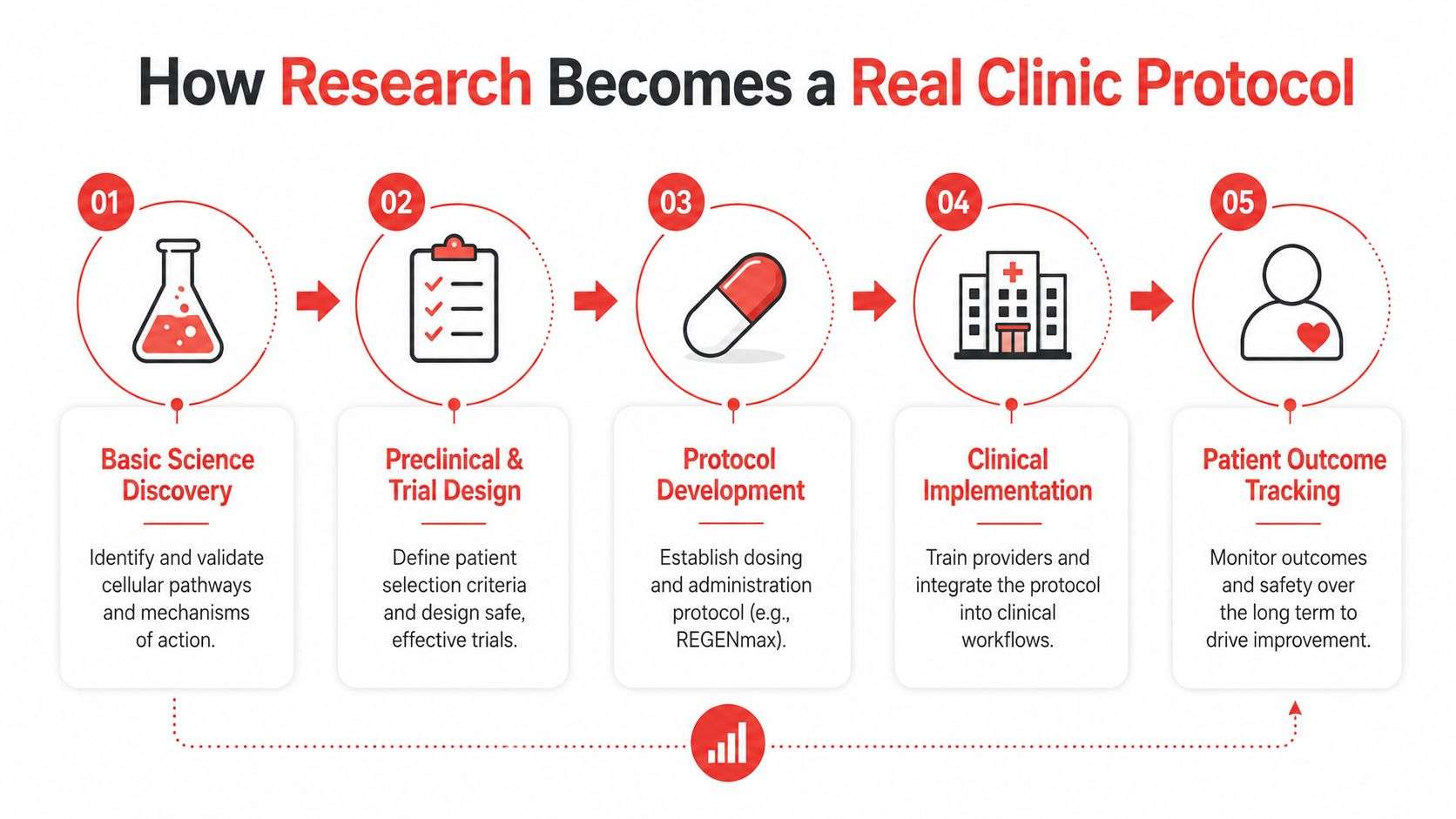
Research enters clinic use in stages, and each stage should refine the protocol a little more. A repair signal that looks promising in the lab is only the starting point. It still has to survive preclinical testing, fit a clear patient selection plan, be delivered in a reproducible way, and then be monitored after treatment so the clinic can see what happened.
What a protocol is really built on
The first question is who should be treated. In sexual wellness care, that usually means checking hormone panels, vascular screening, diabetes status, and whether Peyronie's disease is part of the picture. Those details matter because a protocol for circulation-related dysfunction will not look the same as one built around hormonal imbalance or penile curvature.
Sequencing comes next. A non-surgical program may combine acoustic wave stimulation, laser therapy, and regenerative injections because the sequence is meant to support signaling, tissue response, and follow-through within one plan. That is different from giving a single intervention and hoping it addresses every layer of the problem. Follow-up support matters too, because a tissue response without monitoring is often less useful than a protocol with built-in reassessment.
For visual learners, mechanism of action videos can clarify how each modality works at the cellular level. They are most helpful when they show the step between biological effect and clinic workflow, because that is where many patients lose the thread. A diagram can make the sequence easier to see, but the clinical value still depends on whether the steps are matched to the patient's biology.
When a clinic describes a program like REGENmax, the useful question is not whether the name sounds impressive. It is whether the patient-selection criteria, modality sequence, and follow-up plan are documented in a way that matches the biology. A clinic that can explain those steps clearly is closer to the logic of regenerative medicine research than one that only lists tools.
For adult patients, that same logic applies to how the protocol is discussed. If the clinic can say, “This is why we checked your labs, this is why we chose this sequence, and this is how we will know if it is working,” that is a meaningful sign. If it cannot, the program may be more branding than medicine.
Practical takeaway: a real protocol is a decision tree, not a menu.
The Evidence Gap Most Articles Skip
Personalization is one of the biggest strengths of regenerative medicine, but it's also a fairness problem. A recent PubMed review says research on health disparities in regenerative medicine is still notably limited, and it argues that the same complexity that makes these therapies adaptable can also make them harder to access fairly (PubMed review on disparities). That's the contrarian point most explainers miss. The treatment may be designed for the person, but the system delivering it may still exclude many people.
The National Academies add another layer to that concern. They report that women have historically been excluded from basic, translational, and clinical research, and they note that regenerative medicine could help close those gaps only if studies better address female-specific and sex-differentiated conditions (National Academies report). They also point out that regenerative medicine research has often failed to report the ancestral or ethnic origins of the human cells being studied, which leaves patients and clinicians with a thinner evidence base than they probably realize.
That matters in sexual wellness, too. Patients often assume that if a protocol is “regenerative,” it must work equally well across bodies, ages, sexes, and ancestries. The current literature doesn't justify that assumption yet. The better question is not, “Does it work?” It's, “Does it work in someone like me?”
A thoughtful clinic should be able to answer that without overpromising. If the protocol data come mostly from one population, one clinical setting, or one kind of patient, that should be stated plainly. A patient who asks about evidence in their own demographic group is not being difficult. They're asking the right question.
What to Do Next as a Patient or Researcher
If you're a patient, start with your own baseline. Bring your labs, ask which parts of your symptoms are hormone-related versus vascular, and ask what maintenance looks like after the initial protocol. Then confirm who will deliver the treatment, what the consent process says, and how the clinic tracks response over time. In sexual wellness care, that last piece matters because a protocol that sounds regenerative on paper still needs a follow-up plan in real life.
If you're a researcher or a curious reader, the next frontier is already visible in the literature. Gene-enabled repair, CRISPR-corrected iPSCs, exosome therapeutics, and 3D bioprinted constructs are all part of the shift toward more controlled, patient-specific repair systems. The direction is toward more precise delivery, better reproducibility, and a tighter link between biologic mechanism and measurable function. That is the same reason clinic-grade sexual wellness programs often combine several modalities instead of relying on a single intervention, because each one addresses a different layer of the problem.
The honest takeaway is simple. Regenerative medicine research is promising precisely because it is still being refined. The field has scale, funding, and active trials, but it also has evidence gaps, access problems, and population-specific blind spots that patients should know about before they choose a protocol.
If you want help understanding whether a regenerative sexual wellness protocol fits your goals, Sexual Wellness Centers of America offers clinic-based evaluation, hormone-focused planning, and non-surgical regenerative options designed for adult sexual health concerns. Visit Sexual Wellness Centers of America to review the available services, compare approaches, and ask informed questions before you book a consultation.