
A man with diabetes may notice the change in bed before he notices anything else. Morning erections become less frequent, rigidity fades sooner, and a previously reliable response starts requiring more stimulation. Often, he blames age, stress, or relationship tension. But erectile dysfunction can be the first visible sign that diabetes is affecting blood vessels, nerves, hormones, and cardiovascular health.
Reversing erectile dysfunction with diabetes rarely means taking one tablet and returning permanently to the way things were. A realistic goal is to identify the damaged systems, improve the metabolic conditions driving that damage, and choose treatment that matches the severity of the problem. Pills can help, but durable improvement depends on much more than temporary blood flow.
Table of Contents
- Why Diabetes Changes Erections More Than Aging Alone
- How High Blood Sugar Damages the Erectile System
- What a Proper ED Evaluation Looks Like for a Diabetic Man
- First-Line Medications and Why Results Are Often Weaker
- Optimizing Diabetes Control as the Foundation for Reversal
- Regenerative and Procedural Options Worth Considering
- What Reversal Realistically Means and What to Expect
- Building Your Stepwise Treatment Plan This Week
Why Diabetes Changes Erections More Than Aging Alone
A 52-year-old man with type 2 diabetes may describe a very specific timeline. His morning erections disappeared gradually, perhaps two years before his last satisfying sexual experience. At first, he could still have intercourse with extra stimulation. Later, the erection became unreliable even when desire remained strong.
A non-diabetic man of the same age can experience similar changes with aging, but diabetes often shifts the process earlier and makes it more progressive. In a major meta-analysis, erectile dysfunction affected 52.5% of men with diabetes overall, including 37.5% with type 1 diabetes and 66.3% with type 2 diabetes. Compared with healthy controls, men with diabetes had 3.62 times higher odds of erectile dysfunction (meta-analysis in PubMed).
Historical clinical data also show that the problem can worsen over time. In a classic study of diabetic men who were initially potent, 28% became impotent during follow-up, demonstrating that sexual function can decline progressively rather than remain stable (longitudinal clinical study in PubMed).
ED is a vascular warning sign
An erection depends on small arteries widening, smooth muscle relaxing, nerves releasing the right signals, and the penis trapping incoming blood. Diabetes can interfere with every part of that sequence. The same endothelial injury that limits penile blood flow can also affect coronary, cerebral, and renal circulation.
That makes ED more than a performance complaint. It can be a practical reason to review blood pressure, cholesterol, kidney function, glucose control, smoking, exercise, and cardiovascular symptoms. A useful patient-facing overview of this connection is available in this guide to how diabetes affects sexual health.
| Age decade | Non-diabetic men | Men with diabetes |
|---|---|---|
| Fifth decade | Lower prevalence | About 30% in the cited clinical framing |
| Sixth decade | Increasing prevalence | Higher than non-diabetic peers |
| Seventh decade | Further age-related increase | Over 70% in the cited clinical framing |
The broader clinical message is simple: diabetes makes the erectile system age on fast-forward. Hyperglycemia, insulin resistance, dyslipidemia, inflammation, neuropathy, and vascular stiffness converge on the small vessels that erections rely on. That's why evaluation should begin when the pattern changes, not only after medication fails.
How High Blood Sugar Damages the Erectile System
Diabetes-related ED is primarily a neurovascular disorder, not just a problem of low desire. Chronic hyperglycemia promotes advanced glycation end-products, oxidative stress, endothelial dysfunction, autonomic and peripheral neuropathy, and remodeling of the cavernosal smooth muscle. These processes reduce nitric oxide availability and impair the relaxation needed for an erection (review of diabetic ED mechanisms).
Four systems fail together
Vascular injury is usually the most visible part of the problem. High glucose injures the endothelial lining and reduces nitric oxide signaling. Think of a small-bore garden hose gradually stiffening and narrowing from the inside. Blood may still enter, but the pressure and responsiveness needed for firmness are reduced.
Neural injury disrupts the messages that connect arousal to erection. Glycation, oxidative stress, and microvascular ischemia can damage sensory and autonomic fibers. A frayed phone cable is a useful analogy. It may still carry some signal, but the data arrive weakly or inconsistently. Men may notice reduced penile sensation, delayed arousal, or difficulty maintaining rigidity.
Hormonal disruption can lower sexual desire and reduce the tissue's response to stimulation. Obesity, insulin resistance, and inflammation commonly coexist with low testosterone, but testosterone should be measured rather than assumed to be the cause. Hormone treatment may be appropriate when a genuine deficiency is confirmed, yet it won't repair arterial disease by itself.
Structural change develops after prolonged poor filling and tissue stress. Fibrosis can reduce smooth-muscle flexibility and interfere with the veno-occlusive mechanism that keeps blood inside the penis. A man may achieve partial firmness but lose it quickly because the system can't maintain pressure.
These pathways overlap. A man with poorly controlled diabetes may have reduced nitric oxide, neuropathy, low testosterone, and tissue remodeling at the same time. That explains why ED medication may work less reliably than it does in a man without diabetes, and why diabetic neuropathy and erectile dysfunction need to be considered together rather than treated as unrelated complaints.
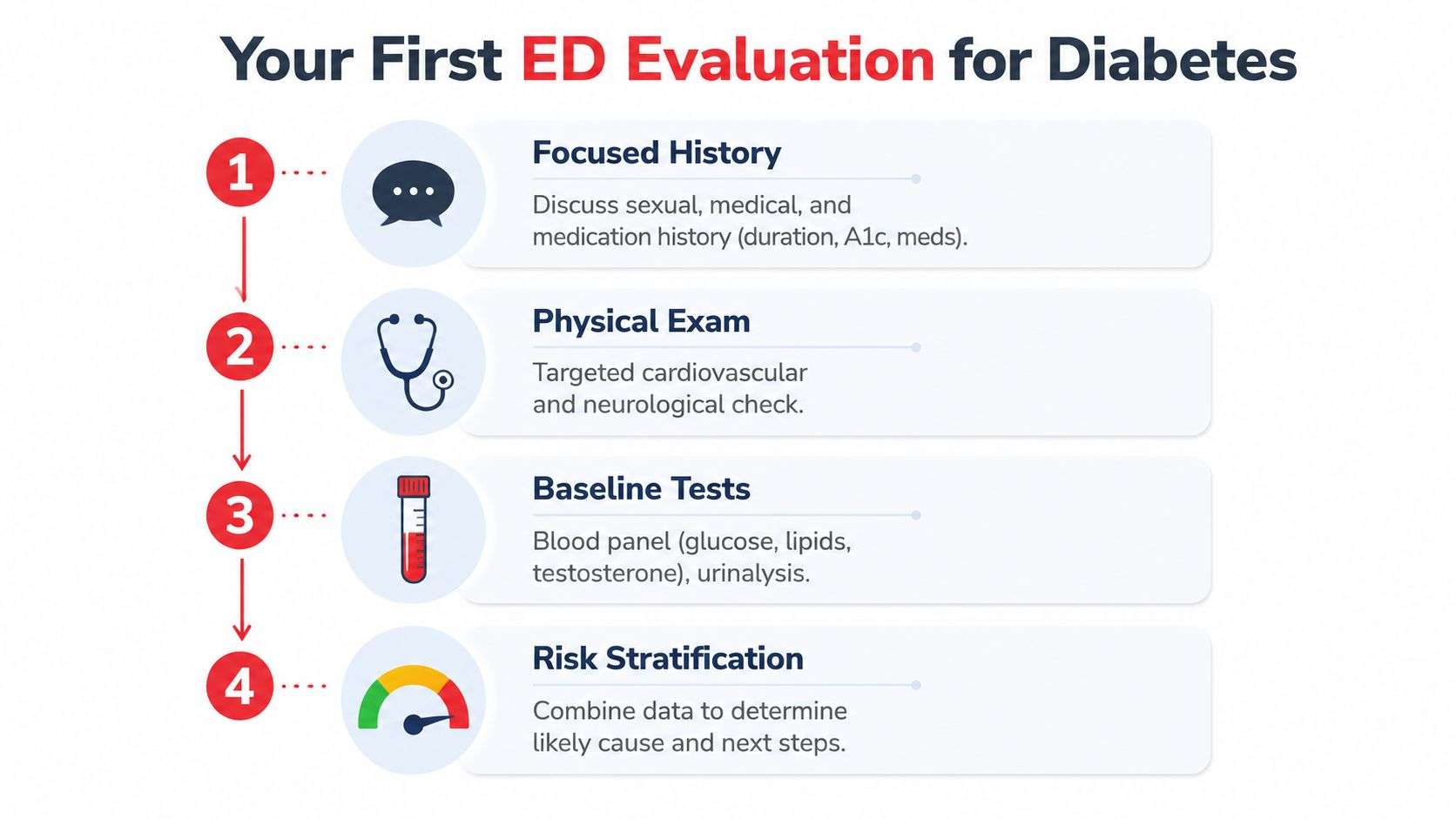
What a Proper ED Evaluation Looks Like for a Diabetic Man
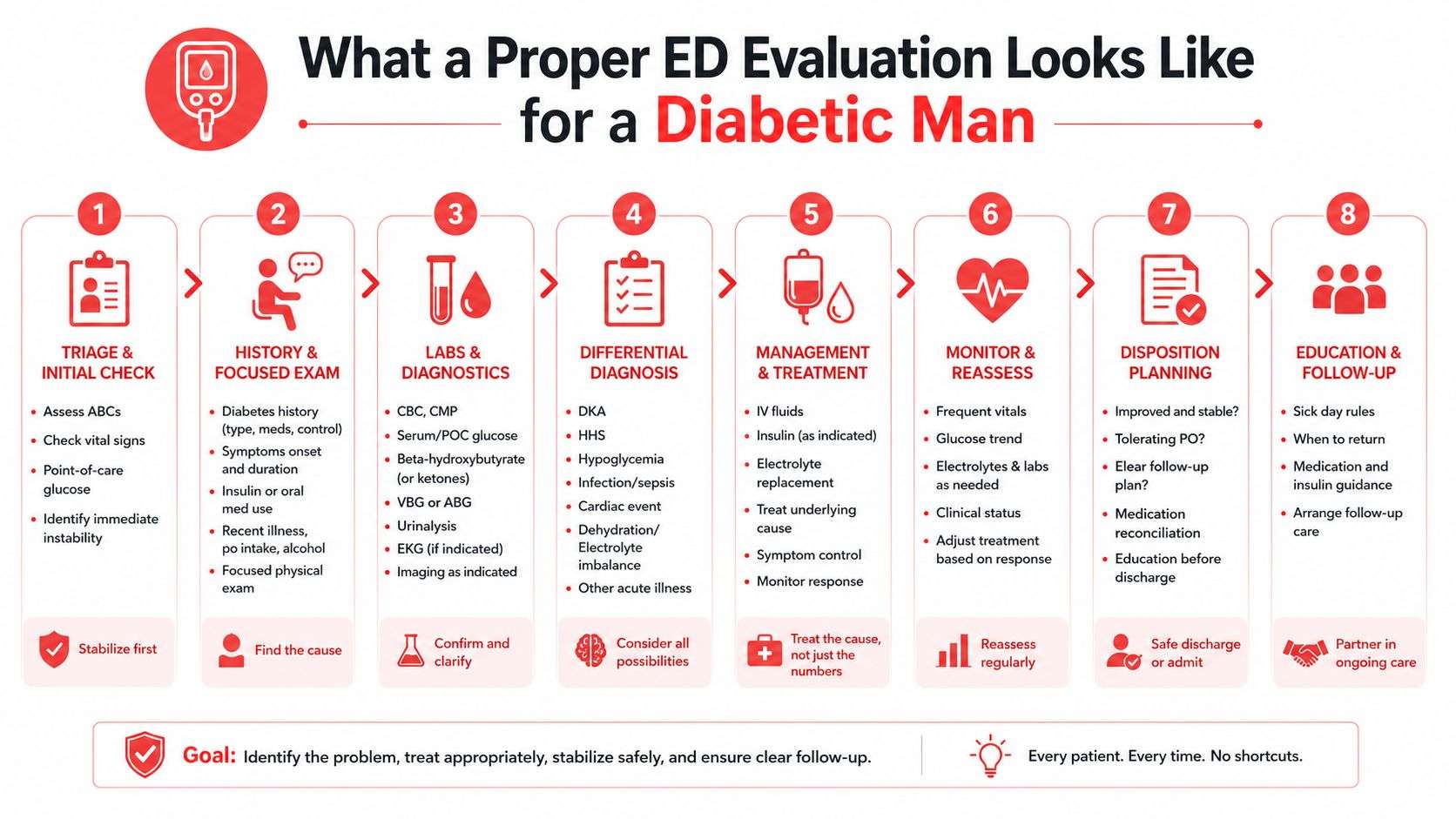
A useful evaluation should answer two questions. What is preventing the erection, and what health issue might the erection be revealing? A rushed prescription without those answers often leads to repeated dose changes, unnecessary frustration, and delayed treatment of the underlying problem.
Start with the history
Bring the timeline, not just the complaint. Tell the clinician when erections changed, whether morning erections remain, whether the problem affects firmness or desire, and whether ejaculation and orgasm have changed. Include diabetes duration, recent glucose patterns, A1c history, cardiovascular events, blood pressure, kidney disease, neuropathy, and sleep quality.
Medication review matters. Antidepressants, some antihypertensives, testosterone-altering drugs, and recreational substances can affect sexual function. Never stop a prescribed medication independently, but ask whether an alternative or dose adjustment deserves consideration.
A validated questionnaire such as the IIEF-5 or SHIM can establish a baseline. The score doesn't replace clinical judgment, but it makes later improvement easier to measure.
Examine the circulation and hormones
The physical examination should include blood pressure, body habitus, femoral and pedal pulses, and a focused neurological assessment. The genital examination can identify Peyronie's disease, penile plaques, or other structural findings. Testicular size and body composition may provide clues about hormonal function, but laboratory confirmation remains essential.
Targeted testing commonly includes fasting morning total and free testosterone, LH, prolactin, TSH, A1c, a lipid panel, and renal function. Men considering hormone care may also benefit from learning which doctors can prescribe testosterone, while remembering that prescription decisions require a personal evaluation and appropriate monitoring.
Practical rule: Don't label ED as “just diabetes” until medication effects, hormone deficiency, vascular disease, neuropathy, and psychological contributors have been considered.
Use vascular testing when the decision requires it
Penile Doppler ultrasound can assess arterial inflow and the ability of the cavernosal arteries to dilate. It can also help distinguish arterial insufficiency from venogenic leakage, where blood enters but isn't retained effectively.
Insurance coverage for this imaging can be limited. Even so, skipping it may leave the clinician guessing whether escalating oral medication, using injections, or considering procedural care is the rational next step. The test is most useful when the result will change the treatment plan.
First-Line Medications and Why Results Are Often Weaker
PDE5 inhibitors remain the best-supported first-line medication group for diabetic ED. They include sildenafil, tadalafil, vardenafil, and avanafil. A Bayesian network meta-analysis of randomized trials found a treatment effect favoring PDE5 inhibitors over control, with a pooled relative risk of 2.91, a 95% confidence interval of 1.95 to 4.34, and P<0.001 (network meta-analysis in PubMed).
These medicines don't create desire or produce an automatic erection. They amplify the nitric oxide pathway during sexual stimulation. Sildenafil, vardenafil, and avanafil are generally used around anticipated sexual activity, while tadalafil can be used around activity or as a daily low-dose option. The exact prescription depends on cardiovascular status, kidney function, other drugs, side effects, and the timing preferences of the couple.
| Medication | Typical dose range | Onset | Duration | Diabetic-specific notes |
|---|---|---|---|---|
| Sildenafil | Individualized prescription dose | Often taken before sexual activity | Several hours | Food and timing can affect practical response |
| Tadalafil | Individualized as-needed or daily prescription | Flexible timing | Longer response window | Daily use may reduce scheduling pressure |
| Vardenafil | Individualized prescription dose | Taken before sexual activity | Several hours | Similar nitric oxide dependence remains |
| Avanafil | Individualized prescription dose | Often selected for faster practical timing | Several hours | Response still depends on stimulation and vascular reserve |
Why diabetes blunts the response
Diabetic men often have less baseline nitric oxide signaling because endothelial dysfunction, neuropathy, and cavernosal fibrosis reduce the pathway these medicines need to enhance. The result may be weaker rigidity, a shorter useful window, or a response that requires more stimulation.
A clinician may address this by checking correct use, adjusting the dose safely, trying another PDE5 inhibitor, or considering daily tadalafil. Alcohol moderation and partner timing can matter too. A tablet won't compensate for heavy alcohol use, poor stimulation, or medication instructions that don't fit the man's routine.
PDE5 inhibitors are a bridge, not a reversal of vascular disease. They can restore usable function for many men, but they don't necessarily restore spontaneous morning erections, repair nerves, or remove the cardiometabolic risk that caused the problem.
Optimizing Diabetes Control as the Foundation for Reversal
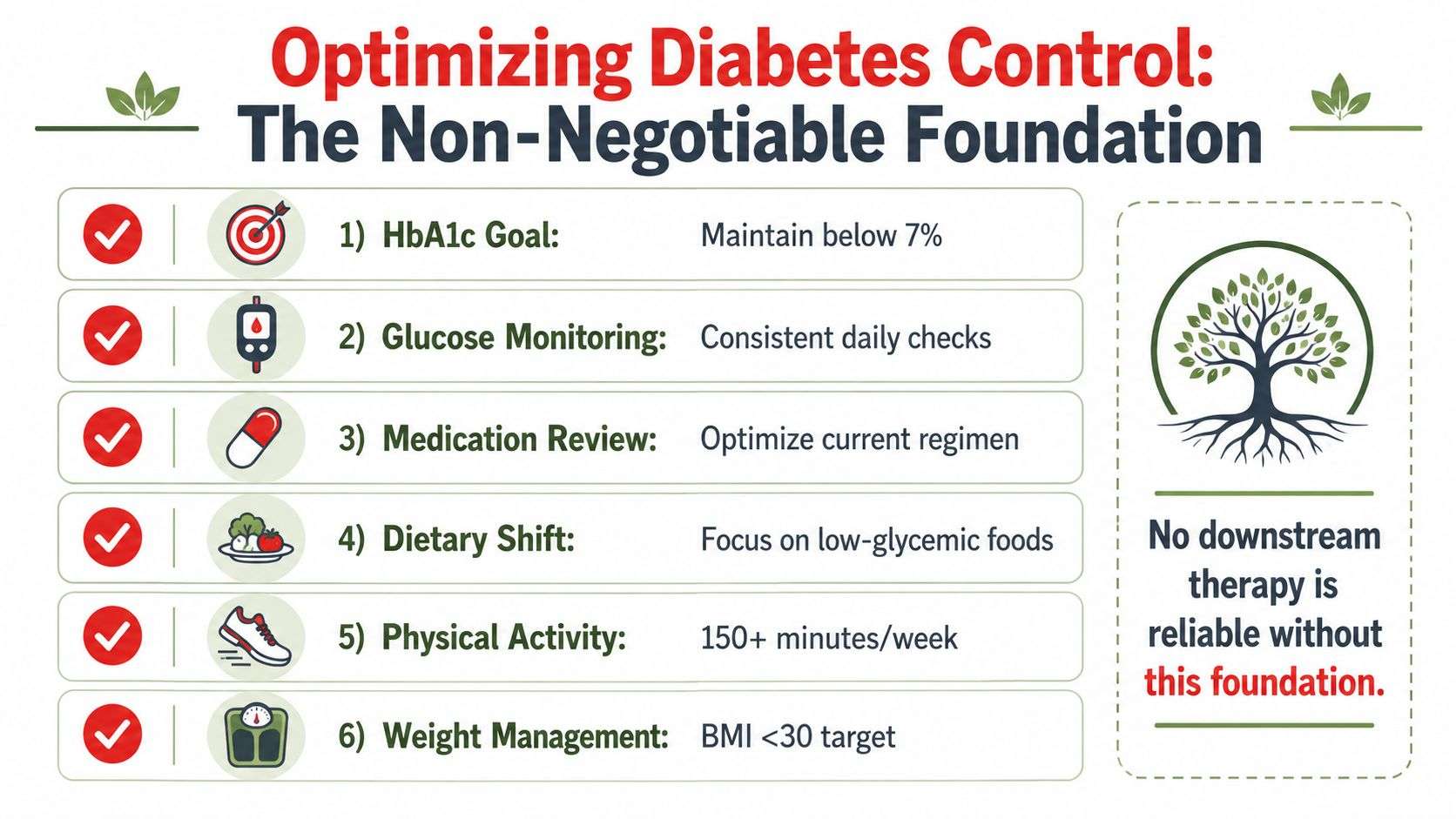
No downstream ED treatment is dependable if glucose, blood pressure, lipids, weight, sleep, and smoking remain unaddressed. Better control may not undo established nerve or vascular injury, but it can reduce ongoing injury and improve the conditions in which medication, injections, devices, or regenerative care must work.
Make glucose patterns visible
A1c should be individualized with the diabetes clinician. Many treatment plans use a goal near below 7%, but the appropriate target depends on age, hypoglycemia risk, comorbidities, and treatment safety. The point isn't to chase a number recklessly. It's to reduce sustained hyperglycemia and large glucose swings while maintaining a safe plan.
Post-meal patterns can reveal problems that a fasting reading misses. A glucose meter or continuous glucose monitor can help identify whether meals, missed medication, overnight changes, or inactivity are undermining control.
Improve the whole vascular environment
Weight management, resistance training, aerobic activity, smoking cessation, blood pressure treatment, and lipid management all support endothelial health. Choose a plan you can repeat. A sustainable eating pattern with high-fiber foods, adequate protein, and fewer rapidly absorbed carbohydrates is more useful than a short restrictive diet that ends quickly.
Sleep apnea deserves direct screening when there's loud snoring, witnessed breathing pauses, morning headaches, or persistent daytime fatigue. Untreated sleep-disordered breathing can worsen metabolic control, blood pressure, testosterone status, and erectile function.
For men who struggle to exercise because of neuropathy, mobility limits, or discomfort, adaptive approaches may help. Information about BionicGym for diabetes management can be a starting point for discussing electrically assisted movement with a qualified clinician, rather than treating it as a substitute for a broader exercise prescription.
Smoking cessation and alcohol moderation are not cosmetic changes. Both can influence vascular tone and treatment reliability. The foundation is built through daily decisions, then reinforced by medication review and regular follow-up.
Regenerative and Procedural Options Worth Considering
Regenerative care attracts men who've found that pills provide inconsistent results. The important distinction is between established symptom-management options and investigational tissue-repair approaches. A treatment can be biologically plausible without having proven, durable benefit for every man with diabetes.
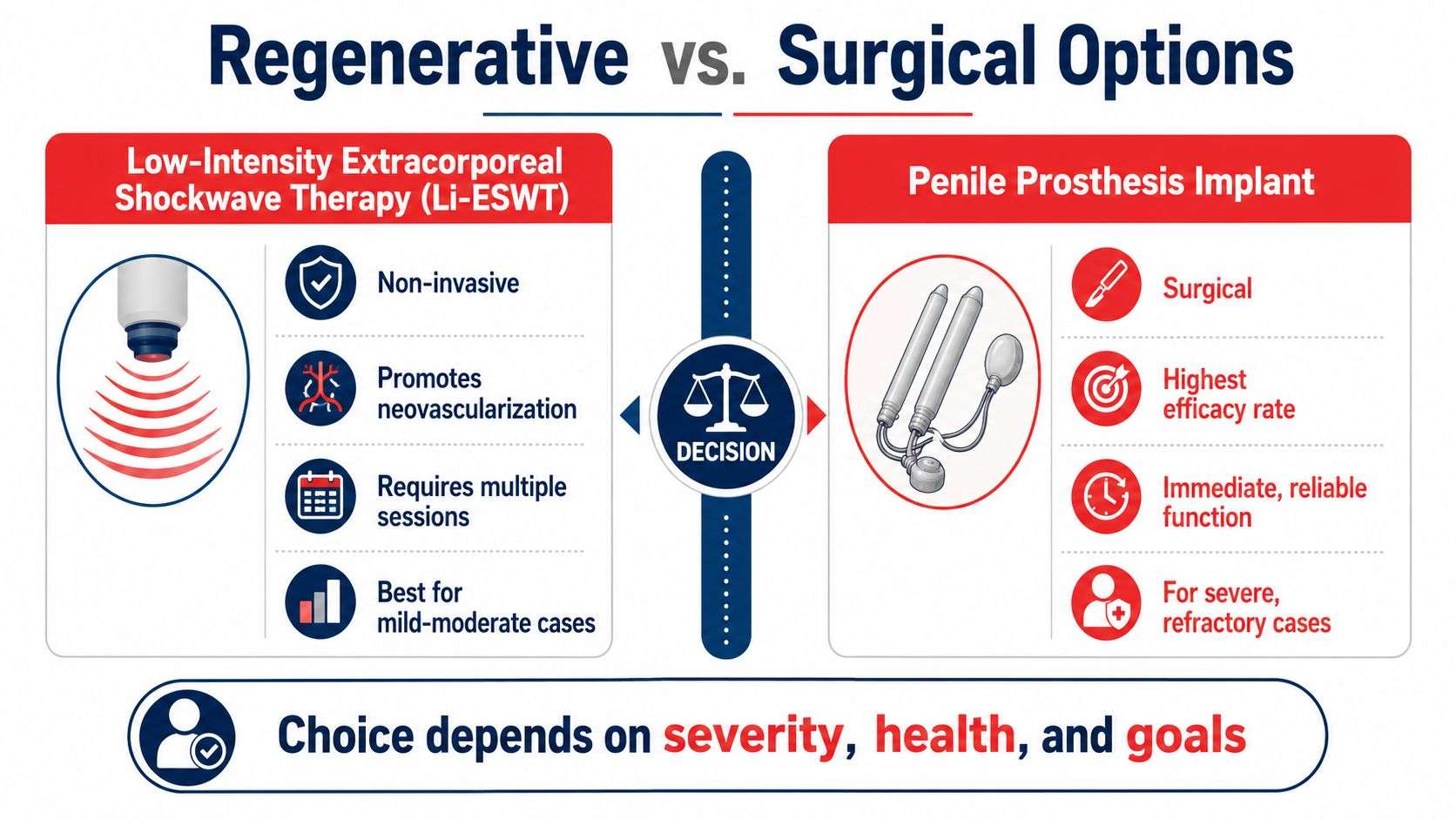
Low-intensity extracorporeal shockwave therapy is non-invasive and is intended to stimulate vascular repair and neovascularization. Early literature presents it as a promising approach, particularly for vascular ED, but treatment protocols vary and the evidence is not equivalent to the evidence supporting PDE5 inhibitors. Laser-based protocols are also designed to target erectile tissue and circulation, yet they should be discussed with clear attention to the quality of evidence, expected maintenance, and total cost.
Intracavernosal injections are different. Standard vasoactive injections can produce an erection by acting directly on penile tissue, bypassing some impaired nerve and nitric oxide signaling. They're often more dependable than pills, but the trade-offs include needle anxiety, dosing education, discomfort, and the need to manage prolonged erections as a medical concern.
Some clinics offer regenerative injection protocols, including HEshot and REGENmax, that combine injection-based treatment with acoustic or laser approaches. These protocols are not interchangeable with established medication or surgery, and their suitability depends on examination findings, glucose control, vascular reserve, and the patient's tolerance for uncertain outcomes.
Match the intervention to the problem
Vacuum erection devices offer a non-drug option and can be useful when medication is contraindicated or insufficient. The erection may feel less natural, and the device requires preparation, but it avoids systemic drug exposure.
A penile prosthesis is the most definitive option for severe, refractory ED. It's surgical and permanent, but it can provide reliable, on-demand function when less invasive treatments fail. Diabetes requires careful surgical planning because glucose control affects wound healing and infection risk.
The vascular treatment options for erectile dysfunction should be interpreted alongside the full medical picture. Regenerative therapies may support improvement in selected men, but they shouldn't be marketed as guaranteed reversal or used to postpone cardiovascular and diabetes care.
What Reversal Realistically Means and What to Expect
A pill can buy a few hours of function without reversing the disease that caused ED. A more meaningful definition of reversal is restored spontaneous or minimally assisted erections that are firm enough for satisfying intercourse, with less dependence on escalating treatment.
Metabolic improvement tends to require patience. Better glucose patterns, weight changes, sleep treatment, and cardiovascular risk management may support erectile gains over months rather than days. Oral medication can act sooner, but response remains variable because diabetic men often have combined vascular and neural injury.
| Intervention | Response rate in diabetic men | Typical time to meaningful effect |
|---|---|---|
| PDE5 inhibitors | Generally effective, but response is often reduced by diabetes-related vascular and neural injury | After correct use and dose adjustment |
| Glycemic and cardiovascular optimization | Individual response varies | Gradual improvement over ongoing follow-up |
| Regenerative protocols | Evidence remains investigational and outcomes vary | Often assessed over several months |
| Injections or vacuum devices | Can provide assisted function when oral medication is inadequate | During use, after instruction |
| Penile prosthesis | Provides a durable mechanical solution for selected severe cases | After surgical recovery |
Men with shorter diabetes duration, better metabolic control, preserved sensation, and less advanced vascular disease generally have more room for recovery. Long-standing diabetes, severe neuropathy, uncontrolled glucose, and advanced vascular disease make complete restoration less likely.
Maintenance is usually part of the plan. Even when erections improve, diabetes remains a chronic condition, so the habits and medical monitoring that support function must continue.
Building Your Stepwise Treatment Plan This Week
Start with a dedicated men's health, urology, or endocrinology appointment. Bring a three-month record of morning glucose, blood pressure readings, current medications, supplements, alcohol intake, and the dates when erectile changes became noticeable.
Use the visit to establish a baseline rather than requesting a treatment in isolation.
- Confirm the medical workup. Ask whether A1c, a lipid panel, total and free testosterone, TSH, renal function, and other targeted tests are appropriate.
- Review reversible contributors. Discuss sleep apnea symptoms, sedentary time, smoking, alcohol, antidepressants, antihypertensives, and any recreational drug use.
- Assess cardiovascular safety. ED treatment must fit your exercise tolerance, heart history, blood pressure, and current medications. PDE5 inhibitors must not be combined with nitrates.
- Choose a starting tier. Mild or recently developed ED may justify metabolic optimization alongside a PDE5 inhibitor. Persistent or severe ED may require injection teaching, a vacuum device, vascular testing, or specialist discussion of procedural options.
- Set a three-month reassessment. Track rigidity, morning erections, side effects, glucose patterns, libido, and treatment consistency. Parallel treatment of diabetes and ED is more sensible than waiting for one problem to resolve before addressing the other.
Don't accept “it's just diabetes” as a complete explanation. Ask what mechanism is most likely, what can improve, what probably won't, and how the plan will be measured.
Sexual Wellness Centers of America provides dedicated diabetes-related ED evaluations and treatment planning, including hormone assessment and non-surgical protocols such as acoustic therapy, laser-based care, and injection-based options. Visit Sexual Wellness Centers of America to discuss whether an individualized plan fits your medical history, current diabetes control, and erectile goals.