
When Snoring Becomes a Serious Health Threat
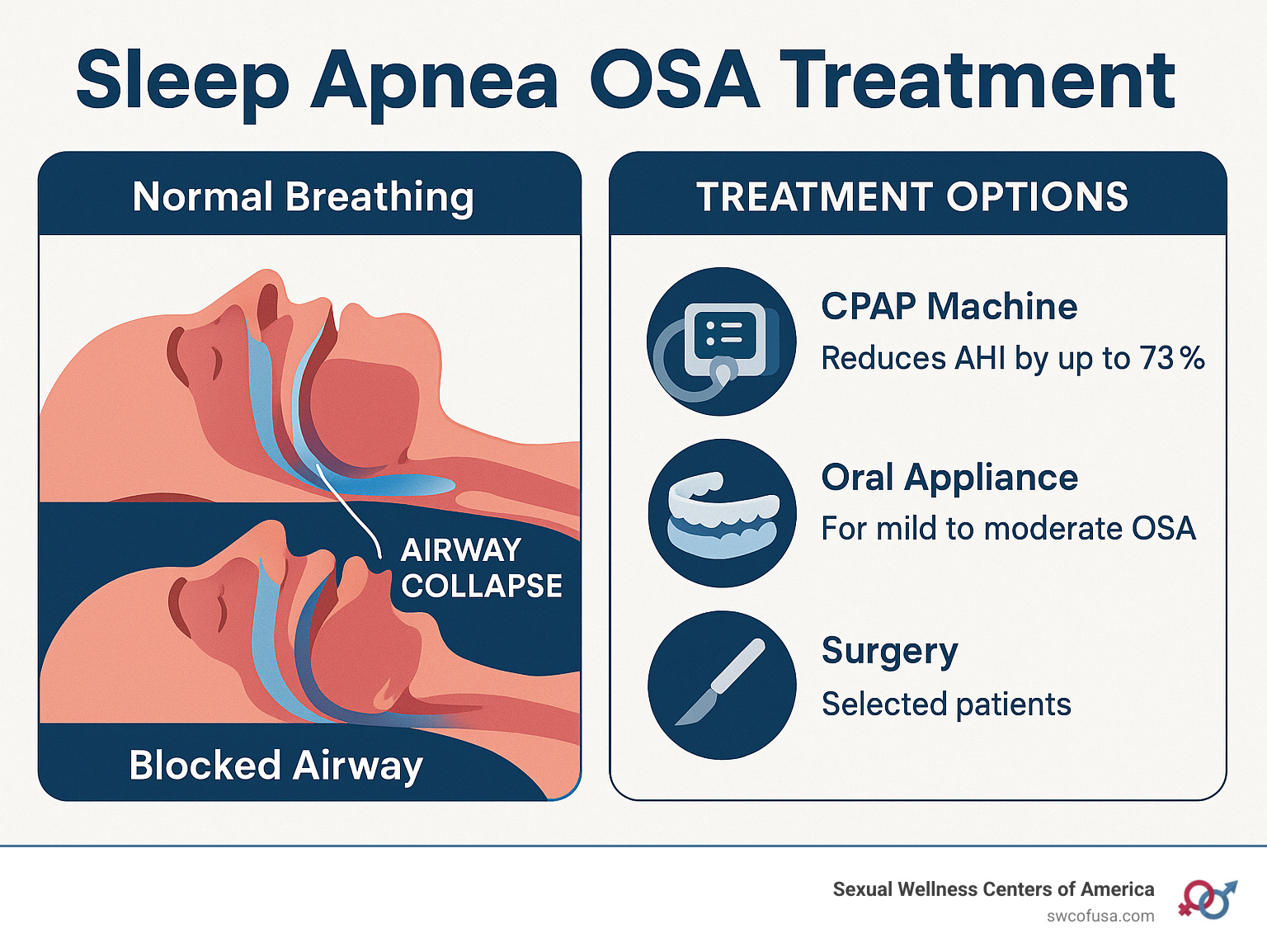
Sleep apnea osa treatment options range from lifestyle changes and CPAP machines to oral appliances, nerve stimulation devices, and surgical procedures, with effectiveness varying based on severity and individual patient factors.
Key Treatment Options:
– CPAP Therapy – Gold standard treatment reducing AHI by up to 73% in severe cases
– Oral Appliances – Custom devices for mild-to-moderate OSA when CPAP isn’t tolerated
– Hypoglossal Nerve Stimulation – Implanted device reducing AHI by 68% on average
– Surgical Options – From tissue removal to jaw advancement for complex cases
– Lifestyle Changes – Weight loss, positional therapy, and sleep hygiene improvements
If you’re one of the 1 billion people worldwide affected by obstructive sleep apnea, you’re facing a condition that stops your breathing repeatedly throughout the night, drops your blood oxygen levels, and puts you at serious risk for heart disease, stroke, and accidents.
Obstructive sleep apnea occurs when your throat muscles relax during sleep, causing your airway to narrow or collapse completely. This affects 9-26% of middle-aged adults. Many people don’t realize they have OSA until a sleep partner notices the pattern of stopped breathing followed by loud gasps for air.
The good news? Sleep apnea osa treatment has advanced significantly, offering multiple paths to better sleep and improved health. From CPAP therapy that can reduce breathing interruptions by over 70% to innovative nerve stimulation devices and surgical solutions, there’s a treatment approach that can work for your specific situation.
I’m Jeff Nuziard, CEO of Sexual Wellness Centers of America, where we’ve helped thousands of patients overcome sleep disorders that impact their overall wellness and intimate relationships. Through our comprehensive approach to sleep apnea osa treatment, we’ve seen how addressing sleep quality can dramatically improve energy, mood, and quality of life.
Sleep apnea osa treatment glossary:
– osa
– sleep apnea symptoms
Understanding Obstructive Sleep Apnea – Diagnosis, Dangers & Data
Obstructive sleep apnea isn’t just loud snoring – it’s your body literally stopping breathing over and over throughout the night. Your airway collapses, cutting off oxygen to your brain and organs, sometimes hundreds of times per night.
We measure this using the apnea-hypopnea index (AHI), which counts breathing disruptions per hour. Mild OSA means 5-14 episodes per hour, moderate OSA is 15-30 episodes, and severe OSA is over 30 episodes per hour. Some patients have AHI scores in the 80s or 90s – imagine your breathing stopping every 30-45 seconds all night long.
The real danger lies in what this does to your body over time. Every time your breathing stops, your blood oxygen levels drop dramatically. Your heart races to compensate. Your blood pressure spikes. This happens night after night, year after year – and your cardiovascular system pays the price.
Scientific research on OSA complications shows significantly increased risk of hypertension, stroke, and motor vehicle accidents. 9-26% of middle-aged adults have OSA, but many don’t know it.
How Is OSA Diagnosed?
Your physical exam gives us important clues. We’ll measure your neck circumference – anything over 16-17 inches increases your risk significantly. We’ll also examine your throat, check your nasal passages, and look at factors like tongue size and jaw structure.
Polysomnography – the overnight sleep study – remains our gold standard. You’ll spend a night in a sleep center while we monitor your brain waves, heart rate, breathing patterns, and blood oxygen levels.
For many patients, we can use home sleep testing instead. You take a small device home that monitors the essential parameters we need for diagnosis. It’s much more convenient and the results are just as reliable for most cases.
Health Risks of Untreated OSA
Cardiovascular disease is the primary concern. Every time your breathing stops, your heart has to work harder. Over time, this leads to hypertension, irregular heart rhythms, heart attacks, and strokes.
Type 2 diabetes becomes much more likely when your sleep is constantly fragmented. Poor sleep affects how your body processes glucose and increases insulin resistance.
The cognitive decline is significant – patients describe living in a mental fog, struggling to concentrate at work, forgetting important details, having trouble making decisions.
Motor vehicle accidents are a serious and immediate risk. When you’re microsleeping at traffic lights or struggling to stay alert on the highway, you’re putting yourself and others in danger.
First-Line Therapies: The Sleep Apnea OSA Treatment Playbook
Continuous positive airway pressure (CPAP) works by delivering a steady stream of pressurized air through a mask, acting like a gentle pneumatic splint that keeps your throat open all night long. CPAP can slash your apnea-hypopnea index by up to 73% in severe cases.
CPAP delivers constant pressure, which works great for most people. APAP (auto-adjusting PAP) changes pressure based on what you need moment by moment. BPAP (bilevel PAP) gives you higher pressure when breathing in and lower when breathing out.
Modern machines include heated humidifiers to prevent dry mouth, ramp features that let you fall asleep at low pressure then gradually increase, and heated tubing to prevent condensation.
Sleep Apnea OSA Treatment With CPAP
Finding your pressure usually happens during a titration study. We start low and gradually increase until your breathing events disappear. Some people need gentle pressure around 6 cm H2O, while others require 15 cm H2O or more.
The mask selection process is crucial. Nasal masks work well if you breathe through your nose. Nasal pillows sit right at your nostrils and are great for people who feel trapped by larger masks. Full-face masks cover both nose and mouth, essential if you’re a mouth breather.
Those first few weeks can be challenging. Mask leaks, dry mouth, feeling like you can’t breathe naturally – these are normal adjustment issues. We work through each problem systematically, adjusting straps, trying different mask styles, and fine-tuning humidity settings.
When CPAP Isn’t Enough – Alternative Sleep Apnea OSA Treatment Paths
About 30-50% of patients struggle with pressure intolerance or can’t get comfortable with a mask. Nasal EPAP valves stick over your nostrils and use your own breathing to create pressure. Oral pressure therapy devices work by creating suction in your mouth, pulling your soft palate forward.
If your OSA is mainly positional – worse when you sleep on your back – we might recommend positional devices. Weight loss programs deserve special mention because losing even 10% of your body weight can dramatically improve OSA severity.
At Sexual Wellness Centers of America, we understand that sleep problems affect your hormone levels, energy, mood, and intimate relationships. When we optimize your sleep apnea osa treatment, we’re addressing multiple aspects of your overall wellness.
More info about sleep-apnea services
Beyond CPAP: Oral Appliances, Nerve Stimulation & Surgical Paths
When CPAP isn’t working, we have several excellent alternatives that can be just as effective for your specific situation.

Custom Oral Appliances
Mandibular advancement devices work by gently nudging your lower jaw forward, which pulls your tongue away from the back of your throat. Studies show that nearly 43% of patients achieve excellent results with greater than 50% reduction in breathing interruptions.
Your dental specialist takes detailed impressions of your teeth and creates an appliance that fits perfectly. These devices work best for patients with mild to moderate OSA, especially if your BMI is under 30 and you have healthy teeth. They’re excellent for people who travel frequently.
Hypoglossal Nerve Stimulation
This FDA-approved system works by delivering gentle electrical pulses to the nerve that controls your tongue, keeping it from falling back and blocking your airway. The device has three components: a small generator implanted under your collarbone, a breathing sensor, and a thin wire connected to the hypoglossal nerve.
Patients typically see a 68% reduction in their breathing interruptions, dropping from about 29 events per hour down to just 9. You need moderate to severe OSA with an AHI between 15-65, a BMI under 32, and you must have tried CPAP first.
The implantation is outpatient surgery taking about 2-3 hours. Most patients go home the same day and return to normal activities within a week.
Surgical Solutions for Severe or Complex OSA
Phase I surgeries address specific problem areas. Removing large tonsils can dramatically open your airway. Nasal surgery to fix a deviated septum can improve airflow and make other treatments more effective.
Phase II surgeries are more comprehensive. Maxillomandibular advancement moves both your upper and lower jaws forward to dramatically enlarge your airway. Studies show an average 87% reduction in breathing interruptions, with patients going from severe sleep apnea to nearly normal breathing patterns.
Recovery varies significantly depending on the procedure. Nasal surgery might keep you down for a week or two, while jaw advancement surgery requires 6-8 weeks of soft foods and limited activity.
Lifestyle & Behavioral Strategies – Everyday Weapons Against OSA
Some of the most powerful sleep apnea osa treatment tools are completely under your control. These lifestyle changes can be game-changers, especially for mild to moderate OSA.
Weight loss is your most powerful weapon. Losing just 10% of your body weight can move you from needing intensive treatment to managing your condition naturally. Extra weight around your neck and throat puts pressure on your airway.
Regular exercise – 150 minutes of moderate activity weekly – can improve your OSA symptoms even if you don’t lose significant weight. It strengthens the muscles around your airway and improves overall sleep quality.
Alcohol and sleep medications are major troublemakers. Alcohol relaxes your throat muscles and makes breathing pauses longer. Avoid alcohol for 4-6 hours before bedtime. The same goes for sleeping pills – they might help you fall asleep, but they’re making your breathing problems worse.
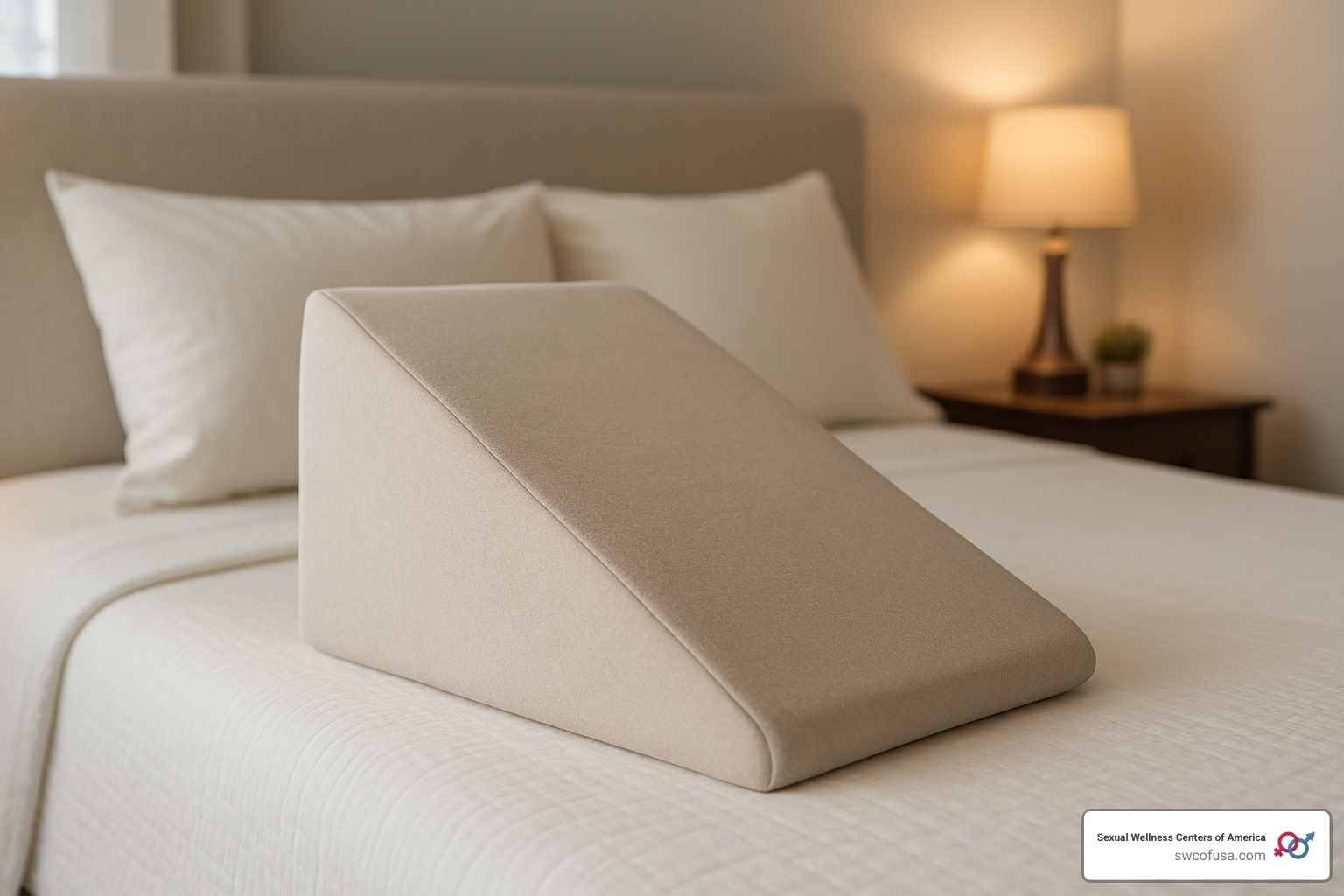
Sleep position makes a huge difference. If your sleep apnea is mainly a problem when you’re on your back, the old tennis ball sewn into your pajama back actually works. Modern positional therapy devices gently vibrate when you roll onto your back, training you to stay in better positions.
Keeping your nasal passages clear can dramatically improve breathing. Simple saline rinses before bed, aggressive allergy treatment, and nasal strips can make a real difference.
Orofacial therapy includes exercises that strengthen your tongue and throat muscles. The FDA has approved devices that provide neuromuscular electrical stimulation – you wear them for 20 minutes daily for six weeks.
Good sleep hygiene ties everything together. Consistent bedtimes, a comfortable sleep environment, and avoiding screens before bed all contribute to better sleep quality.
At Sexual Wellness Centers of America, we understand that sleep problems affect hormone production, mood, and intimate relationships. Our approach to sleep apnea osa treatment considers your overall wellness, not just your breathing patterns.
Measuring Success & Tailoring Care
Effective sleep apnea osa treatment requires ongoing monitoring and adjustment. Success isn’t just about numbers – it’s about how you feel and function in daily life.
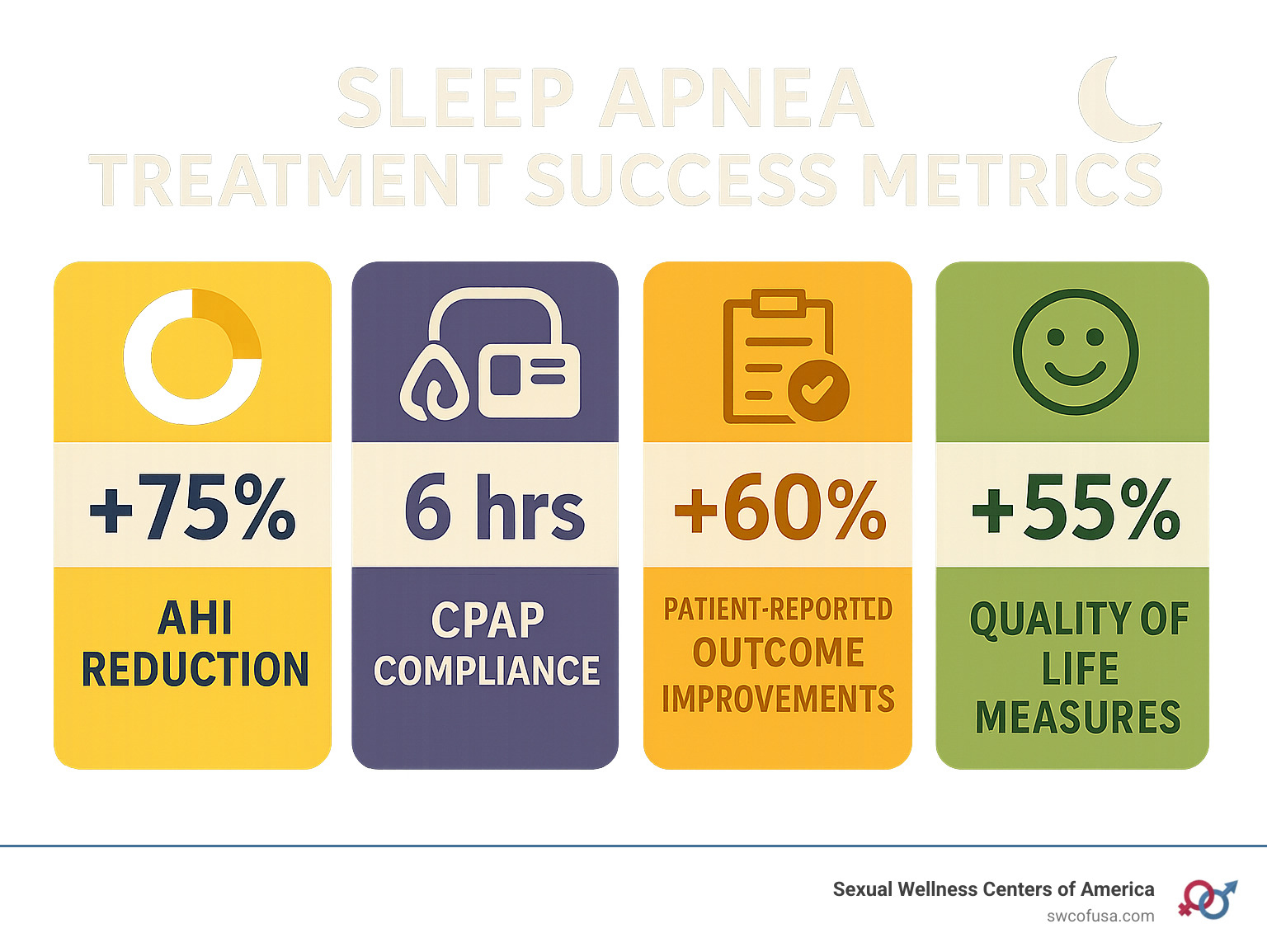
The target AHI is under 5 events per hour – that’s considered normal. Your oxygen saturation should stay above 90% throughout the night. For CPAP users, compliance tracking shows you’re using the machine at least 4 hours per night, but we aim for 6-7 hours nightly for optimal benefits.
Beyond technical measurements, we focus on how you feel day to day. Your Epworth Sleepiness Scale scores should improve dramatically. We want to see your energy levels, mood, and concentration return to normal. Your partner’s feedback is incredibly valuable too – they’ll notice the reduction in snoring and breathing pauses.
At Sexual Wellness Centers of America, we take a multidisciplinary team approach. We coordinate between sleep specialists, dentists, surgeons, and other specialists because sleep health affects everything – including hormone levels and sexual wellness.
Every treatment plan is personalized based on your specific needs. We consider your OSA severity, anatomical factors, other health conditions, your lifestyle and travel requirements, and what you can realistically stick with long-term.
Follow-up protocol ensures you’re not left alone. New CPAP users get a 3-month check-in. Surgical patients need annual sleep studies. Mobile apps for PAP compliance have revolutionized monitoring – your CPAP machine can send data directly to our office.
Patient-reported outcomes matter just as much as technical data. Are you waking up refreshed? Can you stay alert during meetings? Has your blood pressure improved? These real-world improvements make treatment worthwhile.
The key is finding the right combination of treatments that works for your life. That’s where our holistic approach and 97.2% success rate in related therapies comes from.
Frequently Asked Questions About Sleep Apnea OSA Treatment
Do all patients need CPAP forever?
Sleep apnea osa treatment needs can change over time. Patients who lose significant weight – 50+ pounds – may be able to reduce CPAP pressure or even discontinue treatment. Others have successful surgery that corrects anatomical problems.
However, OSA is typically a chronic condition. Even with weight loss or surgery, your airway may still tend to collapse during sleep. Modern CPAP machines are incredibly advanced, quiet, and comfortable compared to older devices.
If you achieve significant weight loss or have surgical treatment, we’ll reassess your needs with a follow-up sleep study. But this should always be done under medical supervision.
Can oral appliances fix severe OSA?
Oral appliances work best for mild to moderate OSA. In severe cases, CPAP typically achieves better results – about 73% of patients achieve significant AHI reduction with CPAP, compared to 43% with oral appliances.
But a treatment you actually use is infinitely better than the “perfect” treatment sitting in your closet. For patients who cannot tolerate CPAP, an oral appliance that reduces AHI from 45 to 20 events per hour can be life-changing.
What side effects should I watch for with surgeries?
For palatal surgeries, most patients experience temporary swallowing difficulties and throat soreness that improves over 2-3 weeks. Maxillomandibular advancement may cause facial numbness initially but usually improves over 6-12 months. Your bite will change and you’ll likely need orthodontic work.
Hypoglossal nerve stimulation may cause tongue discomfort initially. Device-related complications are rare, but there’s a small risk of infection. The battery typically lasts 10-15 years.
Our experience matters tremendously in minimizing risks. We provide detailed recovery instructions and are always available if you have concerns.
Conclusion & Next Steps
After exploring the many paths for sleep apnea osa treatment, one thing is clear: you don’t have to accept poor sleep as normal. Whether your journey leads to CPAP therapy, oral appliances, nerve stimulation, or surgical intervention, there’s a solution waiting for you.
At Sexual Wellness Centers of America in Colleyville, TX, we’ve learned that sleep apnea osa treatment works best when it’s part of a bigger picture. Quality sleep isn’t just about stopping snoring – it’s about restoring your energy, protecting your heart, and improving your intimate relationships.
When you’re exhausted from fragmented sleep, everything suffers. Your hormone levels get thrown off, your motivation disappears, and relationships feel the strain. Our holistic approach considers how sleep health connects to your overall wellness and vitality.
Our 97.2% success rate in related wellness therapies gives us confidence that we can help you achieve the same improvement with your sleep challenges. We bring that same attention to detail and commitment to results to every aspect of sleep disorder management.
Sleep apnea doesn’t get better with time – it typically gets worse as we age or gain weight. The cardiovascular risks, accident dangers, and daily fatigue don’t improve while you’re waiting for the “perfect” time to seek treatment.
Your personalized roadmap starts with understanding exactly what’s happening during your sleep. We begin with a comprehensive evaluation, coordinate with sleep specialists for proper diagnostic testing, and create a treatment plan that fits your life.
The beauty of modern sleep apnea osa treatment is that we have options for every lifestyle and severity level. Success is measured not just by numbers on a sleep study, but by how you feel when you wake up in the morning.
More info about sleep-apnea services
Don’t spend another night fighting for air or another day running on empty. Your sleep apnea solution is closer than you think, and we’re here to guide you through every step.
Ready to finally win the battle against sleep apnea and reclaim your nights? Contact Sexual Wellness Centers of America today to schedule your comprehensive evaluation. Let’s work together to get you the restorative sleep you deserve – and the energy, health, and vitality that comes with it.