
You may be in a familiar place right now. Pills work for a few hours, then the problem comes back. You may be tired of timing intimacy around medication, tired of wondering whether poor blood flow, nerve irritation, hormones, or tissue changes are making things worse, and tired of hearing big promises that sound more like marketing than medicine.
That's where tissue regeneration therapy gets so much attention. It speaks to what patients want. Not a one-night workaround, but a treatment plan that tries to improve how tissue functions in the first place. In sexual medicine, that usually means trying to improve blood flow, support healing in damaged tissue, and create better conditions for arousal, firmness, sensation, or comfort.
That promise is real, but it needs translation. Some regenerative treatments can improve function. Some are still investigational. And “regeneration” doesn't always mean your body grows back brand-new anatomy. Patients deserve that distinction before they spend time, money, and hope on treatment.
Table of Contents
- Your Guide to Tissue Regeneration Therapy
- How Tissue Regeneration Therapy Works
- The Three Pillars of Regenerative Treatment
- The REGENmax Program Your Personalized Protocol
- Candidacy Outcomes and Realistic Expectations
- Getting Started at Our Clinic
Your Guide to Tissue Regeneration Therapy
Tissue regeneration therapy is a broad medical category. In sexual wellness, it usually refers to treatments designed to support healthier tissue behavior rather than forcing a temporary response. That matters if your symptoms seem tied to circulation, aging, diabetes, post-procedure changes, inflammation, or a gradual decline in sensitivity and performance.
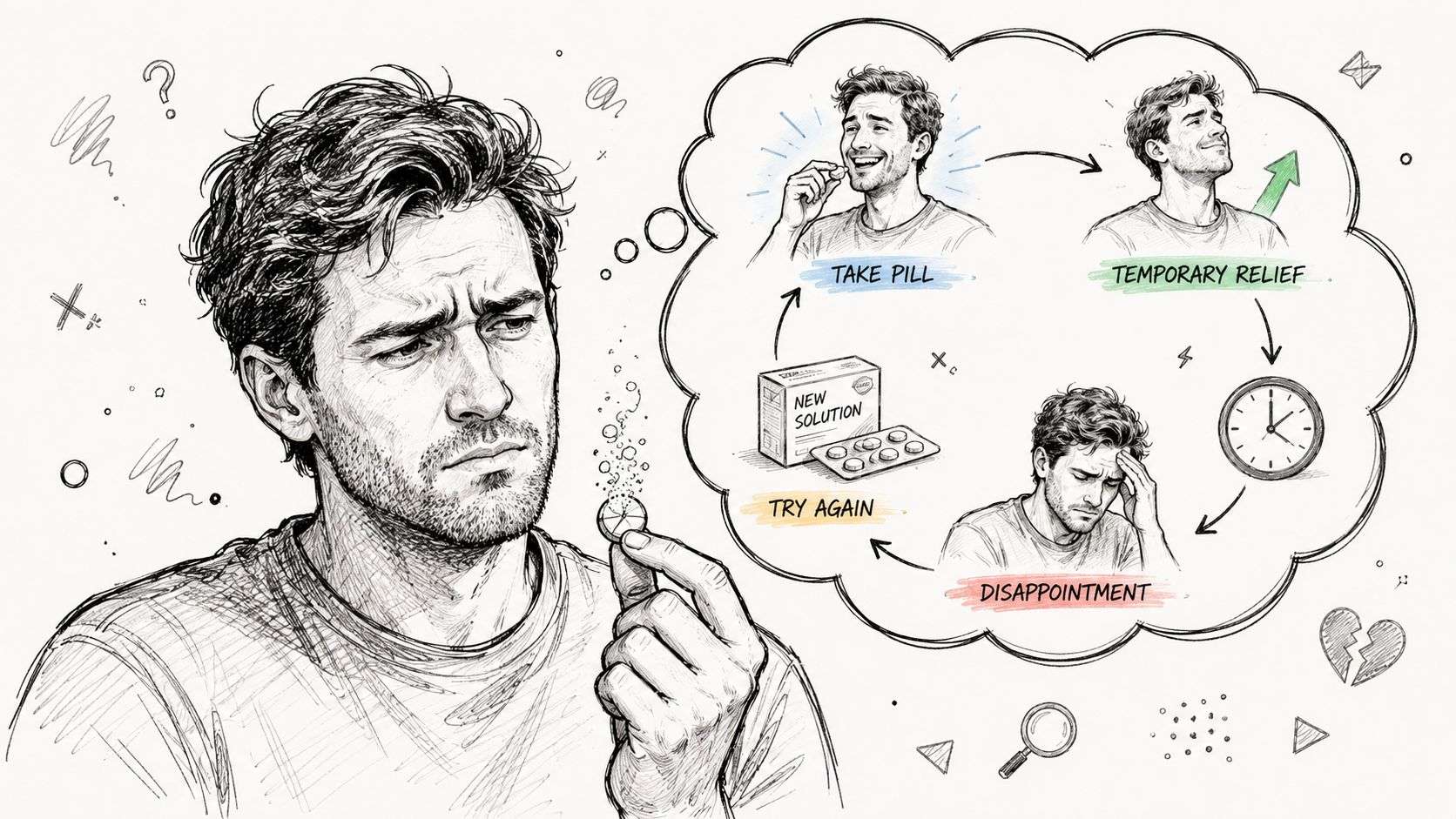
A good way to think about it is this. Traditional symptom relief often acts like flipping a switch for a short window. Regenerative care tries to improve the condition of the wiring, the blood supply, and the healing environment behind that switch. Those are not the same job.
What patients are usually hoping for
Individuals who ask about tissue regeneration therapy want one or more of these outcomes:
- More reliable blood flow: Better ability to get and maintain an erection, or improved arousal response.
- Better tissue responsiveness: Stronger sensation, improved firmness, or less discomfort with intimacy.
- Less dependence on timing-based solutions: Fewer situations where intimacy has to be planned around medication.
- A non-surgical option: A path that doesn't require implants or a more invasive procedure.
Clinical reality: The phrase “tissue regeneration” sounds like full restoration. In practice, many treatments are better understood as efforts to improve function and support healing biology.
Patients also come in with questions about related therapies that circulate online, including peptides. For a basic overview of that category, Novagenesis Biopharma on peptides gives a useful plain-English introduction to what peptides are and why they're discussed in regenerative care.
What this approach can and can't promise
This field is worth taking seriously. It's also a field where overpromising is common.
What works best is a medical approach that matches the treatment to the probable cause. A patient with primarily vascular erectile dysfunction is different from a patient with severe nerve injury, advanced fibrosis, hormone deficiency, or relationship-related performance anxiety. If a clinic treats all of those as the same problem, results become unpredictable fast.
The right expectation is measured optimism. Tissue regeneration therapy may improve function, response, and quality of life. It shouldn't be sold as magic, and it shouldn't be treated as a guaranteed cure.
How Tissue Regeneration Therapy Works
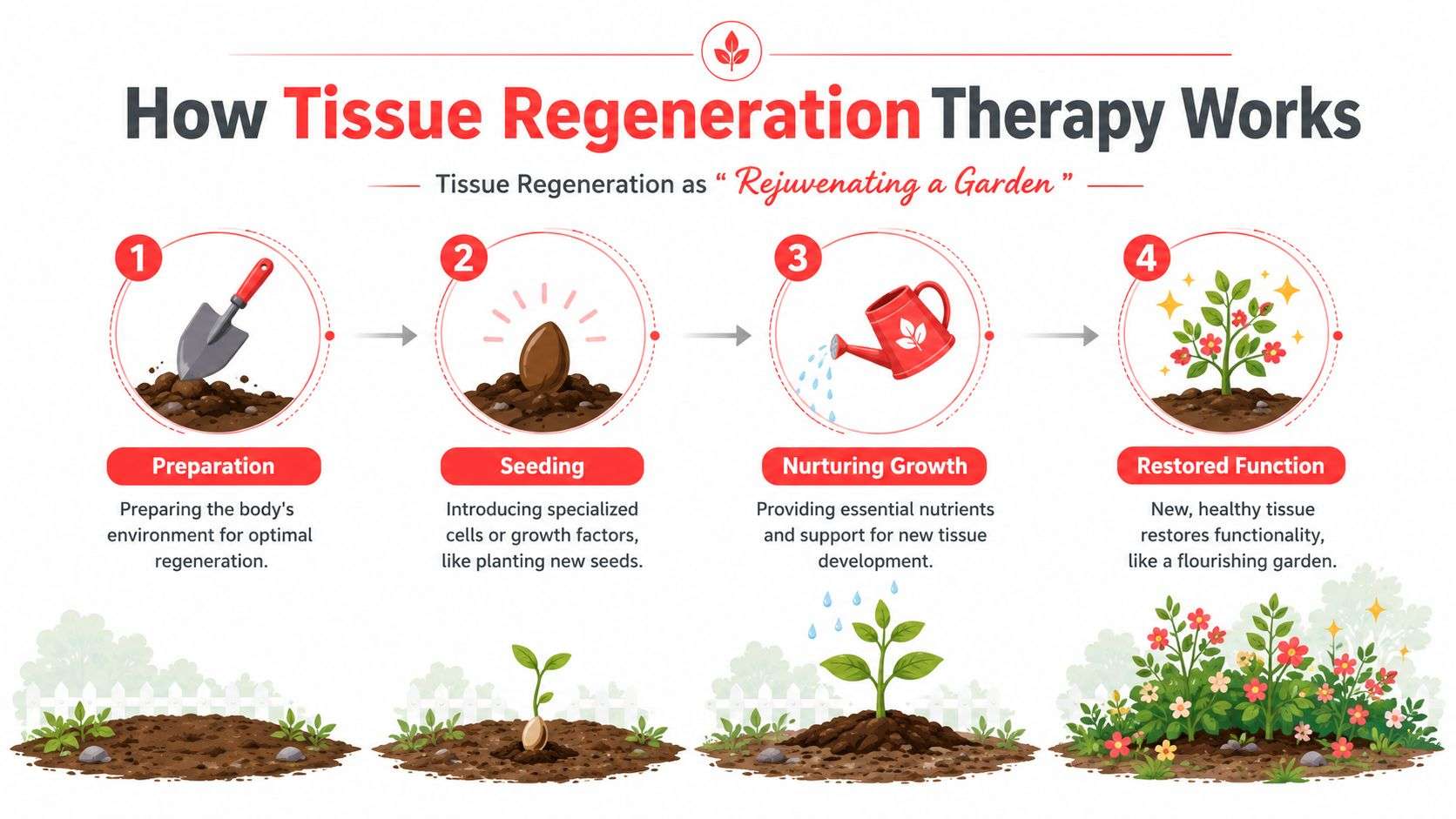
A common clinic scenario goes like this. A patient says, “I can still get some response, but it is less reliable, less firm, and harder to maintain than it used to be.” That pattern usually points to tissue that is still viable but no longer performing well under normal demands. The goal of regenerative treatment is to improve the environment those tissues depend on, not to promise that older tissue will be replaced with entirely new anatomy.
Repair signaling instead of short-term override
Standard symptom treatments can help performance in the moment. They do not necessarily change why function declined in the first place.
Regenerative therapies aim to change local biology inside the tissue. Depending on the modality, that may involve mechanical stimulation, energy-based stimulation, or delivery of concentrated biologic material. The intended response is a repair cascade: changes in blood vessel signaling, inflammatory balance, tissue turnover, and cell-to-cell communication over time.
Healing happens in stages, not in one dramatic event. For patients who want a clear framework for that process, this clinician's guide to wound healing explains why recovery biology tends to be gradual and phased.
What the biology is trying to do
In plain terms, treatment is trying to improve the conditions that support erection quality and tissue health. That often means better nitric oxide signaling, healthier vessel lining, improved smooth muscle behavior, and less dominance of stiff, fibrotic tissue.
A simple way to understand it is to compare healthy erectile tissue to a sponge with good elasticity and blood supply. It can fill, expand, and hold pressure. When circulation weakens, signaling drops, or collagen buildup becomes excessive, the tissue behaves less like a healthy sponge and more like a stiff material that does not fill as well.
That distinction matters. Functional improvement and true anatomical regeneration are not the same thing. In real practice, many patients are seeking better firmness, better consistency, and better response to stimulation. Those are meaningful outcomes. They do not always mean the tissue has been structurally restored to a pre-disease state.
Here is the practical version:
- Nitric oxide signaling helps vessels relax: That allows blood to enter tissue more effectively.
- Smooth muscle supports expansion and blood trapping: Poor smooth muscle health can reduce rigidity.
- Excess collagen can reduce elasticity: More fibrosis usually means less compliance and less reliable function.
- Growth factors act like instructions: They influence how cells respond. They do not force instant repair.
Better function often comes from better signaling and better blood flow, not from instantly replacing old tissue with new tissue.
Patients who want more background on the connection between biologic support, circulation, and nerve recovery can review our overview of BPC-157, nerve regeneration, and blood flow.
Why results vary from person to person
Two men can receive the same treatment and leave with very different outcomes because the starting biology is different.
One may have early vascular decline with limited scar burden and otherwise favorable hormone and metabolic health. Another may have diabetes, endothelial dysfunction, pelvic floor tension, medication effects, poor sleep, and long-standing fibrosis. Both may describe “ED,” but those are not the same clinical problem.
This is why diagnosis matters so much in regenerative medicine. The treatment has to match the likely driver of dysfunction. At our clinic, the best results usually come when we identify whether the main issue is blood flow, nerve signaling, tissue quality, hormone support, or a combination of several factors.
That is also where marketing often drifts away from clinical reality. Tissue regeneration therapy may improve function and support healthier tissue behavior. In selected cases, there may be meaningful biologic repair. But honest counseling means separating symptom improvement from proven structural regeneration, then building a plan around what is plausible for that specific patient.
The Three Pillars of Regenerative Treatment
In clinic practice, tissue regeneration therapy isn't usually one thing. It's often a combination of modalities that stimulate tissue in different ways. One creates a mechanical signal. Another uses light energy. Another delivers concentrated biologic support directly to a target area.
Acoustic wave therapy with REGENwave
Low-intensity extracorporeal shock wave therapy has some of the more recognizable evidence in this space. A review found that 15 of 20 men with mild-to-moderate vasculogenic ED experienced improved function in one clinical setting, and four meta-analyses and systematic reviews reported statistically significant improvement in IIEF-EF and erection hardness score, although trial results have also been mixed, with some sham-controlled studies showing no benefit and others showing improvement, as summarized in this review of LiESWT for erectile dysfunction.
In practical terms, acoustic wave therapy sends controlled pulses into tissue. The treatment isn't trying to “break” tissue. It's trying to create a repair stimulus that encourages angiogenesis and recruitment of endogenous progenitor cells.
Patient experience is usually straightforward. You lie back, treatment is applied externally, and there's little interruption to the rest of the day. If you want a closer look at this specific modality, the clinic page on REGENwave acoustic therapy explains how it's used in a sexual wellness setting.
Advanced laser therapy with REGENlase
Laser-based regenerative treatment works through a different doorway. Instead of mechanical pulses, it uses light energy to influence cellular behavior. The clinical thinking is that certain wavelengths can support local metabolism, healing response, and tissue recovery in areas that need more than surface-level symptom management.
This isn't the same as an ablative cosmetic laser treatment. The goal here is not resurfacing. The goal is to create a biologic environment that's more favorable to repair and responsiveness.
A patient may notice very little during the session beyond warmth or mild sensation. The more important issue is treatment role. Laser can complement other modalities because it affects tissue differently than acoustic therapy does.
Concentrated regenerative injections with HEshot and SHEshot
Injections are the most direct pillar. Instead of signaling tissue from the outside, they place concentrated regenerative material into targeted areas. The logic is precision. When a patient has a specific area of reduced responsiveness, reduced blood flow support, or tissue change, localized treatment can make sense.
This category requires honest counseling. Injections may support function, sensitivity, and tissue quality. They are not the same thing as growing an entirely new anatomical structure. That distinction matters for informed consent and patient satisfaction.
Here's a side-by-side view.
| Modality | How It Works | Primary Goal | Patient Experience |
|---|---|---|---|
| Acoustic wave | Delivers mechanical pulses into tissue | Stimulate repair signaling and blood vessel response | External treatment, brief visit, little downtime |
| Laser | Applies therapeutic light energy to tissue | Support cellular activity and healing environment | Non-surgical, typically comfortable, office-based |
| Regenerative injections | Places concentrated biologic support into target tissue | Deliver localized healing factors where function is limited | In-office procedure with focused treatment area |
What usually works best: Matching the modality to the dominant problem. Vascular issues respond differently than scar-related issues, sensitivity loss, or hormone-related decline.
The REGENmax Program Your Personalized Protocol
A personalized regenerative protocol makes more sense than a one-size-fits-all procedure because sexual symptoms rarely come from one cause. A patient may have a vascular component, hormone imbalance, poor sleep, insulin resistance, medication side effects, pelvic tension, or age-related decline at the same time.
Why combined therapy makes more clinical sense
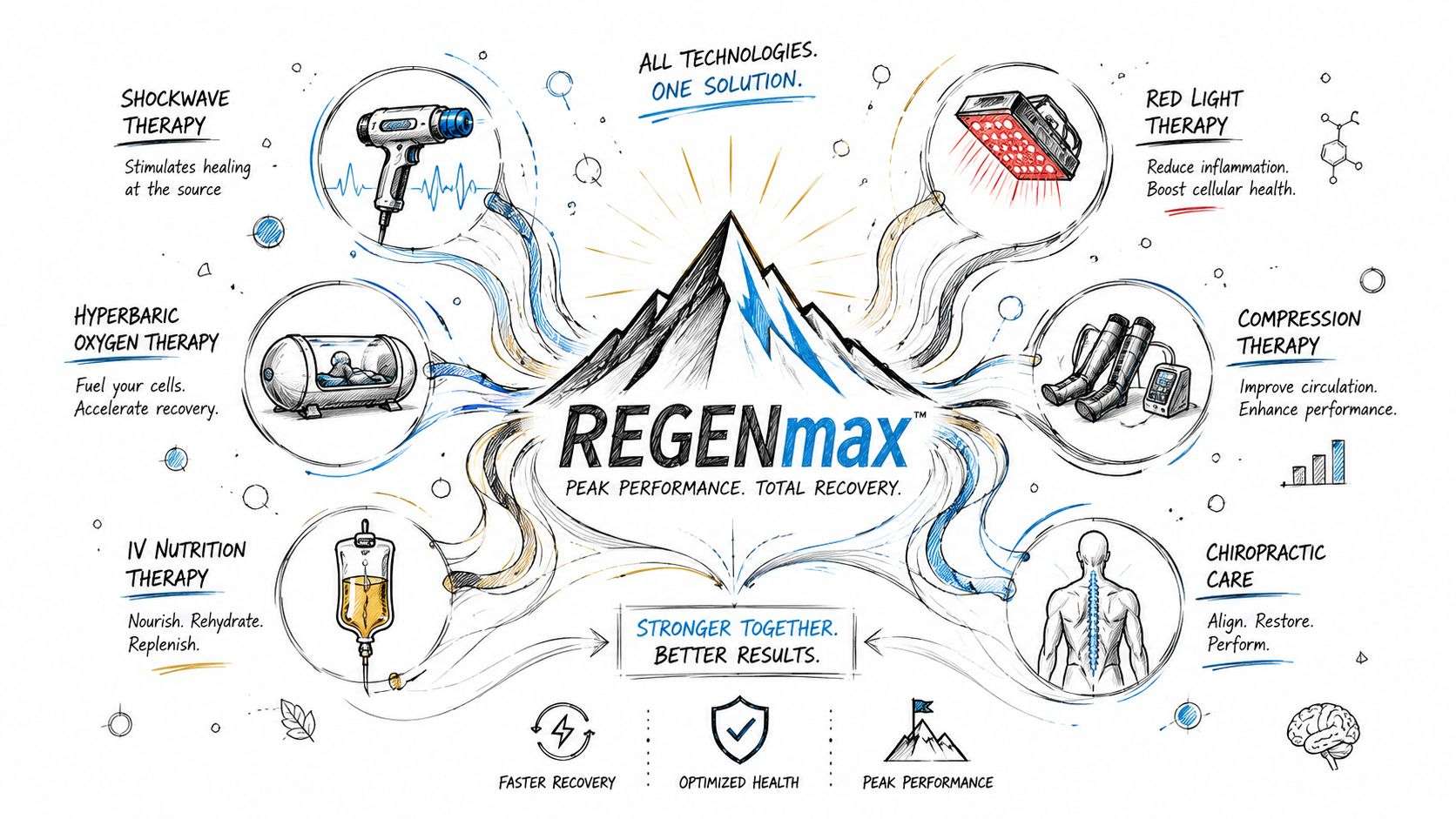
When treatment is layered thoughtfully, each part can support a different piece of the problem.
- One modality can target circulation: That may help if blood flow is the main bottleneck.
- Another can support cellular recovery: This matters when tissue responsiveness has declined.
- A third can focus on local biologic support: That's useful when a targeted area needs more direct intervention.
Used together, combination care can be more rational than repeating the same isolated treatment over and over. That doesn't mean every patient needs every modality. It means the plan should fit the physiology.
One clinic-based example of this type of combined, personalized approach is the Sexual Wellness Centers of America REGENmax® protocol, which combines REGENwave™, REGENlase™, and a concentrated injection protocol after workup and clinical assessment.
How a personalized protocol is built
The better starting point is evaluation, not procedure scheduling.
A practical protocol often begins with:
History and symptom mapping
Erectile firmness, duration, morning erections, orgasm quality, discomfort, curvature, arousal changes, medications, and health conditions all shape the plan.Lab review and biomarker assessment
Hormones, vitamin status, and general metabolic clues can affect tissue healing and sexual function.Tissue-focused treatment sequencing
Some patients do better with energy-based therapy first. Others need injections integrated earlier. Women may be considered for a SHEshot®-based plan when concerns center on arousal, orgasm, or tissue comfort.
For readers who want a closer look at how injection-based care fits into a broader program, this page on REGENmax injection therapy provides additional clinical context.
A personalized protocol should also include a maintenance discussion. Sexual tissue behaves like the rest of the body. It responds to circulation, hormones, inflammation, sleep, stress, and aging. If those drivers aren't addressed, even a strong response may fade over time.
Candidacy Outcomes and Realistic Expectations
A common consultation starts the same way. Someone sits down and says, “I saw the word regeneration and assumed this would rebuild everything.” That is the moment to slow down and get specific, because good care starts with accurate expectations.
The central question is not whether a treatment sounds advanced. The key question is what problem we are trying to treat. In sexual medicine, some patients have tissue that is underperforming because of reduced blood flow, chronic inflammation, age-related change, or mild to moderate structural decline. Others have severe fibrosis, major nerve injury, uncontrolled metabolic disease, or a surgical-level problem. Those are very different situations, and they do not respond the same way.
Who tends to be a reasonable candidate
The patients who usually make the most sense for tissue-focused treatment are those with a functional decline, not a clear surgical emergency.
That often includes:
- Vasculogenic erectile dysfunction: Men who still have some erectile response, but notice less firmness, less reliability, or shorter duration.
- Peyronie's-related symptoms: Men with curvature, discomfort, or reduced function who want a non-surgical evaluation before deciding on more invasive care.
- Female sexual wellness concerns: Women with changes in arousal, orgasm, dryness, or discomfort linked to tissue health and circulation.
- Patients seeking office-based options: Adults who want to address symptoms conservatively before considering procedures with more recovery and risk.
Poor candidacy matters just as much. A patient with untreated hormone deficiency, uncontrolled diabetes, advanced scarring, or major neurologic injury may still need treatment, but not as a stand-alone regenerative plan. In those cases, the first step is usually broader medical correction, not local procedure work.
Functional improvement versus true regrowth
This is the distinction patients deserve to hear clearly.
In orthopedic medicine, specialists have pointed out that the word “regeneration” often gets used more broadly than the evidence supports. Some current therapies appear better at improving pain, function, and tissue behavior than at proving full anatomical regrowth, as explained in their discussion of regenerative medicine treatments.
That same caution applies in sexual wellness. Better function can be a real success. A man may get better rigidity or more consistent response. A woman may notice better arousal, improved comfort, or stronger orgasmic response. Those outcomes matter in daily life, even if no one can honestly claim that lost anatomy has been fully rebuilt.
Patients usually appreciate that distinction once it is explained plainly. The biology is similar to improving the quality of a damaged lawn by restoring water flow, soil conditions, and growth signaling. The lawn may look and perform better. That does not mean every bare patch returns to its original state.
What the evidence supports and what it does not
The published literature in sexual medicine is encouraging, but it is not a blank check for oversized promises.
Human studies of regenerative injections in erectile dysfunction have reported meaningful improvement in selected patients, especially in vascular cases and in earlier-stage disease. As noted earlier in this guide, some trials have shown better short-term erectile outcomes than placebo. That supports cautious use in well-chosen patients. It does not prove that every injection product works the same way, that results are permanent, or that damaged tissue is reliably restored at a structural level.
A separate review of patient decision-making around stem cell therapy found persistent uncertainty in the field, including whether these treatments consistently prevent surgery, outperform standard care, or regenerate tissue over the long term, as discussed in this review of patient perspectives and evidence gaps.
That is why I frame outcomes in practical terms. Often, the goal is symptom modification with possible tissue benefit, not a guaranteed anatomical reset.
There is also an important guideline issue. Major urologic organizations still regard stem cell therapy for erectile dysfunction as investigational, and recent reviews continue to describe the evidence base as limited and still developing, as summarized in this Frontiers review on ADSC therapy for erectile dysfunction. Patients should hear that before treatment, not after.
Real-world results usually fall into three broad groups. Some patients improve clearly. Some improve modestly. Some do not respond enough to justify repeating the same approach. The odds tend to be better when expectations are grounded, the diagnosis is accurate, and the treatment plan addresses the full picture, including vascular health, hormones, medications, and metabolic disease.
Privacy matters too. Any clinic offering intimate care should treat medical data with the same seriousness as the treatment itself, including understanding HIPAA compliance for practices.
The honest message is simple. Tissue regeneration therapy may improve sexual function for the right patient. It is still an evolving area of medicine, and claims of guaranteed permanent regeneration go beyond what current evidence can support.
Getting Started at Our Clinic
A patient often comes in after months of mixed messages. One ad promises regeneration. Another clinic offers a package before anyone has explained why symptoms changed in the first place. Our starting point is simpler and more medical. Identify the driver of the problem, then decide whether tissue-focused treatment has a reasonable chance of improving function.
That distinction matters. Better erections, sensation, or responsiveness can happen without proven full anatomical regeneration. In clinic, the goal is to match treatment to the biology we can influence, not to sell a permanent reset that current evidence does not support.
The first three steps
Schedule a private consultation
The first visit focuses on history. We review symptom pattern, medical conditions, medications, prior treatments, and goals. The key question is whether the issue looks primarily vascular, hormonal, structural, neurologic, or mixed.Complete a thorough evaluation and lab work
Sexual symptoms rarely come from one cause. Bloodwork and clinical assessment help identify hormone issues, metabolic problems, inflammation, or other factors that can limit response. If those drivers are missed, local treatment is less likely to help in a meaningful way.Receive a personalized treatment plan
Some patients are better candidates for energy-based treatment. Some may benefit from injections as part of a broader protocol. Others need hormone support, medication adjustment, lifestyle work, or a maintenance plan because symptom control often depends on more than the tissue itself.
Practical questions patients usually ask
A few questions come up in nearly every consultation.
Is it painful
Most patients report mild to moderate discomfort, depending on the treatment used and tissue sensitivity. Office-based care is usually much easier to tolerate than surgery, but it is still a real procedure, not a spa service.How many treatments will I need
It depends on tissue quality, severity, underlying diagnosis, and whether treatment is being used alone or alongside other therapies. A patient with mild vascular decline and good overall health is different from someone with diabetes, low testosterone, and longstanding symptoms.Are results permanent
Usually not in the absolute sense patients hope for. Sexual function changes with age, circulation, hormone status, sleep, stress, medication effects, and chronic disease. Some patients hold gains well. Others need maintenance because the underlying biology keeps changing.Is it covered by insurance
Often not. Many regenerative and sexual wellness treatments are classified as elective, cash pay, or investigational, which commonly limits coverage. We discuss cost plainly before treatment begins so there are no surprises.
Privacy also deserves direct attention. Sexual health care is personal, and many patients are understandably cautious about records, communication, and travel-related logistics. Anyone who wants a plain-language overview of how medical offices approach patient data protection can start with this article on understanding HIPAA compliance for practices.
Ask direct questions before committing. What is the most likely cause of my symptoms? Is the goal symptom improvement, tissue support, or both? What would make me a poor candidate? If I respond well, what maintenance might I need later?
If you're ready for a careful, medically grounded conversation about non-surgical sexual wellness options, schedule a consultation with Sexual Wellness Centers of America. A proper evaluation can clarify whether tissue regeneration therapy fits your goals, what kind of improvement is realistic, and what combination of treatments makes sense for your specific situation.