
Is acoustic wave therapy a real treatment, or is it another expensive service built around impressive-sounding language? The honest answer depends on what kind of waves a clinic uses, which condition it treats, and what “success” means for the patient. For erectile dysfunction, the therapy has a genuine clinical evidence base, but the average improvement is usually modest, treatment protocols vary, and guideline support remains cautious.
The phrase what is acoustic wave therapy usually refers to low-intensity extracorporeal shockwave therapy, or Li-ESWT. It uses mechanical sound pulses delivered through the skin, not electricity, medication, or surgery. The aim is to encourage tissue repair and healthier blood-vessel function over time, rather than create an erection on demand.
The treatment also shouldn't be confused with the higher-energy shockwave systems used historically for kidney-stone treatment. Sexual-medicine research developed later. A review records that the first studied application for erectile dysfunction appeared in 2010, while a 2017 meta-analysis had enough evidence to combine 14 studies conducted between 2005 and 2015 in its review of the field. That history explains both the interest and the uncertainty surrounding today's treatments.
Table of Contents
- The Question Most Men Ask Before Anything Else
- How Acoustic Waves Change Tissue
- What the Evidence Really Shows for Erectile Dysfunction
- REGENwave vs GAINSWave and Why Device Matters
- What a Typical Treatment Course Looks Like
- Beyond ED, Peyronie's Disease, Female Patients, and Diabetes
- Comparing Acoustic Wave Therapy to Pills, Devices, and Surgery
- Practical Questions Patients Ask Before Booking
The Question Most Men Ask Before Anything Else
The practical question is simple: does acoustic wave therapy work for erectile dysfunction?
It can help some men, particularly those whose erection difficulty is mainly related to reduced penile blood flow. It isn't a universal repair method, and it isn't equivalent to taking a pill shortly before sex. Instead, clinicians use low-intensity acoustic pulses in an attempt to stimulate a healing response in erectile tissue.
Start with the terminology
“Extracorporeal” means the energy is delivered from outside the body. “Low intensity” distinguishes the treatment from the powerful shockwaves used for other medical purposes. “Focused” describes a device that concentrates energy at a selected tissue depth, while radial pressure-wave devices distribute energy more superficially.
Those distinctions matter because clinics sometimes use acoustic wave therapy, shockwave therapy, and pressure-wave therapy as if they mean the same thing. They don't necessarily describe the same device, energy pattern, or evidence base. A patient should ask for the exact machine and treatment technology before assuming that two clinics offer equivalent care.
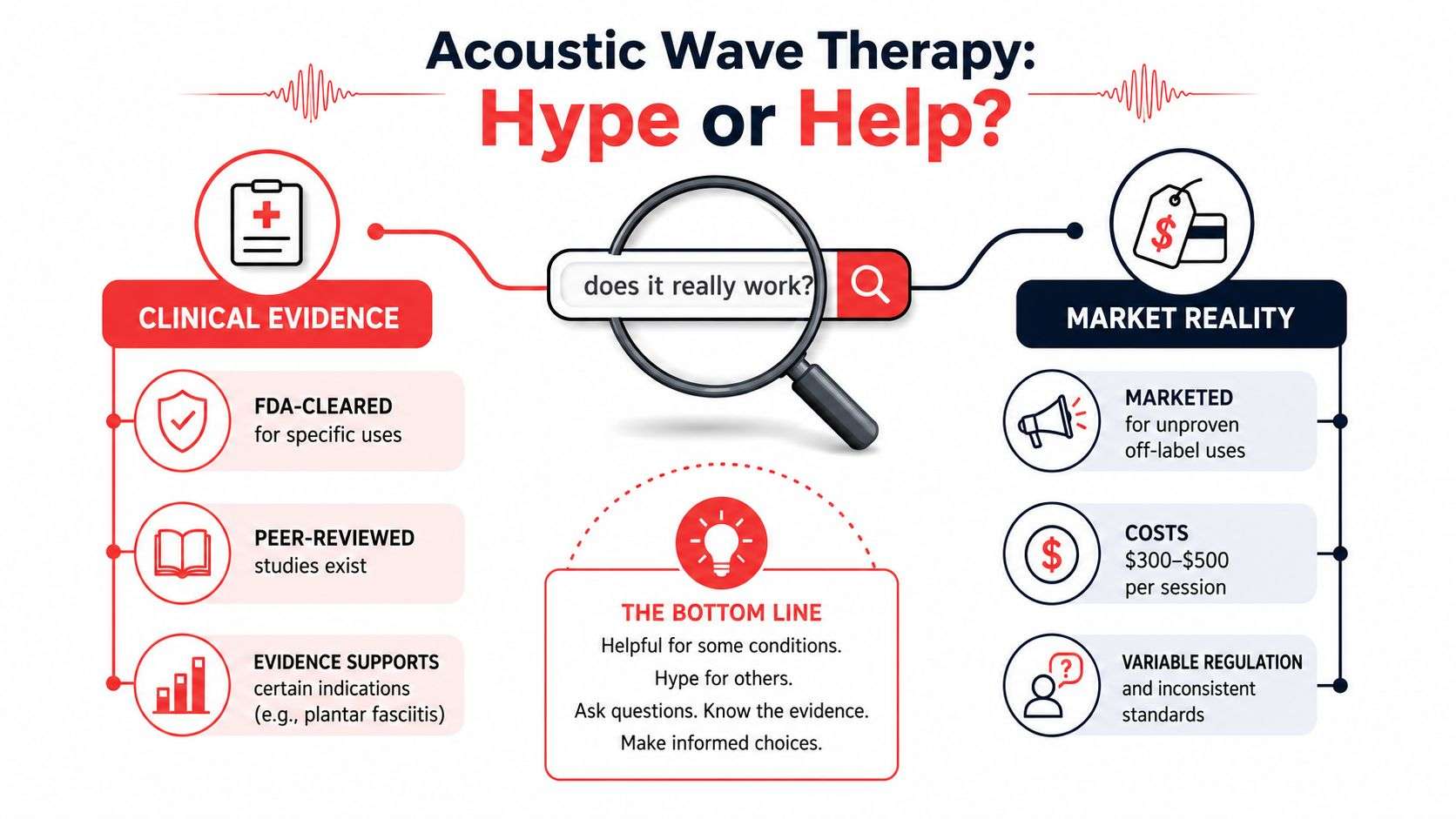
The best-supported use in sexual medicine is vasculogenic erectile dysfunction, meaning erection problems linked substantially to blood-vessel or endothelial dysfunction. The European Association of Urology described Li-ESWT as a potential option for men with vasculogenic ED by 2021, while the American Urological Association continued to classify it as investigational, a difference that reflects accumulating but disputed evidence described in the clinical timeline review.
Practical rule: A clinic should explain the device, energy type, treatment zones, expected benefit, and uncertainty before discussing a package.
The foundation is therefore straightforward. Acoustic wave therapy is a non-surgical tissue-stimulation treatment designed to support vascular repair. It may be reasonable for a carefully selected patient, but the label alone doesn't tell you whether the therapy being offered matches the methods studied in medical research.
How Acoustic Waves Change Tissue
The mechanism is clearer when described as a biological repair sequence rather than an instant trigger. The goal is to influence the tissue over time, not to produce an on-demand erection during or immediately after a session.
Step one creates a signal
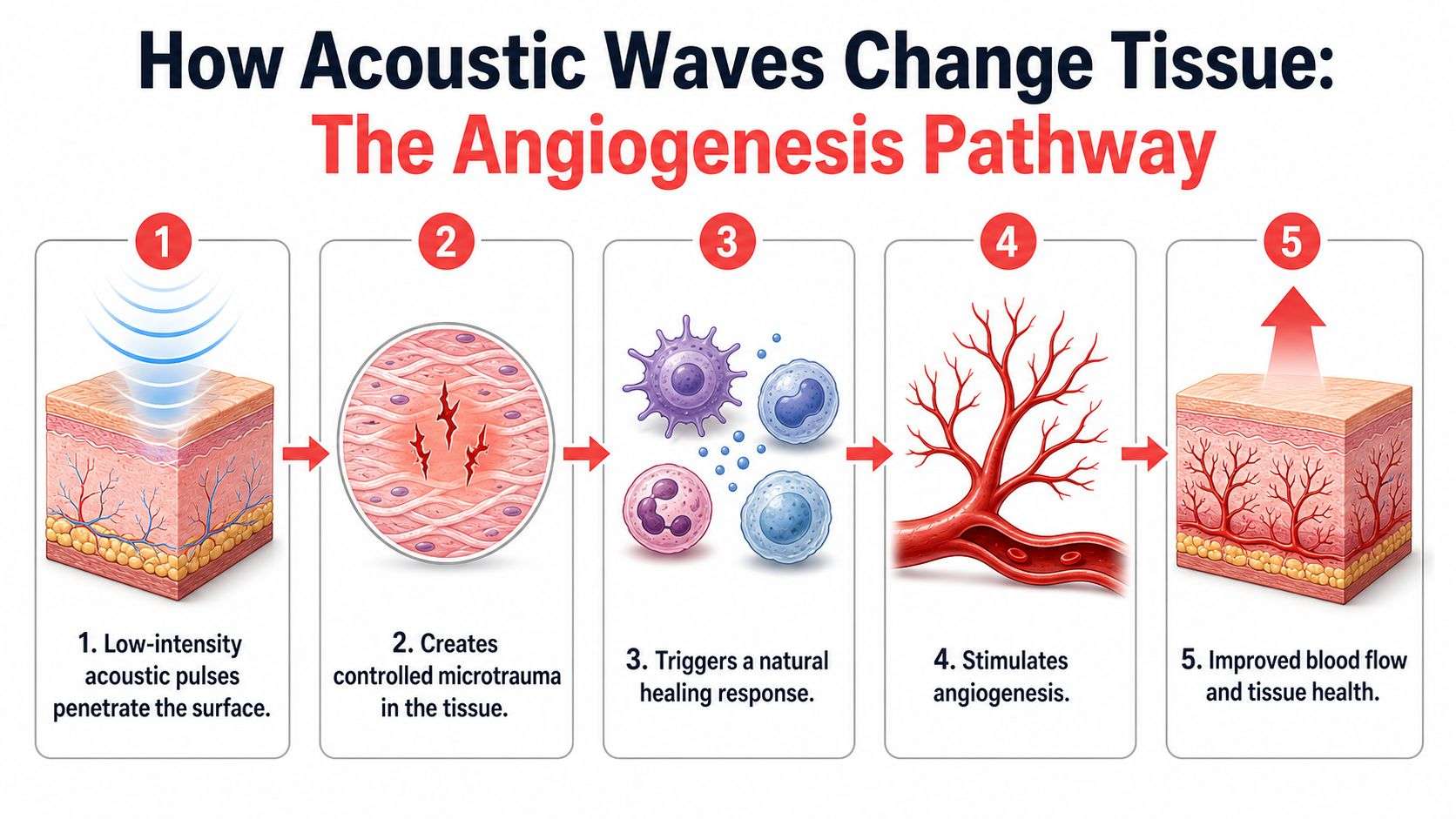
A clinician applies gel and places the treatment head against targeted erectile tissue. Low-intensity acoustic pulses pass through the skin and create controlled mechanical stress, sometimes described as microtrauma or shear stress.
That stress does not work like a drug that temporarily changes a chemical pathway. It appears to act as a signal that prompts the tissue to begin a repair response. Reviews describe downstream activity involving vascular endothelial growth factor, or VEGF, and nitric oxide signaling, both relevant to blood-vessel function and healing in the mechanistic literature.
Step two recruits repair activity
The mechanical stimulus may encourage the recruitment of progenitor cells and support the formation of new small blood vessels, a process called angiogenesis. It may also influence endothelial function and tissue remodeling. In practical terms, the intended result is a healthier local environment for blood to enter and remain in the erectile bodies.
The pathway remains a proposed biological explanation, not proof that every patient will develop enough new vessel activity to improve erections. Response depends on the cause of ED, existing vascular disease, nerve health, metabolic conditions, medications, and the quality of the treatment protocol.
Step three requires time
Tissue remodeling develops gradually. A patient should not judge the treatment by whether he has an immediate erection after a session. The intended effect depends on biological repair, while a PDE5 inhibitor is used around sexual activity and works through a different, more immediate pathway.
This timing also explains why treatment should be matched to the diagnosis. Men with mild-to-moderate vasculogenic ED may have tissue capable of responding to vascular stimulation. Men whose ED is dominated by severe nerve injury, advanced structural disease, or complex post-surgical changes may have less capacity to benefit, even when reduced blood flow is part of the problem.
A clinical discussion of acoustic therapy for erectile dysfunction should therefore define what “regenerative” means in that patient's case. It should connect the proposed mechanism to the diagnosis, set realistic expectations about gradual and possibly modest change, and explain what the therapy cannot repair.
What the Evidence Really Shows for Erectile Dysfunction
Does acoustic wave therapy reliably restore erections, or does it mainly produce a measurable but limited change? The strongest research concerns erectile function, yet the answer is more qualified than many advertisements imply. Reviews generally find improvement in erectile-function measures, alongside modest effects, inconsistent protocols, and low certainty caused by methodological limitations in a recent systematic-review summary.
A statistically significant change is not automatically a noticeable one. A questionnaire score may improve enough to meet a research threshold while a man still lacks consistently firm erections for intercourse. A 2025 Cochrane review concluded that short-term improvement may be too small for men to notice, while possible long-term benefit remains uncertain in its evidence assessment.
Patient profile changes the likely response
An umbrella review found statistically significant improvements in International Index of Erectile Function and Erection Hardness Score compared with placebo. The clearest signal appeared in mild-to-moderate vasculogenic ED in its pooled evidence review. That finding identifies a group with a better chance of responding, not a guarantee or a personal forecast.
| Patient profile | Average IIEF-EF gain | Typical response |
|---|---|---|
| Mild-to-moderate vasculogenic ED | Modest average improvement | More likely to notice better spontaneous or medication-assisted erections |
| Severe or mixed-cause ED | Not established as consistently beneficial | Response may be limited when vascular disease is accompanied by major nerve or structural problems |
| Diabetes-associated ED | Variable and often less predictable | Requires assessment of vascular, metabolic, and neurologic contributors |
| Post-surgical or predominantly neurogenic ED | Not established as reliably effective | Tissue stimulation may not address the main source of dysfunction |
The evidence does not support treating one score change as an individual prediction. A major review found that high-quality level 1a evidence was lacking and that clinical findings remained conflicting. The same review is discussed in this evidence review of acoustic therapy for ED studies.
The clinically honest promise is not “this will restore perfect erections.” It's “you may experience a modest improvement if your underlying problem matches the population most likely to respond.”
Protocol differences also affect interpretation. Research has used different devices, energy settings, pulse patterns, treatment schedules, and follow-up periods. Results from one protocol therefore cannot be transferred automatically to every clinic package.
A patient should ask whether his ED appears mainly vascular, what outcome he is hoping to change, and what alternative plan exists if the response is insufficient. Acoustic therapy is a tissue-remodeling process, not an on-demand erection treatment. A medical evaluation matters more than a brand promise, and this therapy should be judged against realistic goals rather than an advertisement's best-case story.
REGENwave vs GAINSWave and Why Device Matters
The brand on a treatment package does not identify the energy reaching the tissue. A useful clinical comparison starts with the device and protocol: whether the system is focused or radial, how it generates pulses, which anatomical areas are treated, and how closely the schedule resembles methods studied in published research.
REGENwave™ is presented by Sexual Wellness Centers of America as a focused acoustic therapy protocol for sexual performance. GAINSWave® is commonly used as a branded label for acoustic-wave treatment, but that label does not establish the machine, energy settings, or treatment method at a particular clinic. Providers using the same name may therefore deliver different protocols.
| Feature | REGENwave™ | GAINSWave® |
|---|---|---|
| Positioning | Clinic-specific regenerative acoustic protocol | Branded acoustic-wave treatment approach |
| Device question | Confirm the exact focused device and settings at the clinic | Confirm whether the local provider uses focused or radial equipment |
| Treatment target | Ask whether the shaft and crura are addressed | Ask which anatomical zones are treated |
| Session plan | Confirm pulse count, spacing, and total sessions | Confirm pulse count, spacing, and total sessions |
| Maintenance | Ask whether follow-up treatment is recommended | Ask whether follow-up treatment is recommended |
| Pricing model | Confirm whether pricing is per session or packaged | Confirm whether pricing is per session or packaged |
The word “wave” creates much of the confusion. Focused systems direct energy toward a selected depth. Radial devices mainly deliver pressure from the surface. As noted in the clinical explanation from Yale included in this evidence summary, evidence summaries caution that radial waves are much lower energy and have not been shown in scientific studies to improve ED.
The practical distinction is straightforward: device class and clinical execution matter more than branding alone. Before booking a REGENwave treatment protocol, ask the clinic to name the exact machine, confirm whether it is focused, identify the treatment zones, and explain how the protocol fits your diagnosis. Ask how pulse count, spacing, and follow-up are determined.
A clinic that answers only with “advanced waves” has not provided enough information to judge the treatment. Acoustic therapy is tissue remodeling, so the equipment and protocol affect how its evidence should be interpreted. Brand recognition can start a conversation, but it cannot replace technical details or a clinical assessment.
What a Typical Treatment Course Looks Like
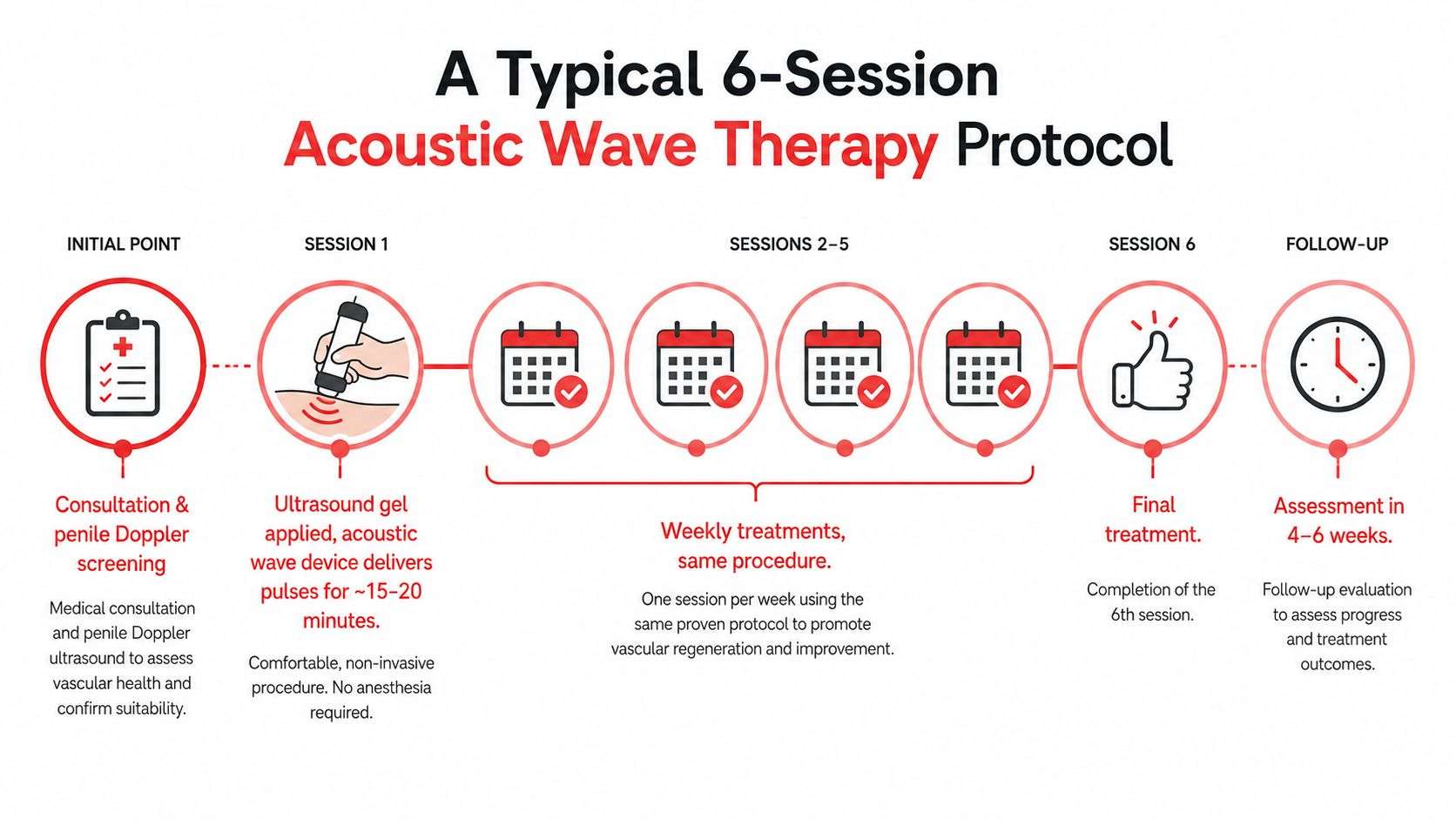
A responsible course starts with diagnosis, not with the first pulse. The consultation should review erection history, cardiovascular risk, diabetes, medications, prior pelvic or prostate procedures, hormone concerns, and the difference between losing rigidity and never achieving one.
Some clinics may use vascular screening, including penile Doppler assessment, when the diagnosis remains unclear or when the treatment plan needs more detail. The purpose is to determine whether reduced arterial inflow, venous leakage, nerve dysfunction, medication effects, psychological factors, or several causes are contributing.
What happens during a visit
The patient usually lies down while the clinician applies ultrasound gel to the treatment area. The device then delivers acoustic pulses to selected areas of the penile shaft and crura. The sensation may feel like repetitive tapping or pressure, and the intensity can be adjusted for tolerance.
Treatment plans differ, but a clinic should explain the pulse count, anatomical zones, session spacing, and total course in advance. No anesthesia or downtime may be needed for many low-intensity protocols, but “non-surgical” doesn't mean every patient experiences the treatment identically.
How to interpret the timeline
A patient may notice changes gradually, such as more frequent morning erections or improved response to stimulation. Those early signs aren't the same as reliable intercourse-ready rigidity, and the timing varies enough that a clinic shouldn't promise a precise milestone.
Sexual Wellness Centers of America describes REGENmax® as a combination program that may pair REGENwave™ acoustic therapy with REGENlase™ laser treatment and a concentrated HEshot® injection protocol. Combination care can change the treatment discussion because any outcome may reflect several interventions, not acoustic waves alone.
A useful follow-up plan tracks erection quality, rigidity, spontaneous erections, medication use, and side effects over time. The goal isn't to prove that a package worked through vague impressions. It's to determine whether the change is meaningful enough to justify continued care.
Beyond ED, Peyronie's Disease, Female Patients, and Diabetes
Acoustic wave therapy is often marketed for conditions beyond straightforward vascular ED. The evidence becomes less settled as the diagnosis changes, so patients shouldn't transfer the results from one condition to another.
Peyronie's disease
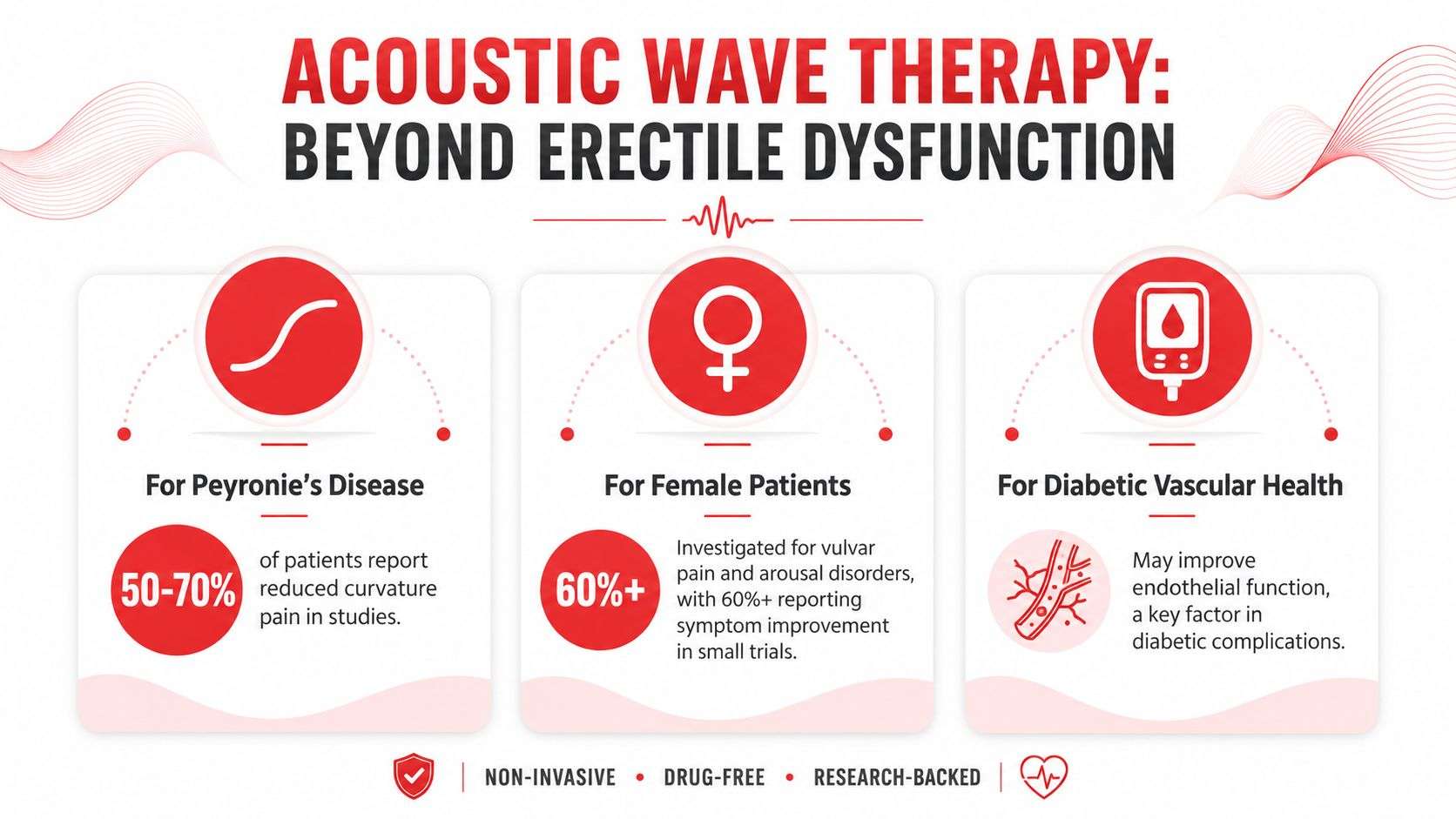
For Peyronie's disease, low-intensity shockwave therapy may reduce pain and may influence plaque or curvature outcomes, but the findings aren't consistent. Evidence summaries indicate that pain relief doesn't necessarily improve sexual function, so a man may feel less discomfort without regaining the erection quality or penile straightness he wants in the Cochrane evidence review.
That distinction is important during consent. A treatment aimed at pain may be reasonable for a painful plaque, but it shouldn't be presented as a proven way to restore normal curvature or sexual performance.
Female sexual function
Clinicians have investigated acoustic approaches for female sexual concerns, including arousal difficulties and vulvar or vestibular symptoms. The research uses varied treatment methods and outcome measures, so it's difficult to draw a single conclusion about effectiveness. A consultation should identify the actual symptom, such as pain, dryness, reduced arousal, or difficulty reaching orgasm, rather than treating “sexual wellness” as one diagnosis.
Diabetes-associated ED
Diabetes can affect blood vessels, endothelial function, nerves, hormones, and medication patterns at the same time. That makes the biological rationale for vascular therapy understandable, but it also makes the outcome less predictable than in a patient with uncomplicated vascular ED.
A patient with diabetes should treat acoustic therapy as one part of a broader plan that includes medical risk assessment and management of contributing conditions. The evidence hierarchy is best understood qualitatively as ED overall, then Peyronie's pain, followed by female sexual-function applications and durable benefit in diabetic ED, with uncertainty increasing across those categories.
Comparing Acoustic Wave Therapy to Pills, Devices, and Surgery
Men often compare treatments by asking which one is “strongest.” A better comparison asks what each treatment changes, how quickly it works, how invasive it is, and whether the benefit remains after the treatment is no longer being used.
| Treatment | Mechanism | Invasiveness | Onset | Duration of benefit | Typical cost, 1–3 yr |
|---|---|---|---|---|---|
| Oral PDE5 inhibitors | Temporarily supports the erection pathway during sexual stimulation | Non-invasive | Relatively rapid, used around sexual activity | Present while the medication is active | Usually the lowest treatment-cost category, depending on prescription use |
| Vacuum erection device | Mechanically draws blood into the penis | Non-invasive but equipment-dependent | Rapid, during use | Temporary and tied to device use | Usually below procedural treatment over time, depending on equipment and replacement needs |
| Acoustic wave therapy | Uses mechanical stimulation to encourage tissue remodeling | Non-surgical and generally outpatient | Gradual, not on demand | May persist after a completed course, but durability remains uncertain | Cash-based procedural care, with pricing determined by the clinic |
| Penile implant surgery | Provides a mechanical erection system inside the body | Surgical and irreversible | After surgical recovery | Designed as a durable definitive option | Highest-cost category, including surgery and follow-up |
Pills remain attractive because they're familiar, fast, and generally simpler to try before a procedure. They don't aim to rebuild erectile tissue, however, and they may be unsuitable or unsafe for some men because of cardiovascular conditions or medication interactions.
Vacuum devices avoid systemic medication and can help create an erection when used correctly. Their limitations are practical. The device must be available, applied, and accepted by both partners, and the erection depends on mechanical assistance.
Acoustic therapy occupies a different position. It's intended as a non-drug, non-surgical tissue-level intervention, so the benefit, if it occurs, is expected to develop rather than appear immediately. The research supports cautious optimism for selected men, not a guarantee of lasting success.
Implants offer the most definitive mechanical solution when other options fail, but surgery and irreversibility make the decision substantially different from trying a non-invasive protocol. A clinician should discuss all reasonable options instead of presenting acoustic therapy as a replacement for every treatment category.
Practical Questions Patients Ask Before Booking
A consultation should answer operational questions before you pay for a course. If you're considering care at a sexual-health clinic in Colleyville, bring a complete medication list and a clear history of when the problem began, whether you have morning erections, which treatments you've tried, and whether erections fail during sex, masturbation, or both.
Tell the clinician about diabetes, cardiovascular disease, pelvic surgery, prostate treatment, penile curvature, testosterone treatment, blood thinners, and any condition affecting sensation. Those details don't automatically rule out acoustic therapy, but they can change the diagnosis and the expected response.
Questions about the protocol
Ask these questions directly:
- Device class: Is the machine focused low-intensity shockwave equipment, or is it a radial pressure-wave device?
- Treatment plan: How many sessions are recommended, and why does that schedule fit my diagnosis?
- Treatment zones: Which parts of the shaft and crura will be treated?
- Outcome tracking: How will you measure whether the change is clinically meaningful?
- Pricing: Is the care charged per session or as a package, and what follow-up is included?
- Maintenance: Do you recommend later sessions, and what evidence supports that recommendation?
- Safety: What side effects should I report, and how will discomfort be managed?
- Alternatives: What will we do if the response is too small to notice?
Be cautious if a provider promises an instant cure, guarantees a specific erection result, or refuses to identify the actual device. The evidence shows that protocols vary and that no specific regimen has proved clearly superior, so a confident consultation should still include uncertainty.
Bring relevant records from your primary-care clinician, cardiologist, endocrinologist, or urologist when available. A focused evaluation can protect you from paying for a treatment that doesn't address the main cause of your ED.
Sexual Wellness Centers of America offers evaluation and non-surgical regenerative protocols that include REGENwave™ and combination care through REGENmax®. Visit Sexual Wellness Centers of America to discuss your symptoms, review whether acoustic wave therapy fits your diagnosis, and ask the device and outcome questions that matter before booking.