
The Truth About Whether Copper Peptides Work for Hair Regrowth
Do copper peptides work for hair regrowth? The short answer: yes, but with important caveats.
Here’s what the current science says at a glance:
| Question | Quick Answer |
|---|---|
| Do they stimulate hair follicles? | Yes — supported by lab and animal studies |
| Do they regrow hair in humans? | Possibly, but only small clinical trials exist |
| Can they replace minoxidil or finasteride? | No — those have far stronger evidence |
| Are they safe to use? | Yes — generally well-tolerated with minimal side effects |
| Best use case? | Early-stage thinning, combined with proven treatments |
| How long to see results? | 3 to 6 months of consistent use |
Hair loss is one of the most emotionally charged health concerns people face. It touches identity, confidence, and how we show up in the world every day. So when a buzzy ingredient like copper peptides starts appearing in every other TikTok before-and-after video, it’s completely natural to wonder if there’s real science behind it — or if it’s just clever marketing.
The honest answer is somewhere in the middle.
Copper peptides — especially a molecule called GHK-Cu — have genuine, well-documented effects on hair follicle biology at the cellular level. They activate key growth pathways, reduce scalp inflammation, and support the environment follicles need to thrive. But robust, large-scale human clinical trials specifically measuring hair regrowth from copper peptides alone are still limited.
That gap between promising lab science and proven clinical results is exactly what this guide unpacks.
I’m Jeff Nuziard, CEO of Sexual Wellness Centers of America, where I’ve spent years helping patients navigate evidence-based solutions for health and wellness — including the question of do copper peptides work for hair regrowth as part of comprehensive, personalized restoration protocols. In the sections ahead, we’ll walk through the science clearly and honestly so you can make an informed decision.
Do copper peptides work for hair regrowth vocab explained:
What Are Copper Peptides and How Do They Influence Hair Follicles?
To understand how copper peptides influence your hair, we first have to look at what they are. Peptides are short chains of amino acids—essentially the building blocks of proteins like collagen, elastin, and keratin. When these amino acid chains bind to copper ions, they form copper peptides.
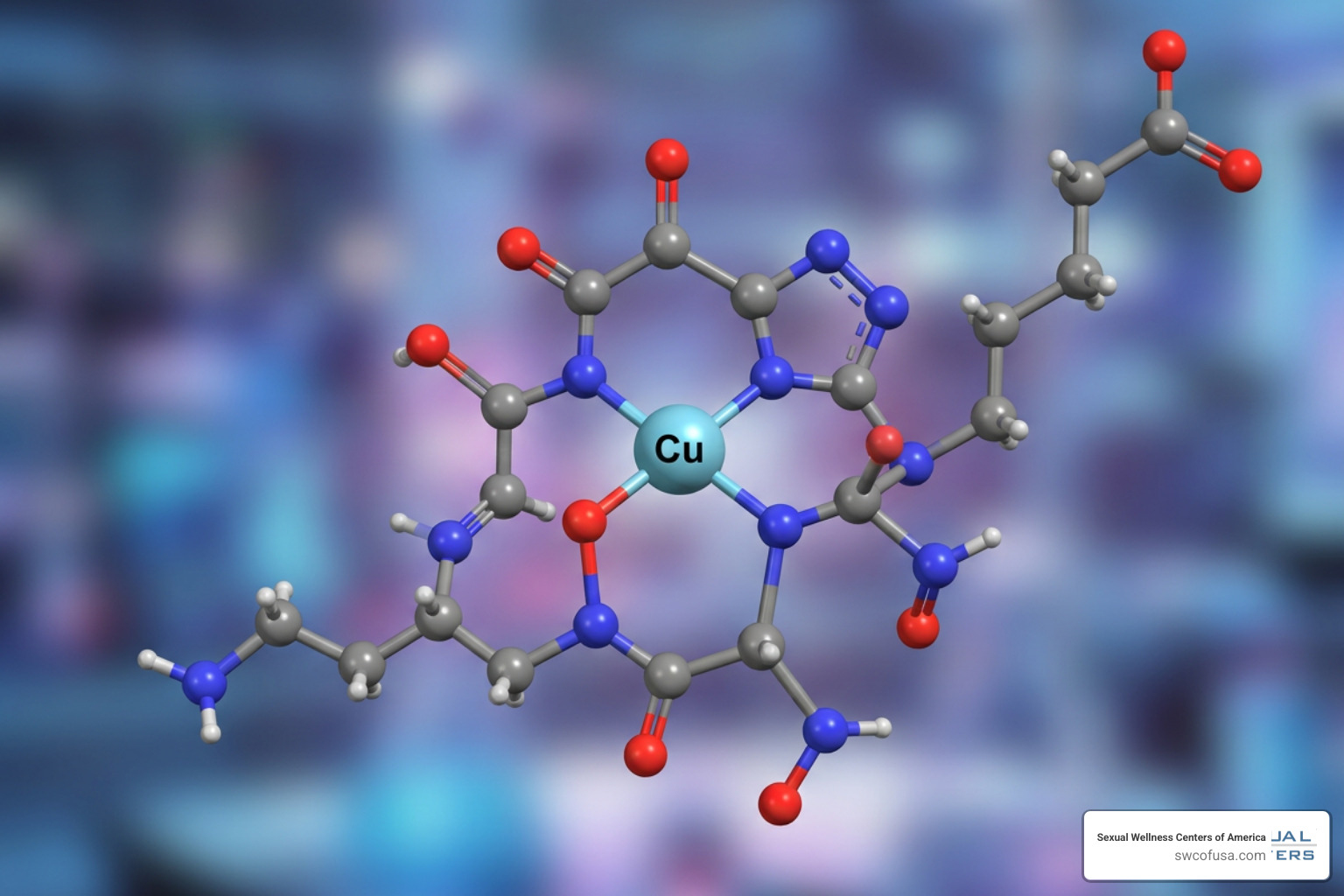
The most famous of these is GHK-Cu (glycyl-L-histidyl-L-lysine copper), a naturally occurring tripeptide complex discovered in 1973. It is found in human plasma, saliva, and urine, but there is a catch: its levels decline significantly as we age. By the time we reach our late thirties and early forties in 2026, circulating GHK-Cu levels drop by roughly 60% from their youthful peak. This decline often coincides with the acceleration of androgenetic alopecia (pattern baldness) in genetically susceptible individuals.
Another closely related peptide frequently studied in follicular biology is AHK-Cu (alanine-histidine-lysine copper). Both function as highly effective delivery vehicles, shuttling copper ions directly into damaged cells to stimulate tissue repair, promote blood vessel growth (angiogenesis), and calm localized inflammation.
At the molecular level, copper peptides influence the scalp through several key mechanisms:
- Dermal Papilla Cell Stimulation: The dermal papilla cells (DPCs) at the base of the hair follicle control hair growth and cycling. Copper peptides promote DPC proliferation, keeping the follicle active.
- Wnt/β-Catenin Pathway Activation: This pathway acts as the “master switch” for hair follicle development and the initiation of the active growth (anagen) phase. Copper peptides help upregulate this pathway, urging dormant follicles back to work.
- Extracellular Matrix (ECM) Remodeling: Copper is a critical cofactor for lysyl oxidase, an enzyme essential for cross-linking collagen and elastin. By strengthening the ECM, copper peptides improve follicle anchoring and scalp elasticity.
- Upregulation of Growth Factors: Research shows that GHK-Cu upregulates key growth factors like VEGF (Vascular Endothelial Growth Factor) and basic fibroblast growth factor (bFGF), which improve microcirculation around the follicle.
To dive deeper into why this specific peptide is so highly regarded for scalp care, explore Why GHK-Cu Is the Secret Sauce for Your Scalp. For a comprehensive look at the science of peptide-driven hair support, you can also read How Copper Peptides Help Hair Growth: Science, Benefits, and Side Effects.
Do Copper Peptides Work for Hair Regrowth? The Scientific Evidence
When exploring whether copper peptides actually regrow hair, it is crucial to separate laboratory models from human reality. The preclinical evidence supporting copper peptides is remarkably strong, but it is largely based on animal and in vitro (cell culture) studies.
One of the foundational studies in this field was published in 1991 by Dr. Loren Pickart, who demonstrated that topical copper peptides could enlarge miniaturized hair follicles in C3H mice, transitioning them from fine vellus hairs to thicker, terminal hairs.
Furthermore, a widely cited 2007 study published in the Archives of Pharmacal Research analyzed the effects of AHK-Cu on human hair follicles ex vivo. The researchers discovered that AHK-Cu:
- Stimulated the elongation of human hair follicles in organ culture.
- Promoted the proliferation of dermal papilla cells.
- Suppressed apoptotic (programmed cell death) pathways that lead to follicle regression.
While these laboratory findings are incredibly exciting, they do not automatically translate to a full head of hair for someone experiencing pattern baldness. To understand the broader spectrum of peptides used for this purpose, check out our guide on Peptides for Hair Regrowth.
Clinical Studies: Do Copper Peptides Work for Hair Regrowth in Humans?
If you are looking for a large-scale, double-blind, placebo-controlled human trial testing topical GHK-Cu by itself, you will not find one. This is the “blind spot” of copper peptide research: almost all human clinical data comes from combination therapies.
For instance, a clinical study on a product called ALAVAX (published by Park et al. in 2016) evaluated a combination of 5-aminolevulinic acid (5-ALA) and a GHK-Cu complex in 45 men with Norwood III–V androgenetic alopecia. Over six months, patients using the formulation saw significant increases in hair density (gaining between 52 and 71 hairs per square centimeter). However, because it was a combination product, researchers could not isolate the exact contribution of the copper peptides.
A more recent 2024 study published in the Journal of Cosmetic Dermatology evaluated an innovative delivery method: tattooing a blend of minoxidil, dutasteride, and copper peptides directly into the scalp of patients with treatment-resistant androgenetic alopecia.
The results of this study were highly encouraging:
- After 5 monthly sessions of the minoxidil-dutasteride-copper peptide tattooing protocol, the median top scalp area regrowth (TSAR) was 26.5% (with an interquartile range of 15.3% to 32.8%).
- 71.4% of the patients achieved greater than 10% TSAR.
- The study demonstrated that 5 monthly sessions yielded a significantly higher median TSAR compared to a shorter 3-session protocol (26.5% vs 10%, P = .0025).
While this study highlights the power of combining copper peptides with proven medical compounds, it also underscores that copper peptides are best utilized as supportive team players rather than solo performers. You can read the full, detailed breakdown of this study at Enhanced hair regrowth with five monthly sessions of minoxidil-dutasteride-copper peptides tattooing, and compare the different forms of copper peptides at Copper Peptides for Hair: GHK-Cu vs AHK-Cu.
Copper Peptides vs. Minoxidil and Finasteride: How They Compare
To put copper peptides into perspective, we must compare them to the gold standards of hair loss treatment: Minoxidil and Finasteride. These are the only FDA-approved treatments for androgenetic alopecia, and they work through entirely different biological pathways.
| Feature | Copper Peptides (GHK-Cu) | Minoxidil | Finasteride |
|---|---|---|---|
| Primary Mechanism | Growth factor upregulation, tissue repair, anti-inflammatory | Vasodilation, potassium channel opening, extends anagen phase | 5-alpha reductase inhibitor (blocks conversion of testosterone to DHT) |
| FDA Approval Status | Cosmetic ingredient (Not approved as a drug) | Approved (Topical 2% & 5%, Oral off-label) | Approved (1mg Oral daily) |
| Clinical Evidence | Moderate (mostly animal, in vitro, or combination studies) | Very Strong (decades of placebo-controlled human trials) | Very Strong (extensive long-term clinical trials) |
| Target Audience | Men & Women (All stages, best for early thinning/scalp health) | Men & Women (All stages of thinning) | Men only (Androgenetic alopecia) |
| Common Side Effects | Mild scalp irritation, temporary tingling | Scalp dryness, itching, unwanted facial hair, temporary shedding | Sexual side effects (2-4% of users), mood changes |
While minoxidil forces blood flow to the follicle and finasteride systemically stops the hormone driving follicle miniaturization, copper peptides work to rebuild the “soil” of the scalp. They heal the skin barrier, encourage healthy collagen production, and reduce chronic, low-grade micro-inflammation.
For a deeper dive into how peptides compare to other clinical follicle boosters, check out Best Peptides for Hair Regrowth: Science-Backed Follicle Boosters and GHK-Cu for Hair Loss: What the Research Shows.
Stacking Treatments: Do Copper Peptides Work for Hair Regrowth When Combined with Minoxidil?
Because copper peptides and minoxidil use completely different mechanisms, they make an exceptional pair. In fact, many people who experience scalp dryness, flaking, or redness from topical minoxidil find that adding a copper peptide serum significantly improves their scalp tolerance.
The tissue-repair properties of GHK-Cu help soothe the irritation caused by the propylene glycol or alcohol vehicles commonly used in minoxidil formulations. When stacking these treatments, we recommend applying your copper peptide serum and waiting at least 60 minutes before applying minoxidil—or alternating them by using copper peptides in the morning and minoxidil at night.
To explore how to weave multiple peptide treatments into a comprehensive hair care routine, read Peptides for Hair Growth.
How to Use Copper Peptides for Best Results
If you decide to incorporate copper peptides into your routine, how you apply them matters just as much as the formulation you choose.
There are three primary ways copper peptides are administered:
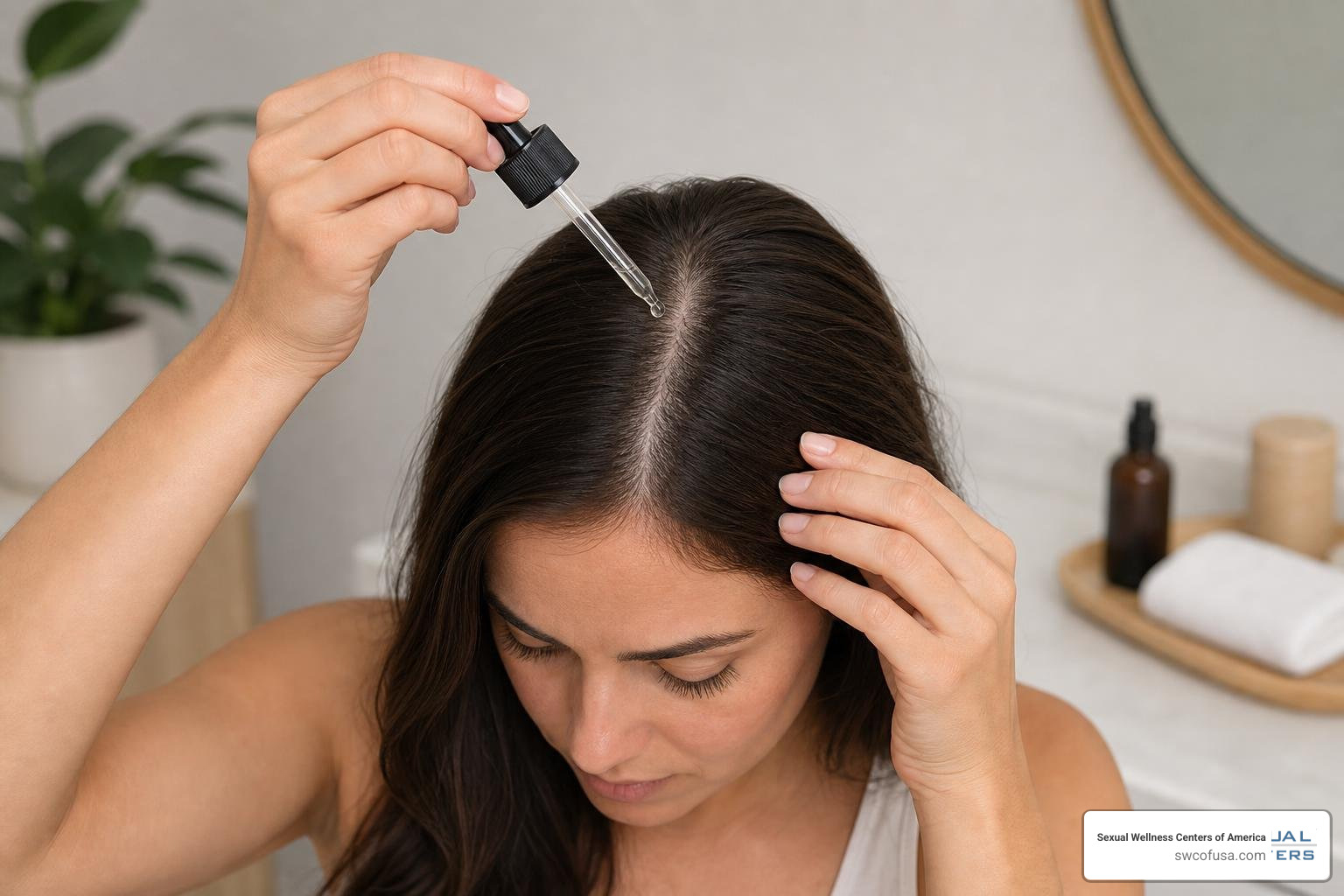
- Topical Serums (Most Common): These are lightweight, water-based daily serums. Look for products that state their copper peptide concentration (typically between 0.1% and 1% GHK-Cu). To apply, part your hair and place a few drops directly onto a clean, dry scalp, focusing on the hairline, part, and crown. Massage it in gently and do not rinse.
- Microneedling (Enhanced Absorption): Because GHK-Cu has a molecular weight of approximately 403 Da, it can penetrate the skin barrier, but its absorption is significantly enhanced when paired with microneedling (using a 0.5mm to 1.0mm roller or pen). This creates micro-channels that allow the peptide to reach the dermal papilla cells directly. Note: Always use sterile techniques to prevent infection.
- Scalp Mesotherapy / Injections: Some wellness clinics offer direct intradermal injections of GHK-Cu. While topical serums are convenient, injections deliver the peptide straight to the root of the follicle.
To learn more about advanced delivery options beyond standard over-the-counter cosmetics, explore Beyond Serums: Exploring Peptide Injections for Hair Loss Solutions and What Are Copper Peptides and How Do They Help with Hair Growth?.
Realistic Timelines, Expectations, and Safety Considerations
Patience is a requirement when treating hair loss. Hair grows at an average rate of only half an inch per month, meaning any visible changes in density will take time.
- Weeks 2–6 (The Adjustment Phase): You may experience a mild, temporary increase in shedding. Do not panic; this is a normal sign of follicle cycling, as older telogen hairs are pushed out to make room for new anagen growth.
- Weeks 4–8 (Scalp Health Improvements): Most users notice a reduction in scalp itching, dryness, and excess oil production. The scalp simply feels healthier.
- Months 3–6 (Visible Density Changes): If the treatment is working, you will begin to see fine, new hairs along the hairline or part, and existing hair may feel thicker and more resilient.
Safety & Side Effects: Topical copper peptides have an excellent safety record spanning over four decades. However, minor side effects can occur, including mild scalp redness, itching, or a temporary tingling sensation upon application. We always recommend performing a patch test on your forearm before applying a new serum to your entire scalp.
Crucial Medical Warning: Individuals diagnosed with Wilson’s disease or any other genetic disorder affecting copper metabolism must avoid copper peptides entirely, as systemic absorption could exacerbate their condition.
For a complete breakdown of what to expect when starting your peptide journey, read our Beginners Guide to Hair Regrowth Peptides.
Frequently Asked Questions About Copper Peptides for Hair
Do copper peptides block DHT?
No, copper peptides do not directly block dihydrotestosterone (DHT) or inhibit the 5-alpha reductase enzyme responsible for converting testosterone to DHT.
Instead, they offer indirect protection. By suppressing inflammatory cytokines (like TGF-β1) and upregulating protective growth factors, copper peptides help shield the hair follicle from the downstream cellular damage and miniaturization that DHT causes. They reinforce the follicle’s structural integrity, allowing it to resist hormonal stress more effectively. For a deeper look at this topic, read Copper Peptides for Hair Loss: Legit Treatment or TikTok Hype?.
Can I use copper peptides daily on my scalp?
Yes, daily application is highly recommended for best results. Because copper peptides are gentle and non-hormonal, they are safe for long-term daily use.
If you have an exceptionally sensitive scalp, start by applying the serum every other day for the first week to monitor for any irritation. Once your skin adjusts, transition to daily use. For more tips on formulation selection and daily routines, check out Copper Peptide Hair Growth Serum for Thinning Hair.
Who is the ideal candidate for copper peptide hair treatments?
The ideal candidate is someone in the early-to-moderate stages of hair thinning (such as Norwood Hamilton Stages I–III for men, or early Ludwig scale thinning for women).
Copper peptides require a functioning hair follicle to work; they cannot revive completely atrophied, scarred, or bald areas of the scalp. They are also highly beneficial for individuals recovering from hair transplant surgery, as they accelerate wound healing and support graft survival. To see how peptides are reshaping modern hair restoration, read From Thin to Thick: How Peptides Are Revolutionizing Hair Growth.
Conclusion
When it comes to addressing hair thinning, there is rarely a single “magic bullet.” While copper peptides show incredible biological promise in supporting the scalp environment, extending the growth cycle, and calming inflammation, they deliver their best results when integrated into a comprehensive, medical-grade treatment plan.
At Sexual Wellness Centers of America in Colleyville, TX, we believe in treating the whole person. We specialize in cutting-edge, personalized wellness and regenerative therapies, including our advanced regenMAX® (REGENmax®) technology. By utilizing comprehensive hormone and vitamin panels, we design customized protocols that target the root causes of hair thinning, sexual dysfunction, and vitality loss from the inside out.
If you are ready to move past the social media hype and build a science-backed routine that actually works, we are here to guide you. Schedule a consultation for REGENmax® hair restoration services in Colleyville, TX with our expert team today, and let’s bring your hair back to life together.