
Understanding Peptide for Hair Growth: A Science-Based Solution
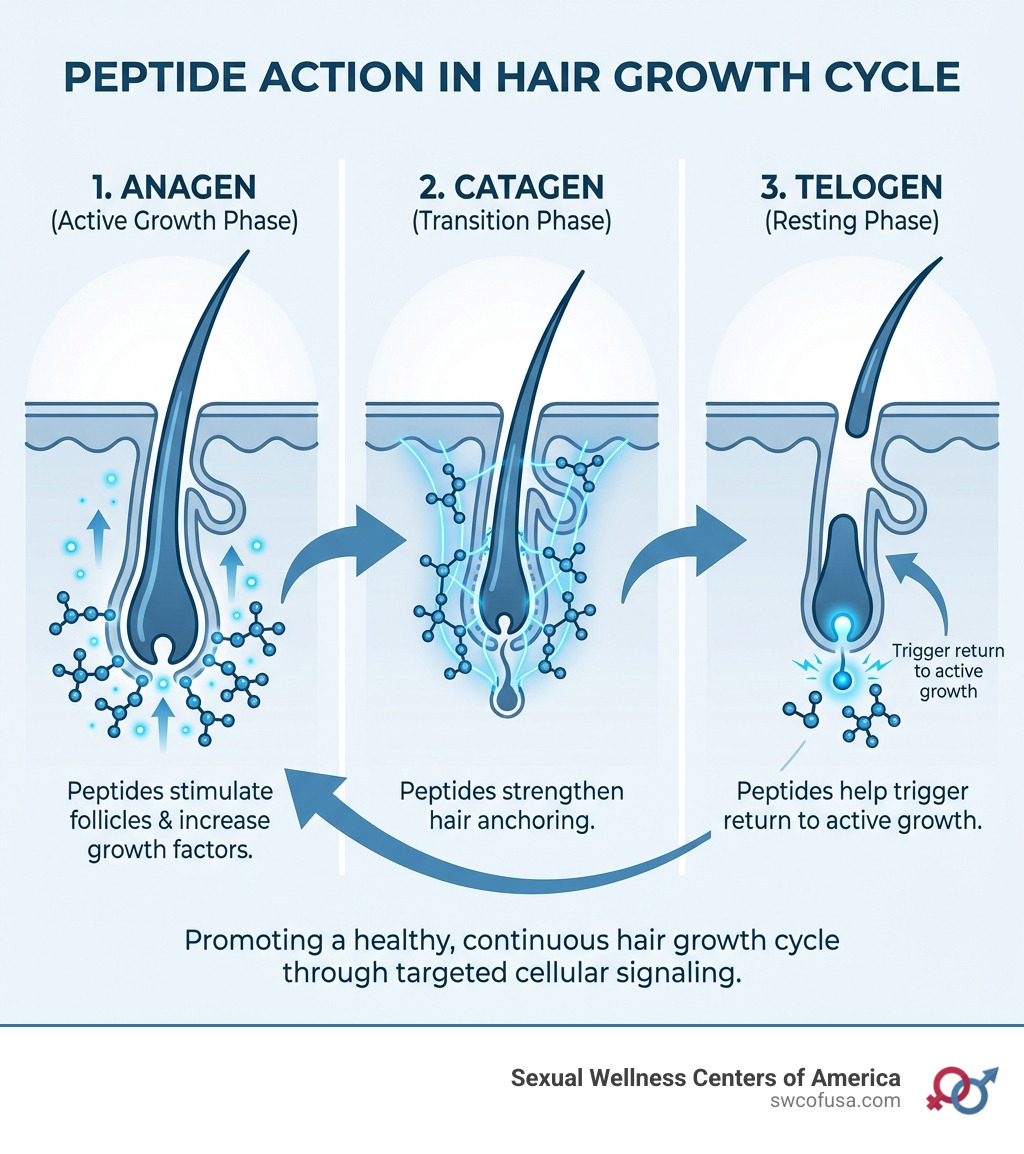
Peptide for hair growth represents a breakthrough in addressing hair thinning and loss through targeted cellular signaling. Here’s what you need to know:
What Are Peptides for Hair Growth?
- Short chains of amino acids that act as building blocks for proteins
- Signal hair follicles to enter active growth phases
- Stimulate collagen and elastin production in the scalp
- Improve blood flow and nutrient delivery to follicles
Most Effective Peptides:
- GHK-Cu (Copper Peptides) – Reduces inflammation and boosts circulation
- Biotinoyl Tripeptide-1 – Anchors hair to follicles and reduces shedding
- Keratin Peptides – Strengthen hair shafts and prevent breakage
Expected Results:
- Visible improvements typically within 3-6 months
- Improved hair density and thickness
- Reduced hair loss and shedding
- Improved scalp health and hair elasticity
Hair loss affects millions of people worldwide, causing not just physical changes but emotional and social impacts as well. Research shows that peptides work by reconstructing the inner bonding of hair follicles and restoring their health at a cellular level. Unlike traditional treatments that may carry hormonal side effects, peptides offer a more targeted approach by activating specific growth pathways like Wnt/β-catenin signaling and increasing critical growth factors such as VEGF and HGF.
I’m Jeff Nuziard, CEO of Sexual Wellness Centers of America, and I’ve spent years helping individuals address age-related wellness concerns, including the use of peptide for hair growth as part of comprehensive regenerative therapies. Our science-backed approach combines cutting-edge peptide treatments with personalized care to help you achieve real, lasting results.
Simple peptide for hair growth glossary:
- acetyl tetrapeptide 3 hair growth
- collagen peptides hair regrowth
- collagen supplement and hair growth
The Science Behind Peptides for Hair Growth
At the heart of regenerative medicine lies the understanding that our bodies possess incredible healing capabilities, often orchestrated by tiny, yet powerful molecules: peptides. So, what exactly are peptides, and how do they relate to hair growth? Peptides are short chains of amino acids, the fundamental building blocks of proteins. Unlike full proteins, their smaller size allows them to penetrate skin barriers more effectively, acting as messengers that direct cellular activity. In the context of hair growth, they play a critical role in cellular signaling and tissue repair, essentially telling our hair follicles to get to work!
The scientific mechanisms by which these peptides stimulate hair growth are fascinating and multifaceted. Hair growth is a complex biological process influenced by genetics, nutrition, hormones, and the health of the scalp. Peptides can influence these factors in several ways. They can help strengthen hair follicles, promote scalp health, and directly stimulate hair growth by enhancing collagen production and improving blood circulation to the scalp. Some peptides even work by modulating key signaling pathways within the hair follicle. For example, some peptides can activate the Wnt/β-Catenin signaling pathway, which is known to be crucial for hair follicle development and regeneration. By optimizing microcirculation, peptides ensure that hair follicles receive an ample supply of nutrients and oxygen, which are vital for healthy growth.
Scientific evidence supports the use of peptides for hair growth, though research is ongoing and continually evolving. Studies have shown that copper peptides can support healthy hair growth with minimal side effects. The potential of peptides lies in their ability to “reconstruct the inner bonding of the hair follicle and restore their health.” This leads to improved overall hair health beyond just growth, contributing to increased strength and elasticity. While peptides are not a “miracle cure,” they are a powerful tool in our regenerative toolbox, capable of addressing various types of hair loss or thinning by tackling underlying issues like inflammation, poor circulation, and weakened hair structure.
GHK-Cu: The Gold Standard Peptide for Hair Growth
Among the most researched and effective peptides for promoting hair growth, GHK-Cu, also known as copper peptide, stands out. This remarkable peptide is widely recognized for its anti-aging and regenerative capabilities. GHK-Cu works by stimulating hair follicles to promote new growth, improving scalp density, and reducing shedding.
The mechanisms of GHK-Cu are quite impressive:
- Stimulating Blood Flow: Copper peptides can significantly boost blood flow to the scalp, ensuring that hair follicles receive essential nutrients and oxygen for robust growth. This increased microcirculation is vital for maintaining healthy hair cycles.
- Reducing Inflammation and Oxidative Stress: A healthy scalp is fundamental for healthy hair. GHK-Cu is known for its anti-inflammatory properties, which can protect the hair and scalp from damage caused by inflammation. It also acts as an antioxidant, combating oxidative stress that can prematurely age hair follicles. A study highlighted the “protective effects of GHK-Cu in bleomycin-induced pulmonary fibrosis via anti-oxidative stress and anti-inflammation pathways,” demonstrating its broader role in cellular protection and healing.
- Boosting Collagen and Elastin: Hair strength and elasticity depend heavily on structural proteins like collagen and elastin. GHK-Cu helps to promote the production of these proteins, strengthening hair strands and preventing damage and breakage. This contributes to a thicker, fuller appearance.
- Encouraging Angiogenesis: GHK-Cu can encourage angiogenesis, which is the formation of new blood vessels. This further improves nutrient delivery to hair follicles, supporting their vitality and growth.
While GHK-Cu is a superstar on its own, other peptides can work synergistically to maximize results. For instance, BPC-157, another potent peptide, offers significant benefits for hair growth by enhancing scalp healing and repairing micro-damage to the skin and follicles. It also improves blood flow and reduces inflammation, creating an optimal environment for hair to flourish. When used in combination, the regenerative properties of BPC-157 can complement GHK-Cu’s follicle-stimulating and anti-inflammatory actions, leading to a more comprehensive approach to hair restoration.
The Role of Peptides in Hair Strength and Anchoring
Beyond simply stimulating new growth, peptides are crucial for maintaining the existing hair’s health, strength, and its firm anchoring within the follicle. This is where other specific peptides, like Biotinoyl Tripeptide-1 and keratin peptides, come into play.
- Biotinoyl Tripeptide-1 and Biotinyl-GHK: These peptide complexes are designed to improve the hair’s anchorage to the follicle. They may reduce hair shedding by strengthening the hair shaft and boosting circulation to support hair follicle health. This encourages follicles to remain in the anagen (growth) phase of the hair growth cycle for longer periods. By ensuring hair is well-rooted, these peptides contribute to overall hair density and a reduction in hair loss.
- Keratin Peptides: Keratin is the primary protein that provides structural support to the hair. When hair is damaged, its keratin structure can be compromised, leading to weakness and breakage. Keratin peptides work by strengthening the hair shaft, preventing damage and breakage. They can also repair and smooth damaged hairs, adding shine and moisture to hair strands. A study on “Keratin-based peptide: biological evaluation and strengthening properties on relaxed hair” underscores their ability to improve hair texture and resilience.
By incorporating these diverse peptides, we can address multiple aspects of hair health, from initiating new growth and improving scalp environment to fortifying existing strands against damage and loss. This comprehensive approach is what makes peptide for hair growth such a solution.
Key Benefits of Peptide Therapy
Peptide therapy offers a holistic approach to hair restoration, extending beyond merely stimulating growth. It focuses on creating an optimal environment for hair to thrive, leading to a cascade of benefits for overall hair health.
Here are the key advantages we see with peptide-based products for hair growth:
- Improved Scalp Health: Peptides, especially those with anti-inflammatory properties like GHK-Cu, play a crucial role in reducing scalp inflammation. A healthy scalp is the foundation for healthy hair. By reducing inflammation, peptides help to prevent conditions that can hinder hair growth and promote a balanced scalp microbiome.
- Increased Hair Thickness and Density: By stimulating hair follicles and prolonging the anagen (growth) phase, peptides lead to the growth of thicker, more robust hair strands. This contributes significantly to increased hair density, giving the appearance of a fuller head of hair.
- Reduced Hair Loss and Shedding: Peptides like Biotinoyl Tripeptide-1 help to anchor hair more firmly to the follicles, which can significantly reduce hair shedding. When hair follicles are healthier and hair strands are stronger, less hair is lost during washing, brushing, and styling.
- Improved Scalp Microcirculation: Good blood flow is paramount for delivering essential nutrients and oxygen to hair follicles. Peptides are known to stimulate blood flow to the scalp, as highlighted by a study showing “stimulating hair growth by boosting blood flow to the scalp.” This improved circulation directly nourishes the follicles, supporting their function and vitality.
- Balanced Hormonal Impact: Some peptides, such as DHT peptides, may help balance hormone levels, which can be a contributing factor to certain types of hair loss, particularly androgenetic alopecia. By addressing these hormonal imbalances locally, peptides can help mitigate their negative effects on hair follicles.
- Improved Hair Elasticity and Moisture Retention: Peptides contribute to the structural integrity of hair by boosting collagen and elastin production. This not only strengthens the hair but also improves its elasticity, making it less prone to breakage. Additionally, healthier hair is better at retaining moisture, leading to smoother, shinier, and more manageable locks.
- Protection Against Breakage: Keratin peptides, in particular, work to repair and smooth damaged hair shafts. By reinforcing the hair’s natural protein structure, they provide a protective barrier that prevents damage and breakage, allowing hair to grow longer and healthier.
Peptide therapy for hair growth is about more than just growing new hair; it’s about nurturing the entire hair ecosystem for long-term health and vitality.
Delivery Methods and Innovations
The effectiveness of any hair growth treatment often hinges on its ability to reach the target – the hair follicles – in an active and concentrated form. For peptides, various delivery methods have emerged, each with its own advantages and disadvantages.
| Delivery Method | Advantages | Disadvantages |
|---|---|---|
| Topical Foams/Serums | Non-invasive, easy to apply, localized treatment, minimal systemic absorption | May have limited penetration, requires consistent application, can be messy |
| Oral Supplements | Convenient, systemic benefits, easy to integrate into daily routine | Digestion can degrade peptides, less targeted, lower bioavailability to scalp |
| Injections | Highly targeted, direct delivery to follicles, potentially faster results | Invasive, requires professional administration, discomfort, cost |
| Advanced Delivery Systems (e.g., Microemulsions) | Improved penetration, improved stability, targeted release, higher efficacy | More complex formulations, potentially higher cost |
Topical foams and serums are perhaps the most common and user-friendly delivery methods. Products like our GHK-Cu & BPC-157 Hair Foam are designed for direct application to the scalp, allowing the peptides to interact with hair follicles locally. The advantage here is the non-invasive nature and the ability to target the treatment precisely where it’s needed, minimizing systemic side effects. However, the skin barrier can limit the penetration of some larger peptide molecules, which is why innovative delivery systems are so important.
Oral supplements, on the other hand, offer convenience and systemic benefits. While they can contribute to overall health, including hair health, the peptides may be degraded by digestive enzymes before they can reach the scalp in effective concentrations.
Injections provide the most direct and targeted delivery, bypassing the skin barrier entirely. This method can lead to faster and more pronounced results as peptides are delivered straight to the hair follicles. However, injections are invasive, require administration by a healthcare professional, and can be more costly. Our Peptide Injection Therapy at Sexual Wellness Centers of America uses this method to ensure optimal delivery.
Innovations in peptide delivery are continuously improving efficacy. One such advancement is the use of microemulsions. Research highlights the potential of an “ionic liquid microemulsion system” for improved topical delivery of copper peptides. This system was shown to improve local delivery of copper peptides by approximately three-fold, while also maintaining their biological activity and enhancing hair growth. Such advanced formulations are designed to overcome the challenges of topical penetration, ensuring that the peptides reach the hair follicles effectively.
How to Choose the Right Peptide for Hair Growth Product
With so many options available, choosing the right peptide for hair growth product can feel overwhelming. However, by considering a few key factors, you can make an informed decision that aligns with your specific needs and goals.
Here’s what we recommend considering when selecting a peptide hair growth product:
- Peptide Type and Concentration: Different peptides target different aspects of hair growth. For instance, GHK-Cu is excellent for stimulating follicles and reducing inflammation, while keratin peptides focus on strengthening the hair shaft. Understanding the primary concern you want to address will guide your choice. Always look for products that clearly state the type and concentration of peptides. Higher concentrations often indicate greater potency, but always ensure they are within safe and effective ranges.
- Ingredient Synergy: Peptides rarely work alone. The best products often combine peptides with other beneficial ingredients like vitamins, minerals, and botanicals. For example, a product might include biotin for overall hair health or antioxidants to combat scalp damage. Look for formulations where ingredients complement each other to maximize results.
- Clinical Evidence: While the field of peptide therapy is rapidly advancing, look for products that are backed by scientific studies or clinical trials, even if preliminary. This indicates a commitment to efficacy and safety. A 2023 paper shows that copper peptides can support healthy hair growth with minimal side effects, although more research is needed.
- Formulation Stability: Peptides can be delicate molecules. A well-formulated product will ensure the peptides remain stable and active throughout the product’s shelf life. This is where advanced delivery systems, like the microemulsions we discussed, become crucial.
- Scalp Sensitivity: If you have a sensitive scalp, opt for products with fewer potential irritants and always perform a patch test before full application.
- Product Purity: Choose reputable brands that prioritize purity and quality in their ingredients. This minimizes the risk of adverse reactions and ensures you’re getting effective compounds.
By carefully evaluating these factors, you can select a peptide for hair growth product that is most likely to deliver the results you desire, contributing to a healthier, fuller head of hair.
Peptides vs. Traditional Hair Loss Approaches
When exploring solutions for hair loss, many individuals often consider traditional treatments like minoxidil and finasteride. While these have been established options for some time, understand how peptide treatments compare, particularly regarding their mechanisms, side effect profiles, and overall approach.
Traditional Options: Minoxidil and Finasteride
- Minoxidil: This is a topical solution (and increasingly, an oral medication) that works as a vasodilator, widening blood vessels to improve blood flow to hair follicles. It can stimulate hair growth and slow hair loss. However, common side effects include scalp irritation, unwanted facial hair growth, and in some cases, cardiac effects with oral use. It typically needs to be used indefinitely to maintain results.
- Finasteride: Primarily an oral medication (though transdermal options are being explored), finasteride works by inhibiting 5-alpha-reductase, an enzyme that converts testosterone into dihydrotestosterone (DHT). DHT is a major culprit in androgenetic alopecia (male and female pattern baldness). While effective, finasteride is associated with potential side effects, including sexual dysfunction, mood changes, and for premenopausal women, it is contraindicated due to potential birth defects.
Peptide Treatments: A Different Approach
Unlike minoxidil and finasteride, which often involve systemic effects or hormonal modulation, peptides offer a more targeted, non-hormonal, and regenerative approach.
- Mechanism of Action: Peptides work by signaling cells, stimulating natural biological processes within the hair follicle and scalp. They focus on improving the local environment, reducing inflammation, enhancing nutrient supply, and strengthening hair structure without directly altering hormone levels or causing systemic vasodilation.
- Side Effect Profile: Generally, peptides are considered to have a favorable side effect profile, especially in topical applications. The main concern might be localized irritation or allergic reactions in sensitive individuals. This is significantly different from the potential systemic side effects associated with finasteride and oral minoxidil.
- Long-Term Safety: Because peptides work with the body’s natural processes, they are often viewed as a safer long-term option, particularly for those concerned about the hormonal impact or other side effects of traditional drugs.
- Non-Invasive Options: Many peptide products are available as topical foams or serums, offering a convenient and non-invasive way to address hair loss. Even advanced delivery systems like microemulsions aim to improve topical absorption, as discussed in research on “novel drug delivery approaches for the management of hair loss.”
- Synergistic Effects with Regenerative Therapies: Peptides align perfectly with our philosophy of regenerative medicine. They can be integrated into comprehensive wellness plans, complementing therapies that focus on overall cellular health and rejuvenation. For example, combining peptide for hair growth with treatments that optimize hormone and vitamin levels can create a powerful synergistic effect, promoting even better outcomes.
While minoxidil and finasteride remain viable options for many, peptides offer an appealing alternative or complementary treatment, especially for those seeking a more natural, targeted, and less side-effect-prone path to hair restoration.
Frequently Asked Questions about Peptides for Hair
We understand you likely have questions as you explore the potential of peptide for hair growth. Here are some of the most common inquiries we receive:
How long does it take to see results from peptides?
Patience is a virtue, especially when it comes to hair growth! While individual results can vary, we generally advise our clients to expect to see visible improvements within 3 to 6 months of consistent use. Hair growth is a cyclical process, and it takes time for new, healthier hair to emerge and mature. Some studies suggest early signs, like reduced shedding or new baby hairs, might be noticeable sooner, even within a month, but significant changes in density and thickness require consistent application over several weeks to months. The effectiveness of a peptide really depends on why your hair is thinning in the first place, so personalized treatment plans are key.
Are there any side effects to using hair peptides?
Peptides are generally well-tolerated and considered to have minimal side effects, especially when applied topically. However, as with any new product, some individuals might experience mild localized reactions such as skin irritation, redness, or itching. These are typically rare and often resolve quickly. If you have a history of sensitive skin or allergies, we always recommend performing a patch test on a small area of your scalp before full application. Discontinue use and consult a healthcare professional if any significant or persistent adverse reactions occur. The good news is that compared to the systemic side effects of some traditional hair loss medications, peptides offer a much gentler profile.
Can I use peptides alongside other hair wellness approaches?
Absolutely! Peptides are often most effective when integrated into a comprehensive hair wellness routine. They can work synergistically with many other treatments and healthy practices. For example:
- Nutritional Support: Ensuring your body has adequate vitamins and minerals (like biotin, zinc, and iron) is crucial for hair health. Peptides can improve the benefits of a nutrient-rich diet or targeted supplements.
- Scalp Health Regimens: Combining peptide treatments with gentle scalp massage, cleansing, and conditioning routines can further optimize the scalp environment for growth.
- Regenerative Therapies: At Sexual Wellness Centers of America, we often incorporate peptides as part of a broader regenerative approach, which might include optimizing hormone levels or other advanced therapies to create the ideal conditions for hair growth.
- Established Treatments (with caution): While peptides offer a distinct advantage, some individuals may choose to use them alongside established treatments like minoxidil under professional guidance. Always consult with your healthcare provider to ensure compatibility and avoid potential interactions.
Our goal is always to create a personalized plan that maximizes your results and supports your overall well-being.
Conclusion
The journey to thicker, healthier hair can be transformative, impacting not just our appearance but our confidence and overall quality of life. As we’ve explored, peptide for hair growth is at the forefront of this revolution, offering a science-backed, targeted, and regenerative approach to combating hair thinning and loss. From the follicle-stimulating power of GHK-Cu to the strengthening and anchoring effects of keratin and biotinoyl tripeptides, these remarkable molecules work in harmony with your body’s natural processes to restore vitality to your hair.
At Sexual Wellness Centers of America in Colleyville, TX, we believe in personalized wellness that addresses the root causes of age-related concerns, including hair loss. Our innovative treatments, such as our REGENmax® technology, are designed to work synergistically with cutting-edge solutions like peptides. By offering comprehensive hormone panels and vitamin optimization, we create a holistic hair health plan custom specifically to you. We are dedicated to leveraging the latest advancements in regenerative medicine to help you achieve not just hair growth, but a renewed sense of well-being.
If you’re ready to explore how peptides and our personalized approach can transform your hair and your confidence, we invite you to connect with us. Visit us today by booking a consultation with our experts to learn more about how peptide therapy and other treatments can transform your hair!