
Why Collagen Peptides Supplements Are Taking the Wellness World by Storm
Collagen peptides supplements are hydrolyzed protein fragments derived from animal collagen that may support skin, joint, and bone health through improved absorption compared to whole collagen proteins.
Quick Answer for Collagen Peptides Supplements:
- What they are: Small protein fragments from hydrolyzed animal collagen (bovine, marine, or chicken)
- Common dosage: 2.5-10 grams daily, safely used for up to 6 months in studies
- Primary benefits: May improve skin hydration and elasticity, reduce joint pain in osteoarthritis
- Forms available: Powder, capsules, gummies, and ready-to-drink options
- Safety profile: Generally safe with rare side effects; avoid during pregnancy/breastfeeding
The collagen supplement market exploded as celebrities and influencers touted miraculous benefits for aging skin and creaky joints. Collagen makes up about 30% of your body’s total protein and naturally declines with age, leading to wrinkles, joint stiffness, and reduced skin elasticity.
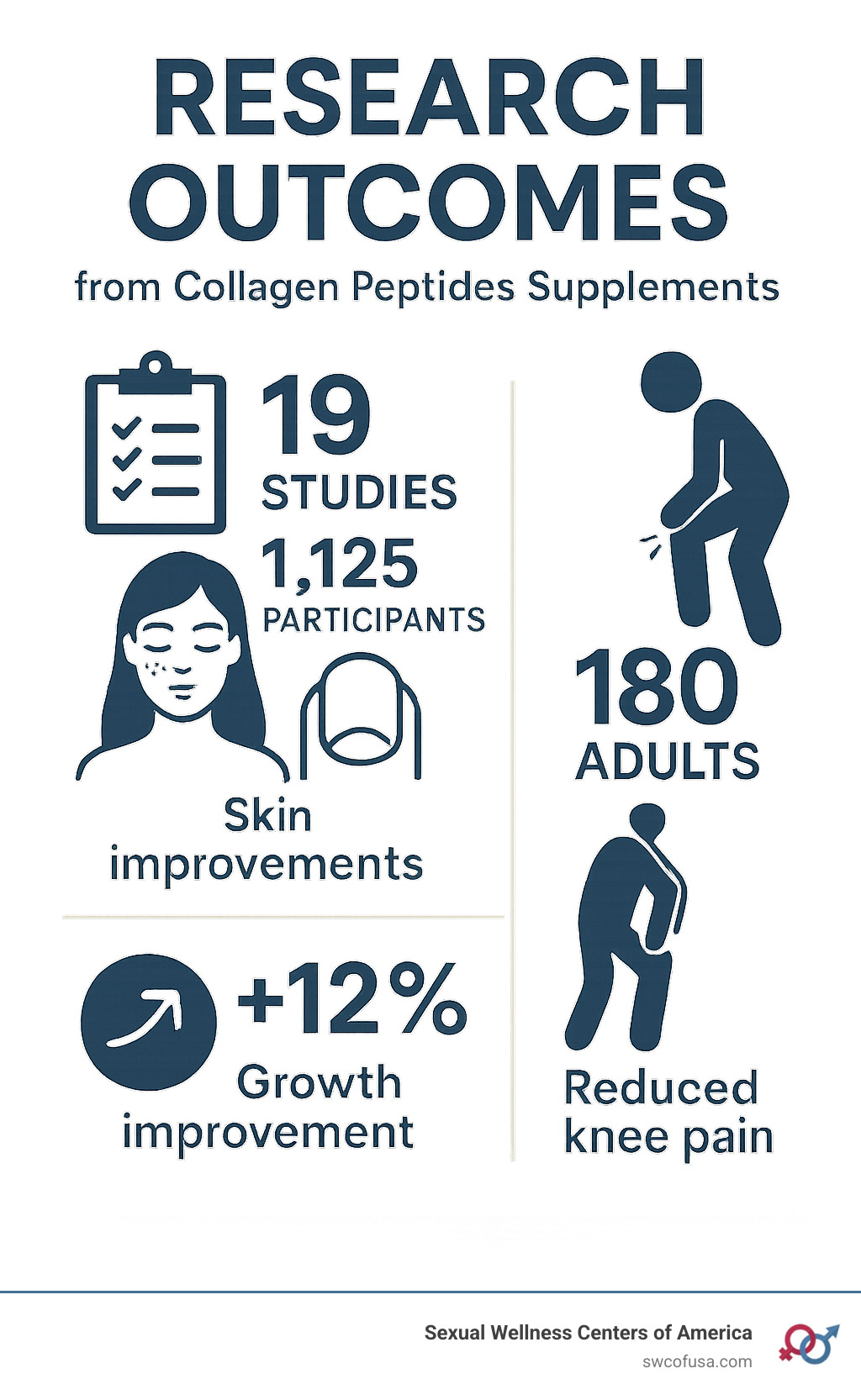
A review of 19 studies with 1,125 participants found that collagen supplements improved skin firmness and moisture content. However, many studies are industry-funded and include additional ingredients like vitamin C and hyaluronic acid, making it unclear which component drives the benefits.
The European Food Safety Authority hasn’t approved any health claims for collagen supplements due to insufficient high-quality human studies. Yet some research suggests hydrolyzed collagen peptides – broken down into smaller, more absorbable fragments – may offer advantages over regular collagen or gelatin.
As Jeff Nuziard, CEO of Sexual Wellness Centers of America, I’ve seen how age-related protein decline affects overall wellness and vitality in our patients. While collagen peptides supplements show promise for supporting healthy aging, understanding the evidence behind the hype is crucial for making informed decisions about your health investment.
Collagen Peptides 101: Types, Sources & Forms
When shopping for collagen peptides supplements, you’ll find more variety than flavors at an ice cream shop. Let’s break down what actually matters for your health and wallet.
Your body contains several types of collagen, but Type I collagen makes up 90% of your body’s total collagen and gives structure to your skin, bones, and tendons. Type II collagen supports your cartilage and joints, while Type III collagen helps maintain your organs and blood vessels.
The real game-changer is processing. Hydrolyzed collagen peptides are broken down into tiny fragments with a molecular weight under 5 kDa, making them much easier for your digestive system to absorb. Undenatured collagen keeps its original triple helix structure intact, which may be harder for your body to use effectively.
Gelatin sits somewhere in between – it’s partially hydrolyzed collagen that turns into a gel when mixed with liquid.
The source matters too. Bovine collagen from grass-fed cattle provides mainly Types I and III collagen. Marine collagen from fish skin and scales offers primarily Type I with smaller peptide sizes that may absorb better. Porcine collagen from pig skin delivers Types I and III, while chicken collagen from sternum cartilage focuses on Type II for joint support.
You’ll find these supplements in several forms. Powder remains most popular because it’s versatile – just mix it into your morning coffee or smoothie. Most powders provide 10-20 grams per serving. Capsules offer convenience for busy lifestyles, though they typically contain lower doses of 3-6 grams per serving. Gummies taste great but often come loaded with added sugars and less actual collagen. Ready-to-drink options are convenient but cost significantly more per gram of collagen.
The amino acid profile tells the real story. Collagen is packed with glycine, proline, and hydroxyproline – the building blocks your body uses to make new collagen. Adding vitamin C and zinc as bioavailability boosters helps your body actually use these amino acids effectively.
At Sexual Wellness Centers of America, we understand that peptide size and quality directly impact absorption. Our Peptide Supplements program considers these crucial factors when developing personalized wellness protocols that actually work for your body.
Collagen Peptides Supplements: What Sets Them Apart
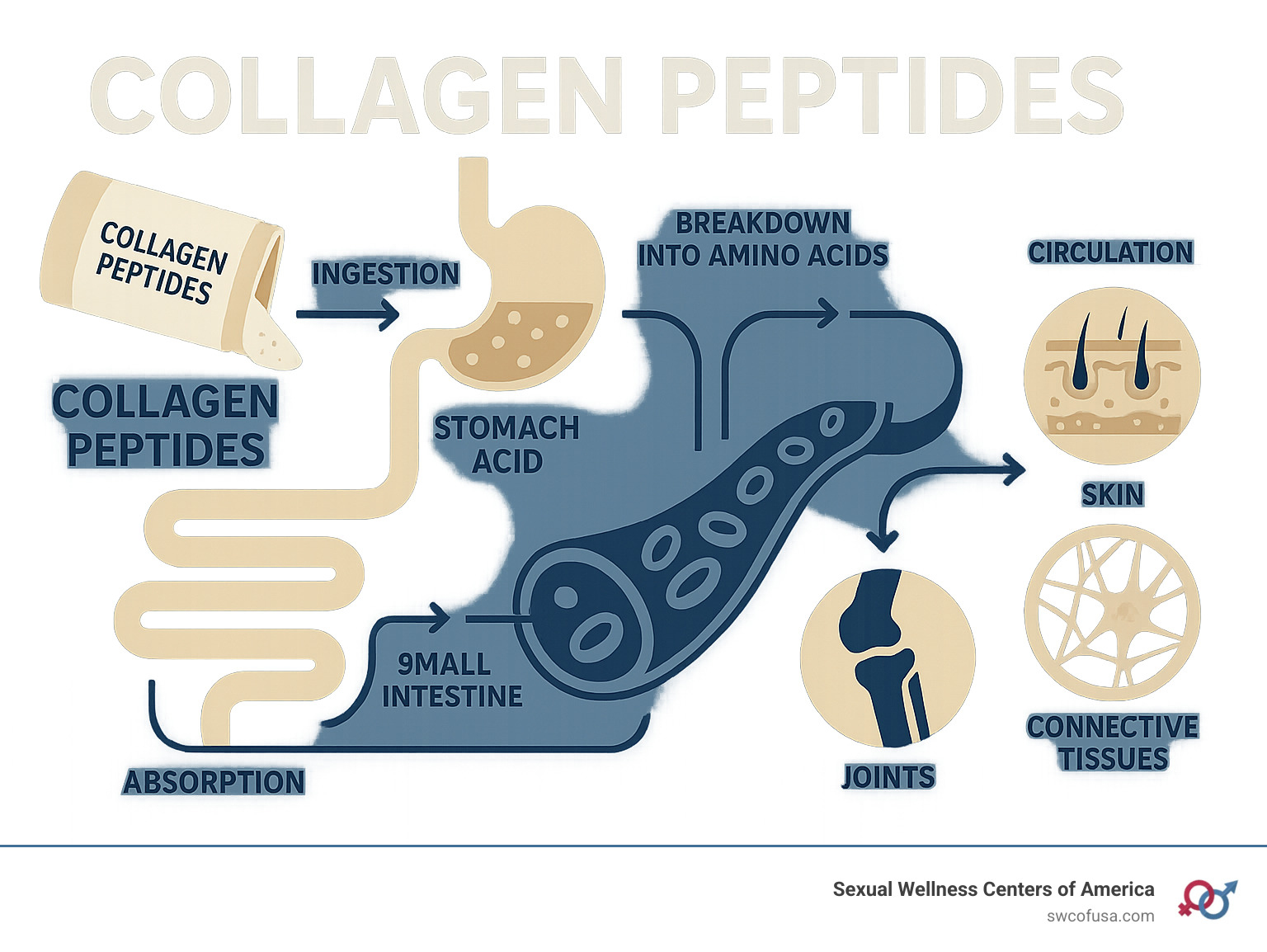
What makes collagen peptides supplements different from regular collagen? It all comes down to hydrolysis that transforms tough collagen molecules into tiny, digestible fragments.
Think of it like this: regular collagen is like trying to eat a whole steak, while collagen peptides are like having that same steak pre-cut into bite-sized pieces. The hydrolysis process uses controlled enzymes to break down native collagen into peptides under 5 kDa in molecular weight – small enough to slip through your intestinal barrier without your digestive system having to work overtime.
The Hydrolysis Advantage:
When you sip bone broth or eat gelatin, your body has to completely break down that collagen into individual amino acids. But collagen peptides arrive pre-digested as small chains that can be absorbed intact. Some research suggests these peptide fragments might even send signals to your body saying “Hey, we need more collagen over here!”
A Reality Check on the Research:
Many collagen studies are funded by the companies selling the supplements, which naturally raises some eyebrows. The European Food Safety Authority has been pretty skeptical too. They’ve looked at health claim submissions for collagen supplements and found them either poorly defined or lacking solid human studies. No claims for collagen supplements have been approved in the EU because the evidence just isn’t strong enough yet.
Quality Markers Worth Your Attention:
Not all collagen supplements are created equal. Look for third-party testing with certifications like NSF or IGEN, grass-fed, pasture-raised sources for bovine collagen, and heavy metal testing (especially crucial for marine sources). Manufacturing in cGMP facilities also shows a company takes quality seriously.
| Form | Pros | Cons | Best For |
|---|---|---|---|
| Powder | High dose, versatile mixing, unflavored options | Measuring required, texture in drinks | Daily routine, smoothies, coffee |
| Capsules | Convenient, precise dosing, no taste | Lower doses, more pills needed | Travel, taste-sensitive users |
| Gummies | Tasty, easy to take | Added sugars, lower collagen content | Occasional use, kids |

Do Collagen Peptides Supplements Improve Skin & Hair?
When it comes to skin benefits, collagen peptides supplements actually show some promising results – though we need to keep our expectations realistic.
What the Skin Research Shows:
A systematic review found that hydrolyzed collagen can improve skin hydration and elasticity, though researchers emphasize we need more studies to nail down these effects. One well-designed study followed 72 healthy women aged 35 and older for 12 weeks and found genuine improvements in skin hydration, elasticity, and density.
The magic seems to happen with supplements containing high amounts of prolylhydroxyproline and hydroxyprolylglycine – these specific peptide combinations show more pronounced skin improvements. Some studies have even documented wrinkle depth reduction, though how noticeable these changes are in real life varies from person to person.
Hair and Nails: The Weaker Evidence:
A small 2017 study of 25 people with brittle nails found that taking 2.5 grams of collagen daily for 24 weeks helped with brittleness and nail growth. That’s encouraging, but 25 people is a pretty small group to draw big conclusions from.
As for hair benefits? The evidence is practically non-existent. What little research exists involves tiny studies that don’t really prove much of anything.
The Honest Truth:
No human studies have actually shown that the collagen you swallow ends up in your skin, hair, or nails – despite what flashy marketing claims might suggest. When you consume collagen, your body breaks it down into amino acids that might contribute to keratin production or get deposited in various tissues throughout your body.
For a deeper dive into what science actually says about skin benefits, check out this Scientific research on skin benefits and consider how peptide therapy might fit into your overall wellness approach.
Are Collagen Peptides Supplements Safe & Who Should Avoid Them?
Good news: collagen peptides supplements have a pretty solid safety record. Studies have used doses up to 10 grams daily for up to 6 months with very few problems reported.
The Safety Sweet Spot:
Most research uses 2.5-10 grams daily as the typical safe dosage, and studies have followed people for up to 6 months of continuous use. When side effects do happen, they’re usually mild – think occasional digestive discomfort like bloating or nausea.
Who Should Think Twice:
Pregnant and breastfeeding women should skip collagen supplements since we don’t have enough safety data for these important life stages. If you have kidney or liver conditions, definitely chat with your healthcare provider first – your body processes protein differently, and you’ll want professional guidance.
People dealing with gout or protein-restricted diets need medical supervision too, since collagen adds to your daily protein intake. And if you’re taking certain medications, there might be interactions to consider.
Potential Drug Interactions:
While rare, collagen supplements might interact with antibiotics (due to theoretical protein binding), diuretics (because of the amino acid content), or interfere with protein-restricted regimens by adding extra protein to your daily intake.
Red Flags to Watch For:
Keep an eye out for digestive upset like nausea, bloating, or diarrhea. If you have fish allergies, marine collagen sources could trigger allergic reactions. Unusual fatigue or changes in how you feel overall are also worth mentioning to your doctor.
At Sexual Wellness Centers of America, we always emphasize the importance of consulting with healthcare professionals before starting any supplement routine. Our personalized approach to wellness considers your unique health profile. For more detailed safety information, explore our Scientific research on safety resources.
Evidence-Based Benefits: Skin, Joints, Bones, Nails
When you cut through the marketing hype, the scientific evidence for collagen peptides supplements tells a nuanced story. Some benefits have solid research backing, while others remain more hopeful than proven.
The Joint Pain Relief Story
The most convincing evidence comes from joint health research. When 180 active adults aged 18-30 took collagen supplements for 12 weeks, they experienced genuine reductions in exercise-induced knee pain. This wasn’t just wishful thinking – systematic reviews consistently show short-term pain relief in people with osteoarthritis.
The mechanism makes biological sense too. Your cartilage is mostly collagen, and the peptides may either support cartilage regeneration or reduce inflammation. While the evidence quality remains moderate, it’s encouraging enough that many orthopedic specialists now discuss collagen supplements with their patients.
Bone Health: The Mixed Results
Bone health research shows promise but needs more work. Some studies suggest collagen peptides may support bone formation when combined with calcium and vitamin D, which makes sense since Type I collagen forms the organic scaffolding of your bones. However, robust trials measuring actual bone mineral density changes are still lacking.
Athletic Recovery Gets Interesting
Here’s where the research gets exciting for active people. UK researchers found that taking 30 grams of hydrolyzed collagen with vitamin C before high-intensity resistance exercise improved new collagen synthesis in tendons. This suggests real potential for athletic recovery and injury prevention, though more studies are needed to confirm optimal dosing and timing.
The Nail Study Everyone Quotes
The nail brittleness research is compelling but limited. 25 participants taking 2.5 grams daily for 24 weeks showed improved nail growth and reduced brittleness. The results were significant, but the tiny sample size means we can’t be certain these benefits apply to everyone.
Hair Claims Fall Short
Despite countless marketing claims, hair benefits remain largely unproven. A small study suggested 12 weeks of supplementation might reduce hair breakage, but calling this “evidence” is generous. The research simply isn’t there yet to support broad hair health claims.
The Research Reality Check
The biggest challenge with collagen research is study quality. Many trials involve small sample sizes, industry funding may introduce bias, and placebo effects are hard to control when people are judging subjective outcomes like “skin feel.” Few large-scale, independent studies exist.
At Sexual Wellness Centers of America, we’ve learned that collagen peptides supplements work best as part of a comprehensive wellness approach rather than miracle solutions. Our Peptide Therapy for Inflammation protocols combine evidence-based supplementation with lifestyle modifications for optimal results.
Dosage, Quality & How to Choose a Supplement
Finding the right collagen peptides supplement doesn’t have to be overwhelming once you understand the key factors. Think of it like choosing a good protein powder – quality matters more than fancy marketing claims.
Most research shows benefits with 5-15 grams daily for 8-12 weeks, though some specialized formulations work with smaller amounts. The famous Verisol studies that showed skin improvements used just 2.5 grams daily, proving that quality can matter more than quantity.
Here’s what works for different goals: general supplementation typically needs 5-10 grams daily, while joint support often requires 8-12 grams. If you’re an athlete looking for recovery benefits, you might go up to 15 grams, especially before workouts when combined with vitamin C.
Timing isn’t as critical as consistency. Taking your supplement with meals can reduce any potential stomach upset, and pre-workout timing may boost collagen synthesis when paired with vitamin C. But honestly, the most important thing is taking it every day for at least 8-12 weeks.

Quality markers separate the good from the mediocre. Look for third-party testing that verifies purity and potency – certifications like NSF or IGEN are gold standards. Grass-fed, pasture-raised sources matter for bovine collagen, while heavy metal testing is crucial for marine sources since fish can accumulate toxins.
Manufacturing in cGMP facilities ensures consistent quality, and minimal additives keep things clean. You want collagen, not a chemistry experiment with artificial flavors and fillers.
The single versus multi-collagen debate is simpler than it seems. Single-source options like marine-only collagen work well for specific goals, while multi-collagen blends provide broader amino acid profiles. Type-specific formulations can target particular tissues if you have focused concerns.
Unflavored powder offers the most versatility and highest doses per serving. You can mix it into coffee, smoothies, or even soup without changing the taste. Flavored options taste better but may contain artificial sweeteners that some people prefer to avoid. Capsules provide convenience but typically deliver lower doses, meaning you’ll need more pills to match powder servings.
Watch out for red flags that signal poor quality or overhyped products. Claims of “instant results” or “miracle cures” should make you run the other way. Proprietary blends without clear ingredient amounts hide what you’re actually getting. Lack of third-party testing means you’re trusting the manufacturer’s word alone.
Extremely low prices often indicate corners cut in sourcing or manufacturing. Quality collagen from grass-fed cattle or wild-caught fish costs more to produce than factory-farmed alternatives.
At Sexual Wellness Centers of America, we see how proper supplementation fits into comprehensive wellness plans. Our Peptide Injection Therapy programs often work alongside oral supplementation to maximize results, giving you multiple pathways to support your health goals.
Boosting Natural Collagen: Lifestyle & Nutrition
While collagen peptides supplements can be helpful, the most powerful approach to healthy aging starts with supporting your body’s natural collagen factory. Your body has been making collagen for decades – it just needs the right building blocks and environment to keep doing its job well.
Your Diet Is Your Foundation
The protein on your plate matters more than you might think. Complete proteins from lean meats, fish, eggs, and dairy provide all the essential amino acids your body needs to build collagen from scratch. It’s like giving your internal construction crew the best materials to work with.
But protein alone isn’t enough. Your body also craves vitamin C from citrus fruits, berries, and bell peppers – this nutrient acts like a foreman, directing the collagen-building process. Without enough vitamin C, collagen production literally stops.
The Mediterranean approach to eating naturally supports collagen synthesis. This eating pattern emphasizes colorful vegetables, healthy fats, and diverse proteins while fighting the inflammation that breaks down existing collagen. Proline from egg whites and dairy, glycine from bone broth and skin-on poultry, and zinc from oysters and pumpkin seeds all play starring roles in this collagen-supporting cast.
Daily Habits That Make or Break Collagen
Your lifestyle choices either support or sabotage your collagen every single day. UV protection with broad-spectrum SPF 30+ sunscreen isn’t just about preventing sunburn – it’s about protecting the collagen you’ve already built. Think of sunscreen as insurance for your skin’s structural foundation.
Smoking dramatically accelerates collagen breakdown, making it one of the worst things you can do for your skin and joints. The good news? Your body starts repairing collagen damage within weeks of quitting.
Quality sleep for 7-9 hours gives your body time to repair and rebuild collagen. During deep sleep, growth hormone levels peak, signaling your body to get busy with tissue repair. Poor sleep essentially puts your collagen production on pause.
Movement Matters More Than You Think
Resistance training does something remarkable – it tells your tendons and ligaments to strengthen themselves by producing more collagen. The mechanical stress from lifting weights or doing bodyweight exercises triggers your body to reinforce its connective tissues.
Combining exercise with collagen peptides and vitamin C may amplify this effect, giving your body extra building blocks right when it needs them most.
The Hormone Connection
Estrogen levels significantly affect collagen production, which explains why many women notice skin changes during menopause. As estrogen declines, so does collagen synthesis. This doesn’t mean you’re powerless – it just means you might need to work a little harder to support your body’s natural processes.
What’s Working Against You
Excessive sugar creates a process called glycation, where sugar molecules attach to collagen fibers and make them stiff and brittle. Processed foods high in advanced glycation end products and trans fats increase inflammation that breaks down healthy collagen.
Excessive alcohol depletes the nutrients your body needs for collagen synthesis, while chronic stress raises cortisol levels that actively degrade existing collagen.
At Sexual Wellness Centers of America, we understand that optimal wellness comes from addressing the whole picture – not just taking supplements. Our comprehensive Peptide Therapy Benefits approach recognizes that supporting your body’s natural processes often delivers the most lasting results.

Frequently Asked Questions about Collagen Peptides
Can food alone cover my collagen needs?
Whole-food proteins do give your body the amino acids required for collagen production, yet they rarely deliver the concentrated, ready-to-use peptides found in supplements. A mug of bone broth provides roughly 2–3 g of intact collagen, while a typical powder offers 5–15 g of hydrolyzed peptides that absorb more efficiently. Think of food as the foundation and a supplement as an optional booster.
How long until I see results?
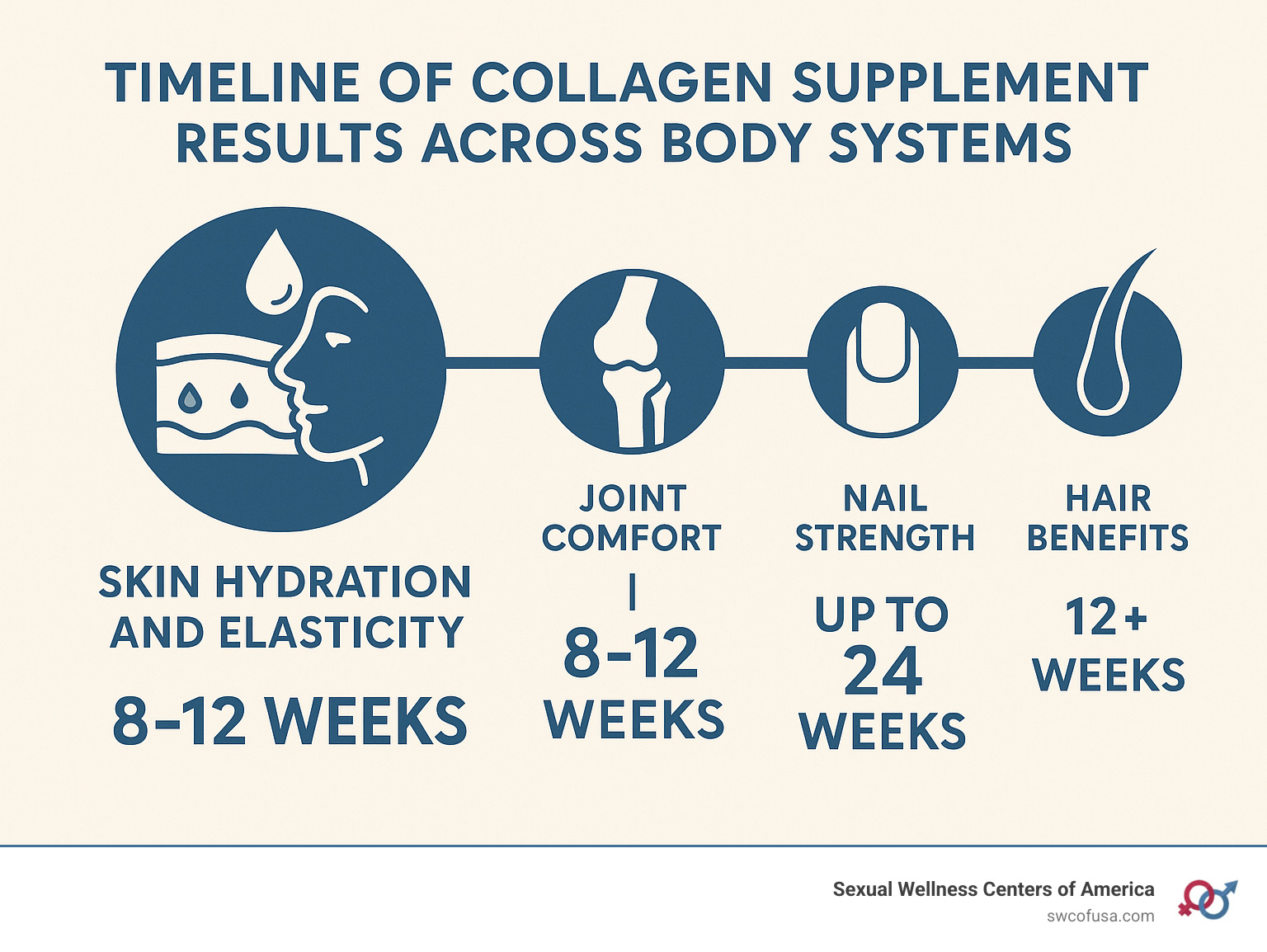
Clinical studies and real-world feedback put the sweet spot at 8–12 weeks of daily use for skin hydration and joint comfort, and up to 24 weeks for noticeable nail strength. Consistency—not timing—drives results.
Can collagen interact with my medications?
Collagen peptides have very few known interactions, but caution is wise if you:
- Follow a protein-restricted plan for kidney or liver disease.
- Have gout that flares with high protein intake.
- Use potent diuretics or certain antibiotics (theoretical binding issues).
When in doubt, review any new supplement with your healthcare provider.
Conclusion
Collagen peptides supplements represent a promising but not miraculous approach to supporting skin, joint, and overall wellness. The evidence shows modest benefits for skin hydration and elasticity, potential joint pain relief, and limited nail improvements, but the research quality varies and many studies are industry-funded.
Here’s what we know for certain: hydrolyzed collagen peptides are better absorbed than whole collagen, 2.5-10 grams daily appears safe for up to 6 months, and results take 8-12 weeks of consistent use. Quality matters tremendously – choose third-party tested, grass-fed sources over cheap alternatives.
But here’s the reality check: there’s no magic bullet for aging. The most effective approach combines thoughtful supplementation with lifestyle factors like UV protection, proper nutrition, adequate sleep, and stress management. These foundational elements often matter more than any supplement.
At Sexual Wellness Centers of America, our evidence-driven approach recognizes that optimal wellness comes from addressing the whole person, not just isolated symptoms. Collagen peptides supplements work best as part of a comprehensive strategy that includes proper nutrition, exercise, and when appropriate, advanced peptide therapies.
While the supplement industry’s marketing often overstates benefits, the scientific evidence does support modest improvements in skin health and joint comfort for some individuals. The key is having realistic expectations and choosing high-quality products from reputable sources.
Our recommendation: If you’re interested in trying collagen peptides, start with a 12-week trial of a high-quality, third-party tested product at 5-10 grams daily. Monitor your response and discontinue if you experience any adverse effects. Consistency matters more than perfection.
For those seeking more comprehensive anti-aging and wellness support, our personalized peptide therapy programs offer targeted approaches based on individual health assessments and goals. We’ve seen how addressing hormonal balance, nutritional deficiencies, and cellular health can create dramatic improvements in how our patients look and feel.
Explore our Peptide Supplements options to find how we can help optimize your wellness journey with evidence-based treatments custom to your unique needs. Our approach goes beyond simple supplementation to address the root causes of aging and wellness concerns.
There’s no magic bullet for aging, but thoughtful supplementation combined with healthy lifestyle choices can support your body’s natural processes and help you feel your best at any age. The journey to optimal wellness is personal, and we’re here to guide you every step of the way.