
What are Sermorelin Peptide Injections?
Sermorelin peptide injections are a prescription therapy that stimulates your pituitary gland to produce more of your own natural growth hormone — without injecting synthetic HGH directly into your body.
Here’s what you need to know at a glance:
| Topic | Quick Answer |
|---|---|
| What it is | A synthetic analog of GHRH (growth hormone-releasing hormone) |
| How it works | Signals your pituitary gland to release growth hormone naturally |
| Who it’s for | Adults experiencing age-related decline in growth hormone (somatopause) |
| How it’s given | Subcutaneous injection, typically 200–500 mcg nightly |
| When you’ll notice results | Sleep improves in weeks 1–2; full optimization by months 4–6 |
| Is it FDA-approved? | Not currently for anti-aging; available via compounding pharmacies with a prescription |
As we age, growth hormone levels decline steadily — a process known as somatopause. For many people in their 40s and 50s, this shows up as fatigue, slower recovery, increased body fat, poor sleep, and reduced vitality. It can also quietly affect sexual health and intimacy.
Sermorelin therapy works with your body, not against it. Rather than flooding your system with synthetic hormones, it gently nudges your pituitary gland to do what it was designed to do — produce growth hormone on its own, in natural pulses, regulated by your own feedback systems.
That distinction matters more than most people realize.
I’m Jeff Nuziard, CEO of Sexual Wellness Centers of America, and I’ve spent my career helping men and women in Colleyville, Texas navigate hormone-related health challenges — including the role sermorelin peptide injections play in restoring energy, physical performance, and sexual wellness. In this guide, I’ll walk you through everything you need to make an informed decision.
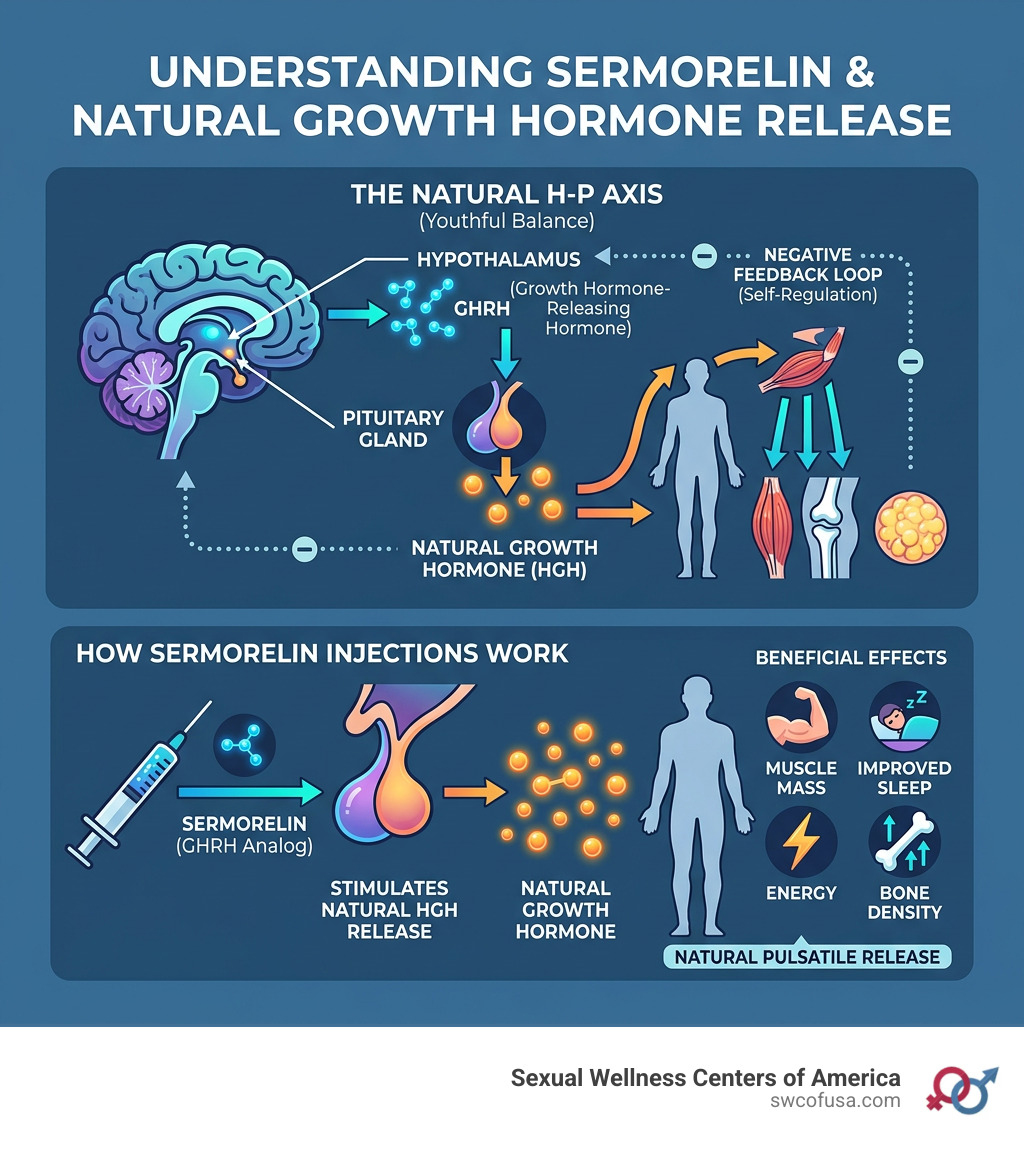
To understand sermorelin peptide injections, we first have to look at how our bodies handle growth. Sermorelin is a synthetic analog of Growth Hormone-Releasing Hormone (GHRH). In simpler terms, it is a “secretagogue”—a substance that causes another substance to be secreted.
When we are young, our hypothalamus naturally produces GHRH, which travels to the pituitary gland and says, “Hey, it’s time to release some growth hormone!” As we get older, that signal starts to fade. Sermorelin steps in to mimic that natural signal, providing the pituitary stimulation needed to kickstart endogenous (internal) production of Human Growth Hormone (HGH).
This is a vital part of maintaining healthy tissues and organs throughout your life. According to the Endocrine Society, HGH levels that are lower than typical can lead to significant health problems in both children and adults. By using sermorelin, we aren’t just replacing a hormone; we are restoring a biological conversation that has grown quiet over the years. You can learn more info about peptide supplements and how they function as cellular messengers to optimize various bodily functions.
How Sermorelin Differs from Synthetic HGH
Many people confuse sermorelin with synthetic HGH (somatropin), but the two are very different in how they interact with your biology. Synthetic HGH is “exogenous,” meaning you are putting the final hormone directly into your bloodstream. While effective for certain medical conditions, it bypasses your body’s natural regulatory systems.
Sermorelin, on the other hand, preserves the natural feedback loops of the neuroendocrine axis. Because it stimulates the pituitary to release HGH in “pulses” (the way the body naturally does at night), it is much harder to “overdose” or create an imbalance.
| Feature | Sermorelin Injections | Synthetic HGH (Somatropin) |
|---|---|---|
| Source | Stimulates your own pituitary gland | Man-made hormone injected directly |
| Regulation | Subject to natural feedback loops | Bypasses natural regulation |
| Release Pattern | Natural episodic pulses | Constant “square wave” levels |
| Safety Profile | Lower risk of side effects | Higher risk of joint pain and insulin issues |
| Tachyphylaxis | Low risk (body doesn’t stop responding) | Higher risk (pituitary may shut down) |
By choosing sermorelin, you avoid the risk of “tachyphylaxis”—a fancy medical term for when your body becomes desensitized to a drug. Because sermorelin encourages your body to do the work, it keeps your endocrine system active rather than making it lazy.
Clinical Mechanism of Action
The science behind sermorelin peptide injections is fascinating. Once injected, the peptide travels to the pituitary gland, specifically targeting cells called somatotrophs. These cells are responsible for the production and release of growth hormone.
As the pituitary releases growth hormone, it travels to the liver, where it stimulates the production of Insulin-like Growth Factor 1 (IGF-1). This is the “workhorse” molecule that actually carries out most of the growth and repair functions in your body. According to Mayo Clinic research, this natural regulation is key because the body can still shut down HGH production if levels get too high, providing a built-in safety mechanism that synthetic HGH lacks.
Primary Benefits of Sermorelin Therapy
The goal of peptide therapy isn’t just to “feel younger”—it’s to achieve cellular renewal. When your growth hormone levels are optimized, every system in your body gets a boost. We often see clients report a significant reduction in adipose (fat) tissue, particularly around the midsection, along with an increase in lean muscle mass.
Beyond the mirror, the benefits of peptide therapy extend to bone density and cardiovascular health. Many adults in their 40s and 50s find that their “get up and go” has finally returned.

Enhancing Recovery with Sermorelin Peptide Injections
If you’ve ever felt like a weekend workout leaves you sore for the entire week, you’re experiencing the effects of declining HGH. Growth hormone is essential for protein synthesis and injury repair. It signals the body to shuttle amino acids into muscle cells to repair the micro-tears caused by exercise.
Furthermore, sermorelin supports collagen production. Collagen isn’t just for skin; it’s the “glue” that holds your tendons and ligaments together. By boosting HGH, you are effectively providing your body with the raw materials needed for faster healing. We often utilize peptides for healing to help athletes and active adults in Colleyville get back to their routines faster.
Anti-Aging and Skin Health
One of the most visible benefits of sermorelin peptide injections is the improvement in skin elasticity. As HGH levels rise, skin becomes thicker and more hydrated, which can lead to a noticeable wrinkle reduction.
But anti-aging isn’t just skin deep. We also see improvements in:
- Deep Sleep: Sermorelin promotes “slow-wave” sleep, which is the stage where the most physical repair happens.
- Cognitive Function: Many users report improved mental clarity and “brain fog” lifting.
- Immune Support: HGH plays a role in the production of T-cells and other immune markers.
For those looking to turn back the clock, anti-aging peptide therapy offers a comprehensive way to support both how you look and how you think.
Dosage, Administration, and Results Timeline
Proper administration is key to getting the most out of your therapy. Sermorelin peptide injections are typically administered via a tiny subcutaneous injection (just under the skin) into the fatty tissue of the abdomen or thigh.
The standard dosage range is between 200 mcg and 500 mcg per night. At Sexual Wellness Centers of America, we often find that a starting dose of 300 mcg (which is 33 units on a standard syringe if the concentration is 0.9 mg/mL) is the “sweet spot” for many of our Colleyville clients.
What to Expect from Sermorelin Peptide Injections
It is important to remember that peptides are not a “quick fix” like caffeine. They work by gradually shifting your internal chemistry. Here is a typical timeline based on clinical observations and client feedback:
- Weeks 1–2: Improved sleep quality is usually the first thing people notice. You’ll wake up feeling more rested and experience more vivid dreams.
- Weeks 3–4: You’ll start to feel a boost in energy and mental focus. Your “afternoon slump” might start to disappear.
- Months 2–3: This is where the physical changes begin. You’ll notice better recovery after exercise and potentially some initial weight loss and fat metabolism changes.
- Months 4–6: Full optimization. This is when the “total body” benefits—lean muscle growth, skin tightening, and improved bone density—become fully apparent.
Proper Storage and Handling
Sermorelin is a delicate protein. When you receive your kit, it will likely come as a “lyophilized” (freeze-dried) powder that needs to be reconstituted with bacteriostatic water.
Best practices for handling include:
- Refrigeration: Once mixed, sermorelin must be kept in the refrigerator. Do not freeze it.
- Light Sensitivity: Keep the vial in a dark place (like the box it came in) to prevent light from breaking down the peptide bonds.
- Gentle Mixing: Never shake the vial. Gently swirl it to dissolve the powder.
- Syringe Safety: Always use a fresh, sterile syringe for every dose and dispose of them in a sharps container.
For a deeper dive into the technical side of administration, you can check our guide on peptide injection therapy.
Safety, Side Effects, and Ideal Candidates
Is sermorelin safe? For the vast majority of adults, yes. Because it stimulates natural production, the body has a hard time “overdoing” it. However, like any therapy, there are potential side effects to be aware of.
The most common side effect is a temporary injection site reaction—redness, itching, or slight swelling that usually disappears within an hour. Some people also experience “flushing” (a warm sensation in the face) or a mild headache shortly after the injection.
Who should avoid sermorelin?
- Active Cancer: Since HGH promotes cell growth, it should not be used by anyone with active malignancy.
- Pregnancy/Breastfeeding: There is insufficient data on safety for developing infants.
- Hypothyroidism: An underactive thyroid can interfere with sermorelin’s effectiveness. We always check thyroid levels as part of our initial hormone panel at our Colleyville office.
If you are dealing with chronic inflammation, we often find that peptide therapy for inflammation can be a great adjunct to sermorelin to help soothe joints while the HGH works on repair.
Legal Considerations and FDA Status
It is important to clear up some confusion regarding the legal status of sermorelin. While sermorelin was originally FDA-approved for use in children with growth deficiencies, the brand-name version (Geref) was discontinued by the manufacturer for commercial reasons—not safety concerns.
Today, sermorelin peptide injections are available as compounded medications. This means they are prepared by licensed compounding pharmacies to the specific strength and dose required by a physician’s prescription. While the FDA does not “approve” compounded drugs in the same way it does mass-produced ones, they are a legal and standard part of wellness medicine when prescribed by a licensed provider. You can read more about what peptide supplements are and their regulatory landscape here.
Frequently Asked Questions about Sermorelin
Can Sermorelin be combined with TRT?
Absolutely. In fact, we often recommend it. Testosterone Replacement Therapy (TRT) and sermorelin have a synergistic relationship. While testosterone is excellent for libido and strength, sermorelin addresses the “recovery” and “metabolism” side of the equation.
Using them together can help mitigate some of the side effects sometimes seen with TRT alone, such as skin issues. For those looking to maximize their physical results, combining these therapies is a powerful way to support peptide supplements for muscle growth.
How long do I need to stay on Sermorelin?
Most clinical protocols suggest a “cycle” of 3 to 6 months to see full optimization. After this period, many patients move into a maintenance phase where they might reduce the frequency of injections or take a “holiday” for a month to allow the pituitary gland to maintain its own rhythm. Your provider will monitor your IGF-1 levels to determine the best long-term path for you.
Is it better to take Sermorelin in the morning or at night?
Nighttime is the “gold standard” for sermorelin. Your body naturally releases its largest pulses of growth hormone during the first few hours of deep sleep. By injecting sermorelin about 60–90 minutes after your last meal and right before bed, you are timing the medication to sync with your body’s natural circadian rhythm.
Fasting is also important; if your blood sugar is high (from a late-night snack), your body produces somatostatin, which can “blunt” the effect of the sermorelin.
Conclusion
At Sexual Wellness Centers of America in Colleyville, TX, we believe that aging shouldn’t mean a decline in quality of life. Whether you are looking to reclaim your energy, improve your physique, or enhance your intimacy, sermorelin peptide injections offer a natural, physiologically sound way to boost your vitality.
Our approach is entirely personalized. We don’t just hand out prescriptions; we look at your full hormone and vitamin panel to create a plan that works for you. From our HEshot®™ and SHEshot®™ treatments to our advanced regenMAX® technology, we are dedicated to a 97.2% efficacy in helping our clients feel their best.
If you’re ready to see if sermorelin is the missing piece of your wellness puzzle, we invite you to schedule a consultation for peptide therapy in Colleyville. Let’s get your body talking again.