
How Hormone Panels Work — And Why They Matter for Your Health
Hormone panels are blood tests that measure the levels of key hormones and related markers in your body. They give you and your doctor a clear picture of how your endocrine system is functioning — covering everything from energy and mood to fertility, sexual health, and metabolism.
Here’s a quick summary of what hormone panels are and what they test:
| What | Details |
|---|---|
| What it is | A blood test measuring multiple hormones at once |
| Common hormones tested | Testosterone, estradiol, progesterone, FSH, LH, TSH, cortisol, DHEA-S, prolactin |
| Who it’s for | Men and women experiencing fatigue, low libido, weight changes, mood swings, irregular cycles, or other hormone-related symptoms |
| Where to get tested | Through a healthcare provider, direct-to-consumer lab services, or a sexual wellness clinic |
| Typical cost range | $150–$600+ depending on panel size and provider |
| How long for results | 1–5 business days depending on the lab |
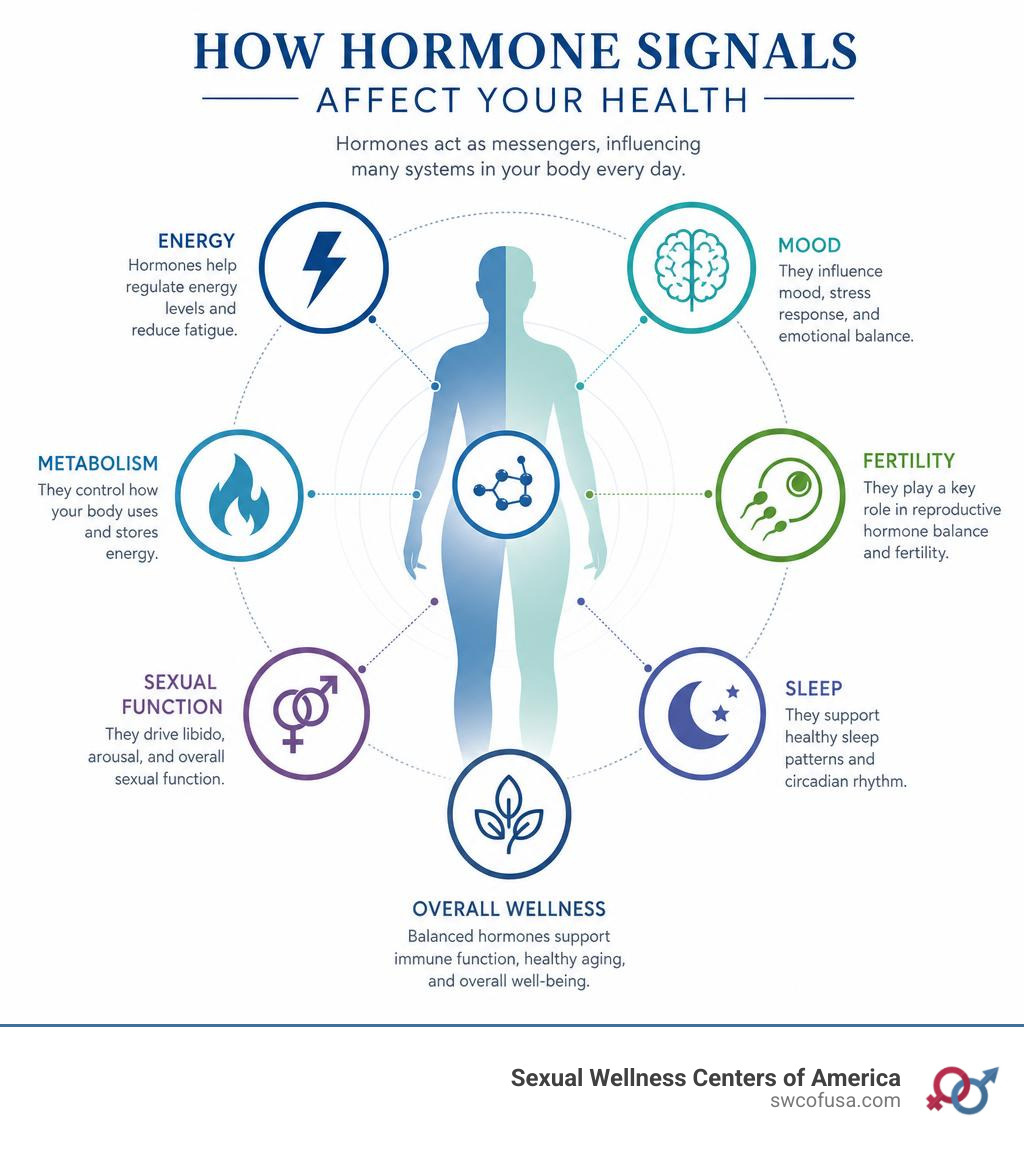
Hormones control nearly every system in your body. When they’re off — even slightly — you can feel it. Low energy. Poor sleep. Reduced sex drive. Unexplained weight gain. These aren’t just “signs of aging.” They’re often signals worth investigating.
That’s especially true for people over 40, where hormonal shifts accelerate and symptoms can quietly compound over time.
I’m Jeff Nuziard, CEO of Sexual Wellness Centers of America, and through years of guiding patients through personalized sexual wellness and hormone optimization programs, I’ve seen how proper hormone panel testing can be the turning point between frustration and real answers. In this guide, we’ll walk you through everything you need to know — from what’s tested to how to act on your results.
What Are Hormone Panels and What Do They Measure?
Hormone panels are lab tests that measure several hormones and related blood markers at the same time. Instead of looking at one number in isolation, a panel helps us see patterns across the endocrine system.
Your endocrine system includes glands such as the thyroid, ovaries, testes, adrenal glands, pituitary gland, and pancreas. These glands release chemical messengers that affect:
- Energy
- Mood
- Metabolism
- Sleep
- Fertility
- Sexual function
- Muscle and bone health
- Stress response
- Body temperature
- Blood sugar regulation
A basic panel may only include a handful of reproductive or thyroid markers. A more comprehensive panel may include reproductive hormones, thyroid hormones, adrenal hormones, pituitary signals, vitamin levels, and metabolic markers such as insulin or HbA1c.

Core Hormones Commonly Included in Hormone Panels
Common markers may include:
| Marker | What it helps evaluate |
|---|---|
| FSH | Ovarian function, menopause transition, sperm production signaling |
| LH | Ovulation, testosterone signaling, pituitary function |
| Estradiol | Main estrogen marker, menopause status, cycle health |
| Progesterone | Ovulation and luteal phase function |
| Total testosterone | Overall testosterone production |
| Free testosterone | Testosterone available for use by tissues |
| SHBG | Protein that binds sex hormones and affects free hormone levels |
| DHEA-S | Adrenal androgen output |
| Cortisol | Stress response and adrenal function |
| Prolactin | Pituitary signaling, menstrual and libido concerns |
| TSH | Thyroid signaling from the pituitary |
| Free T4 | Available thyroid hormone storage form |
| Free T3 | Active thyroid hormone |
| TPO antibodies | Autoimmune thyroid risk, including Hashimoto’s patterns |
| Insulin | Insulin resistance risk |
| HbA1c | Average blood sugar over roughly 2 to 3 months |
| Vitamin D | Bone, immune, mood, and hormone-related health support |
Not every person needs every marker. The right panel depends on symptoms, age, sex, medications, health history, and goals.
What Each Major Hormone Result Can Suggest
Hormone results are clues, not final answers. A few examples:
- FSH: Higher levels in women may suggest declining ovarian reserve or menopause transition. In men, abnormal FSH may point to sperm production signaling issues.
- LH: Helps assess ovulation patterns in women and testosterone production signaling in men. Higher LH relative to FSH can sometimes appear in PCOS patterns.
- Estradiol: Low estradiol may contribute to hot flashes, vaginal dryness, sleep changes, and bone concerns. High estrogen patterns may contribute to breast tenderness, heavy cycles, or mood changes.
- Progesterone: Often checked in the luteal phase to confirm whether ovulation likely occurred.
- Testosterone: Low levels can affect libido, energy, mood, erection quality, muscle mass, and motivation. High levels in women may be associated with acne, hair growth, or PCOS-type patterns.
- DHEA-S: Reflects adrenal androgen production. High levels may occur with androgen excess patterns; low levels may occur with aging or adrenal output changes.
- Cortisol: A morning cortisol snapshot can help evaluate stress-response patterns, though it must be interpreted carefully.
- TSH, free T4, free T3: Help evaluate thyroid function. Thyroid hormones affect weight, temperature regulation, mood, heart rate, bowel habits, and fertility.
- Prolactin: High prolactin can interfere with menstrual cycles, fertility, libido, and testosterone signaling.
For a deeper explanation of pituitary-related markers, see our guide: More info about pituitary panel labs.
Why People Get Hormone Panel Testing
People usually ask about hormone testing when they feel “off” but cannot explain why. That is exactly where hormone panels can be useful.
Symptoms That May Point to Hormone Imbalance
Hormone imbalance can look different from person to person. It is not always dramatic; sometimes it is the slow fade of energy, motivation, or sexual confidence.
Symptoms that may justify testing include:
- Fatigue that does not improve with rest
- Low libido or decreased sexual desire
- Erectile dysfunction or changes in performance
- Irregular, missed, or heavy periods
- Hot flashes, night sweats, or sleep problems
- Infertility concerns
- Mood swings, anxiety, or low motivation
- Brain fog and difficulty concentrating
- Acne, unwanted hair growth, or hair thinning
- Unexplained weight gain or difficulty losing weight
- Reduced exercise recovery and muscle loss
Of course, not every symptom is hormonal. Low energy can come from stress, anemia, sleep apnea, depression, medication effects, or lifestyle factors. Testing helps narrow the possibilities.
Conditions Hormone Testing May Help Evaluate
Hormone testing may support evaluation of:
- PCOS
- Perimenopause and Menopause
- Thyroid disorders (Hypothyroidism, Hyperthyroidism, Hashimoto’s thyroiditis)
- Insulin resistance and Diabetes risk
- Adrenal dysfunction patterns
- Pituitary disorders
- Infertility concerns
- Erectile dysfunction and Low testosterone
- Estrogen imbalance and Osteoporosis risk
PCOS affects about 8-13% of women of reproductive age, and approximately 50-70% of women with PCOS have some degree of insulin resistance. Thyroid issues are also common: about 1 in 8 women will develop thyroid problems during her lifetime.
For more on women’s hormone support, visit More info about hormone balancing for women.
Comparing Hormone Panels for Women, Men, Fertility, Menopause, and Thyroid Health
Different panels answer different questions. A fertility panel is not the same as a thyroid panel. A men’s sexual wellness panel is not the same as a menopause panel.
| Panel type | Common markers | Best for |
|---|---|---|
| Basic women’s panel | FSH, LH, estradiol, testosterone, DHEA-S, TSH, prolactin | Irregular cycles, PCOS patterns, baseline review |
| Expanded women’s panel | Basic markers plus progesterone, free T3, free T4, TPO antibodies, sometimes SHBG | Fertility, thyroid symptoms, perimenopause, broader symptoms |
| Fertility-focused panel | FSH, LH, estradiol, AMH, progesterone, prolactin, TSH | Ovarian reserve, ovulation, fertility planning |
| Menopause panel | FSH, estradiol, LH, progesterone, thyroid markers | Hot flashes, night sweats, cycle changes |
| Thyroid panel | TSH, free T4, free T3, TPO antibodies | Fatigue, weight changes, temperature sensitivity, thyroid monitoring |
| Adrenal panel | Morning cortisol, DHEA-S | Stress-response patterns, fatigue context |
| Men’s hormone panel | Total testosterone, free testosterone, SHBG, estradiol, LH, FSH, DHEA-S, prolactin, PSA, thyroid markers | Low libido, ED, fatigue, muscle loss, performance concerns |
| Metabolic panel add-ons | Insulin, HbA1c, glucose, lipids, CMP, vitamin D | Weight changes, insulin resistance, cardiometabolic risk |
Women’s Hormone Panels: Cycle, Fertility, PCOS, and Menopause Markers
Women’s hormone testing depends heavily on timing because estradiol, FSH, LH, and progesterone change throughout the menstrual cycle.
For baseline reproductive hormones, cycle days 2-4 are often used if a woman is still menstruating. For progesterone, testing is commonly done about 7 days after ovulation (often called “day 21” in a typical 28-day cycle). These panels help identify patterns related to PCOS, perimenopause, menopause, thyroid dysfunction, or ovulation concerns. They do not diagnose these conditions alone; symptoms, exam findings, and medical history are equally important.
Learn more here: More info about HRT for women.
Men’s Hormone Panels: Testosterone, Prostate, Thyroid, and Sexual Function
Men’s hormone panels often focus on testosterone, but testosterone is only one piece of the puzzle. A strong men’s panel evaluates total and free testosterone, SHBG, estradiol, LH, FSH, DHEA-S, prolactin, and PSA when appropriate.
For sexual wellness, we look at testosterone, thyroid function, prolactin, blood sugar regulation, and cardiovascular risk together. Erectile dysfunction can be hormonal, vascular, neurologic, medication-related, stress-related, or a combination of these factors.
For more, see More info about hormone therapy for ED.
Specialized Panels for Thyroid, Adrenal, Fertility, and Metabolic Health
Specialized panels are useful when symptoms point to a specific system:
- Thyroid panels: TSH, free T4, free T3, and TPO antibodies.
- Adrenal panels: Morning cortisol and DHEA-S.
- Fertility panels: FSH, LH, estradiol, AMH, progesterone, prolactin, and TSH.
- Metabolic panels: Insulin, HbA1c, fasting glucose, lipid panel, CMP, CBC, vitamin D, B12, magnesium, and inflammatory markers.
These add context. For example, low libido with low testosterone is one conversation. Low libido with abnormal thyroid markers, high prolactin, poor sleep, and insulin resistance is a very different conversation.
Blood Hormone Panels: Basic vs Comprehensive Testing
Most clinically useful hormone panels are blood tests. Blood testing provides standardized reference ranges and can be repeated over time to track trends.

Provider-Ordered Blood Hormone Panels
Provider-ordered testing has a major advantage: clinical context.
A healthcare provider can help determine:
- Which markers are worth checking
- Whether timing matters
- Which medications or supplements may interfere
- Whether results fit symptoms
- Whether repeat testing is needed
- Whether treatment is safe
- How to monitor progress over time
Provider-ordered labs are especially important for people considering hormone replacement therapy, thyroid treatment, fertility care, or sexual wellness treatment planning.
Learn more about our approach to More info about hormone replacement therapy.
Why Professional Interpretation Matters
A lab number is not a personality test. It should not define you, panic you, or send you down a 2 AM internet rabbit hole.
Professional interpretation matters because hormone results are affected by:
- Age
- Sex
- Cycle phase
- Time of day
- Stress
- Sleep
- Exercise
- Recent illness
- Medications
- Supplements
- Pregnancy
- Hormonal contraception
- Hormone therapy
- Lab reference ranges
- Health conditions such as PCOS, thyroid disease, or insulin resistance
A “normal” result may still be suboptimal for a symptomatic patient. An “abnormal” result may need confirmation before treatment. Patterns matter more than one isolated value.
Basic vs Comprehensive Hormone Panels: Price and Scope
As of May 2026, general cash-pay pricing often falls into these ranges:
| Test type | Typical scope | Common price range |
|---|---|---|
| Single hormone test | One marker, such as testosterone or TSH | $40-$150 |
| Basic hormone panel | 5-8 markers | $150-$250 |
| Expanded panel | 9-15+ markers | $250-$400 |
| Comprehensive panel | Hormones plus metabolic, vitamin, thyroid, and inflammation markers | $300-$600+ |
| Add-on markers | AMH, cortisol, vitamin D, insulin, PSA, etc. | Often $30-$150 each |
Extra fees may include:
- Lab draw fees
- Physician oversight fees
- Follow-up consultations
- Repeat testing
- Imaging or specialist referrals
- Medication monitoring labs
At-home kits may be convenient, especially for screening, but they vary in sample type, collection timing, and clinical follow-up. Finger-prick blood spot, saliva, and urine tests can provide useful information in certain situations, but serum blood testing through a clinical lab is still commonly preferred for many treatment decisions.
For cost context, see More info about hormone replacement therapy cost.
How to Prepare for Hormone Testing and Improve Accuracy
Preparation can make or break hormone testing. The same person can get different results depending on cycle day, time of day, sleep, stress, medication timing, and recent exercise.
Basic preparation steps:
- Timing: Ask which day and time to test, especially for cycle-dependent hormones.
- Fasting: Fast 8-12 hours if glucose, insulin, or lipids are included.
- Morning Draw: Test in the morning (usually 8-10 AM) when recommended.
- Hydration: Stay well-hydrated before your blood draw.
- Avoid Intense Exercise: Skip heavy workouts the day before if advised.
- Medication Review: Tell your provider about all medications and supplements.
- Supplement Caution: Ask about biotin, thyroid medication, steroids, birth control, and hormone therapy.
- Avoid Testing During Illness: Postpone testing during acute illness unless urgent.
- Cycle Timing: Follow specific cycle-timing instructions if menstruating.
- Do Not Stop Prescribed Meds: Never stop prescribed medication unless instructed by your provider.
Best Timing for Women’s Hormone Panels
For women who menstruate:
- Cycle day 2, 3, or 4: Often used for baseline FSH, LH, and estradiol.
- About 7 days after ovulation: Used for progesterone to assess ovulation (often day 21 in a 28-day cycle).
- AMH: Can often be checked at any point in the cycle.
- Irregular cycles: Testing may need to be individualized.
- Postmenopause: Testing can usually be done without cycle timing.
Perimenopause can be tricky because hormones fluctuate dramatically, meaning repeat testing may be needed to establish trends.
Fasting, Medications, Supplements, and Lifestyle Factors
Common preparation issues include:
- Fasting: Many panels require 8-12 hours fasting, especially if metabolic markers are included.
- Morning draw: Testosterone, cortisol, and some broader hormone panels are best checked in the morning.
- Biotin: Biotin can interfere with some lab assays. Many labs recommend avoiding it for at least 72 hours before testing.
- Thyroid medication & Steroids: Timing matters. Ask whether to take your dose before or after the draw.
- Hormone therapy & Birth control: Testosterone, estrogen, progesterone, pellets, creams, injections, and oral contraceptives all affect timing and results.
- Lifestyle: Alcohol, poor sleep, and acute stress can affect cortisol, glucose, testosterone, and other markers.
What Can Make Hormone Panel Results Misleading?
Misleading results can happen when testing ignores context. Common causes include testing on the wrong cycle day, testing testosterone late in the day, recent illness, severe stress, poor sleep, overtraining, under-eating, pregnancy, perimenopause fluctuation, obesity, or supplement interference. That is why we treat hormone panels as a starting point, not the entire story.
Interpreting Results and Choosing Follow-Up Care
Hormone interpretation is pattern recognition. We compare symptoms, history, physical findings, medications, timing, and labs.
How Hormone Imbalances Are Interpreted
Common patterns include:
- High FSH plus low estradiol: May suggest menopause transition or reduced ovarian function.
- High LH relative to FSH with high androgens: May fit a PCOS-type pattern, but diagnosis requires more than labs.
- Low progesterone in the luteal phase: May suggest ovulation did not occur or timing was off.
- Low testosterone in men: May support hypogonadism evaluation, especially with symptoms.
- High testosterone in women: May suggest hyperandrogenism, PCOS patterns, or other causes requiring evaluation.
- High TSH with low or low-normal free T4: Often suggests hypothyroid patterns.
- Low TSH with high thyroid hormones: May suggest hyperthyroid patterns.
- High prolactin: May require repeat testing and pituitary evaluation depending on degree and symptoms.
- High cortisol: May reflect stress, medication effects, illness, or less commonly endocrine disorders.
What to Do After Abnormal Hormone Panel Results
After abnormal results, the next step is structured follow-up:
- Review results with a qualified provider.
- Confirm timing and preparation were correct, and repeat labs when appropriate.
- Review symptoms, medications, supplements, sleep, stress, and lifestyle.
- Consider thyroid imaging or pelvic ultrasound when clinically appropriate.
- Add glucose, insulin, HbA1c, or lipid testing when metabolic risk is present.
- Adjust medications only under medical supervision.
- Discuss nutrition, exercise, sleep, and stress support.
- Consider hormone replacement therapy when benefits, risks, symptoms, and labs support it.
- Seek specialty care for fertility, pituitary, thyroid, or complex endocrine concerns when needed.
If you are looking locally, visit More info about hormone replacement therapy near you.
How Hormone Levels Change With Age, Stress, and Health Conditions
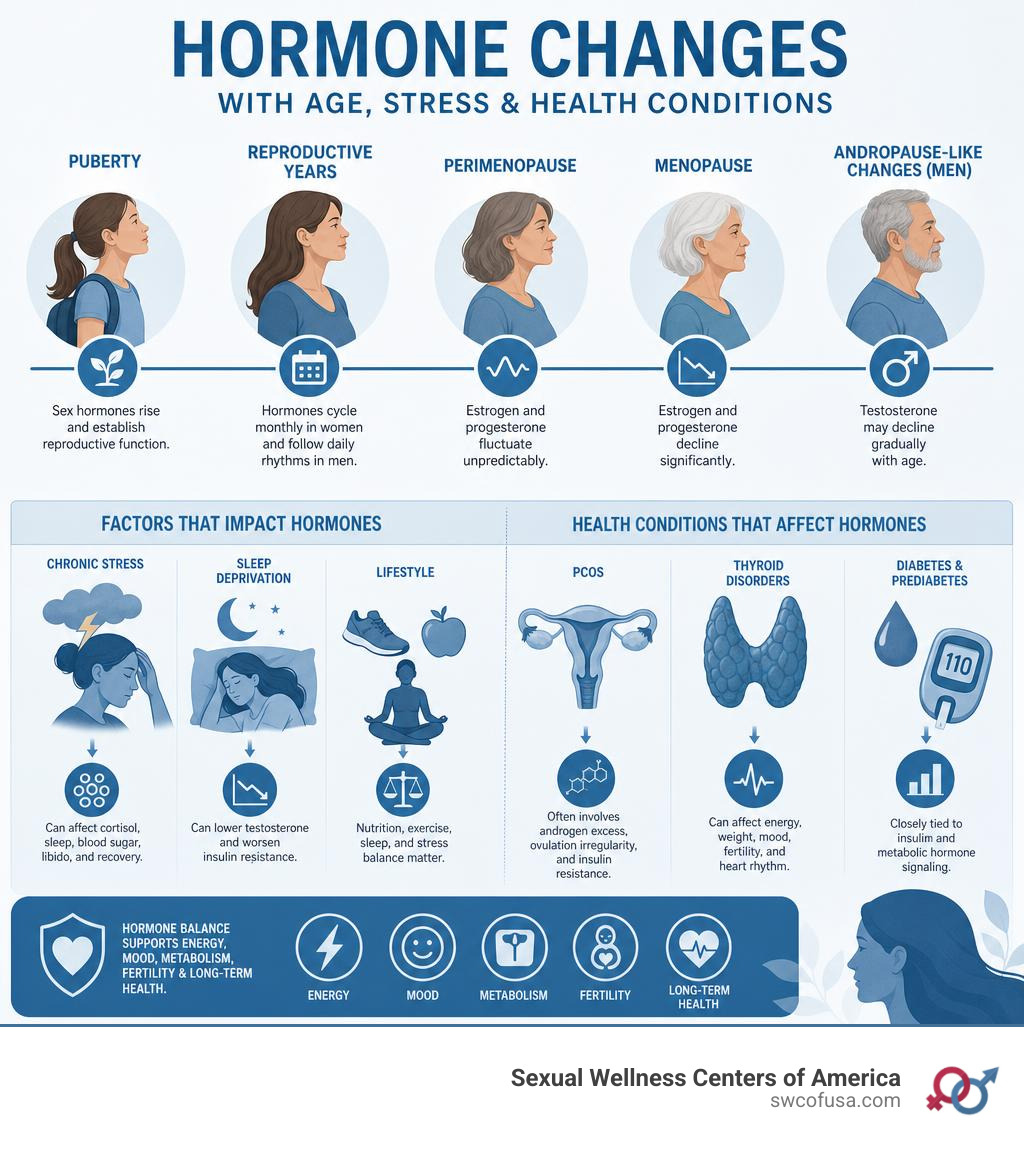
Hormones change across life stages. Puberty establishes reproductive function, while reproductive years follow monthly cycles in women and daily rhythms in men. During perimenopause, estrogen and progesterone fluctuate unpredictably before declining significantly in menopause. In men, testosterone may decline gradually with age (andropause-like changes).
Chronic stress, sleep deprivation, PCOS, thyroid disorders, and diabetes also profoundly affect hormone signaling. Women have many of the same chronic heart disease risk factors as men, but some risk factors can affect women differently. Hormone changes, insulin resistance, thyroid dysfunction, and menopause can all influence long-term health planning.
Hormone Panels and Treatment Planning at Sexual Wellness Centers of America
At Sexual Wellness Centers of America in Colleyville, TX, we use hormone and vitamin panels as part of a personalized sexual wellness evaluation. Our goal is not just to chase numbers. Our goal is to understand why someone is feeling less energetic, less confident, less sexually responsive, or less like themselves.
When Hormone Replacement Therapy May Be Discussed
Hormone replacement therapy may be discussed when symptoms and lab findings align.
Examples include:
- Low testosterone with fatigue, low libido, ED, reduced motivation, or muscle loss
- Menopause symptoms such as hot flashes, night sweats, vaginal dryness, and sleep disruption
- Low estrogen patterns affecting comfort, intimacy, or quality of life
- Progesterone concerns affecting sleep or cycle patterns
- Hormone-related bone health concerns
- Persistent symptoms after lifestyle contributors have been addressed
HRT is not automatic. We review medical history, contraindications, risk factors, symptom severity, lab confirmation, and monitoring needs.
Learn more here: More info about hormone replacement therapy.
How Hormone Panels Support Sexual Wellness Care
Sexual function depends on more than one hormone. A strong evaluation may consider:
- Testosterone status
- Estrogen status
- Progesterone status
- Thyroid contribution
- Prolactin status
- Metabolic health
- Stress and sleep
- Medication effects
- Circulation and tissue health
- Relationship and confidence factors
For men, hormone testing can support evaluation of erectile dysfunction, low libido, reduced performance, and low stamina.
For women, hormone testing can support evaluation of low desire, arousal changes, orgasm changes, vaginal dryness, discomfort, and menopause-related symptoms.
Related Sexual Wellness Options
Depending on goals and candidacy, we may discuss hormone optimization alongside regenerative sexual wellness options such as:
- HEshot®
- SHEshot®
- REGENmax®
- Personalized hormone optimization
- Follow-up lab monitoring
- Sexual function support plans
Our care is individualized. Some patients need hormone support. Some need sexual wellness treatments. Some need both. Some need better sleep and fewer 11 PM emails. We respect all possibilities.
To schedule locally, visit Schedule hormone replacement therapy in Colleyville, TX.
Frequently Asked Questions About Hormone Panels
How accurate are hormone panels?
Blood hormone panels are generally reliable when performed by quality labs and collected at the right time. Accuracy depends on sample timing, cycle phase, fasting status, time of day, medication use, supplement interference, and proper interpretation. Direct-to-consumer tests can be useful for screening, but they may not provide enough clinical context for treatment decisions. For abnormal results, symptoms, or treatment planning, provider review is strongly recommended.
How often should hormone panels be repeated?
It depends on why testing was done. Common retesting timelines include:
- Baseline wellness: Often annually or when symptoms change.
- Thyroid medication changes: Often around 6 weeks after starting or adjusting treatment.
- HRT monitoring: Usually individualized based on therapy type, symptoms, and safety markers.
- Fertility tracking: Timed to specific cycle days or treatment cycles.
- Abnormal results: Repeated when confirmation is needed.
Trends are often more useful than one isolated result.
Can hormone panels be paid for with insurance, FSA, or HSA?
Sometimes. Coverage depends on the plan, diagnosis codes, medical necessity, provider ordering, and lab network rules. Possible payment options include insurance billing when medically necessary, cash-pay lab pricing, FSA funds, and HSA funds. Before testing, verify whether the lab is in network, whether preauthorization is needed, and whether add-on tests have separate fees.
Do normal hormone panel results mean symptoms are not hormone-related?
Not necessarily. “Normal” means the result falls within a lab reference range, but it does not always mean optimal for your age, symptoms, timing, or goals. Symptoms may still relate to free hormone levels rather than total levels, SHBG changes, thyroid conversion issues, cycle timing, perimenopause fluctuations, sleep deprivation, stress, insulin resistance, or nutrient deficiencies. That is why we interpret labs with the person attached.
Conclusion: Use Hormone Panels as a Starting Point, Not a Standalone Diagnosis
Hormone panels can be incredibly helpful, but they are not a diagnosis by themselves. They are a map. They show us where to look next.
The best results come from:
- Choosing the right panel
- Testing at the right time
- Preparing correctly
- Reviewing symptoms honestly
- Interpreting patterns professionally
- Following up with a personalized plan
At Sexual Wellness Centers of America in Colleyville, TX, we use hormone panels to guide hormone optimization, menopause support, testosterone evaluation, and sexual wellness care. When appropriate, we may combine lab-guided hormone care with options such as HEshot®, SHEshot®, and REGENmax® to support sexual function, confidence, and quality of life.
If you are tired of guessing, testing can be a smart first step. Schedule a personalized evaluation here: Schedule hormone replacement therapy in Colleyville, TX.