
Understanding Your Peyronie’s Disease Treatment Options
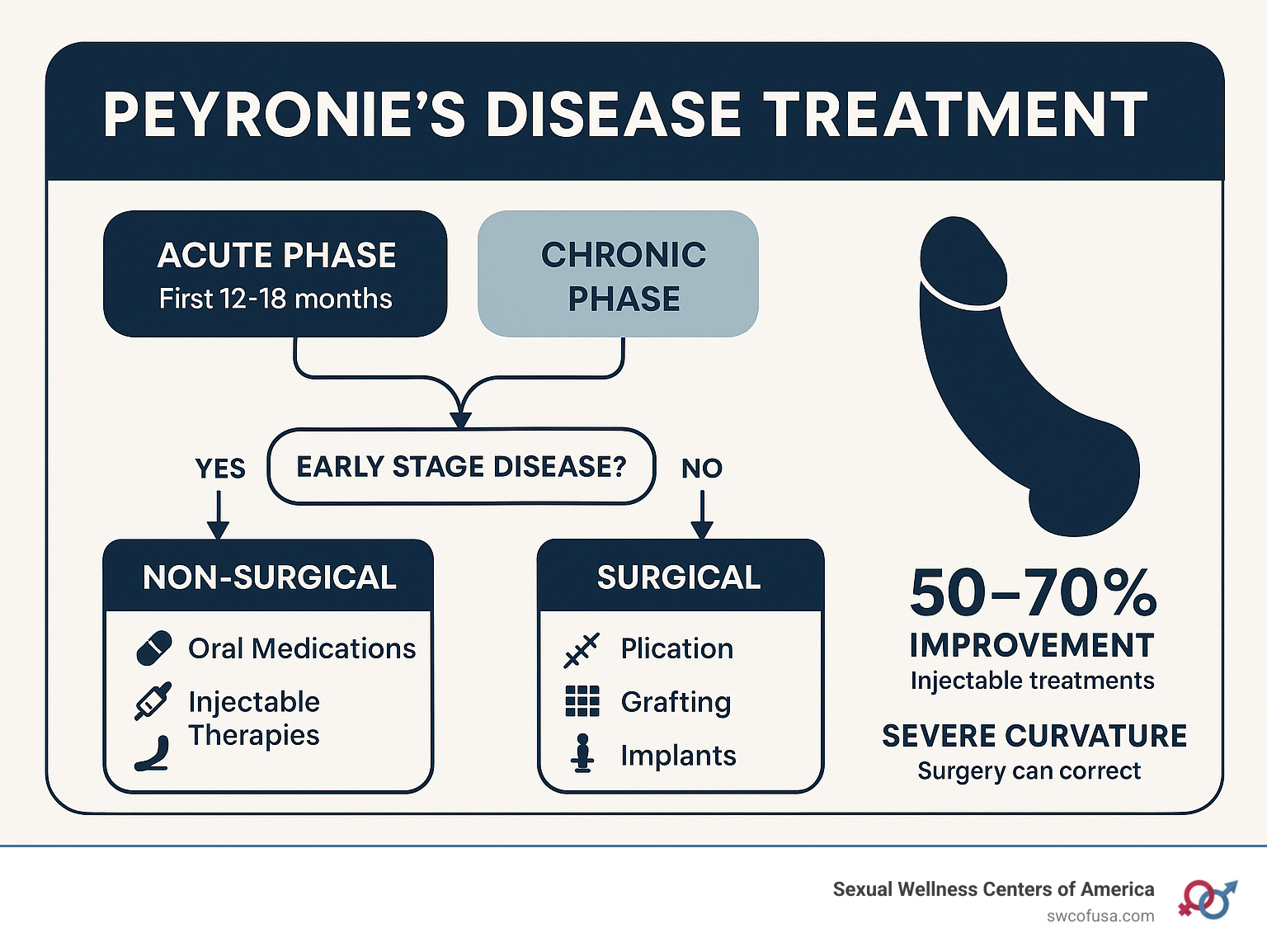
Peyronie’s disease treatment includes both non-surgical and surgical approaches, ranging from oral medications and injectable therapies to penile traction devices and corrective surgery. The best treatment depends on your disease stage, curvature severity, and individual symptoms.
Quick Treatment Overview:
- Non-surgical options: Oral medications, collagenase injections (Xiaflex®), verapamil injections, penile traction therapy
- Surgical options: Plication surgery, plaque grafting, penile implants
- Timeline: Acute phase (first 12-18 months) focuses on reducing inflammation; chronic phase may require more intensive interventions
- Success rates: Injectable treatments show 50-70% improvement; surgery can correct severe curvature but carries higher risks
If you’re among the estimated 6-10% of men aged 40-70 affected by Peyronie’s disease, you’re likely experiencing frustration with penile curvature, pain during erections, or difficulty with sexual intimacy. The good news is that multiple effective treatment options exist, and early intervention during the acute phase often yields the best results.
Peyronie’s disease occurs when scar tissue (plaque) forms in the tunica albuginea – the fibrous layer surrounding the erectile chambers of the penis. This plaque causes the penis to bend or curve during erection, potentially leading to pain, shortened length, or erectile dysfunction.
The key to successful treatment lies in understanding that Peyronie’s disease progresses through two distinct phases. The acute phase, lasting 6-18 months, involves active inflammation and plaque formation. The chronic phase begins when symptoms stabilize, and surgical options may become necessary for severe cases.
As Jeff Nuziard, CEO of Sexual Wellness Centers of America, I’ve helped hundreds of men steer their Peyronie’s disease treatment journey over the past decade, combining evidence-based therapies with compassionate, personalized care.
Peyronie’s disease treatment vocab to learn:
- does insurance cover treatment for peyronie’s disease
- is peyronie’s disease treatment covered by medicare
- over the counter treatment for peyronie’s disease
Understanding Peyronie’s Disease: Causes, Symptoms & Diagnosis
Peyronie’s disease treatment starts with understanding what’s happening in your body. This condition develops when scar tissue (plaques) forms under the skin of your penis in the tunica albuginea – the fibrous wrapper around your penis’s erectile chambers.
When you get an erection, these rigid plaques can’t stretch like healthy tissue, forcing your penis to bend toward the affected area. While only about 1 in 100 men in the United States over 18 have been formally diagnosed with Peyronie’s disease, research suggests the real number is closer to 1 in 10 men.
Scientific research on penile plaque shows that about 70% of these plaques form on the top side of the penis, creating an upward curve during erection.
Causes & Risk Factors
Minor trauma and micro-injuries appear to be the most common triggers – often tiny injuries during sex, sports, or daily activities that cause bleeding and inflammation in the tunica albuginea.
Genetics matter significantly. Peyronie’s disease often runs in families, with strong connections to other connective tissue disorders. If you have Dupuytren’s contracture, you’re at higher risk.
Diabetes significantly increases your risk, especially when combined with erectile dysfunction. Men with diabetes-related ED have a 4 to 5 times higher chance of developing Peyronie’s disease.
Other risk factors include age (most common between 40-70), tobacco use, previous pelvic trauma or prostate surgery, autoimmune conditions, and certain medications.
Symptoms & Stages
The most obvious sign is penile curvature during erection, ranging from mild (less than 30 degrees) to severe (over 90 degrees). Pain during erection is common, particularly early on. About 75% of men experience stress and depression because of how it affects sexual function.
Length loss typically ranges from 0.5 to 1.5 centimeters. Some men develop an hourglass deformity when plaques wrap around the shaft.
Understanding the two stages is crucial:
- Acute phase (6-18 months): Active inflammation, pain, progressive curvature changes
- Chronic phase (after 12-18 months): Pain subsides, curvature stabilizes, plaques may calcify
How Peyronie’s Is Diagnosed
Diagnosis starts with discussing your symptoms, family history, and any trauma. During physical exam, we identify plaques that feel like firm areas under the skin.
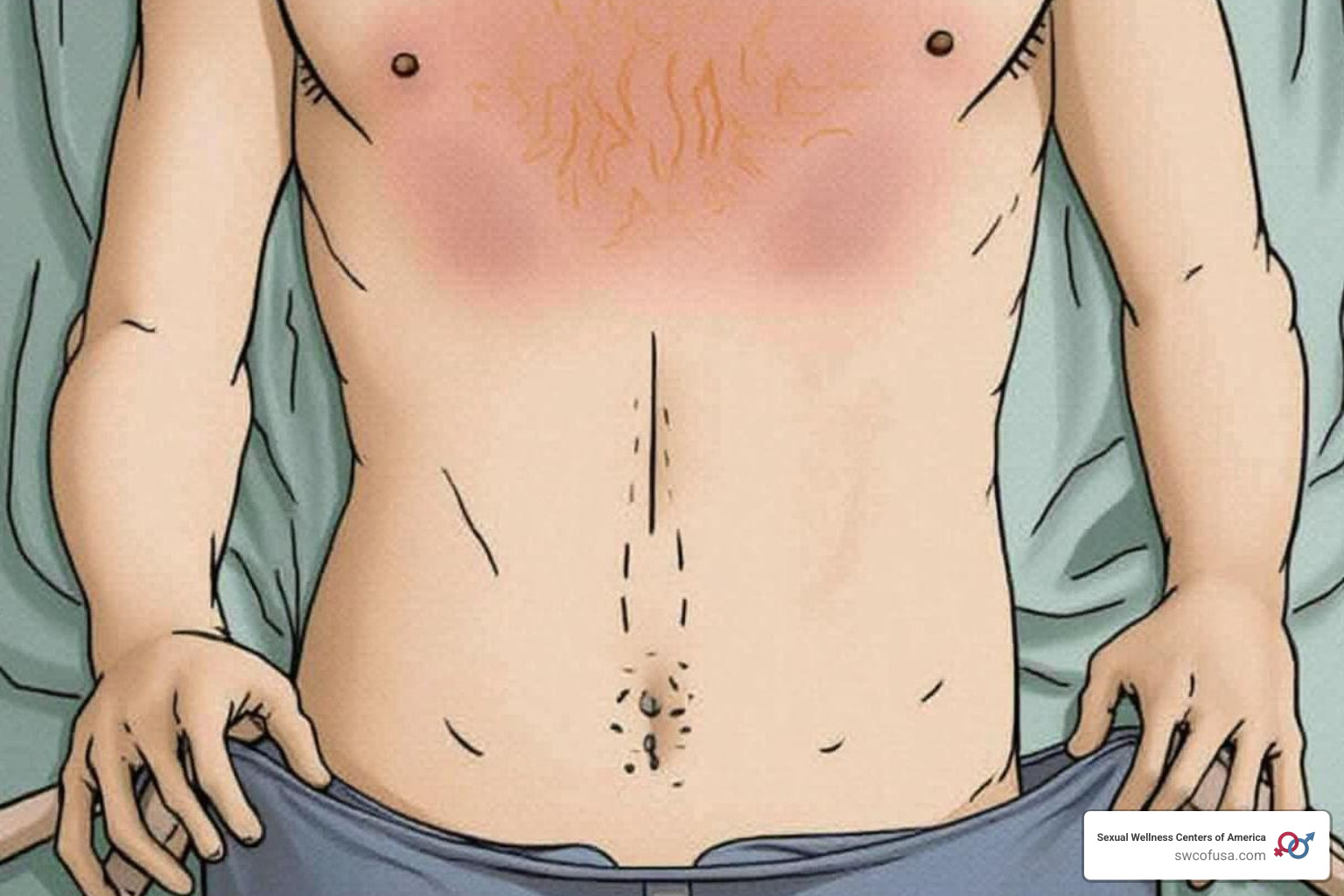
Patient-provided photographs of your erect penis are valuable for documenting curvature severity. Duplex ultrasound may be performed to locate plaques precisely and assess blood flow.
When to Seek Peyronie’s Disease Treatment
Knowing when to start Peyronie’s disease treatment is crucial for optimal outcomes. You should seriously consider treatment when:
- Your curvature is progressing or exceeds 30 degrees
- You experience pain during erections that interferes with sexual activity
- Erectile dysfunction develops alongside curvature
- The condition causes significant psychological distress
The timing of intervention matters tremendously. Research shows that men who seek treatment during the acute phase achieve better results than those who wait until the chronic phase.
Acute vs. Chronic Approach to Therapy
During the acute phase, we focus on calming inflammation and preventing additional plaque formation using anti-inflammatory medications, oral therapies, injectable treatments, and penile traction therapy. This is your window of opportunity when tissues are still responsive to medical intervention.
Once you enter the chronic phase – typically after 12-18 months when curvature stabilizes and pain subsides – our strategy shifts. For mild, stable curvature, we often recommend watchful waiting. Injectable therapies can still be effective, though results may be more modest. For severe deformity, surgical intervention becomes viable.
The critical point is avoiding surgery during the acute phase, as operating on actively inflamed tissue increases complication risks and disease recurrence.
Non-Surgical Peyronie’s Disease Treatment Options
When surgery can be avoided, most men prefer to start here. These approaches work best in the acute phase, when scar tissue is still being formed, but many men in the chronic phase also benefit—especially when we combine several methods.
Oral Medications for Peyronie’s Disease Treatment
- Pentoxifylline 400 mg twice daily – improves blood flow and can modestly shrink plaques.
- Vitamin E 400–800 IU daily – very safe; evidence is mixed but many patients choose it for its antioxidant effects.
- Colchicine or propionyl-L-carnitine – small studies show less pain and smaller plaques; stomach upset limits use for some men.
- Daily low-dose tadalafil – protects tissue by improving circulation; it will not straighten the penis by itself.
- NSAIDs – reliable short-term relief for pain and inflammation.
For a deeper look at non-prescription options, see our guide on over the counter treatment for Peyronie’s disease.
Injectable Therapies: Collagenase, Verapamil & Interferon
- Collagenase (Xiaflex®) – the only FDA-approved drug for Peyronie’s. Up to four treatment cycles can soften plaque and, alongside gentle modeling, reduce curvature by about 30–50 % in 70 % of properly selected men.
- Verapamil – injected every two weeks for six sessions; roughly half of patients see a 10–15° improvement with very low risk.
- Interferon α-2B – now used less often but remains an option when other injectables are not suitable.
Penile Traction & Mechanical Devices
Continuous, gentle stretching can remodel scar tissue, preserve length, and work synergistically with injections.
- 10–20° average curvature reduction when devices such as RestoreX are worn consistently for 30 minutes to several hours daily over 3–6 months.
- Up to 1–2 cm length gain in many studies.
- No systemic side-effects; compliance is the main challenge.
Vacuum erection devices help oxygenate tissue, while acoustic wave technology like REGENwave® is completely non-invasive and may relieve acute-phase pain.
Your exact program will be custom after a physical exam and ultrasound so we understand both the stage and severity of your curve.
Surgical Options for Advanced Cases
Surgery is reserved for chronic-phase Peyronie’s that makes intercourse impossible or when injections and traction have failed. We confirm the curve has been stable for at least six months before operating.
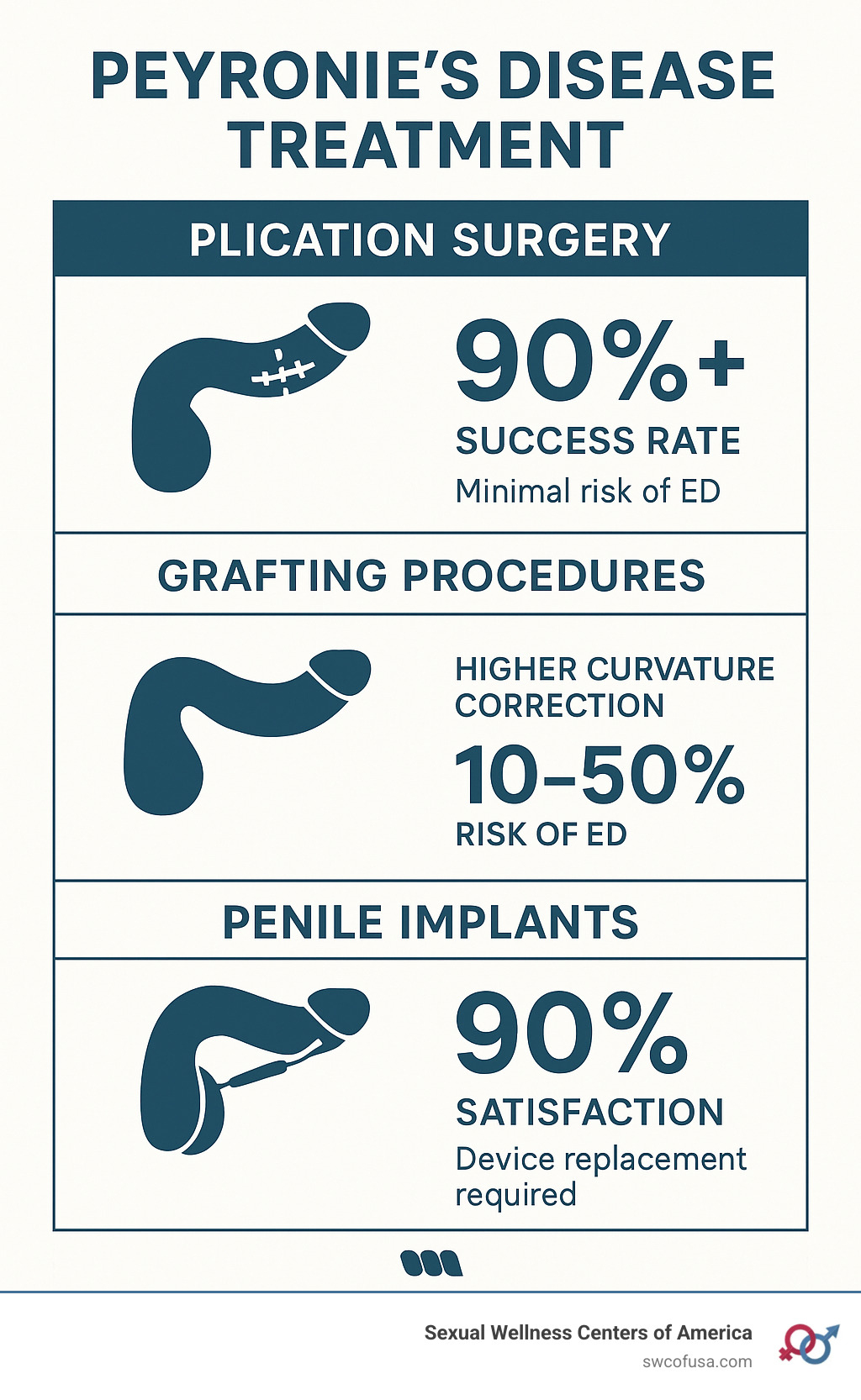
Plication Surgery
Best for curves under ~65° without hourglass deformity. Sutures placed on the opposite side of the plaque even out the shaft.
- Curvature correction > 90 %
- 0.5–1 in expected length loss
- Low risk of new erectile dysfunction
- Four to six weeks of sexual abstinence while sutures heal
Plaque Incision/Excision with Grafting
Used for bends > 70° or complex hourglass deformities. Scar tissue is cut or removed and replaced with a vein, bovine pericardium, or synthetic graft.
- Restores length and straightness at almost any angle
- 10–50 % may need ED medication or an implant later
- Longer procedure and recovery than plication
Penile Implants for Combined ED & Curvature
Inflatable or malleable prostheses straighten the penis during placement and create reliable rigidity afterward.
- Satisfaction rates > 90 %
- Treats curvature and severe ED in a single surgery
- Device will eventually need replacement and natural erections will not return
Discuss your goals, erection quality, and curvature degree with your surgeon to decide which route fits best.
Lifestyle, Support & Prevention Strategies
Therapy works best when you protect penile tissue and care for your mental health.
- Mental health & partner communication
About 75 % of men feel stress or sadness. Counseling or sex therapy reduces anxiety, improves treatment adherence, and helps couples find comfortable positions or activities. - Injury prevention & vascular health
Use generous lubrication, guide penetration, and avoid positions that bend the penis backward. Quit smoking, stay active, and control diabetes—good circulation limits scar formation. - Maintain erections during healing
Daily low-dose tadalafil, a vacuum device, or other ED therapies keep blood flowing and tissues elastic, cutting the risk of length loss or recurrent curvature.
These steps do not replace medical care, but they amplify every treatment discussed above.
Frequently Asked Questions About Peyronie’s Disease Treatment
Does Peyronie’s disease ever resolve without treatment?
Spontaneous resolution is uncommon—roughly 1 in 10 very mild cases. Pain often fades after a year, but curvature usually persists. Regular follow-up lets us act quickly if it worsens.
How effective is collagenase compared with surgery?
- Collagenase (Xiaflex®) – ideal for 30–90° curves; ~70 % of patients see a 30–50 % reduction with minimal risk of new ED.
- Surgery – can achieve near-complete straightening at any angle but involves operating-room risks, longer recovery, and a higher chance of erectile changes.
Many men try collagenase first and keep surgery as a backup.
Can lifestyle changes improve Peyronie’s disease treatment outcomes?
Yes. Consistent traction use, strict diabetes control, quitting tobacco, and partner support all improve blood flow, treatment compliance, and overall satisfaction.

Conclusion
Peyronie’s disease is challenging, but modern therapies—from collagenase injections and traction devices to precise surgeries—allow most men to regain comfortable intimacy. Early evaluation preserves length and may avoid surgery, yet even long-standing cases can be corrected by experienced specialists.
At Sexual Wellness Centers of America in Colleyville, we combine proven options with innovative treatments such as HEshot®, SHEshot®, and REGENmax® technology. Every plan is guided by comprehensive hormone and vitamin testing and our 97.2 % success rate in reversing sexual-health conditions.
If you notice new curvature, pain, or changes in erection quality, take the first step today. Visit our Peyronie’s disease treatment page to learn more or request a confidential appointment.